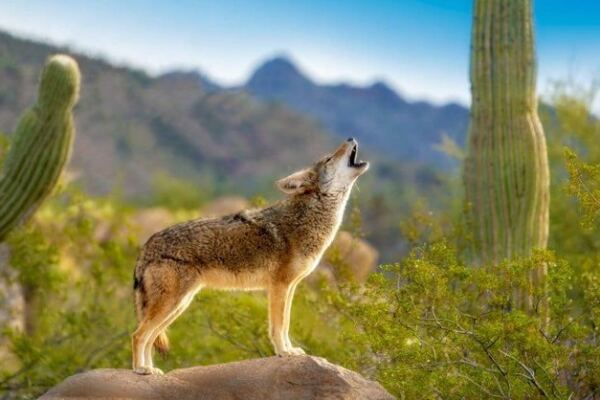
A long, wavering howl drifts across the field behind your house, and suddenly everyone is awake and listening. Coyotes live all over Kentucky, so many people hear them at some point.
Knowing what a howl does and does not tell you can ease worry and help you focus on what really matters. Here is a calm look at the sound and the simple steps that keep pets and families safe.
What does a nighttime howl communicate?
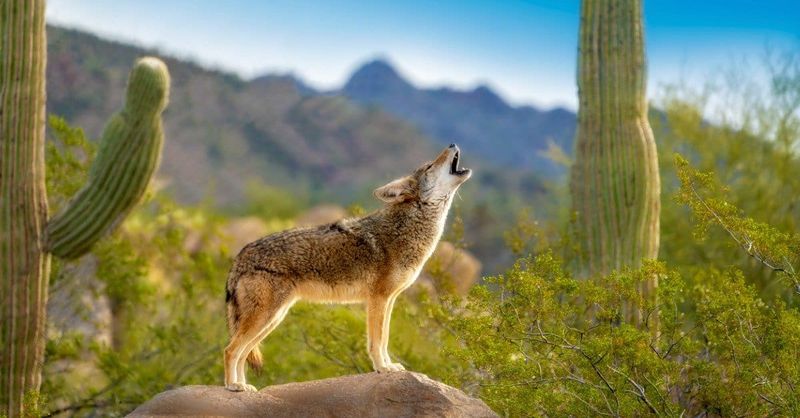
Howling is ordinary coyote communication. According to USDA wildlife damage guidance, coyotes howl mainly to share information about where they are or to show that a stretch of land is occupied.
Other coyotes may answer, which is why one howl can turn into a whole round of calls. That back-and-forth is a bit like neighbors calling across a valley to say, “I’m over here.”
A vocal session is not always made of howls, either. Kentucky Fish and Wildlife notes that coyotes also use yips, barks, and whines, which is why the noise can sound like a jumble of excited voices.
Location, answering other coyotes, and marking an area as occupied are all possible purposes. None of them is a precise translation, and no single howl has one fixed meaning.
A howl you hear on Tuesday may not carry the same message as one on Friday.
What you can say for sure is simple. If you hear a howl, a coyote is vocalizing within earshot of you.
The sound by itself does not tell you exactly how far away that animal is, so a howl that seems close may come from a coyote well beyond your property, and one that seems faint may not be as distant as you think.
Coyotes vocalize after dark, but they are not only nocturnal
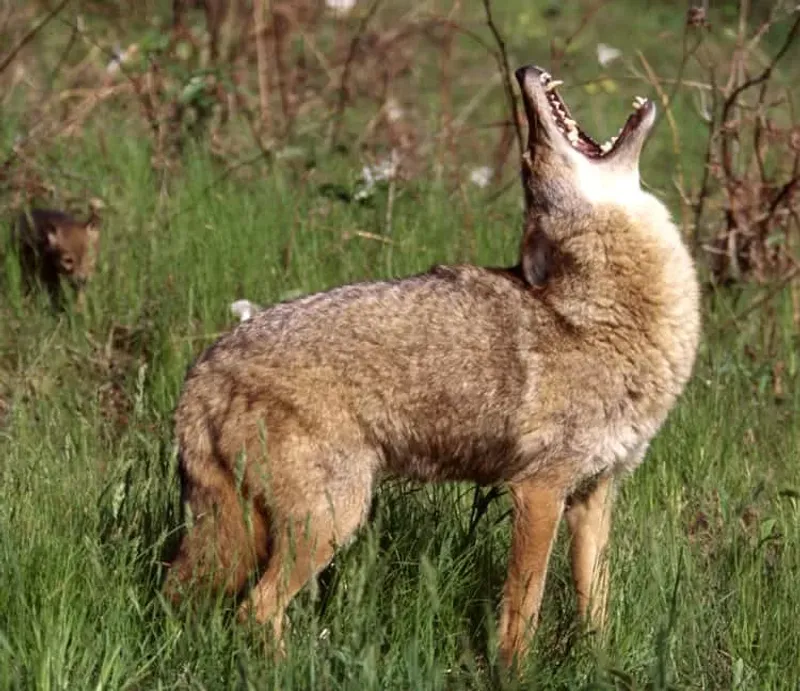
Most of us notice coyotes at night simply because it is quiet and dark, and sound carries. That does not mean the animals only come alive after sunset.
Kentucky Fish and Wildlife describes coyotes as animals that can be seen and heard at different times, and they are not strictly nocturnal.
Think about how your own hearing works. Daytime brings traffic, mowers, and chatter that mask distant calls, while a still night lets a single voice travel far.
A howl heard at 10 p.m. may say as much about your quiet street as about the coyote.
So the clock alone tells you little. A howl after dark is not a sign of unusual behavior, and it does not point to a particular activity.
There is no good reason to guess why that animal chose that moment to call.
Instead of reading meaning into the timing, keep the plain fact in mind. A coyote vocalized within earshot, and that is all the sound can confirm.
The next sections look at other limits of what a chorus can reveal, and why those limits are actually good news for staying calm.
A chorus can sound larger than it is
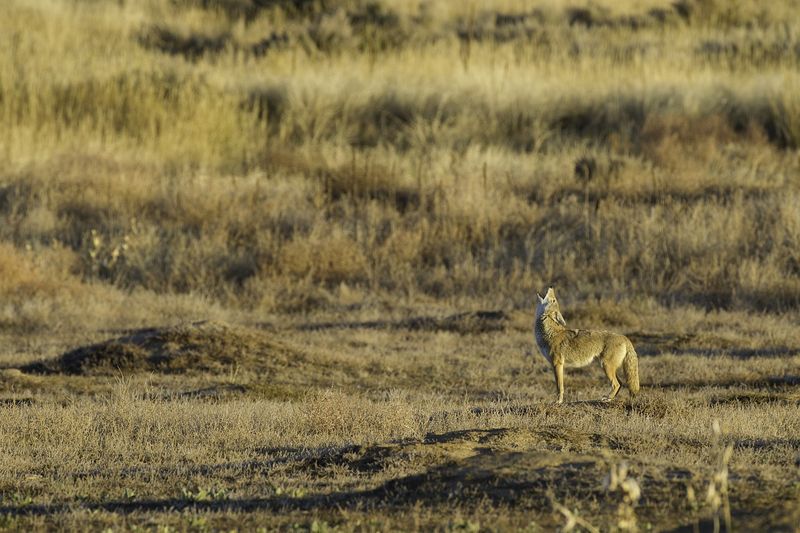
When yips and howls overlap, it can sound like a whole pack has gathered at the edge of your yard. Our ears are easily fooled.
In a 2017 study in Human-Wildlife Interactions, researchers played recordings of one to four howling coyotes to 427 people.
Listeners were asked to guess how many coyotes they heard. On average, they overestimated the number by nearly twofold.
That result is a helpful reminder not to count coyotes by ear. A few animals can seem like many, especially when sound bounces off hills, barns, and trees.
It is also worth being clear about what the study did not do. It measured how people judged recordings, not how many coyotes live in any Kentucky neighborhood.
You cannot use it to work out how many animals are near your home.
The practical takeaway is easy. If a chorus makes you uneasy, remember that the sound may be exaggerating what is out there.
Rather than trying to tally voices, put your energy into things you can control, like securing food sources and keeping an eye on your pets.
Kentucky’s seasonal shifts affect sightings—not proven howling
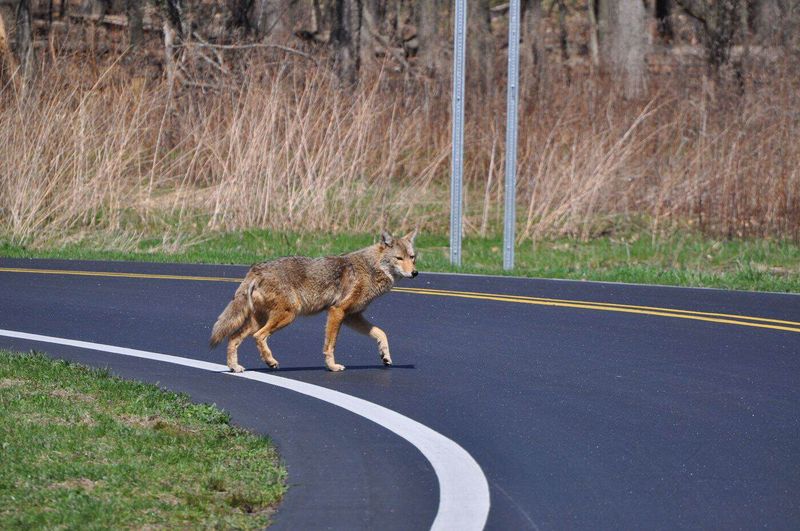
Seasons do shape how often people in Kentucky see coyotes. Kentucky Fish and Wildlife reported that sightings may rise during winter breeding season.
The agency’s coyote page adds that sightings can also climb in spring and early summer while pups are being raised, and again in late summer and fall when young coyotes disperse to find their own territory.
Those are patterns in sightings and movement. They describe when people are more likely to spot coyotes on roads, in fields, or near homes.
They do not tell us how often coyotes howl in a given season. Nobody in the Kentucky sources measured howl rates by month, so it would be a stretch to say that winter mating or pup rearing causes more howling.
The same goes for any single night. Hearing a howl in January does not mean it is about breeding, and a howl in June does not mean it is about pups.
The season gives useful background about when coyotes are on the move. It cannot decode a sound you hear after dark.
Does a howl mean danger?
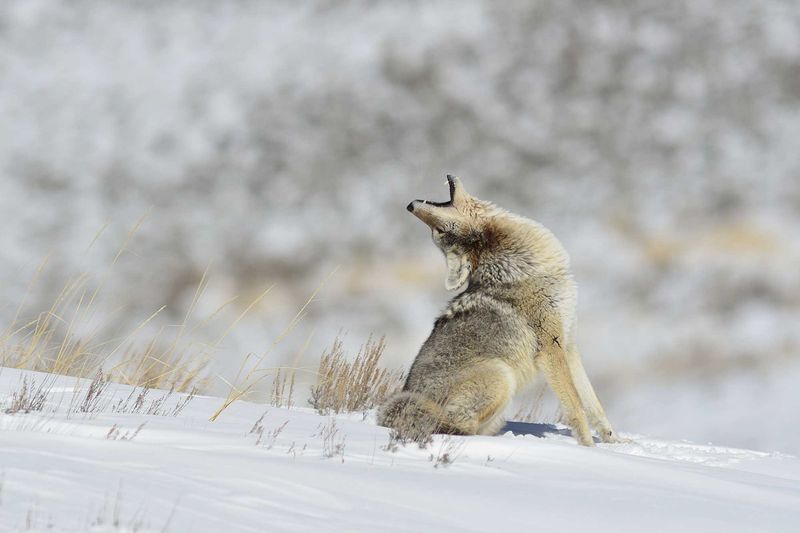
A howl means a coyote is vocalizing within earshot. That is the full extent of what the sound confirms.
It does not show how far the animal is from your home, what it is doing, or whether it poses a threat to anyone.
The USDA describes howling mainly as communication about location or occupied range, not as a hunting cry or an announcement of a kill. A howl is not a warning that something is about to happen.
Kentucky Fish and Wildlife also offers some perspective. In its winter sightings advisory, the agency says most coyotes do not cause conflict.
That is reassuring, though it is not a promise that risk is zero.
The helpful move is to separate the sound from the situation. A howl is just noise.
What deserves attention are things like small pets left outside, food that draws wildlife, or a suspected den close to your property.
Those are the factors that make a difference, and you can act on every one of them. A calm check of your yard and routines will do more good than worrying about what a howl might mean.
Simple precautions reduce chances of conflict

Most of the useful steps happen around the house. Secure garbage and compost so nothing tempting is left out, and bring pet food indoors.
Kentucky Fish and Wildlife recommends these steps to reduce conflict.
Supervise pets whenever they are outside, and keep them leashed or behind a fence. At night, turn on lights and look around the yard before you let a pet out.
If a coyote approaches and you do not suspect a den nearby, the agency advises deterring it. Make noise, stand tall to look larger, and keep it up until the coyote leaves.
A suspected den changes the advice. Keep away, back off slowly, and do not haze the animal there.
Signs of a den might include repeated coyote activity in one spot or a hole in a brushy bank, though you should never go looking to confirm it.
The agency’s winter mating season notice backs these habits, and they matter most when sightings tend to rise.
Do not feed coyotes or walk toward them, and never try to get close for a photo. Keep your pets from chasing or greeting them as well.
CDC wildlife guidance gives the same general advice: keep your distance from wild animals and do not let pets interact with them.
Take the sound as a signal, not a diagnosis
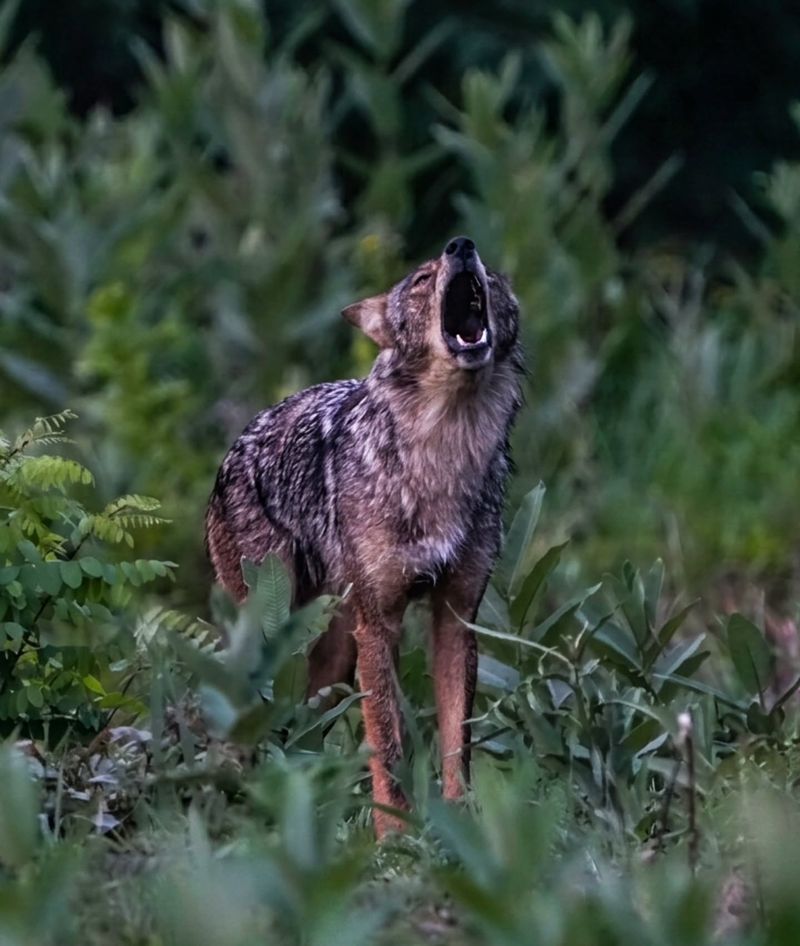
After-dark howling is ordinary coyote communication. Hearing it tells you a coyote is vocalizing within earshot, and nothing more about its distance, its activity, or any threat.
As Kentucky Fish and Wildlife makes clear, the practical work is on the ground, with pets and attractants.
So skip the guessing game about what a voice means. Let the howl be a gentle reminder to check the latch, the food bowl, and the lights, then enjoy one of the wild sounds of a Kentucky night.
Share this story