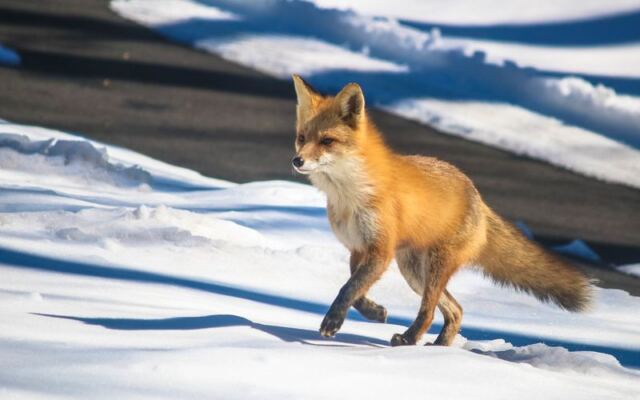
A fox crossing a snowy yard makes people stop and stare. It is easy to wonder what the animal wants and whether it means trouble.
The real answer is more modest than most stories suggest, and knowing it helps you protect your pets and chickens without panic.
A winter sighting does not prove a seasonal spike
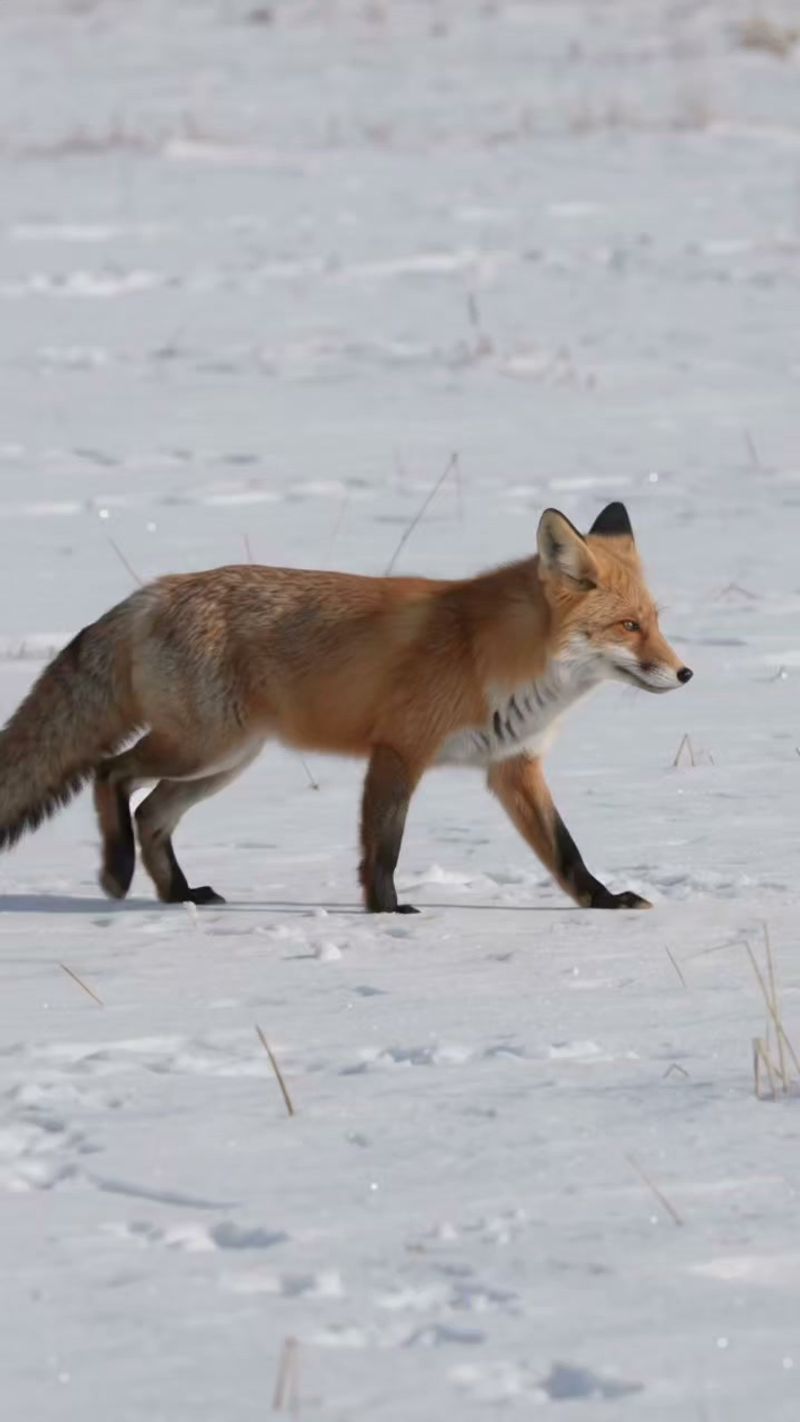
Seeing a fox in winter feels like a sign that something has changed. Maybe more foxes are out and about, maybe they are bolder.
The sources reviewed for this article do not back that up. Nobody has measured a statewide jump in early-winter sightings in Massachusetts, so a single encounter cannot tell you about a trend.
What we do know is that foxes do not take the winter off. According to MassWildlife’s fox guidance, they are active all year and can be seen by day or night.
Bare trees and snow cover also make animals easier to spot, which can make a fox feel new when it has simply been visible for the first time.
The breeding calendar matters here too. MassWildlife says red and gray foxes breed from mid-January to late February, and its February 2026 monthly update places that activity in the late winter.
So December sightings are not explained by mating season.
Think of your sighting as one data point about your own yard. It tells you a fox passed through, and that is about all it tells you.
The next sections cover what the fox might be doing and what you can sensibly do about it.
What might a fox be doing in your yard?
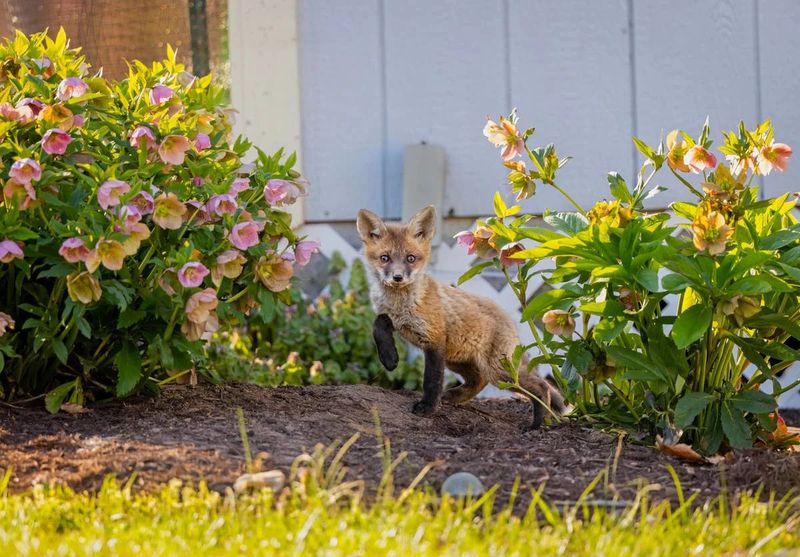
Most of the time, a fox in your yard is simply getting from one place to another. Yards, fence lines, and quiet streets work like roads for wildlife.
A fox may be traveling, searching for food, or moving around its territory, and a quick glance cannot tell you which.
Food is a common reason to wander, and red foxes are not picky. Rutgers Cooperative Extension describes them as adaptable omnivores that eat small mammals such as mice and voles, along with rabbits, birds, eggs, insects, fruit, and carrion.
Because the menu is so wide, a visit does not point to one target, whether that is a vole under the lawn or something else.
Winter conditions can change what is on offer. Some days a fox may find plenty of small animals, and on others it may have to cover more ground.
That is one more reason a single sighting is hard to interpret.
It also helps to check which fox you are looking at. Massachusetts has gray foxes as well as red foxes, and state guidance covers both.
A rusty-orange coat with a white-tipped tail suggests a red fox, but if you are unsure, avoid assuming the details in this article apply to your visitor.
Snow can hide prey, but it does not explain every pounce
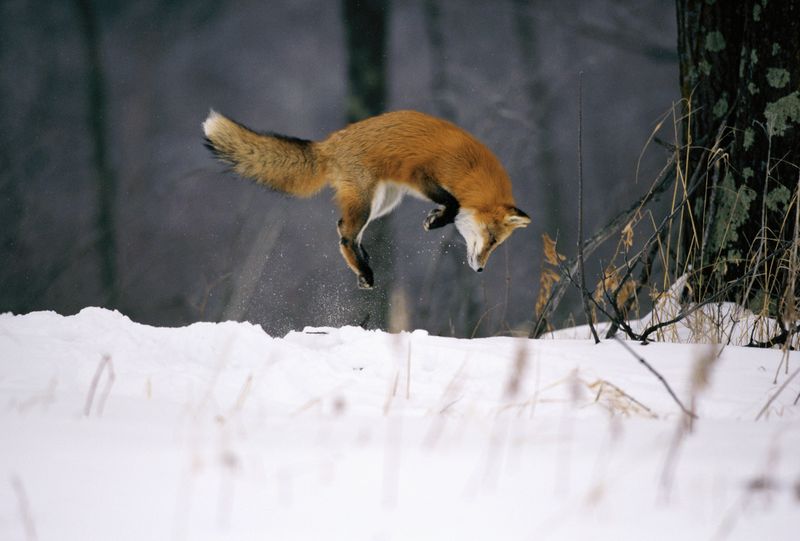
Few sights are more memorable than a fox freezing, tilting its head, and leaping nose-first into the snow. Red foxes can locate small mammals hidden beneath it, and the National Park Service notes that they listen for prey.
Rutgers Extension also describes mice and voles as part of their diet.
Still, watching a pounce does not tell you what the fox was after. It might have been a vole, but it might also have been a false alarm or a different food item.
You cannot name the prey from the window.
Snow is not simply a helper for foxes either. A 2023 study in Maine found that deep snow can impede fox movement and reduce prey availability.
That research looked at its own study area, not Massachusetts foxes, so treat it as a reminder that winter can be hard rather than a measurement of your local animals.
You may also hear that foxes use Earth’s magnetic field to aim their jumps. A field study reported a directional pattern, but the magnetic explanation is a hypothesis, not settled science.
It is a fun idea to keep in mind, not a fact to repeat.
Breeding and den preparation begin later in the season

Fox life follows a calendar, and it helps to keep the steps separate. According to MassWildlife, red and gray foxes in Massachusetts breed from mid-January to late February.
Den preparation begins during that same stretch.
Births come afterward. Kits are born in March and April, and they emerge from the den several weeks later.
So breeding, den preparation, births, and emergence are four distinct stages, not one blended event.
MassWildlife’s February 2026 monthly update highlights this late-winter timing. That means a December sighting is probably not about mating or denning, and a fox seen in early January has not necessarily started either.
These stages can change how foxes move around, since animals looking for mates or den sites may travel more. Even so, a fox in your yard is not proof of a den or of young nearby.
If you see one in late February, it is reasonable to keep this season in mind, and nothing more than that.
Remove easy food, but check for an active den
The simplest way to make your yard less interesting to a fox is to take away the snacks. MassWildlife advises against feeding or petting foxes, and that includes leaving food out on purpose.
Feeding can make wild animals comfortable around people, which tends to end badly for them.
Secure your garbage and compost, and feed pets indoors. Sweep up fallen birdseed too, since it draws mice and other small animals that foxes may eat.
A bird feeder can end up feeding the whole neighborhood food chain.
Foxes may also use spaces beneath porches or sheds for shelter. Before you seal one up, think carefully.
Do not block an entrance if an active den could be inside, because an animal could be trapped in or kits could be separated from a parent.
If you suspect a den or have a problem animal, contact MassWildlife for help instead of handling it yourself. Trying to trap or chase a fox is not a safe choice.
Quiet, steady changes to your yard usually do more than any dramatic move.
Keep pets close and under control

A little supervision goes a long way. Massachusetts advises keeping pets leashed and under control, and feeding them indoors so bowls do not draw wildlife.
Stepping outside with your dog at night, rather than letting it roam, is a simple habit that lowers risk.
Cats deserve extra thought. MassWildlife notes that foxes can view cats as potential food.
That does not mean every fox will go after a cat, but keeping cats indoors, especially at dawn, dusk, and overnight, is a sensible precaution.
Small dogs can be at a disadvantage too, so stay close when they are out, and turn on a porch light before letting them out in the dark. If you see a fox, calmly call your pet in and leave the fox room to move on.
If a pet is bitten or scratched by a wild animal, contact your veterinarian. Rabies is the reason the advice is firm, and Massachusetts’ rabies information covers it.
Your vet can advise on vaccination status and next steps.
Secure chickens behind predator-proof barriers

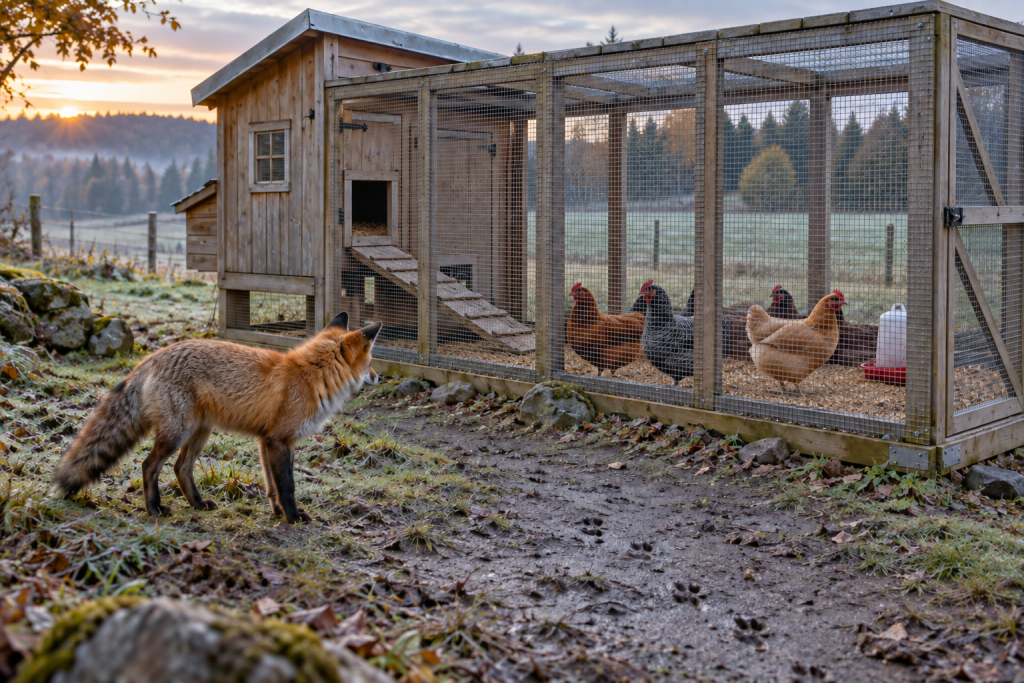
Backyard flocks are their own concern, and they call for good hardware. MassWildlife’s poultry predator advice recommends predator-proof fencing and keeping chickens enclosed.
It also says to secure their feed, since spilled grain brings in more visitors.
Pay attention to the material. Chicken wire may not keep predators out, despite its name, because it is thin and can be torn or pushed through.
Stronger wire, solid latches, and a closed coop at night are better bets.
These steps reduce risk, but they do not guarantee that no predator will get through. Check your setup from time to time for gaps, loose boards, and spots where an animal might dig or squeeze.
Seeing a fox nearby does not mean an attack is about to happen. It is a good prompt to walk your fence line, though.
A tight coop is cheaper than any repair after the fact, and it lets you watch a passing fox with a calm mind.
When should you call for help?
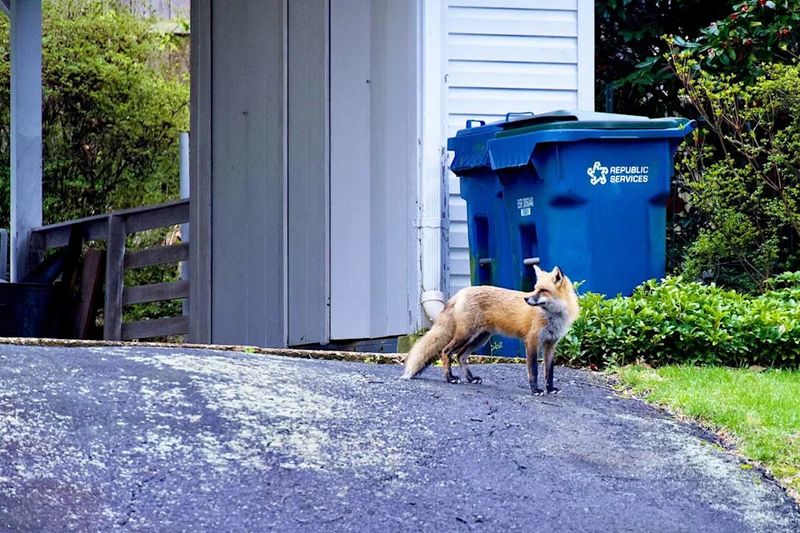
Most fox encounters need nothing more than distance. Do not approach or handle a fox, and do not try to trap it.
Give it space and let it leave on its own.
Daylight alone is not a warning sign. Foxes can be active during the day, as MassWildlife explains.
What deserves a call is clearly abnormal behavior, and in that case you should report it to your local animal control.
If a person may have been exposed to rabies, such as through a bite or scratch, contact a healthcare provider, your local board of health, or the Massachusetts Department of Public Health. The state’s rabies page explains the next steps.
For a suspected den or a problem animal, reach out to MassWildlife.
A fox in the snow is, most nights, just a neighbor with fur and a long way to go.
Share this story