Why might Delaware residents hear coyotes more in late fall and winter? Many people notice yips and howls after dark just as the holidays arrive, and it is natural to worry about a small dog or cat in the backyard.
The real story is tied to the seasons, not the calendar on your wall. Knowing what a howl can and cannot tell you helps you protect your pets without losing sleep.
Is a holiday-season howl spike documented in Delaware?
Nobody has shown that Delaware coyotes howl more around the holidays. The sources behind this article include no local monitoring and no count of howls over time, so a measured holiday spike is not something anyone can point to.
What we do have is a seasonal pattern that makes more noise in late fall and winter plausible. Delaware’s wildlife agency, DNREC, says most young coyotes disperse in October and November and that Delaware coyotes breed in February and March.
Those are two separate stages, and neither is tied to a particular holiday.
Broader research adds a general clue. A review in a 2017 study on how people judge coyote group size reports that howling is common during dispersal and breeding seasons.
That is a general summary, not a Delaware field measurement.
So the better question is why you might hear coyotes in late fall and winter. The rest of this article covers what a chorus means, when to be careful with pets, and which yard changes help all year.
Young coyotes disperse before the breeding season begins
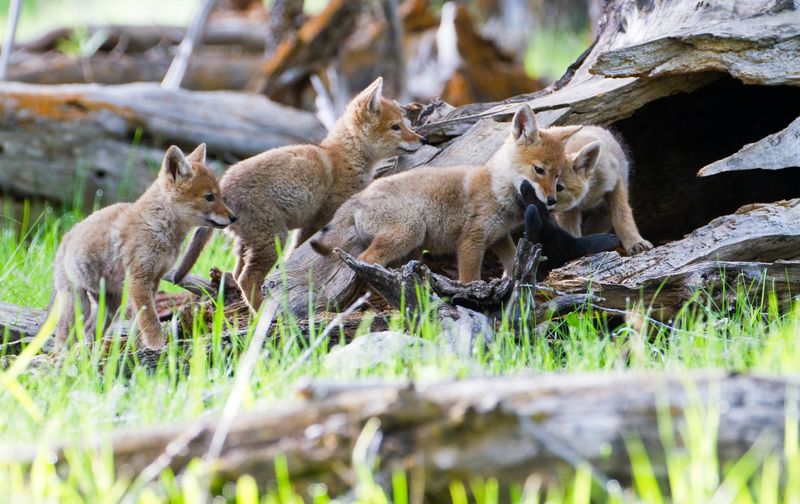
Autumn is moving season for young coyotes. According to DNREC, most young coyotes disperse in October and November, leaving the area where they were born to find territory of their own.
Breeding comes later. Delaware coyotes breed in February and March, a few months after dispersal.
Treating them as one event would blur the picture, because a young animal wandering in November is in a different stage of life than an adult pair settling in during late winter.
Why does that matter for sound? Animals on the move and animals claiming space have reasons to call out.
The research review in that Human-Wildlife Interactions paper reports that howling is common during dispersal and breeding seasons, often at night and before sunrise.
Keep the limits in mind. That finding is a broad summary, and it does not show a change in Delaware howling around the holidays.
Dates are also a guide, not a schedule, since individual coyotes do not follow an exact calendar. Other states publish slightly different timings, so treat the Delaware dates as typical rather than precise.
The practical takeaway is simple. If you hear more coyotes in the cold months, the seasons are a reasonable explanation, and you can plan for them without reading anything dramatic into it.
A chorus is a poor head count
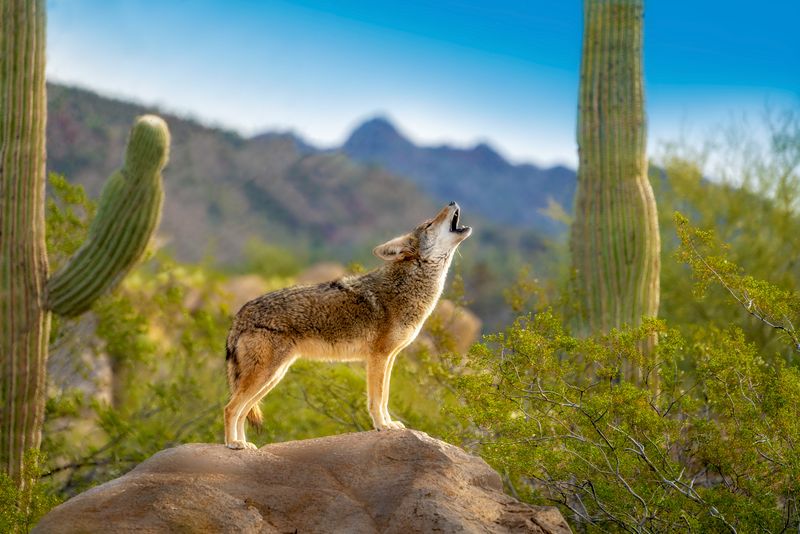
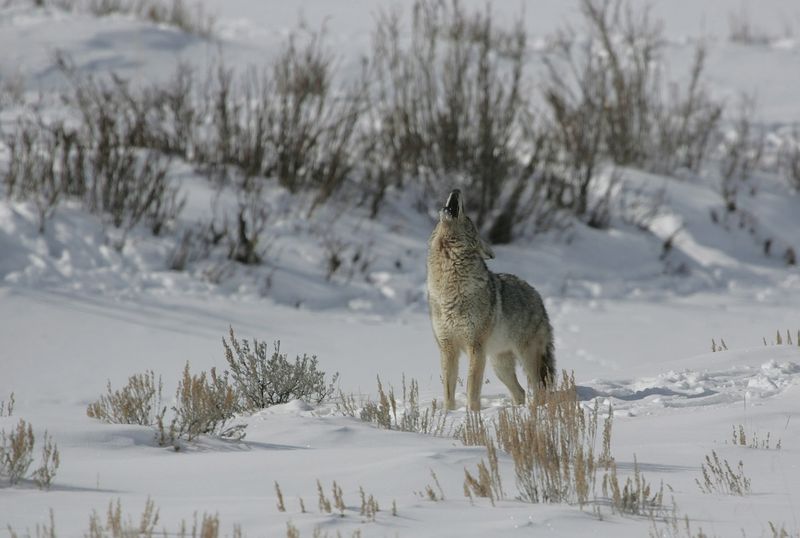
Coyotes howl to communicate and to mark territory. Those calls carry across fields and neighborhoods, which is why a few animals can sound like a crowd.
Researchers tested exactly that. In a study conducted in southern Texas, people listened to recordings and guessed how many coyotes were calling.
They consistently estimated nearly twice as many coyotes as were actually vocalizing.
That result is a good reason to skip the head count. A loud, layered chorus does not tell you how many coyotes live nearby.
The study tested estimates of group size from recordings, so it says nothing about Delaware population numbers or pet attacks.
It also did not test whether listeners can tell if animals are getting closer or moving away. So do not assume you can judge direction or approach by ear alone.
A howl by itself does not mean a threat is building. It tells you coyotes are in the area, which is something to keep in mind when you let a small dog out, not a reason to panic.
Your habits matter far more than the volume you hear.
When should pet owners be most alert?
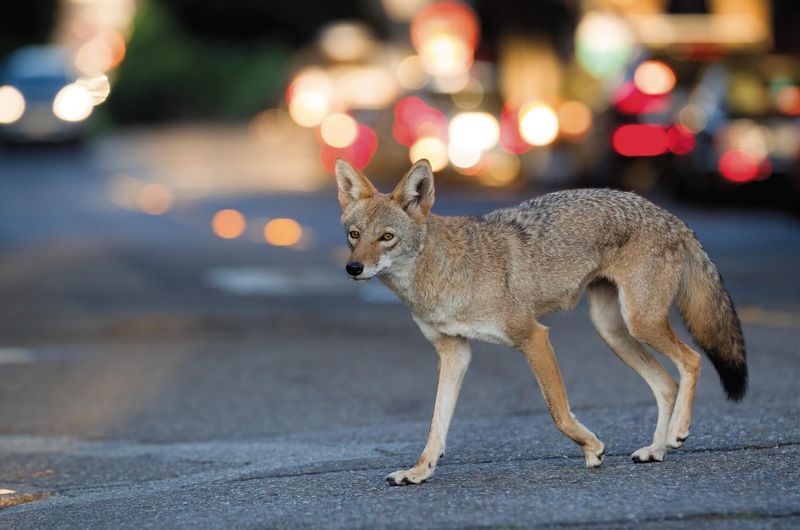
Night, dawn, and dusk are useful times to be extra careful. Coyotes are often active then, and the late fall sunset arrives early enough to catch many evening dog walks in the dark.
Still, no hour is a safe one. Both DNREC and North Carolina’s wildlife agency note that coyotes can be out at other times, so midday does not guarantee an all-clear.
Small dogs and cats can be prey for coyotes. That is a fact worth respecting, but it should be kept in proportion.
DNREC describes Delaware’s coyote population as relatively low, and its examples of coyotes not harassing leashed dogs are only examples, not a full count of pet attacks.
Here is what to do. Keep cats indoors.
Go outside with your dog rather than opening the door and waiting. Keep dogs on a leash during walks, and never leave pets unattended outdoors, even in a fenced yard.
A porch light and a flashlight make early-morning and after-dark trips easier. The goal is steady supervision, not fear, and it works the same way in July as it does in December.
Make the yard less inviting and harder to enter

Coyotes follow food and cover, so a yard that offers neither is a less appealing stop. Start with the easy wins, using the advice from DNREC: secure garbage, bring pet food indoors, clean up fallen fruit, and sweep up spilled birdseed.
Shelter matters too. Gaps beneath sheds, decks, and porches can serve as resting spots, so close off anything an animal could crawl into.
A quick walk around the property with a flashlight will show you where those openings are.
Autumn is a handy time for this chore. Apples and pears drop, bird feeders get busy, and leaf piles hide gaps, so a weekly sweep makes a difference.
What about fences? A fence may discourage a coyote, but it is not a guarantee.
The North Carolina Wildlife Resources Commission advises a fence at least six feet high with a barrier at ground level to deter digging. That is North Carolina’s guidance, not a Delaware rule.
Even with a good fence and a clean yard, stay with your pets when they go outside. Fixing the yard lowers the odds of a visit, and supervision covers the rest.
Respond to a howl without assuming an attack
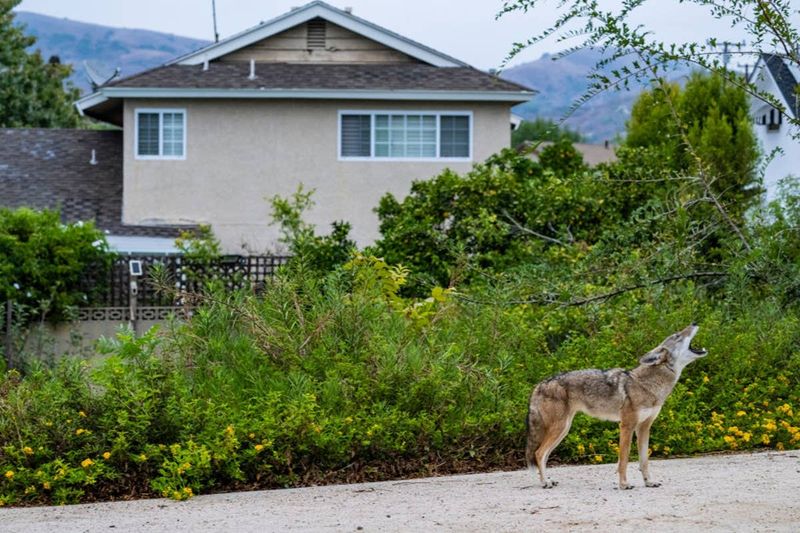
Hearing a howl from the porch is not a signal that your pet is in immediate danger. Bring the dog in if it makes you more comfortable, then carry on with the sensible habits you already have.
A coyote in view is not automatically a problem either. A daytime sighting alone does not mean rabies or aggression.
North Carolina’s wildlife guidance points to unexplained aggressive behavior, or a coyote that does not respond to hazing, as reasons to call local animal control.
If you haze, do it from a safe position, and do not run away. Never approach, feed, or corner a coyote.
DNREC specifically says not to feed them. If the animal seems to be defending a den, leave calmly rather than pushing on.
A howl is just a sound in the dark, and your routine is what keeps pets safe.
Share this story