Get the latest garden guides in your inbox →
Gardening Latest
  • General Gardening
  • Lawn Care
  • Plant Care
  • Composting
  • Soil Health
  • Backyard
  • Garden Muse Magazine
  • General Gardening
  • Lawn Care
  • Plant Care
  • Composting
  • Soil Health
  • Backyard
  • Garden Muse Magazine
  • News
  • Gardening Calendar
  • Garden Structures
  • Vegetable Garden
  • Vertical Garden
  • Raised Beds
  • Hydroponics
  • General Equipment
  • Community Gardens
Garden Themes
  • Spiritual Garden
  • Hydroseeding
  • Seeding and Laying Sod
  • Artificial Grass
  • Lawn Care Equipment
  • Plants
  • Trees
  • Planting Tools
  • Composting Basics
  • Fertilizer
  • Alternative Growing Mediums
  • Front Yard
  • Backyard Activities
  • Landscaping
Gardening Latest

Explore by state

Which state is your garden in?

Currently viewing Delaware

All states

Northeast

  • Connecticut —
  • Delaware 13
  • Maine —
  • Maryland 3
  • Massachusetts 15
  • New Hampshire —
  • New Jersey 3
  • New York 9
  • Pennsylvania 9
  • Rhode Island —
  • Vermont —

Southeast

  • Alabama 3
  • Arkansas —
  • Florida 3
  • Georgia 3
  • Kentucky 14
  • Louisiana 2
  • Mississippi —
  • North Carolina 1
  • South Carolina 13
  • Tennessee —
  • Virginia 2
  • West Virginia —

Midwest

  • Illinois 2
  • Indiana 4
  • Iowa 13
  • Kansas —
  • Michigan 3
  • Minnesota 2
  • Missouri 2
  • Nebraska —
  • North Dakota —
  • Ohio 3
  • South Dakota —
  • Wisconsin 14

Southwest

  • Arizona 3
  • Colorado —
  • Nevada —
  • New Mexico —
  • Oklahoma —
  • Texas 2
  • Utah —

West

  • Alaska —
  • California 3
  • Hawaii —
  • Idaho —
  • Montana —
  • Oregon —
  • Washington —
  • Wyoming —

No state matches that search.

Site menu

Gardening Latest
  • General Gardening
    • News
    • Gardening Calendar
    • Garden Structures
    • Vegetable Garden
    • Vertical Garden
    • Raised Beds
    • Hydroponics
    • General Equipment
    • Community Gardens
    Garden Themes
    • Spiritual Garden
  • Lawn Care
    • Hydroseeding
    • Seeding and Laying Sod
    • Artificial Grass
    • Lawn Care Equipment
  • Plant Care
    • Plants
    • Trees
    • Planting Tools
  • Composting
    • Composting Basics
  • Soil Health
    • Fertilizer
    • Alternative Growing Mediums
  • Backyard
    • Front Yard
    • Backyard Activities
    • Landscaping
  • Garden Muse Magazine

Explore

  • About GardeningLatest.com
  • Contact Us

Get the latest from the garden

New guides on lawn care, plants and backyard projects, sent when they go up.

Subscribe →

Follow

  • Facebook
  • X
  • Pinterest
  • YouTube
Delaware Gardening

These Venomous Spiders Move Into Delaware Basements and Garages Once the Cold Sets In, and Here’s How to Spot Each One

When Delaware nights turn chilly, plenty of spiders start looking for a warm place to wait out the winter.

OP

By Owen Pruitt

November 20, 2026 · 5 min read

These Venomous Spiders Move Into Delaware Basements and Garages Once the Cold Sets In, and Here’s How to Spot Each One
These Venomous Spiders Move Into Delaware Basements and Garages Once the Cold Sets In, and Here's How to Spot Each One

When Delaware nights turn chilly, plenty of spiders start looking for a warm place to wait out the winter. Your basement, garage, and storage boxes look like a five-star hotel to them.

Most of these eight-legged guests are harmless, but a few carry venom strong enough to cause real trouble. Knowing what each one looks like can help you stay calm, stay safe, and decide when it is time to call for help.

At a glance

Where
Delaware Gardening
Hardiness zone
7 0 to 10°F
Read
5 minutes
Published
November 20, 2026

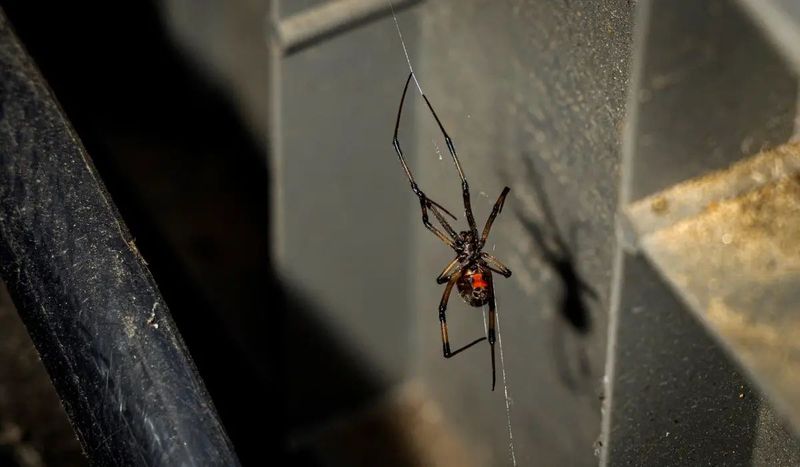
1. Southern Black Widow

Southern Black Widow
© Rigo Pest Prevention

Picture a shiny black bead with legs, tucked under a pile of firewood. That is how many Delaware homeowners first meet the southern black widow.

The female is the one to watch, with a round, glossy body about the size of a pea.

Flip her over and you will usually see the famous red hourglass on her belly. Her web looks messy and tangled, not neat and round, and she likes dark, quiet spots like under shelves, inside old boxes, and near garage door corners.

Males are smaller, browner, and not considered dangerous.

A bite can cause muscle cramps, sweating, and stomach pain within an hour or so. Bites are rare because widows are shy and only strike when pressed against skin.

Wearing gloves when moving stored items is a simple habit that goes a long way.

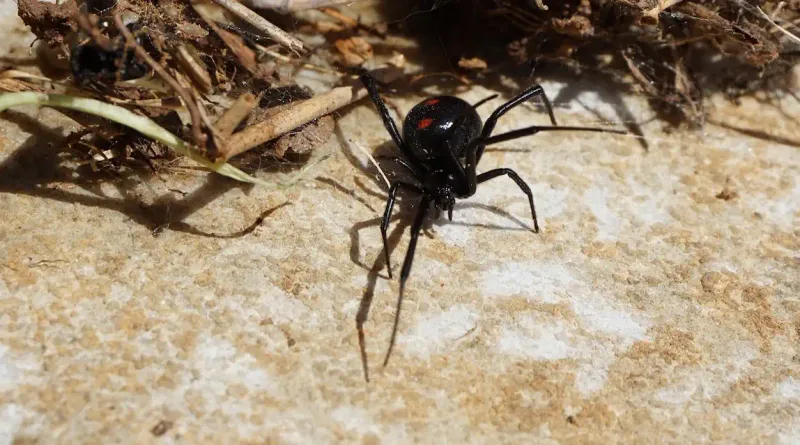
2. Northern Black Widow
Northern Black Widow
© Fromms Pest Control

Here is a fun twist: Delaware sits right where the ranges of two black widow species overlap. So that widow in your crawl space might actually be the northern cousin.

Telling them apart takes a closer look.

On the northern black widow, the red hourglass is usually broken into two separate pieces, almost like it got snapped in half. Many also have a line of red spots running down the top of the abdomen.

Shiny, dark, and fast, the broad-faced sac spider often gets mistaken for something scarier.

Otherwise, it shares the same glossy black coat and round shape.

You are most likely to spot one under basement stairs, in window wells, or inside rarely used outdoor equipment brought in for winter. The venom works the same way as the southern species, so treat any bite seriously.

Clearing clutter near walls removes the hiding spots these spiders love most.

3. Brown Recluse
Brown Recluse
© Bug Identifier

Let’s clear something up first. Brown recluse spiders are not native to Delaware, and confirmed sightings are very rare.

Still, they sometimes hitch rides in moving boxes or furniture shipped from southern and midwestern states.

Look for a light tan to brown spider with a darker violin shape on its back, with the neck of the violin pointing toward the rear. The real giveaway is the eyes.

A recluse has six eyes arranged in three pairs, while most spiders have eight.

Many bites blamed on recluses turn out to be infections or other bugs. If you think you found one, try to safely trap it in a jar so an expert can identify it.

Shaking out shoes and clothes stored in the garage is smart either way.

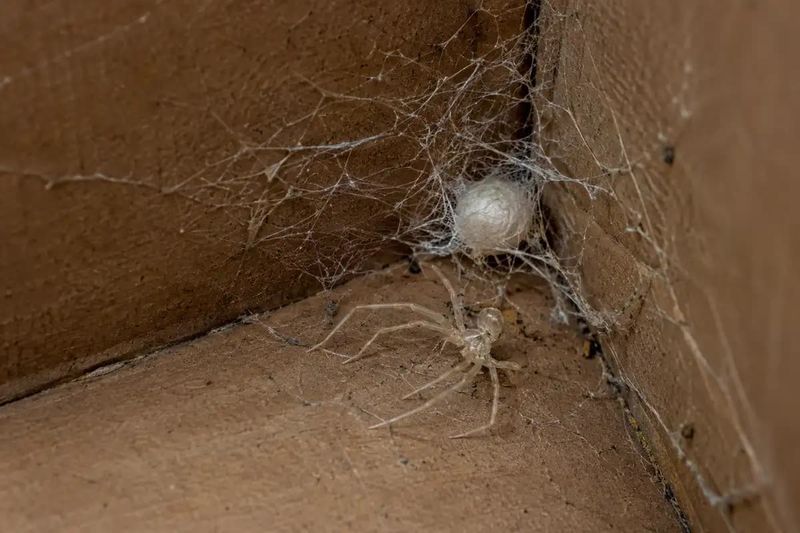
4. Yellow Sac Spider
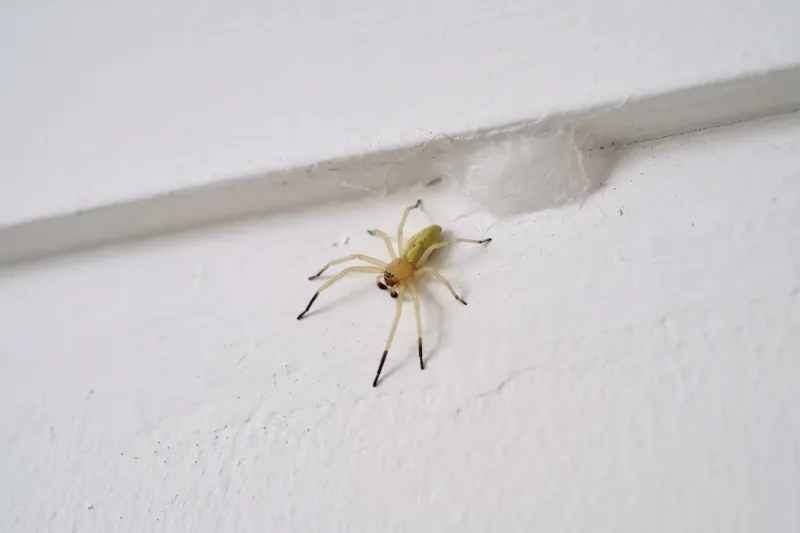
Yellow Sac Spider

Ever found a tiny white silk pouch tucked in the corner where the wall meets the ceiling? There is a good chance a yellow sac spider built it.

These little hunters are among the most common spiders that sneak indoors once autumn arrives.

They are pale yellow or light green, about a quarter inch long, with darker brown jaws and leg tips. Instead of catching food in webs, they roam at night looking for small insects.

That wandering habit is exactly why they bite people more often than many other spiders. Someone rolls over in bed or slips on a glove, and the spider defends itself.

The bite usually stings and may leave a red, sore bump that heals in a week or two. Annoying, yes, but rarely serious.

5. Broad-faced Sac Spider
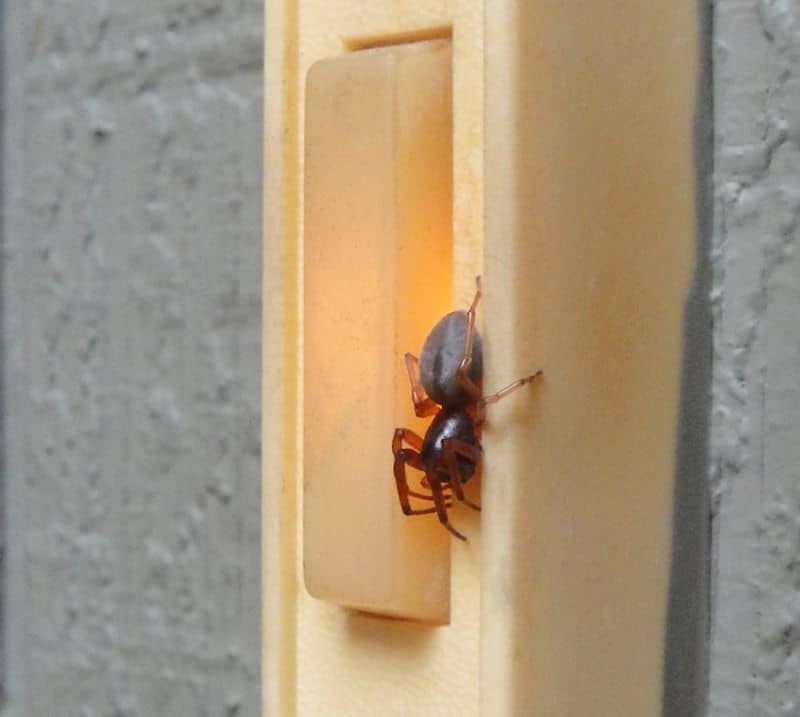
Broad-faced Sac Spider
© USA Spiders

Shiny, dark, and fast, the broad-faced sac spider often gets mistaken for something scarier. It has a reddish-brown front half that looks almost polished and a duller gray or tan back end.

Its name comes from the wide, flat front of its head, which makes its jaws look extra bold. Adults can reach about half an inch, so they look more impressive than the yellow sac spider.

They wander into garages and basements as temperatures drop, often hiding under boards or inside rolled hoses.

Bites are uncommon but can be painful, with some swelling and redness afterward. Cleaning the area with soap and water and using a cold pack usually does the trick.

Did you know? These spiders build silk retreats under tree bark in summer, then trade them for your garage come fall.

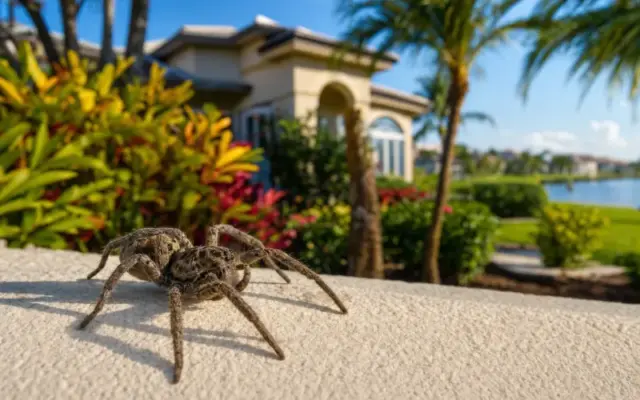
6. Wolf Spider
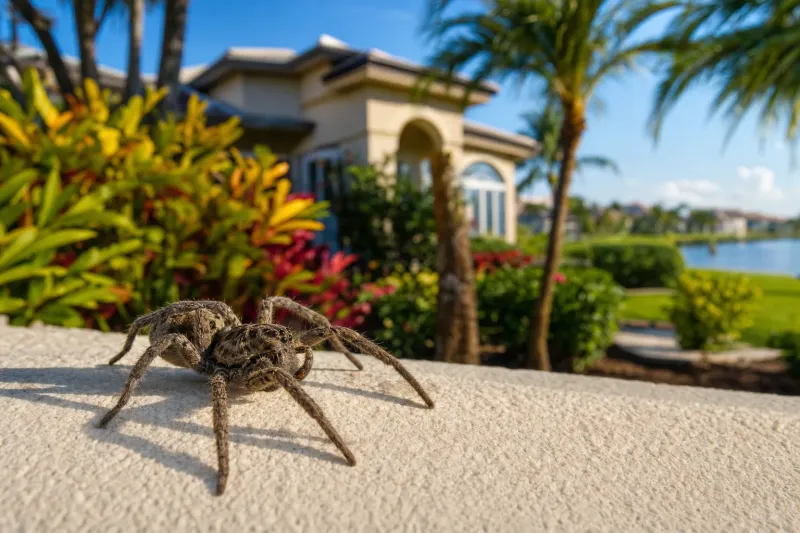
Wolf Spider
© Waves Pest Control

Nothing makes a person jump quite like a big, hairy spider dashing across the garage floor. Wolf spiders are the sprinters of the spider world, and they can be over an inch long including legs.

Most are brown or gray with stripes running along their bodies. Shine a flashlight at night and their eyes glow back at you like tiny diamonds.

Moms carry their egg sacs on their back ends, and later their babies ride piggyback.

Their venom is mild for people. A bite feels a lot like a bee sting and might itch for a day or two.

Truthfully, these hunters are helpful, since they eat crickets, roaches, and other pests. Sealing gaps under garage doors keeps most of them outside where they belong.

7. False Black Widow
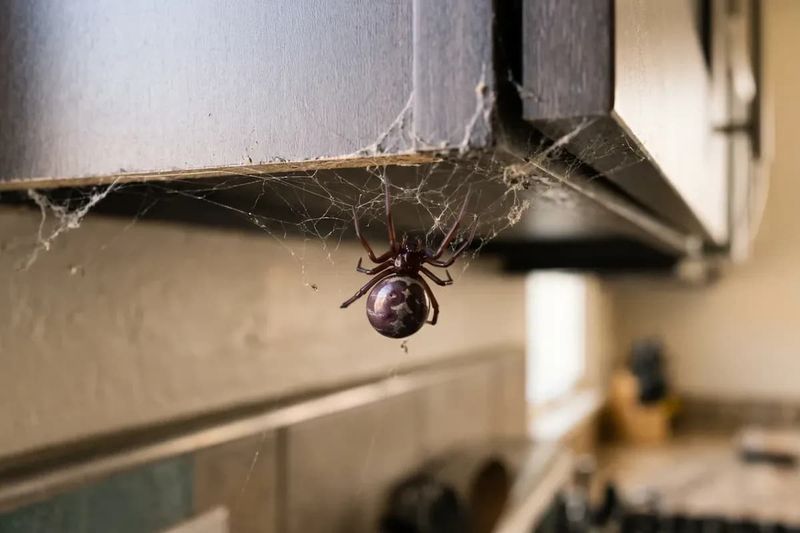
False Black Widow
© Bug Identifier

Talk about an identity crisis. The false black widow looks so much like the real thing that people often panic when they spot one near the water heater.

Its round body is dark brown or purplish instead of glossy black, and there is no red hourglass. Some show faint cream or tan markings on top.

It builds the same kind of tangled web in sheltered corners, which adds to the confusion.

The good news is that its venom is much weaker. A bite may cause some pain and mild symptoms, but it is far less serious than a true widow bite.

Even so, nobody wants to be bitten, so gloves and a good flashlight are your best friends when cleaning dark spaces this winter.

Share this story

OP

Written by

Owen Pruitt

More from Owen Pruitt →

About Gardening Latest

Gardening Latest provides in-depth guides to maintaining and enhancing your garden and backyard. Learn how to make the most of the space you have and create a beautiful garden.

More about us →

Latest stories

  • Wisconsin GardeningHere’s What To Do Next If You Spot A Yellow Jacket Nest Near Your Wisconsin Home

    Here’s What To Do Next If You Spot A Yellow Jacket Nest Near Your Wisconsin Home

    42 min ago
  • Iowa GardeningHearing Coyotes Howl Near Your Iowa Home Late at Night? Here’s What It Really Means

    Hearing Coyotes Howl Near Your Iowa Home Late at Night? Here’s What It Really Means

    43 min ago
  • Massachusetts GardeningHearing Scratching in Your Massachusetts Walls at Night? Flying Squirrels Are One Possibility

    Hearing Scratching in Your Massachusetts Walls at Night? Flying Squirrels Are One Possibility

    1 hr ago
  • Delaware GardeningA Virginia Opossum Crossing Your Delaware Yard on a Cold Night Is Generally Normal Wildlife Activity

    A Virginia Opossum Crossing Your Delaware Yard on a Cold Night Is Generally Normal Wildlife Activity

    1 hr ago
  • Kentucky GardeningKentucky’s Northern Short-Tailed Shrew Has a Venomous Bite, and Your Fallen Leaves Make Good Habitat

    Kentucky’s Northern Short-Tailed Shrew Has a Venomous Bite, and Your Fallen Leaves Make Good Habitat

    1 hr ago

Gardening by state

Stories for your state, and the hardiness zone most of it gardens in.

Keep exploring

Read next

All Delaware Gardening →
Delaware GardeningA Virginia Opossum Crossing Your Delaware Yard on a Cold Night Is Generally Normal Wildlife Activity
Delaware Gardening

A Virginia Opossum Crossing Your Delaware Yard on a Cold Night Is Generally Normal Wildlife Activity

1 hr ago
Delaware GardeningDaily Walnuts and Your Health: Modest Cholesterol Findings, No Proven Brain Boost
Delaware Gardening

Daily Walnuts and Your Health: Modest Cholesterol Findings, No Proven Brain Boost

20 hr ago
Delaware GardeningHow Delaware Gardeners Can Winterize a Rain Barrel Before Freezing Weather
Delaware Gardening

How Delaware Gardeners Can Winterize a Rain Barrel Before Freezing Weather

Yesterday

More from Delaware Gardening

  • Protecting Delaware Bigleaf Hydrangeas From Winter Cold: When a Leaf-Filled Cage Can Help Save Next Summer’s Blooms

    Nov 17
  • Are Delaware’s Winter Bird Feeders Drawing Foxes and Hawks Closer to Your Back Door?

    Nov 17
Back to top

Leave a response Cancel

Your email address stays private. Required fields are marked with an asterisk.

Gardening Latest

In-depth guides to maintaining and enhancing your garden and backyard: how to make the most of the space you have, and how to make it beautiful.

  • Facebook
  • X
  • Pinterest
  • YouTube

We may earn a portion of sales from products or services that are purchased through our site as part of our affiliate partnerships with retailers.

Explore

  • About GardeningLatest.com
  • Contact Us
  • Terms and Conditions
  • Privacy
  • Editorial Note:
  • FTC Disclosure

Newsletter

New garden guides and seasonal tips, straight to your inbox.

We’ll email you a link to confirm. Unsubscribe any time.

Almost there! Check your inbox and tap the link to confirm.

© 2026 Gardening Latest. All rights reserved.

Back to top