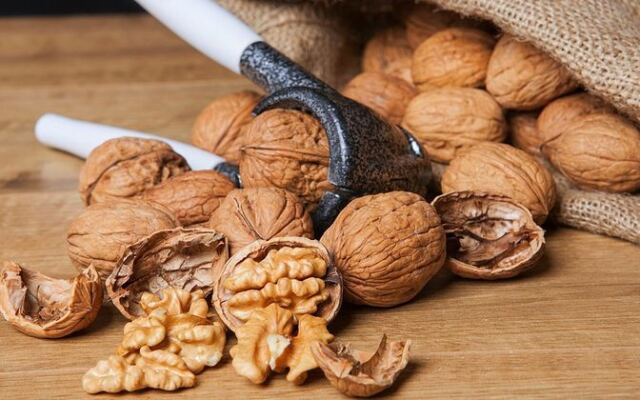
Many Delaware kitchens have a bag of walnuts sitting in the pantry, ready for oatmeal, salads, or snacking. Researchers have studied what happens when people eat them every day, and the results are more modest than the headlines often suggest.
Some findings are encouraging for cholesterol, while others, like brain health, are still unproven. Here is what the research can and cannot tell you about a daily walnut habit.
A handful needs a serving-size reality check
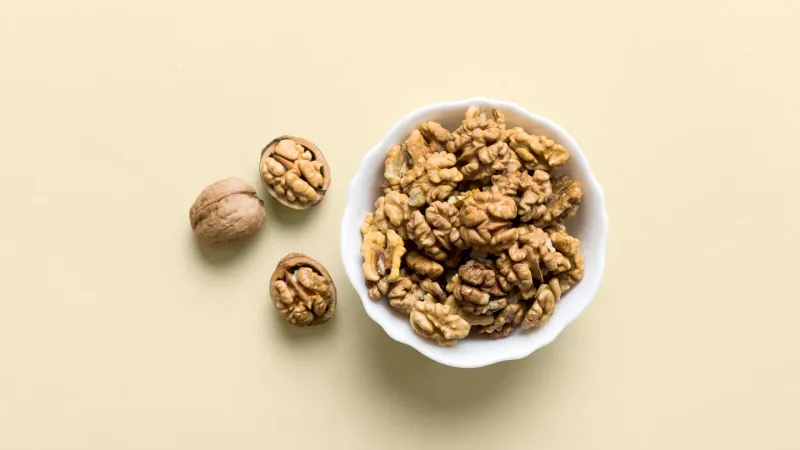
Ask five people to grab a handful of walnuts and you will get five different amounts. Hand size, how tightly you cup your fingers, and whether you pile them high all change the total.
A handful is not a standard serving, so it makes a shaky unit for any health goal.
One easy fix is to measure once. Weigh out an ounce, which is about 28 grams, and pour it into your palm to see what it looks like.
After that, you have a personal picture of the portion, and you can compare it with what you normally scoop.
Numbers help here. According to USDA FoodData Central, raw English walnuts have about 654 calories and 6.7 grams of fiber per 100 grams.
That works out to roughly 185 calories and 1.9 grams of fiber in a single ounce.
Those figures show that walnuts are energy-dense. A small portion carries a fair number of calories, so a casual double handful can add up quickly.
That does not make walnuts a bad choice. It simply means they work best when you think about where they fit in your whole day of eating.
Treat the ounce as a reference point, not a dose. Nobody needs to hit an exact number, and the amounts used in studies do not apply identically to every person.
Knowing what your own handful holds gives you the information to decide how walnuts fit alongside the rest of your meals.
The clearest evidence is a modest shift in blood lipids
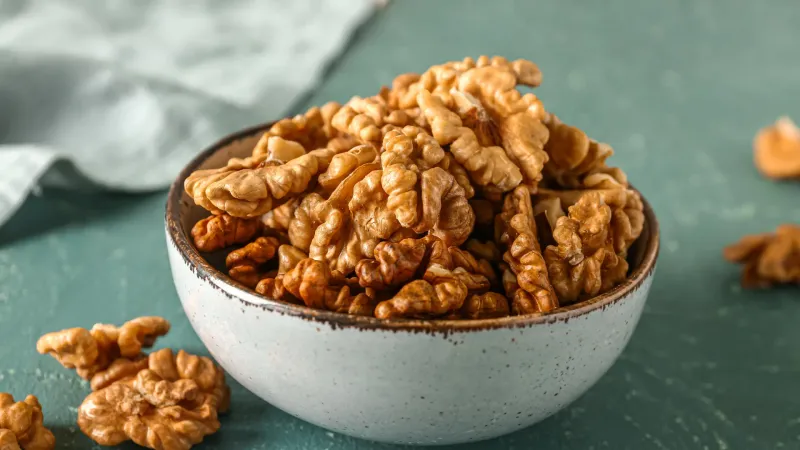
If walnuts have a best-supported benefit, it is in blood fats. A meta-analysis of randomized trials pooled results from 13 studies.
On average, LDL cholesterol dropped about 5.7 mg/dL, total cholesterol about 8.9 mg/dL, and triglycerides about 10.9 mg/dL.
The analysis found no significant change in HDL cholesterol, so walnuts should not be described as a way to raise the so-called good kind. These are averages across groups, and results varied from study to study.
Any one person could see a bigger change, a smaller one, or none at all.
It also helps to separate lab numbers from health outcomes. A lower LDL reading is a useful sign, but it does not prove fewer heart attacks or deaths.
Those outcomes take much longer and larger studies to measure.
The FDA has taken a careful position too. Its qualified health claim says supportive but not conclusive research suggests that 1.5 ounces (about 43 grams) of walnuts per day may reduce the risk of coronary heart disease.
The wording comes with conditions: walnuts should be part of a diet low in saturated fat and cholesterol, and they should not increase total calories.
That is not a prescription, and it is not proof that walnuts prevent heart disease. Walnuts also do not replace medicine or advice from your own clinician.
Think of them as one food that may nudge some numbers in a helpful direction inside a broader heart-healthy pattern.
A general brain benefit has not been established
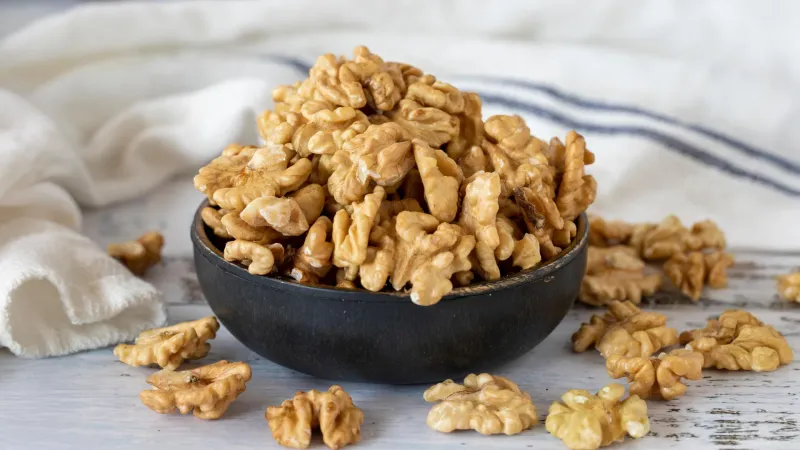
Walnuts look a bit like tiny brains, and that resemblance fuels a lot of bold claims. The actual trial data is less dramatic.
In the two-year Walnuts And Healthy Aging trial, 708 cognitively healthy older adults were randomly assigned to add walnuts or to skip them.
Overall, walnut supplementation did not improve the main outcome, which was global cognition. Some results differed by study site, but those subgroup findings were exploratory.
They raise questions for future research and do not confirm a general brain benefit.
One trial cannot close the book, either. It does not rule out every possible effect, such as benefits in other groups, with other amounts, or over longer periods.
It simply means that nobody can honestly promise that walnuts sharpen thinking.
Observational studies add some confusion. People who eat more walnuts often differ in other ways, such as diet quality, exercise, and education.
A systematic review of walnut and cognition studies found mixed evidence and pointed out the limits of the available trials.
So walnuts should not be treated as protection against dementia or memory loss. If you enjoy them, they can still fit into a balanced eating pattern for other reasons.
For brain health, habits with stronger backing, like staying active and managing blood pressure, deserve the real attention.
Walnuts add some fiber, but they are not a digestion fix
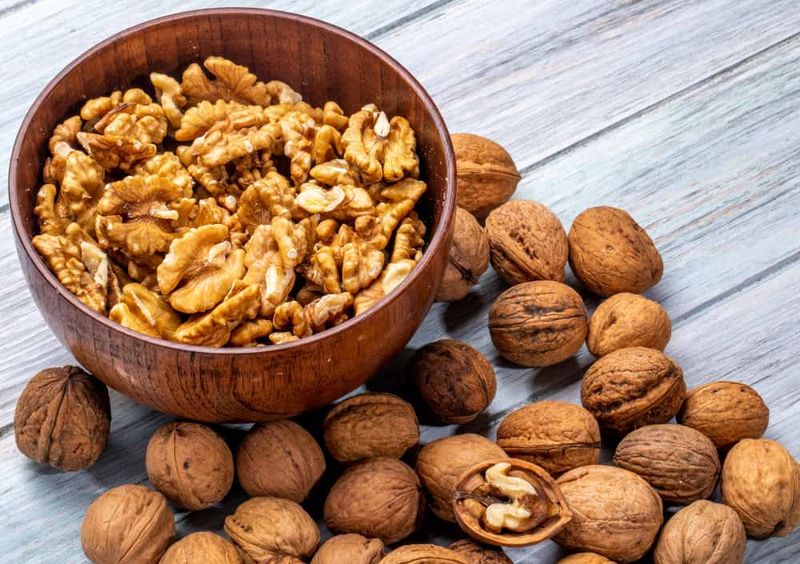
Fiber gets mentioned a lot when people talk about nuts, so it helps to see the actual amount. An ounce of raw English walnuts has about 1.9 grams, based on USDA data.
That is a small contribution, not a major source.
The National Institute of Diabetes and Digestive and Kidney Diseases gives a general adult range of 22 to 34 grams of fiber daily, depending on age and sex. It also advises raising fiber slowly and drinking enough liquids, since a sudden jump can cause gas or bloating.
Walnuts are not a constipation treatment, and a handful will not fix a sluggish gut.
Gut microbes are a separate topic from bowel habits. In a small randomized controlled trial, healthy adults eating 42 grams of walnuts daily showed changes in some gut-microbe measures during the intervention.
Those shifts are interesting, but they are markers, not outcomes. The study did not show that people digested food better or became healthier because of them.
A change in bacteria counts does not automatically mean a clinically meaningful gain.
A practical example: sprinkle walnuts on oatmeal alongside beans, fruit, or whole grains, and drink water through the day. That combination does more for fiber intake than nuts alone.
Walnuts can be one part of the picture without carrying the whole load.
Can walnuts make you feel fuller?
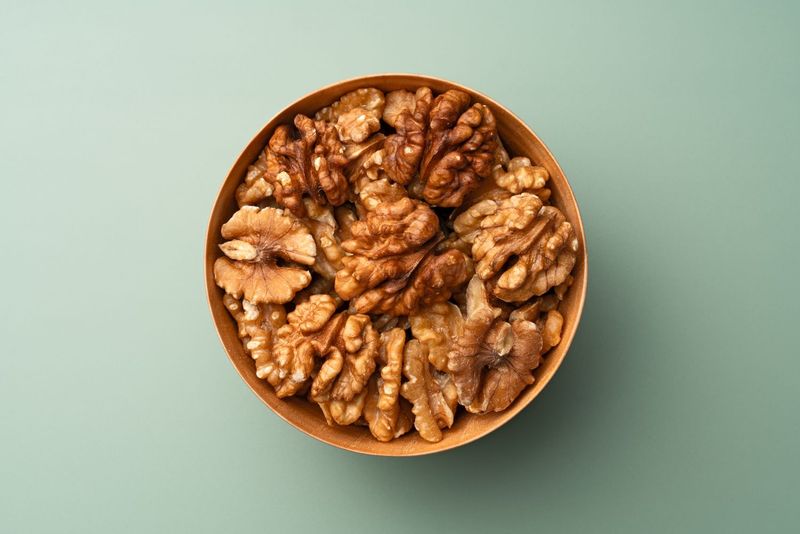
Feeling full after a meal is a real and useful signal, and researchers have looked at whether walnuts help. In a short study lasting four days, walnut consumption increased satiation, which is the sense of fullness during and right after eating.
The same study found no effect on insulin resistance or the metabolic profile.
The limits matter. Four days is a very short window, and the study tells us little about what happens over months.
People can also adjust their appetite later in the day, so feeling full at one meal does not guarantee they eat less overall.
Fullness is also different from body weight. Weight depends on total calories across weeks and years, activity, sleep, and many other factors.
A short-term fullness boost has not been shown to cause weight loss, and it should not be counted on as an appetite-control trick.
Walnuts are energy-dense, so if they leave you feeling satisfied, that is helpful only when they replace something else. Otherwise the extra calories may cancel out the effect.
Your own response may also differ from the study participants, since appetite varies a lot between people.
A simple experiment: notice how you feel after a lunch with walnuts compared with a lunch without. Your personal observation is more useful than any promise from a headline.
Make walnuts a swap, not an automatic add-on
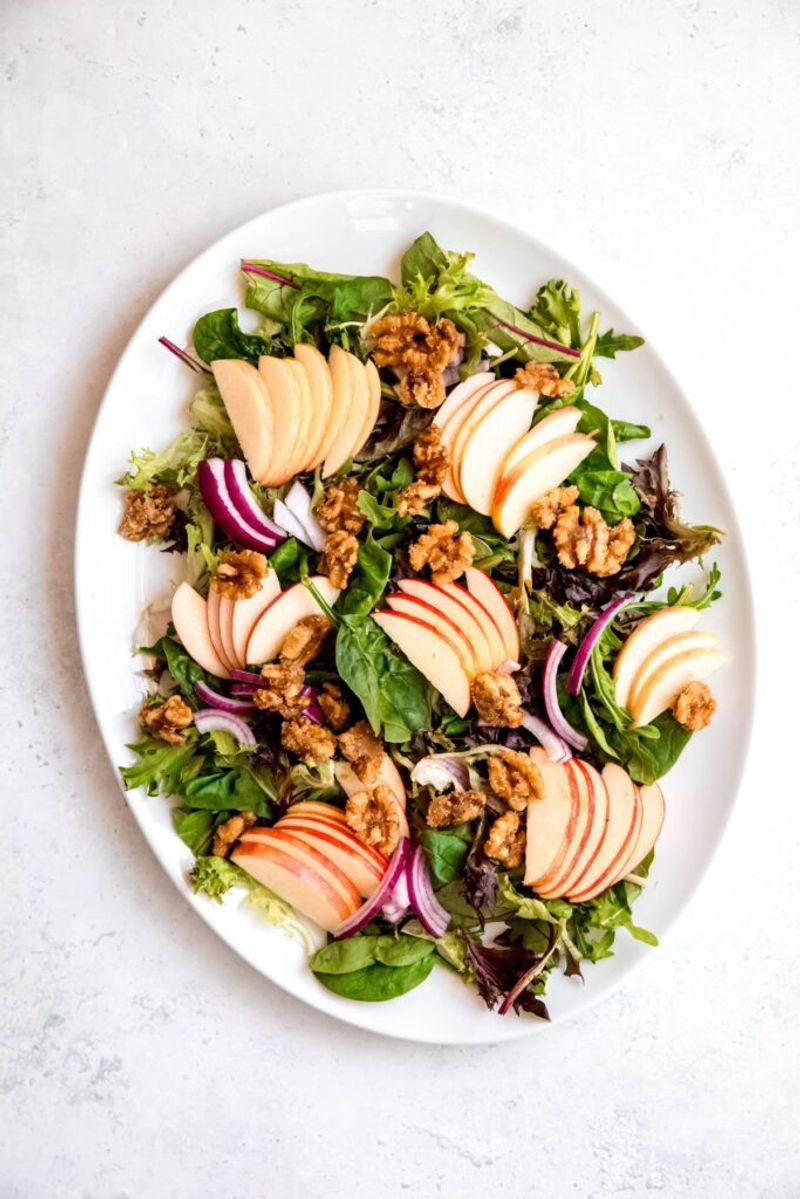
Here is the practical heart of it. Adding walnuts on top of everything you already eat adds roughly 185 calories per ounce, according to USDA nutrient data.
Swapping them in for another food keeps your calorie total closer to where it was.
That distinction connects directly to the FDA’s qualified claim, which says walnuts should be eaten without increasing total calories. In real life, that might mean walnuts replacing chips, crackers, or a sugary snack.
It might also mean using them in place of croutons or fried toppings on a salad.
Choosing what they replace matters as much as the walnuts themselves. Swapping out a high-saturated-fat snack fits the claim’s dietary conditions better than layering nuts onto a snack-heavy day.
No universal serving fits everyone, and nobody needs to start eating walnuts if they do not want to.
Safety comes first for some people. Walnuts are a major food allergen under FDA food allergen labeling guidance.
Anyone with a walnut allergy should avoid them and follow the allergy-management advice from their clinician.
If you are managing cholesterol or heart disease, talk with your care team before changing your routine. A walnut habit is a small tool, not a treatment.
Sometimes the best change is the one that takes something out as well as putting something in.
Share this story