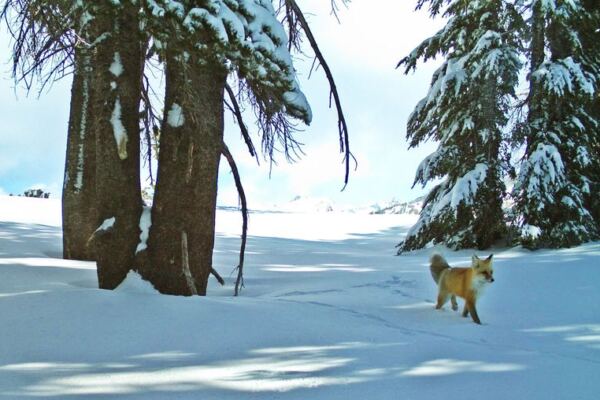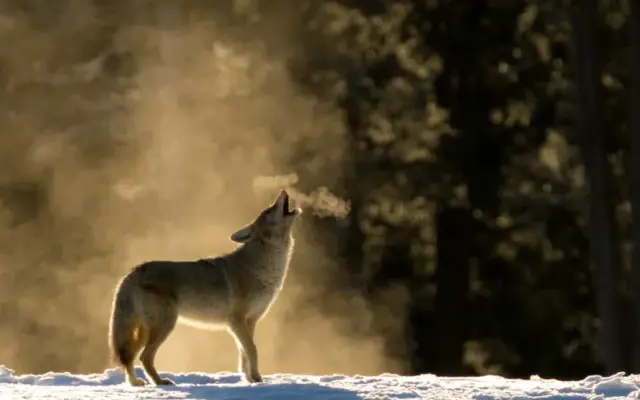
A long, wavering howl drifts through your window after dark, and suddenly you are wide awake. It sounds wild, and it can feel a little spooky when it comes from just beyond the yard.
Coyotes live all around Iowa, and their night songs are far more ordinary than they seem. Knowing what the sounds mean, and what they do not mean, helps you stay calm and still look out for your pets.
A howl is communication, not proof of danger
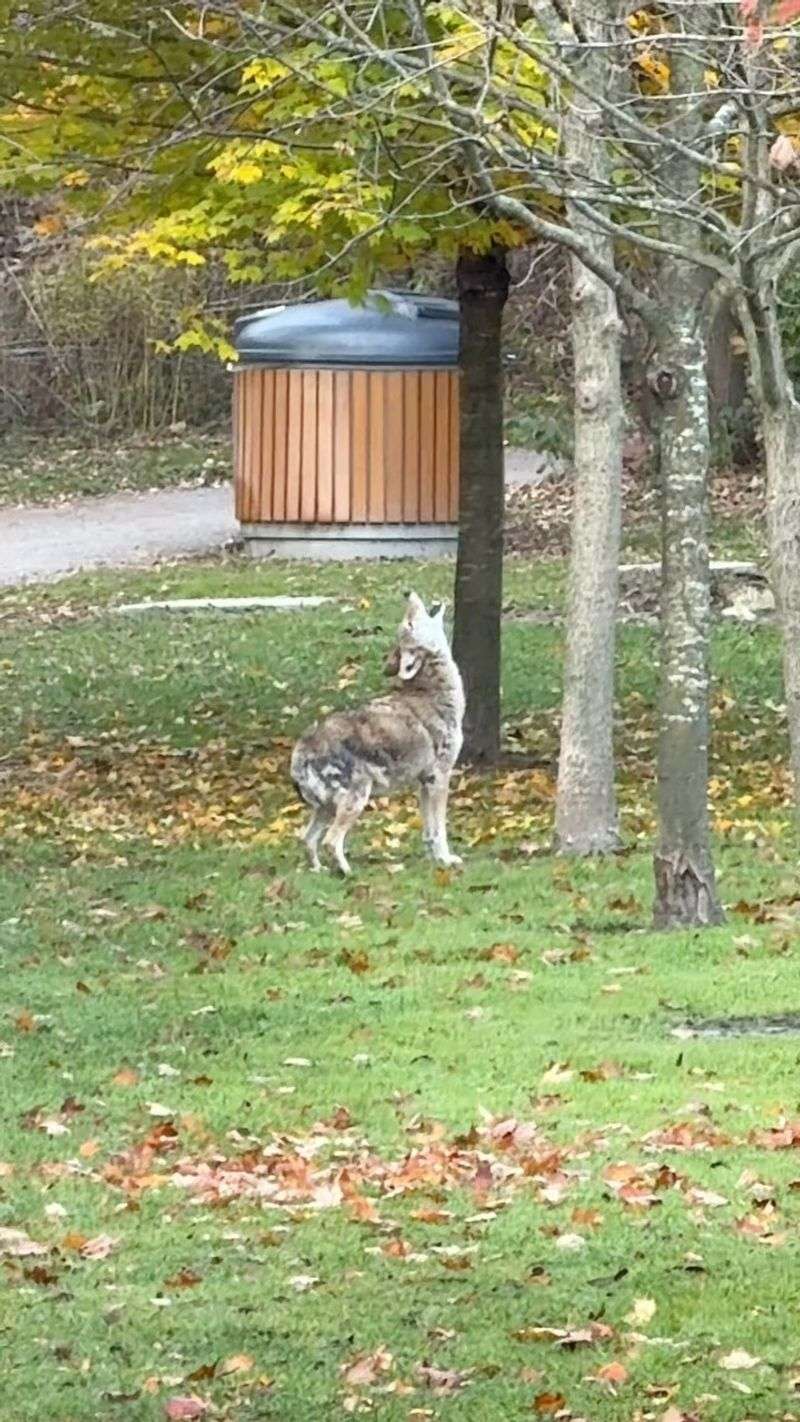
Picture the howl as a coyote version of a phone call. Iowa DNR explains that coyotes use howls, barks, and yips to signal to other family groups and to strengthen social bonds.
Vocalizing can also help them defend their territory by letting neighboring coyotes know the area is already taken.
That is quite different from some of the stories people tell. You may have heard that a howl means the coyotes just made a kill, or that they are about to attack, or that they are heading for your house.
Nothing in Iowa DNR’s description supports those ideas. A howl is a message between coyotes, and it is not aimed at you.
Sound alone also leaves a lot unanswered. From inside your home, you cannot tell exactly what the animals are doing, whether they are resting, traveling, or just chatting across a field.
A chorus tells you coyotes are somewhere out there, and that is about all.
This leads to the most useful idea in this article. Hearing a chorus is one thing, and seeing a concerning encounter is another.
The sections ahead show how to tell the two apart, so you can relax when the night is simply noisy and act when a coyote’s behavior calls for it.
Why residents hear coyotes at night
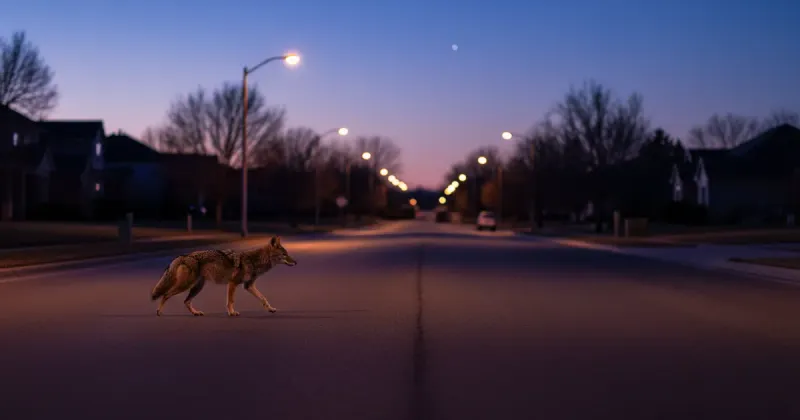
Evening walks and late porch sits are when many Iowans first notice the chorus. According to Iowa DNR, coyotes are active at night, especially in cities and other places where people are busy during the day.
Vocalizing is commonly heard at dusk or during the first hour of darkness.
In less populated areas, coyote activity tends to peak around dawn and dusk instead. So where you live can shape when the animals are moving around and when you are most likely to hear them.
Iowa also has a yearly rhythm. Breeding runs from January through March, pup rearing from April through August, and dispersal from September through December.
Those periods help explain why coyote activity changes over the year.
Still, the clock and the calendar do not solve the mystery of any single chorus. A howl at 11 p.m. in February does not point to one particular cause, and a howl in July does not either.
Treat the time and season as background, and enjoy knowing that nighttime vocalizing is a normal part of coyote life.
A chorus cannot tell you how many coyotes are nearby
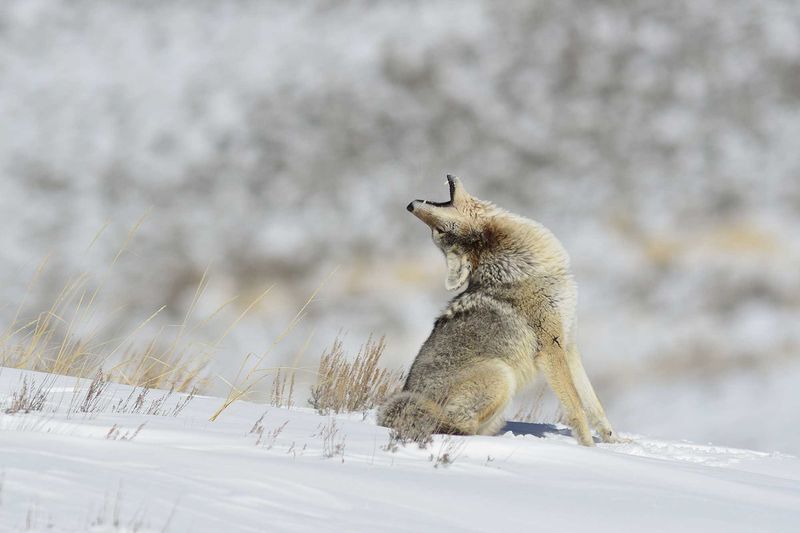
Your ears can play tricks on you here. In a 2017 study, 427 people listened to recordings of one to four coyotes and tended to guess too many, by nearly twofold on average.
Coyotes layer their calls, which can make a few animals sound like a crowd.
There is a catch worth knowing. The study used recordings and participants in southern Texas, so it was not counting coyotes near Iowa homes.
Its lesson is caution about counting by ear, and its numbers are not a formula for working out how many animals are in your neighborhood.
The moon is another popular piece of folklore. A 1996 Saskatchewan study found that group howling was negatively related to increasing moonlight, while lone howling showed no relationship with moonlight.
That does not support the idea that a full moon makes coyotes howl more.
It also does not prove a universal lunar pattern. Neither study lets you read the number or the activity of coyotes from a chorus outside your window, so there is no need to count voices or check the moon.
Judge risk by behavior, not sound
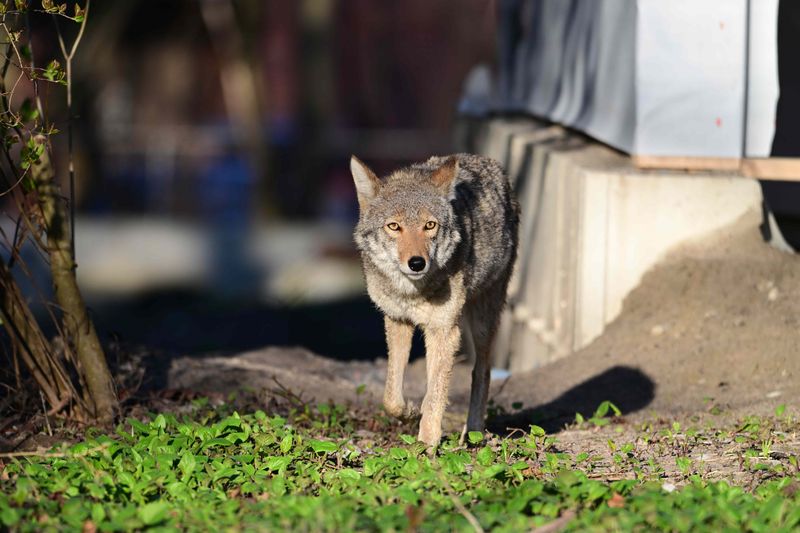
Behavior is the better thing to watch. Iowa DNR notes that coyotes tend to be shy around people.
A coyote that keeps its distance and slips away is acting the way coyotes usually do.
Things look different when a coyote repeatedly approaches people, acts aggressively, or attacks pets. Those signs deserve far more attention than a chorus does.
Howling is not an official danger threshold, so a noisy night does not mean you should worry.
At the same time, no one can promise that every encounter is harmless. Hearing coyotes does not make a neighborhood unsafe, and it does not mean there is zero risk either.
Neither conclusion follows from the sound.
Timing can guide your pet routines. Conflicts with dogs can increase during breeding season and pup-rearing season, so extra care makes sense then.
Keep a closer eye on dogs during those months, and let what you actually see, not what you hear, set your level of concern.
Routine steps can protect pets and reduce conflict
Hearing howls calls for no special action on its own. What helps is a set of everyday habits that keep coyotes from finding easy reasons to hang around.
Iowa DNR’s guidance keeps these steps simple.
Start with food. Bring pet food indoors at night, and secure garbage and other food attractants so nothing tempting sits in the yard.
A latched lid or a garage shelf can do the job.
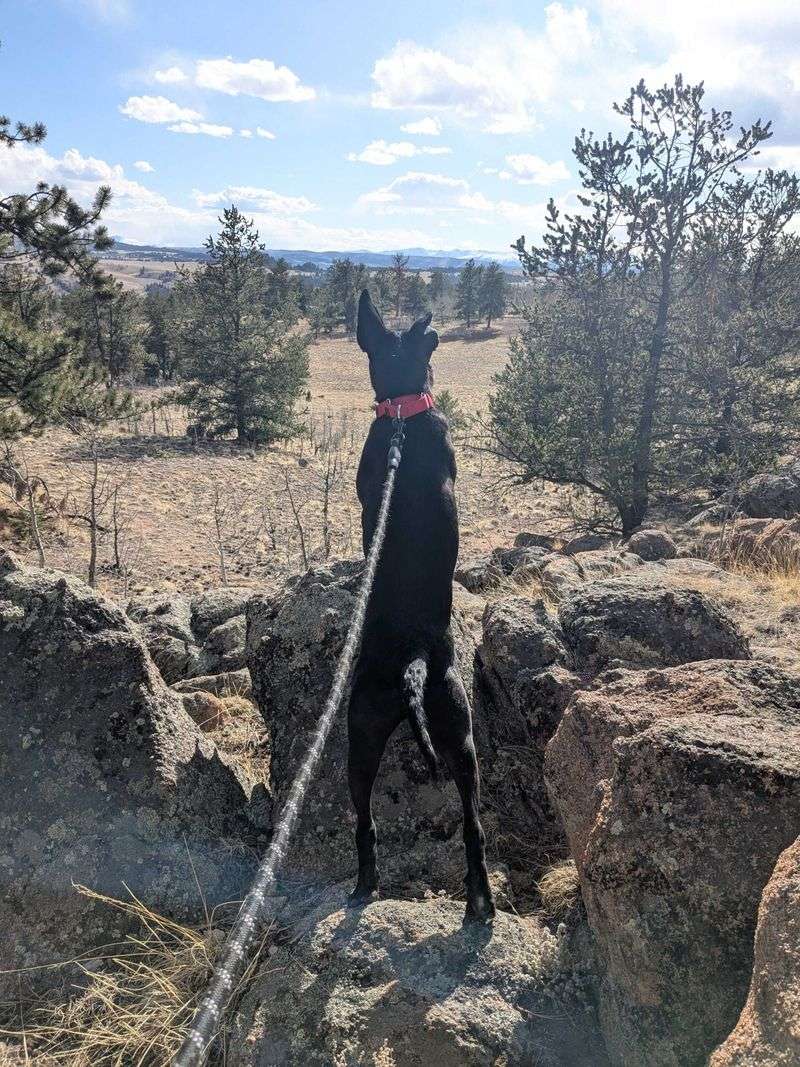
Next, think about your pets. Supervise them when they are outside, even in a fenced yard, rather than letting them roam unwatched after dark.
Where coyotes are known to be present, keep dogs on a leash.
These habits work in the background, whether or not you hear a single howl. Build them into your evening routine, like turning off lights and locking the door.
They are separate from what you would do if a coyote came right up to you, which the next section covers.
If a coyote comes too close, respond safely
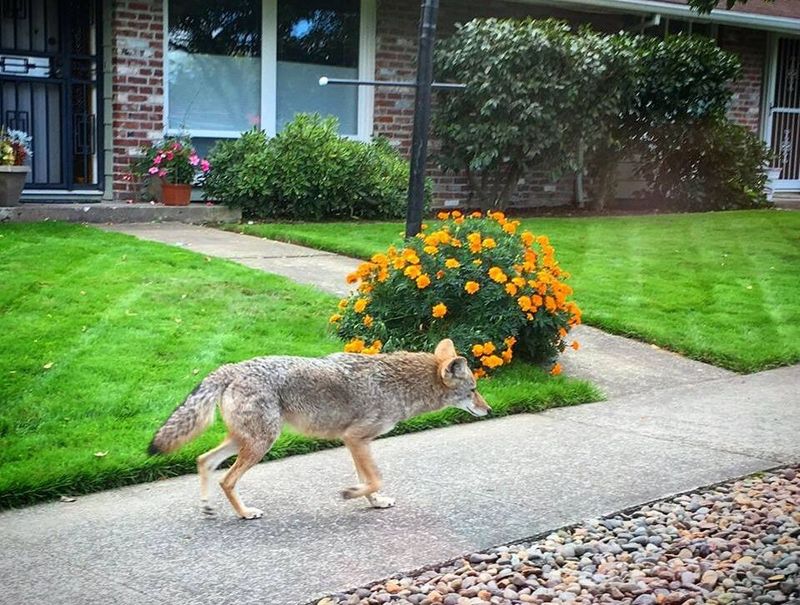
A coyote that gets too close to you is a different situation from one howling down the road. Iowa DNR recommends hazing: make yourself look large and make loud noises.
Stand tall, raise your arms, and shout or clap.
Do not run, and do not chase the animal. Hazing is meant to send a clear message from where you stand, not to start a pursuit.
If the coyote does not leave even after you increase your hazing, move away and report the situation to your city. Local officials can then follow up on an animal that is not backing off.
There are firm exceptions. Do not haze a coyote that appears sick or injured, is cornered, or is with pups.
Back away calmly and give it room instead.
Remember that all of this applies to a close encounter. It is not a reason to go looking for a coyote you hear howling at a distance, and you should never approach one.
Let the sound be a sound
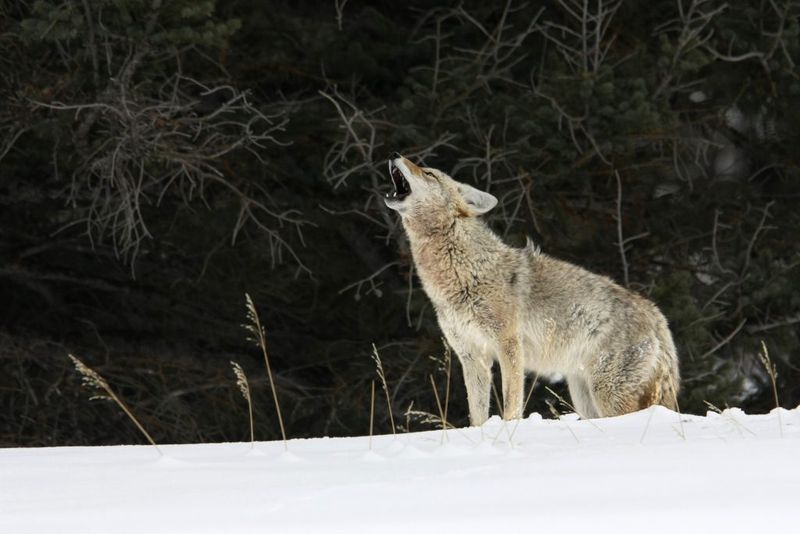
Next time a chorus rises from the dark, you can treat it for what it most likely is: coyotes talking to each other. It is not proof of danger, and it is not a head count.
Let what you see guide your choices, keep your usual pet habits, and save the hazing steps for a coyote that truly comes too close.
A howl in the night says only that the wild neighbors are still out there.
Share this story