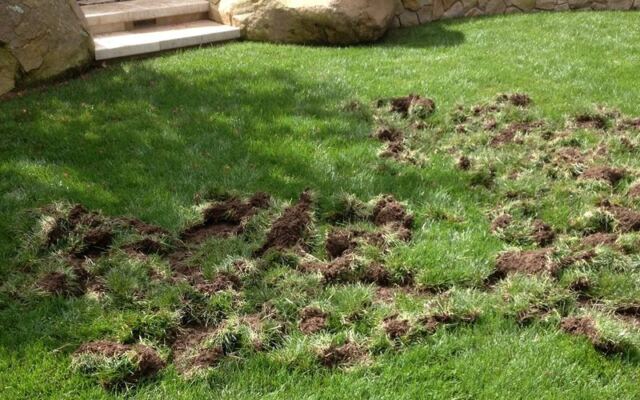
You step outside on a late fall morning and find patches of torn-up turf that were not there the day before. Skunks are one common suspect in Massachusetts, but they are not the only one.
The holes can also leave you wondering about grubs and whether you need to treat the lawn. A little detective work can save you money, effort, and an unnecessary pesticide application.
Skunks are a plausible suspect, not a sure thing
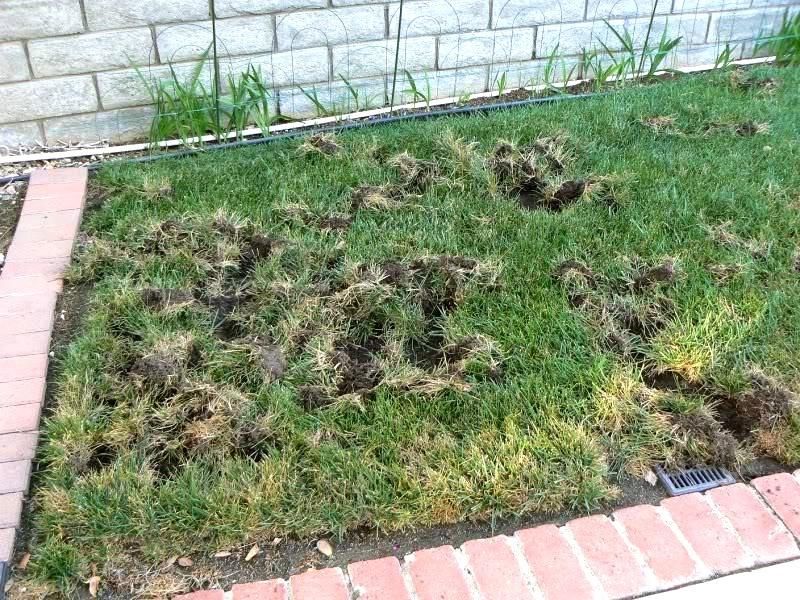
Picture a quiet suburban yard in late October. By morning, a handful of small pits and flipped-over patches of grass have appeared.
Striped skunks are common across most of Massachusetts, so they are a reasonable first guess.
According to MassWildlife, skunks forage by digging small holes in lawns, and they eat insects and other invertebrates. That diet is why a lawn full of soil life can look like an appealing buffet to them.
Penn State Extension describes skunk feeding holes as small, cone-shaped pits or patches of upturned earth, often up to 3 to 4 inches across. That is a useful size to keep in mind.
Holes that size are better described as small and scattered than as huge craters, even if a whole lawn dotted with them looks dramatic.
Here is the catch. Hole shape and size are clues, but they do not prove which animal visited.
Other critters can leave similar marks, and nobody saw the digger at work.
Think of skunks as a likely suspect, not a confirmed culprit. Tracks in soft soil, a motion-activated camera, or a direct sighting at dusk would give you stronger evidence.
Until then, it makes sense to keep an open mind and treat the digging as a clue that deserves a closer look rather than a diagnosis.
The next sections walk through timing, other possible diggers, and how to check the turf yourself.
Late-fall timing does not mean the freeze caused the digging
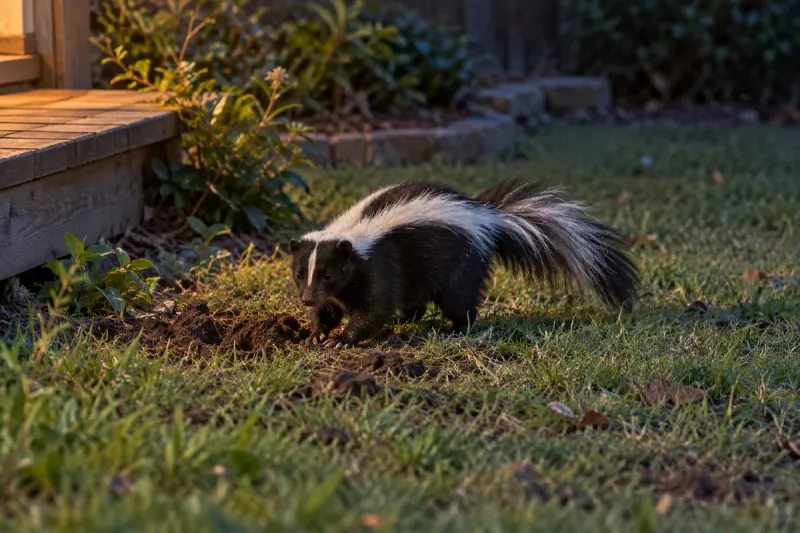
Many people assume skunks dig just before the ground freezes, as if the cold were a starting bell. The real story is about overlapping seasons and temperature, not a freezing deadline.
Frozen ground is not what sets the digging off.
UMass reports in its lawn insect monitoring fact sheet that common lawn grubs are active in the soil from early August through October. By late fall, many are still in the soil, though they may be moving deeper as the weather cools.
Skunks follow the thermometer. MassWildlife notes that skunks sleep when temperatures stay below freezing but can become active on warmer nights.
A mild November evening can bring one out, while a hard cold snap may keep it tucked away.
Put those two patterns together and late-fall foraging becomes plausible. Food is still in the soil, and some nights are warm enough for a skunk to go looking.
That is a seasonal overlap, not a rule. A skunk can dig on a mild night in November or even during a winter thaw, and the freezing of the soil is not the cause.
If you find fresh holes after a warm spell, that fits the pattern, but it still does not tell you who dug them or what they found.
Holes alone cannot identify the animal or diagnose grubs
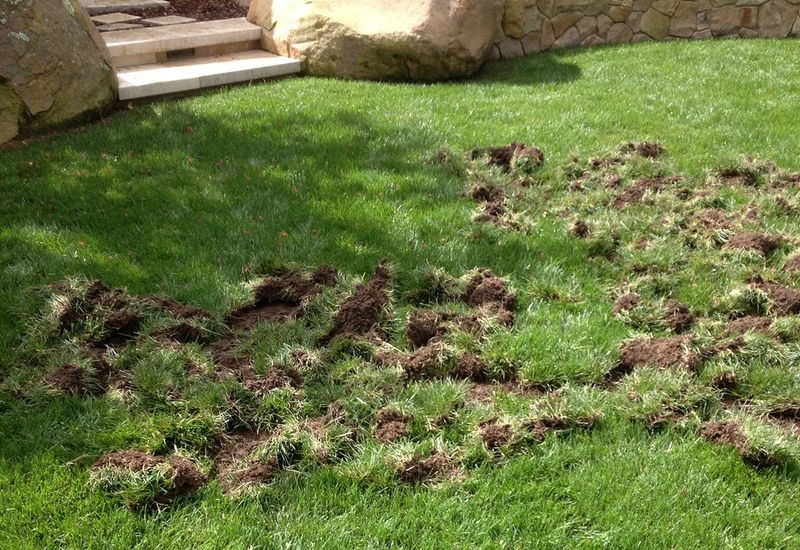
Two separate questions are tangled together here. One is who dug the holes.
The other is what the animal was after. Holes alone answer neither.
Shallow, scattered holes that look like golf divots can come from several animals. University of Minnesota Extension groups skunks, raccoons, and gray squirrels together as animals that can leave this kind of damage.
So a neighbor’s raccoon or a squirrel might be just as guilty.
The food question is just as open. Grubs are one possible meal, but animals may also be hunting earthworms or other soil insects.
UNH Extension says animal digging is not a reliable indicator of grubs. A lawn can also hold grubs without any animal digging at all.
It also helps to separate animal holes from grub damage. Grubs feed on roots, and the result can be thinning patches or turf that lifts easily, almost like loose carpet.
A hole dug by an animal is a different symptom from that.
To complicate things, other lawn problems can look like grub injury. Drought stress, disease, compacted soil, and poor drainage can all thin out grass.
That is why the turf itself needs a close look before anyone decides what is going on beneath it.
A sod sample can check whether grubs are present
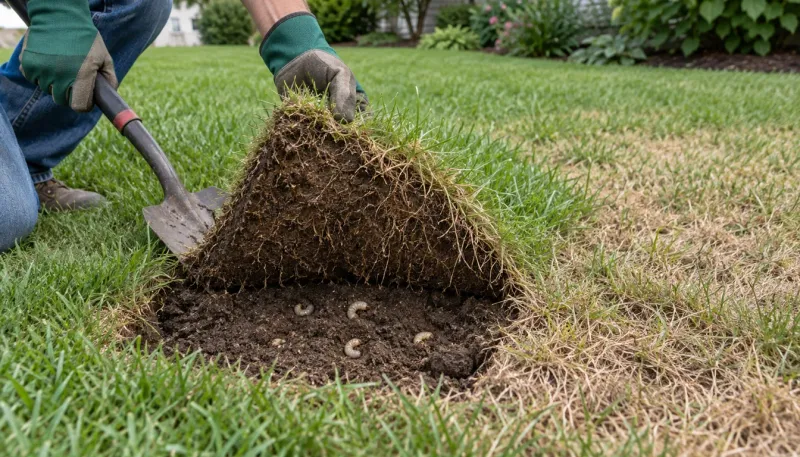
The most direct way to learn what is under your lawn is to look. Pick a spot with thin or damaged turf and cut a square about 6 by 6 inches.
UMass Extension recommends lifting the sod about 4 to 6 inches deep.
Peel it back and break up the soil and root zone with your hands or a trowel. Count any white, C-shaped grubs you find.
Put the sod back afterward and water it so the patch can recover.
That small square covers one-quarter of a square foot. Multiply your count by four and you get a rough estimate per square foot.
If you find two grubs, that works out to roughly eight per square foot, and it is only a rough guess.
One sample is not enough. Grub numbers can vary a lot from one part of a lawn to another, so check more than one affected spot.
Try the edge of a damaged area, where the turf is just starting to thin, as well as a few places where the grass still looks healthy.
Write your counts down with the location and date. Those notes will help if you later talk with a local Extension office.
Interpret a grub count in context
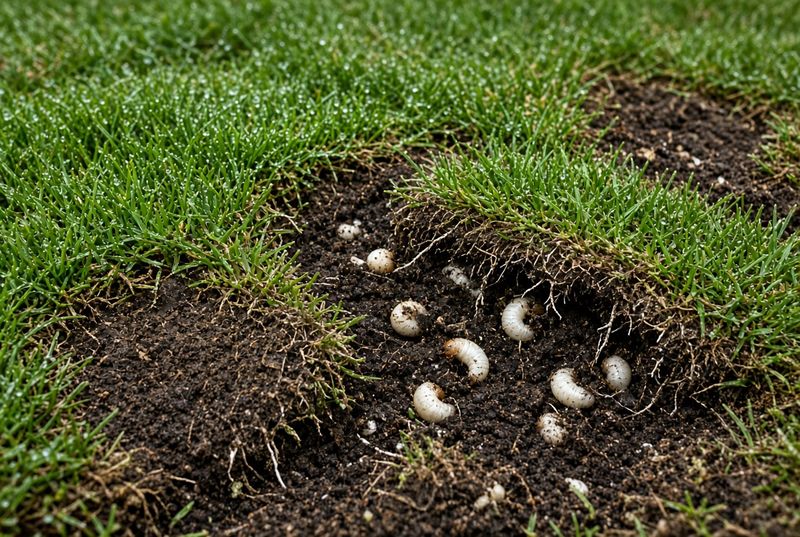
Suppose your sample turns up a handful of grubs. Does that mean trouble?
Not automatically, because a count is a guide and not a universal treatment trigger.
UMass says healthy turf may tolerate roughly 8 to 10 grubs per square foot, while stressed turf may weaken at lower counts. A drought-stricken or shaded lawn has less reserve to lose roots.
UNH Extension takes a firmer line and identifies 10 or more per square foot as a serious infestation.
Those numbers sound close but they come from different sources and settings. Read them as a range, not a single line that every yard must obey.
Other details shape the picture. Grub species matter, since white grub is a general term for larvae of several beetles, and damage and timing vary among them.
Turf health, watering, soil, and sun exposure matter too.
Visible symptoms count the most. Thinning grass that peels up easily and has few roots points toward real injury.
A green, well-rooted lawn with a few grubs under it may need nothing but good care.
If your counts sit near the edge of these ranges, ask your local Extension office to help weigh your lawn’s situation.
Do not treat automatically in late fall
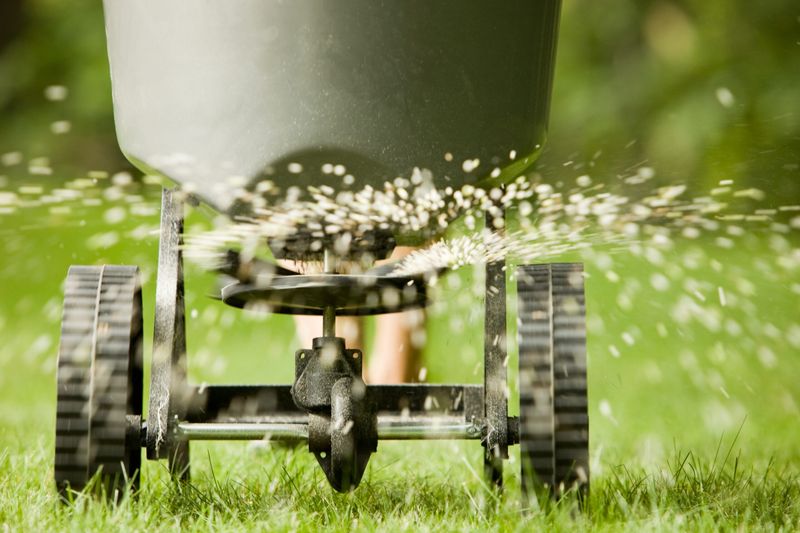
Seeing torn-up turf can make you want to grab a bottle of grub killer. Hold off.
Holes alone do not confirm a problem, and a late-fall spray is often poorly timed.
UMass’s guidance on insect management with insecticides places many treatment windows earlier in the season. It also notes that spring control is normally timed for when grubs are near the surface.
UNH Extension cautions that grubs in late fall are larger and harder to control.
Pesticides also carry possible risks to people, pets, wildlife, and the environment, so they should follow a confirmed need. Treating the lawn is not a reliable way to stop a skunk from digging either.
A sensible path looks like this. First, confirm the diagnosis by checking the turf and sampling in more than one spot.
Next, look at current local Extension guidance for your area. Finally, read and follow the product label if you still decide a pesticide is warranted.
The UMass monitoring guide also suggests watching the lawn over time. Often the calmer move in late fall is to repair the damage and plan ahead for next year.
Reduce attractants and give skunks room to leave
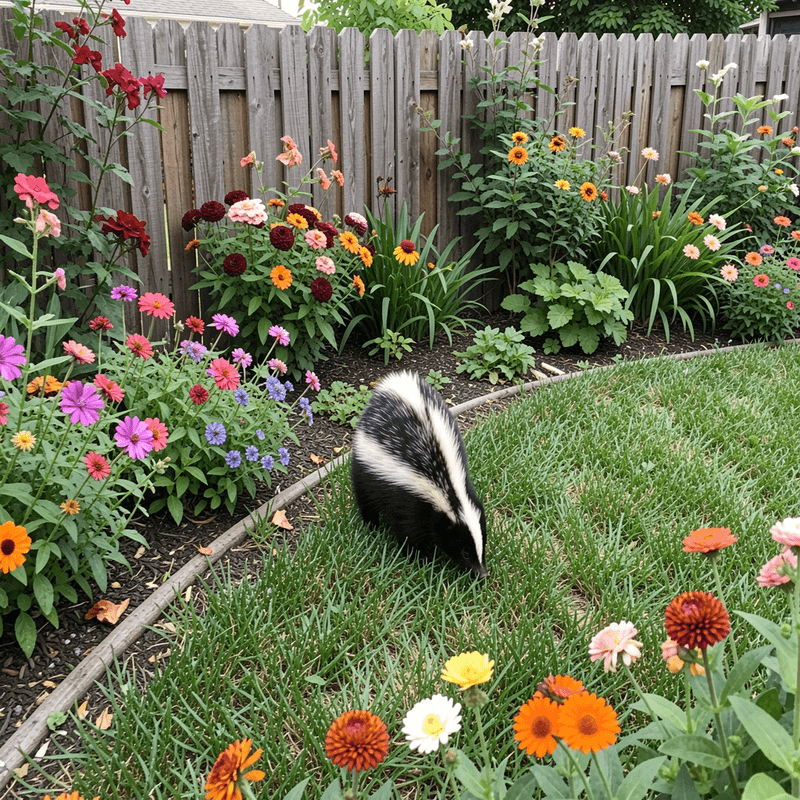
You cannot control the weather, but you can make your yard less inviting. MassWildlife advises securing garbage and compost, cleaning up spilled birdseed, and feeding pets indoors.
Each of these removes an easy meal that might bring wildlife around.
Try a quick evening routine. Snap lids on trash cans, close the compost bin, sweep up seed below feeders, and bring pet bowls inside.
These steps are low-risk and help with raccoons too.
If you see a skunk, give it plenty of space. Do not approach it, corner it, or try to handle or trap it.
Most skunks will wander off on their own if they are left alone.
Rabies is rare but serious. The Massachusetts Department of Public Health lists skunks among the wild mammals in which rabies has been found.
If a person or pet may have been bitten, scratched, or otherwise exposed, contact a health care provider, your local board of health, or a veterinarian right away, depending on who was exposed.
A torn-up lawn is annoying, but it heals. A calm response keeps both you and the wildlife safe.
Share this story