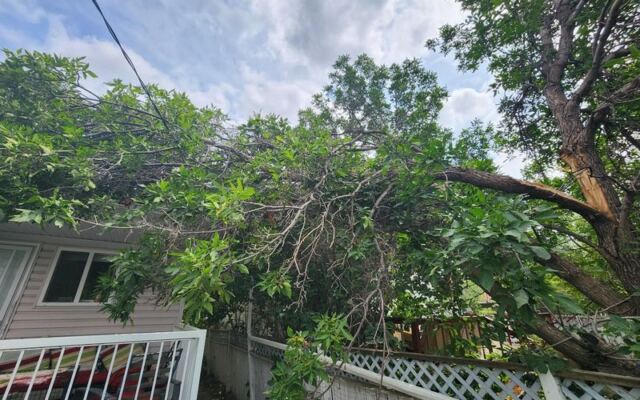
A big limb sags over your fence, dropping leaves in your yard and blocking the sun. It seems simple to grab a saw and fix it.
But in Kentucky, where the cut stops matters, and the fence may not be the line you think it is. Here is what the law lets you do and where the risks begin.
Kentucky generally lets you trim encroaching branches to the boundary
Kentucky recognizes a limited self-help remedy for owners whose neighbors’ trees reach across the line. In Schwalbach v.
Forest Lawn Memorial Park, the Court of Appeals described the adjoining owner’s right to cut intruding branches back to the property boundary. The remedy is trimming, not taking over the tree.
The Court of Appeals repeated the same boundary-line approach in Saufley v. Reed, a case about vegetation crossing a fence line.
So the general rule is fairly settled: what hangs over your land can be cut back to where your land ends.
Two limits matter. First, the limit is the actual legal boundary, and a fence by itself does not necessarily mark it.
Second, the right does not reach past that line, and it does not let you remove the neighbor’s tree.
Harm is where the answer gets less clear. Pruning that damages the neighbor’s tree may create legal risk, but the cases reviewed do not set a precise threshold for when pruning damage becomes excessive or unlawful.
Treat the rule as permission to trim at the line, not permission to do whatever the cut results in.
Is the fence actually on the property line?
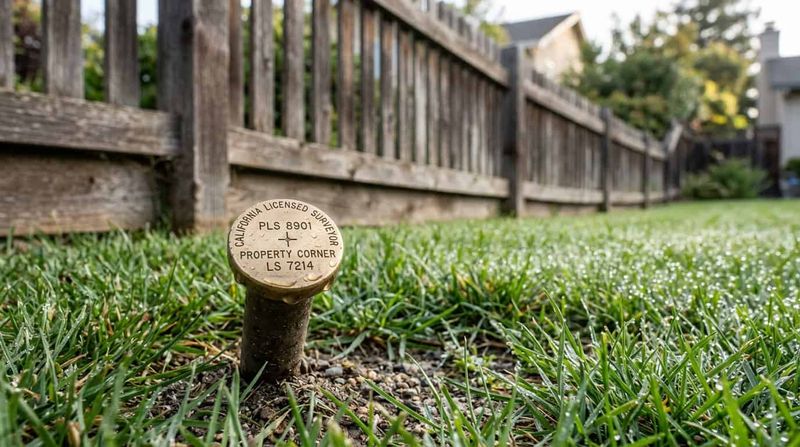
Fences wander. Owners build them a little inside or outside the true line, or replace them years after the original was put up.
That is why a fence is a clue, not proof.
Kentucky’s cases describe the trimming right by reference to the property boundary. As the Court of Appeals discussed in Saufley v.
Reed, the fence line and the legal boundary are not the same thing. If you cut to the fence and the real line sits farther back, you may be cutting on the neighbor’s side.
Pause if anything about the line is uncertain. Maybe your deed description looks odd, the neighbor disputes where the line runs, or you cannot tell who owns the tree because the trunk sits near the border.
In those cases, do not cut the trunk and do not guess.
A survey is a practical option when the line is truly in doubt. It is not a universal legal requirement, and many owners with a clear, agreed boundary never need one.
Legal advice can also help when ownership of the tree itself is contested.
Think of it like measuring twice before cutting. A few days spent confirming the line costs far less than a dispute over a cut made on the wrong side.
The right to trim does not settle how much pruning is too much
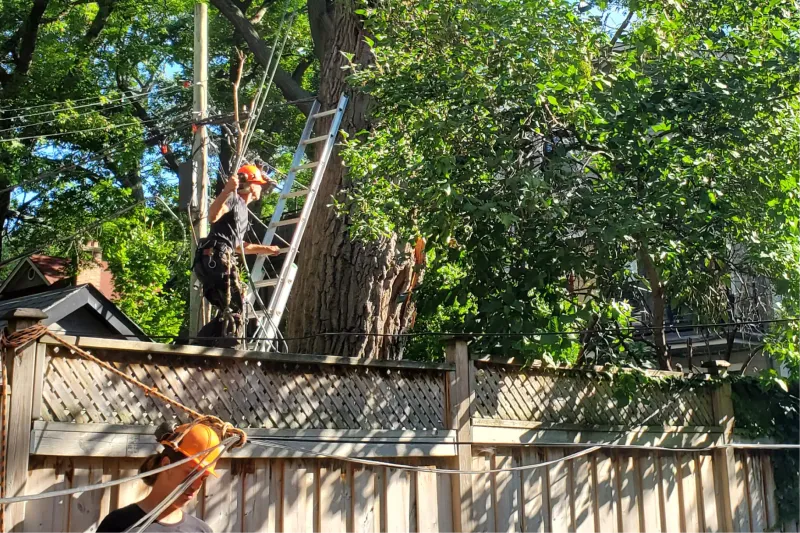
Cutting branches that cross the boundary is one thing. Pruning so hard that the neighbor’s tree is harmed is another.
The first is the recognized remedy, and the second may create legal risk.
The reviewed Kentucky cases give no numerical or tree-health test for excessive pruning. There is no safe percentage of the crown to remove, and no rule that spells out when a cut becomes too much.
Anyone who tells you otherwise is going beyond what the cases say.
The facts in Saufley v. Reed were unusual: poisonous bushes extended across a fence line and cattle died.
The court applied the boundary-trimming rule to those facts. It is helpful support for the general rule, but it does not decide every dispute about excessive pruning.
Good tree care offers a practical guide even though it is not a legal test. University of Kentucky Extension warns in its pruning guide that topping damages a tree’s form and can shorten its useful life.
It also recommends an arborist for work on large trees.
So keep cuts clean and limited to the overhanging limbs. Avoid chopping a tree flat at the fence or making random cuts, since those are the kinds of results most likely to start an argument.
Tree damage does not automatically mean treble damages
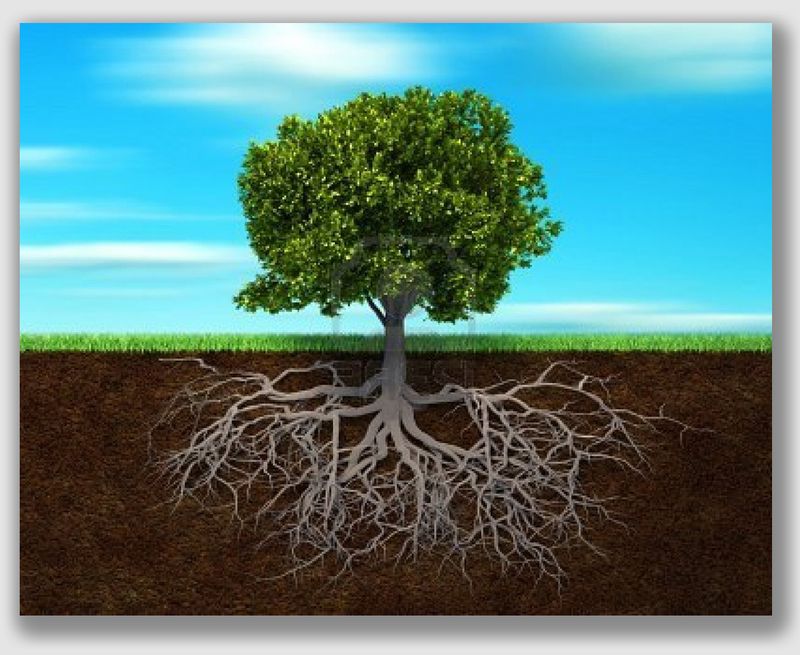
Some people hear that damaging a neighbor’s tree means paying triple. That overstates the law.
Kentucky has a timber statute, KRS 364.130, but its wording is narrower than many assume.
The statute addresses a person who, without legal right or color of title, cuts or saws down another’s timber to convert it to his own use. It provides treble stumpage value and treble property damages in that situation.
The listed elements matter: cutting down timber, lacking legal right, and converting it to one’s own use.
Ordinary branch trimming at the boundary looks different. Under Schwalbach, an adjoining owner has a recognized right to cut intruding branches back to the line, so that conduct is not the same as cutting down someone’s timber without any right.
That does not mean damage never matters. A tree that dies or is hurt after pruning can still lead to a dispute, and cutting past the boundary can create real risk.
But the death or damage of a tree does not by itself establish treble damages.
Whether the statute applies depends on the conduct and the facts. No one can honestly predict an award from a general article, so if a real dispute has started, case-specific legal advice is the sensible next step.
A hazardous tree is not automatically your neighbor’s legal responsibility
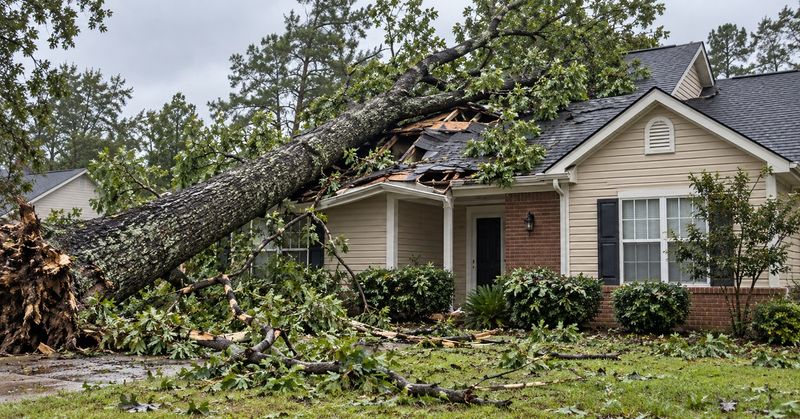
A rotting or leaning tree feels different from a branch that is merely annoying. Many owners assume the neighbor must remove it.
Kentucky’s cases do not go that far.
In Schwalbach, the dispute involved ordinary leaves and debris from a healthy tree. The court’s remarks about a dead and dangerous tree possibly requiring removal or creating liability were dicta, meaning a hypothetical comment rather than a ruling.
The Court of Appeals in Saufley likewise treated that subject as a limited hypothetical. Neither case establishes a blanket duty for neighbors to remove every hazardous tree.
Facts would matter in a real dispute: how dangerous the tree is, whether the neighbor knew about it, and where it stands. Do not assume a particular remedy is available, and do not assume you can cut it down yourself.
The overhanging-branch right stays separate from this question. You may trim limbs over your land to the boundary, but a hazard claim against a neighbor is a different matter.
If a tree looks ready to fall, ask a qualified attorney about your situation and an arborist about the danger.
Plan the work around safety and local rules
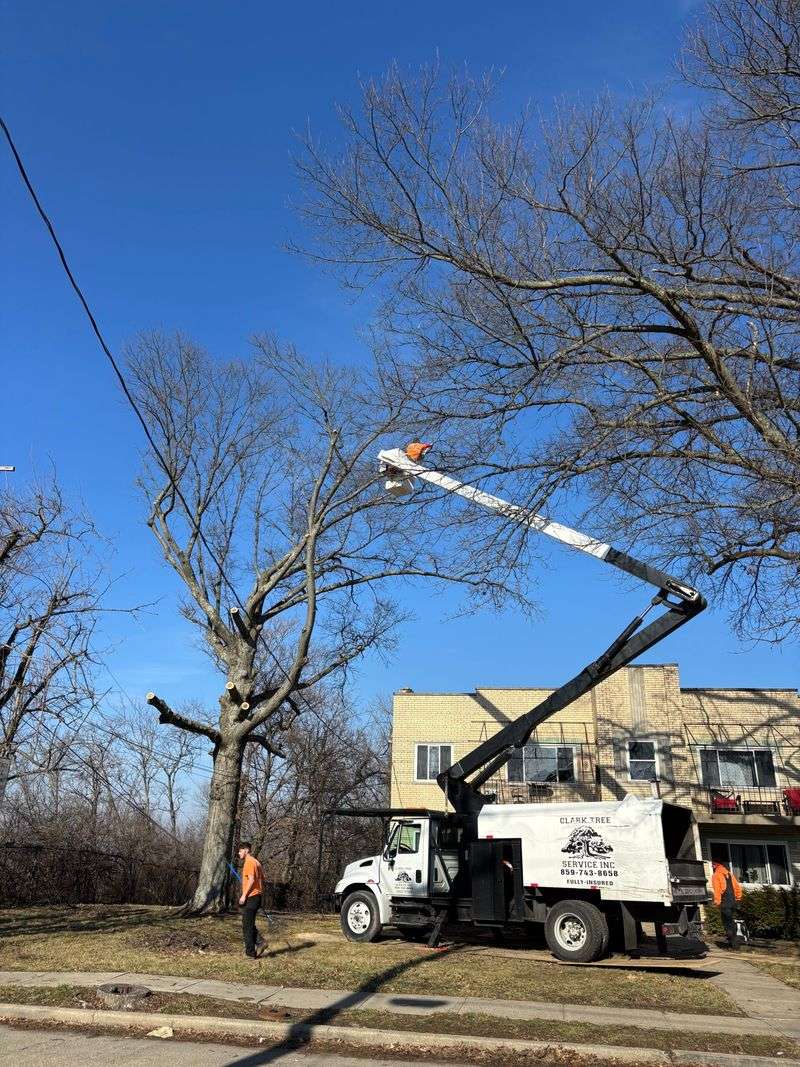
Some steps are smart even though no court requires them. Talking with your neighbor first often ends the problem before it grows.
Photos of the overhang, taken before you cut, give you a record. The reviewed cases, including Saufley, do not make either one a prerequisite to ordinary boundary trimming.
For large or complex limbs, hire an arborist. University of Kentucky Extension recommends in its pruning guide that professionals handle work on large trees.
That protects both you and the tree.
Power lines change everything. According to OSHA’s tree trimming guidance, work within 10 feet of a power line must be done by trained, experienced line-clearance tree trimmers.
Do not try it yourself, and stay off ladders near the lines.
Also think about who owns the ground the tree grows on. If it stands in a public right-of-way, or a city or town may have its own rules, check locally first.
Kentucky’s Tree Owner’s Manual notes that municipalities may regulate public trees and tree care.
A call to city hall takes minutes. It can spare you a fine or a surprise from a rule you never knew existed.
Use the actual boundary as your guide
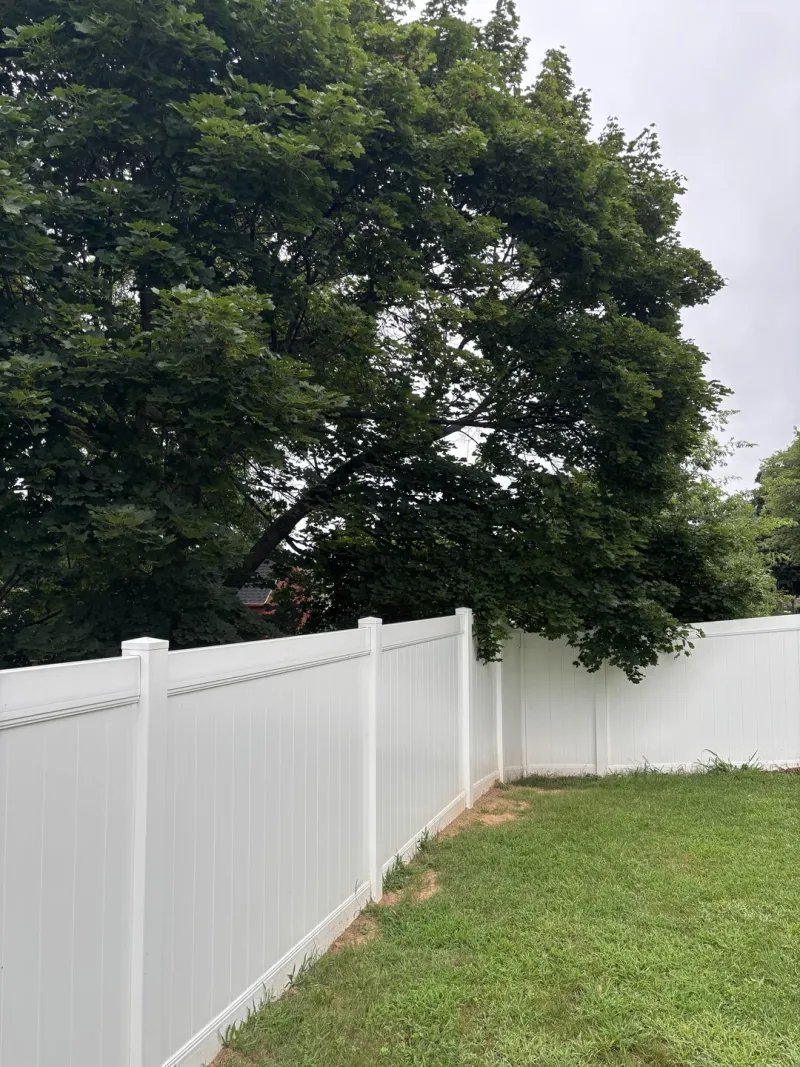
Kentucky generally lets you trim overhanging branches back to the actual property line, not automatically to the fence. Pruning that harms the neighbor’s tree may create legal risk, though the cases do not set a precise threshold.
Treble damages are not automatic either, as Saufley and the related case law show.
If the line is disputed, confirm it first. For hazardous or complex work, get qualified help.
A fence shows where someone built, but the boundary decides where you can cut.
Share this story