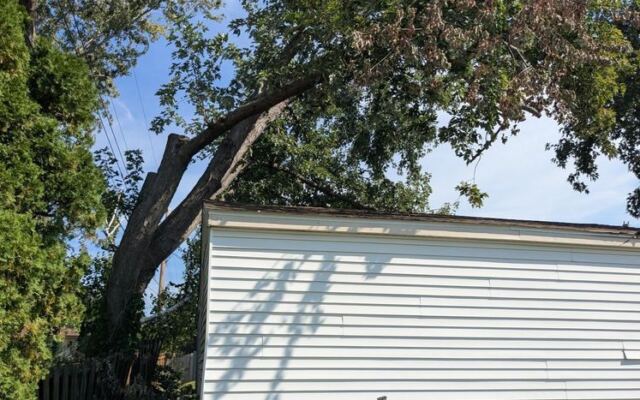
A heavy limb hanging over your roof can make every forecast of ice feel like a threat. Many Massachusetts homeowners wonder if they can simply cut it back before the storm arrives.
The answer is yes in a narrow sense, but there are limits that can trip you up. Knowing them now can save you from a legal headache and a dangerous afternoon.
Massachusetts recognizes a limited right to trim overhanging branches
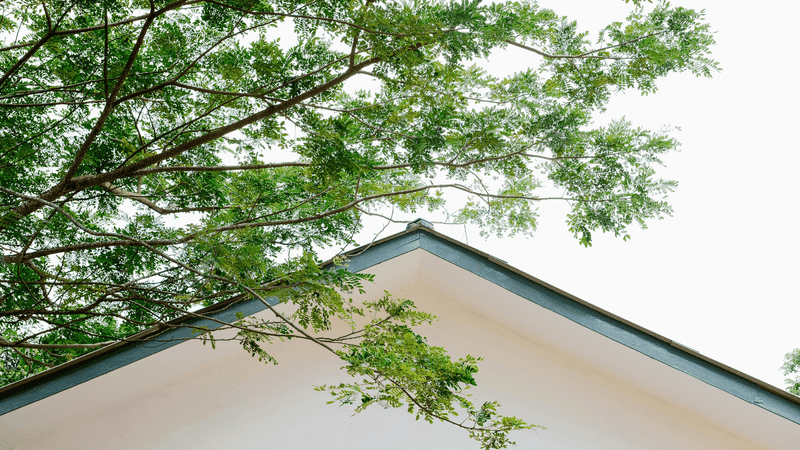
Picture a big maple whose trunk stands in your neighbor’s yard, but whose limbs stretch over your driveway. Massachusetts courts have long recognized that you may use self-help to cut back the branches that reach over your land.
The Supreme Judicial Court discussed this kind of right in Ponte v. DaSilva, and an older decision, Michalson v.
Nutting, is part of the same line of cases.
Notice where this rule comes from. It is common law, meaning it was built up through court decisions over time.
There is no special state statute that gives homeowners a general right to prune before winter storms, so you cannot point to a law that says storm season changes anything.
The key idea is the difference between trimming and taking control. You may remove the part of a branch that has crossed into your airspace.
You are not taking charge of the neighbor’s tree, deciding how it should be shaped, or removing it because you would like a better view or fewer leaves.
Think of it as a narrow tool for a narrow problem. It deals with the piece that intrudes on your property.
It does not settle who owns the tree, whether local rules apply, or who is responsible if something falls, and the next sections take those questions one at a time.
Your right to cut stops at the property line
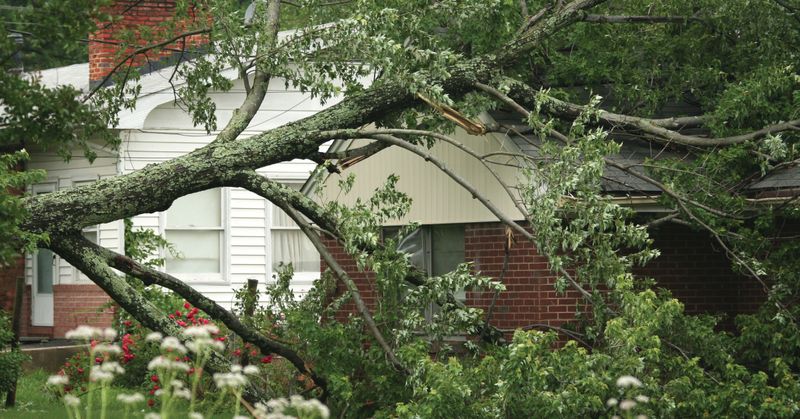
Here is where many people go wrong. The right to trim covers only the portion of the branch that crosses the boundary above your land.
You cannot step into the neighbor’s yard to reach the trunk, and you cannot cut on their side of the line, even if the limb looks dangerous to you.
If you need access to the neighbor’s property to do the work, get their consent first. The rule is about branches and roots that encroach on your side, not about permission to come onto their land.
A friendly conversation or a short written note can prevent a bigger dispute later.
Cutting also has to be done with care. The cases recognize a right to remove the encroaching part, but that is not a license to recklessly damage the rest of the tree.
In Smith v. Silva, the Appeals Court looked at a tree dispute in which wrongful cutting of someone else’s trees can lead to substantial damages under Massachusetts law.
Boundary trees raise another wrinkle. If the trunk stands right on the line, ownership and rights may be different, and the ordinary overhanging-branch rule may not answer the question.
Older cases like Michalson deal with the encroaching limb, not shared trunks. When a trunk straddles the line, talk with the neighbor and consider legal advice before anyone picks up a saw.
Local rules may require a check before you prune
The general rule about boundary pruning is not the end of the story. Some trees and some places come with extra restrictions.
Before you cut anything, take a minute to figure out what kind of tree it is and where it stands.
State law limits work on public shade trees. Under Chapter 87, Section 3, cutting or trimming a public shade tree generally requires the tree warden’s permission.
A tree near the street may fall into that category even if it looks like it belongs to the yard next door.
Designated scenic roads add another layer. The scenic road statute sets rules for certain work along those roads.
Massachusetts also lets towns adopt bylaws, and the state’s guide to laws protecting community trees explains how these protections fit together.
Local variation is real. Somerville, for example, has its own tree removal guidelines for private trees.
That does not mean every town has the same rule, and it does not mean you need a permit for every private branch that crosses a line.
If you are unsure whether a tree is public, whether the road is scenic, or whether your town has a bylaw, call the town hall, the tree warden, or the planning office. A quick call before storm season is far easier than sorting out a violation afterward.
Storm preparation is not a reason to take pruning risks
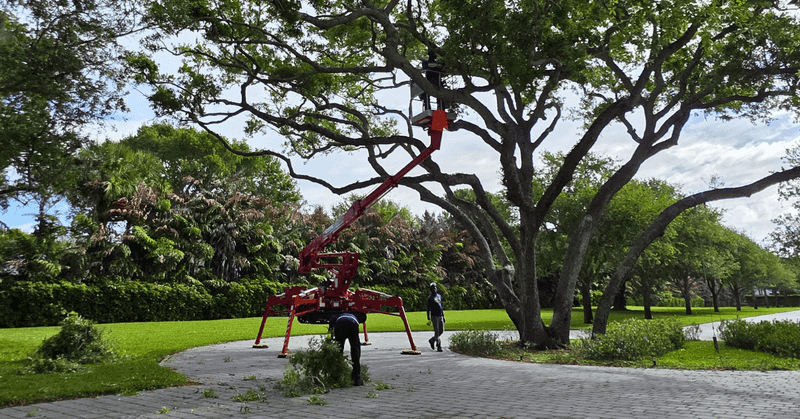
A storm warning can create pressure to act fast, but speed does not make a risky job safe. The legal question and the safety question are separate.
Even where you have the right to trim, that right does not make it wise to climb or cut alone.
The Massachusetts DCR offers a clear rule of thumb in its Citizen Forester newsletter. Contact an arborist if pruning requires a ladder or a chainsaw, or if the tree is within 10 feet of utility lines.
Heavy limbs can swing, split, and drop in unexpected ways.
Power lines deserve special respect. If a branch is touching or close to a wire, or if equipment such as a service drop is involved, leave it alone.
National Grid’s page on tree safety during storms is a good place to learn what to do and who to call.
A professional can also help with the legal side. An arborist can tell you which part of a limb sits over your land and can make cuts that avoid hurting the tree more than needed.
If the neighbor’s consent is needed, bring them into the conversation before the crew arrives.
A fallen branch does not automatically decide who was negligent
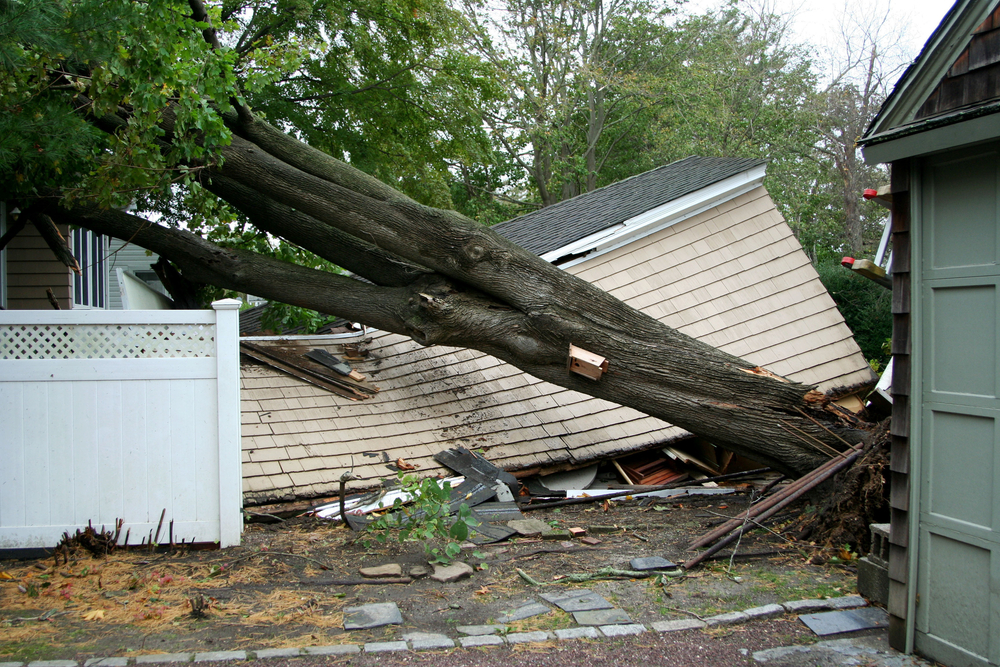
After a storm, it is tempting to say the tree owner must pay, or that nature takes the blame and nobody owes anything. Neither shortcut is right.
A storm alone does not establish liability, and it does not grant immunity either.
In Ponte v. DaSilva, the Supreme Judicial Court held that a landowner’s failure to stop ordinary debris from a healthy tree from reaching a neighbor’s property was not negligence or private nuisance in the circumstances before it.
That was a decision about leaves, twigs, and similar debris from a healthy tree, not a promise that owners are never responsible.
A different situation arises when a tree is decayed or in poor shape. A case such as Glavin v.
Eckman shows how courts look at the details when a tree causes harm. The answer can change depending on the facts.
Several things tend to matter. One is the condition of the tree, such as visible rot, dead limbs, or fungus.
Another is who had control over the tree and its care. A third is foreseeability, meaning whether a reasonable owner would have seen the danger coming.
Evidence is the final piece. Photos taken before the storm, written notices to the neighbor, and records of past tree work can all help show what was known.
If a limb does fall, take pictures of the break, the tree, and the damage before anything is moved.
Your homeowners policy generally covers damage first
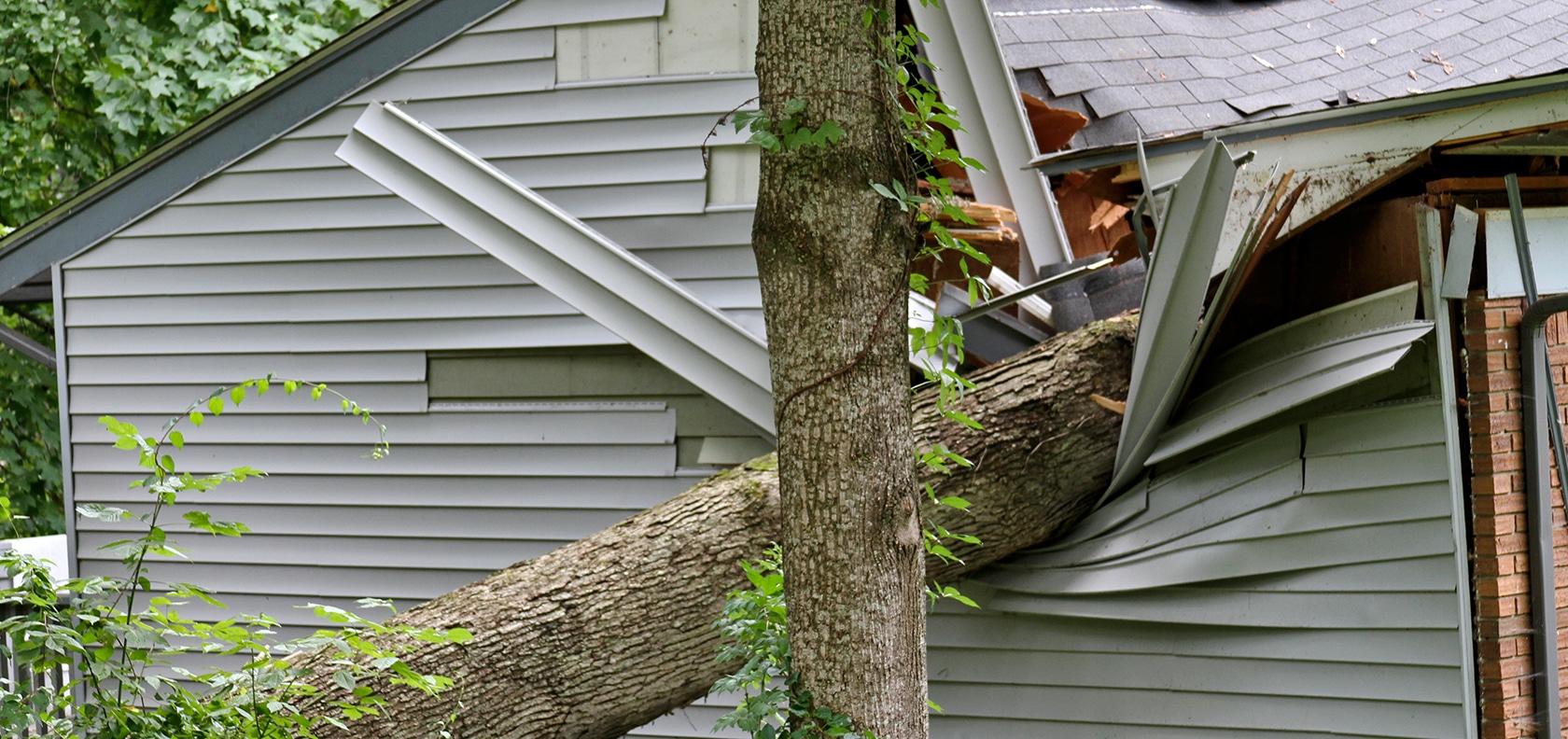
When a neighbor’s tree damages your house, car, or fence, the first call is usually to your own insurer. The Massachusetts Division of Insurance explains in its homeowners insurance FAQs that your own homeowners policy generally covers the loss, subject to the terms of that policy.
Deductibles, limits, and exclusions still apply, so read your policy.
Your insurer may then try to get its money back. If the neighbor was negligent, your company may seek reimbursement from the neighbor’s insurer.
That is a possibility, not a promise, and recovery is not guaranteed.
It helps to keep three questions apart. Insurance coverage asks whether your policy pays for the damage.
Legal fault asks whether someone was careless enough to be responsible. Removal cost asks who pays to haul the limb away.
That third question has no universal answer in the research behind this article. Some policies may cover certain debris removal, and some may not, depending on the terms and the situation.
The fact that a branch landed in your yard does not by itself settle who bears every cost, and it does not mean the neighbor must pay.
Call your agent soon after the damage, ask what your policy says about tree debris removal, and keep receipts. Document everything before cleanup begins.
Before the storm, verify the boundary, rules, and risks
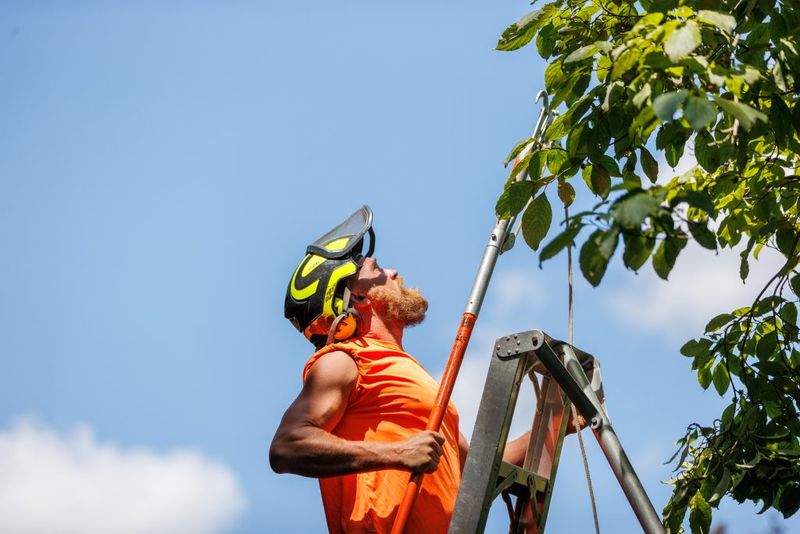
Start by finding out which branches actually cross your boundary, and plan to cut only what is over your land. Check whether the tree is public or affected by a scenic road or town bylaw, since Chapter 87 limits work on public shade trees.
Bring in a qualified arborist for anything that needs a ladder, a chainsaw, or sits near wires, as the DCR advises.
Remember that coverage depends on your policy, and responsibility for damage depends on the facts. A tree you trim well still cannot be made storm-proof, but a clear plan makes the winter far less stressful.
Share this story