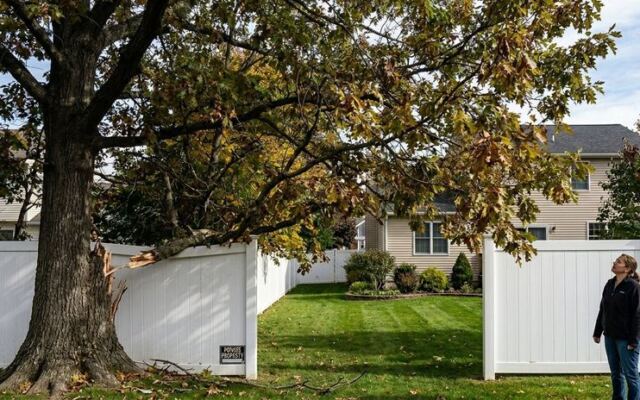
A big limb from next door is shading your patio, dropping leaves in your gutters, and maybe leaning a little too close to your roof. Who gets to decide what happens to it?
Delaware guidance gives some answers, but the law is less settled than many people think. Here is what you can ask for, what you may be able to do yourself, and what happens when a storm sends a branch down.
What an overhanging branch does—and does not—settle
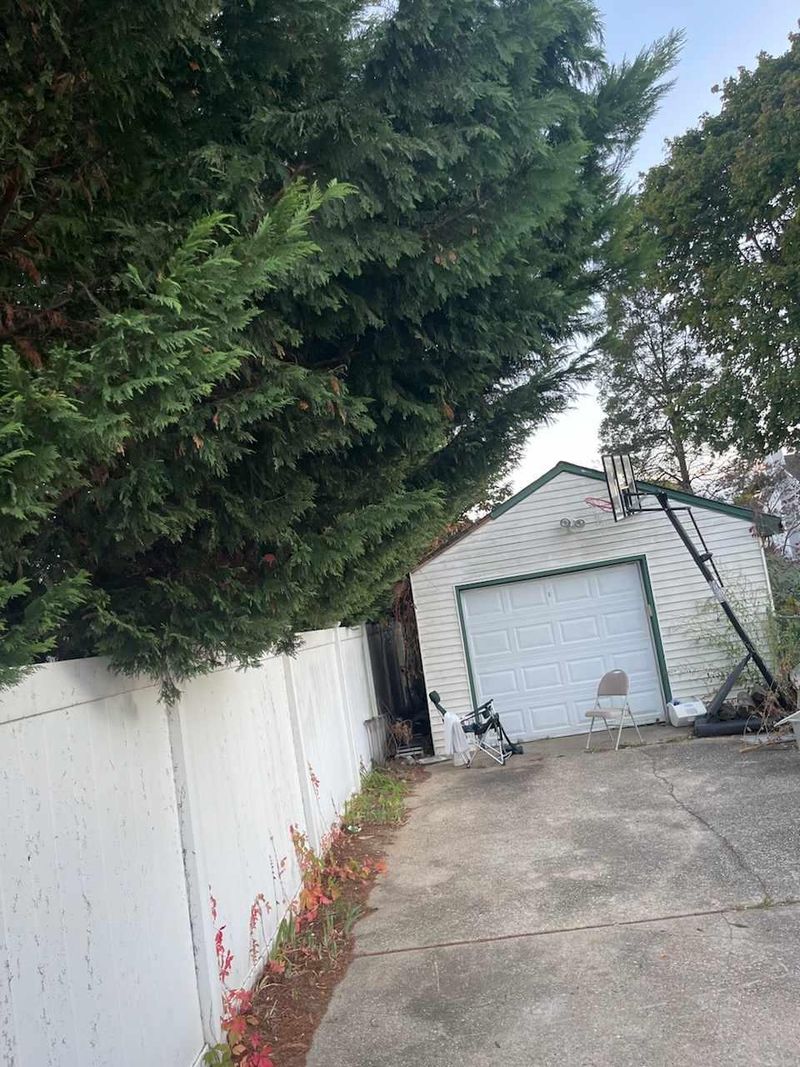
Seeing a neighbor’s limbs stretch over your fence feels like it should come with a clear rulebook. It does not.
A branch crossing the line tells you where the limb is, but it does not answer who must trim it, whether you may cut it, or who owns the tree.
The best-known practical guidance for this area comes from New Castle County. Its Tree FAQs in a county newsletter cover asking a neighbor to trim, pruning encroaching limbs, and storm debris.
That is county guidance written for residents. It is not a statewide court ruling, and it does not carry the same weight as a statute or a judge’s decision.
It helps to treat this topic as several separate questions instead of one big one. Can you ask the neighbor to act?
May you prune from your own side? What if the cutting harms the tree?
What if a storm drops a limb into your yard? Each question has its own answer, and mixing them up is how people get into trouble.
Another point trips people up. Branches crossing a boundary do not automatically turn a tree into a boundary tree, which is a special category under Delaware law.
We will take that up later, along with the rules about cutting down a tree versus trimming one.
Think of this article as a map. Start with the friendliest option, which is talking to your neighbor, and move toward the riskier ones only when you understand the limits.
When the stakes are high, such as a big cut or a real dispute, case-specific legal advice is worth the cost.
Can you make the neighbor trim the branches?

Short answer: you can ask, but you probably cannot force the issue. According to New Castle County’s tree guidance, a homeowner may ask a neighbor to trim a tree, but cannot compel the neighbor to do the work or pay for it.
That statement comes from county guidance. It is not a statewide appellate holding, so it is best read as the county’s practical view of how these disputes usually go.
It also means a neighbor who says no has not necessarily broken a rule.
Even so, asking is a smart first move. Most people would rather fix a small problem than have a feud.
A friendly note or a chat over the fence often works better than a demand letter.
A few things can make your request easier to say yes to. Point to the exact limb and explain what bothers you, such as blocked light, gutter clogs, or a branch rubbing the roof.
Offer to share the cost or help with cleanup if you want it done fast. Keep a short record of when you asked and what was said, in case the situation changes later.
Keep the tone neighborly, and avoid language that sounds like the neighbor has a legal duty to agree. Under the county’s guidance, that duty is not clearly there.
If the answer is no, you still have options to weigh, but each one carries its own uncertainty, which is where we turn next.
Delaware has not clearly settled self-help pruning
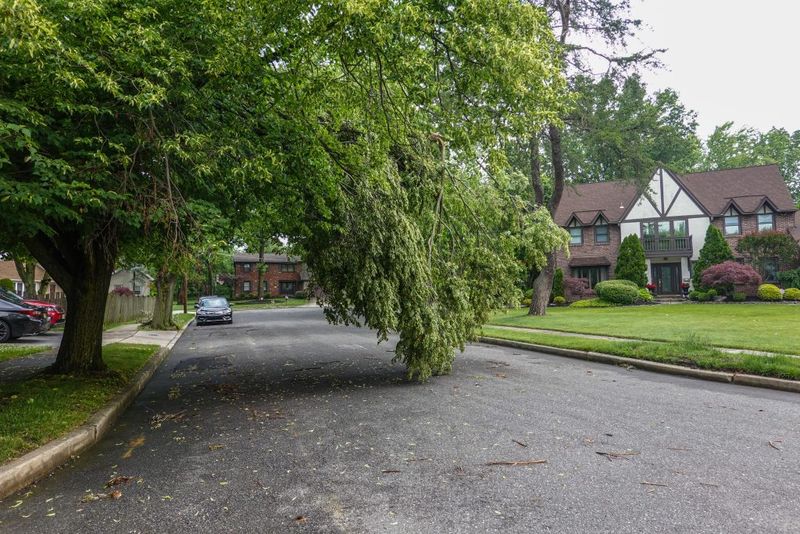
Many homeowners wonder if they can simply trim what hangs over their land. New Castle County’s guidance, found in its Tree FAQs, says a neighbor may prune encroaching limbs from their own property as long as the tree is not harmed.
That sounds simple, but the courts have not made it so. In Dayton v.
Collison, a 2019 Delaware Superior Court decision, the judge said it remained unclear whether Delaware recognizes this kind of self-help right. The court declined to decide the issue at that stage of the case.
There is some support on the other side. A 2023 Court of Chancery report in Hamby v.
Sapp quoted an older Delaware case saying a landowner may remove encroaching branches and roots up to the boundary. However, that matter involved a pole overhanging a boundary, not a tree dispute, so it offers limited, fact-specific support.
Put together, the picture looks like this. The county says limited pruning from your side is allowed if the tree is not harmed.
A court has said the legal footing is unresolved. A later report offers some backing but does not settle the tree-branch question.
So it is fair to say you may have this right, but it is not fair to call it a guaranteed, universal one. If you plan to prune, keep cuts modest, stay on your own side of the line, and avoid anything that could injure the tree.
Pruning a limb is not the same as felling a tree

Trimming a branch and cutting down a tree are very different acts in the eyes of the law. Delaware’s timber-trespass law, found in Title 25, Chapter 14, deals with someone who willfully, negligently, or maliciously cuts down or fells trees growing on another person’s land without consent.
The damages in that statute are conditional. Triple-value damages can apply in specified situations, such as when property bounds were properly marked or the cutter had notice that the owner’s rights were at risk.
For unintentional trespass, the statute uses a different measure. It is not an automatic fine, and it is not a penalty for any trimming.
The Dayton case drew a similar line. As the court’s opinion shows, harm to a tree that is still standing was treated differently from felling a tree for purposes of statutory treble damages.
Other claims could still come up, though, so harming a tree is never risk free.
Boundary trees are a separate topic. Under Title 25, Chapter 11, cutting, felling, altering, or removing a boundary tree or other landmark without lawful authority carries a $200 forfeiture to the wronged party.
The statute does not spell out every situation that makes a tree a boundary tree. Overhanging branches alone do not do it.
If you think the trunk sits on or near the line, or if the neighbor disputes ownership, slow down.
Extra care makes sense for big cuts, anything that could damage the tree, or any boundary disagreement. Those are the moments to get a surveyor, an arborist, or a lawyer involved before the saw comes out.
After a storm, cleanup and negligence are separate questions
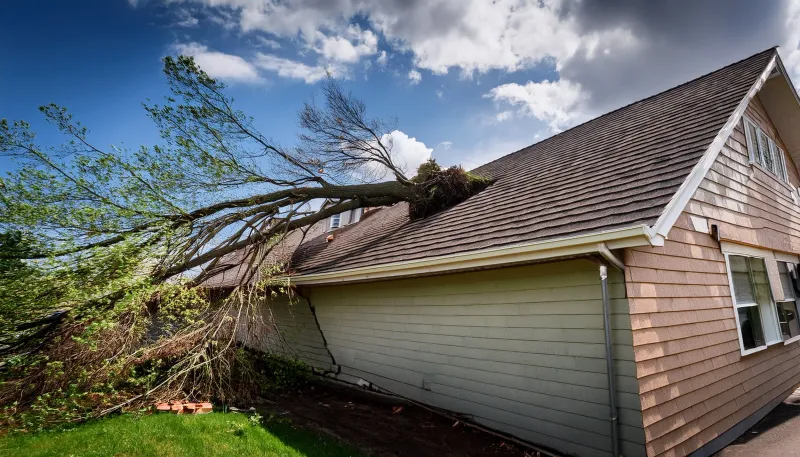
When a limb lands in your yard, two questions pop up right away. Who deals with the mess, and did anyone do something wrong?
They are not the same question.
On cleanup, New Castle County’s guidance says homeowners are generally responsible for what falls into their own yard. It also says a homeowners policy could help with removal and damage, subject to the deductible.
Coverage depends on your specific policy, so call your insurer and read the terms.
Negligence is a different matter. It asks whether the tree owner failed to act reasonably, and the answer depends on the facts.
In Oliver v. NRG Energy, a 2009 Superior Court case involving a tree that fell in a storm, the court described notice of a hazardous condition as necessary to find a property owner negligent.
Another Delaware case, West v. East Coast, involved a falling limb and treated the cause as a fact question.
Was it nature, or was it poor upkeep? Courts look at that closely.
So no one can honestly say the tree owner always pays, or that a storm always lets the owner off the hook. Notice, the tree’s condition, causation, and evidence all matter.
If you suspect a neighbor ignored an obviously dying tree, take photos, note dates, and save any messages you sent warning them. Evidence like that can make a real difference later.
Check the property line, safety risks, and local rules before pruning
Before any cutting, turn the legal ideas into a short checklist. First, confirm where the property line really is, since guessing wrong can turn a trim into a trespass.
Second, talk with your neighbor. Third, avoid cuts that could harm or destabilize the tree.
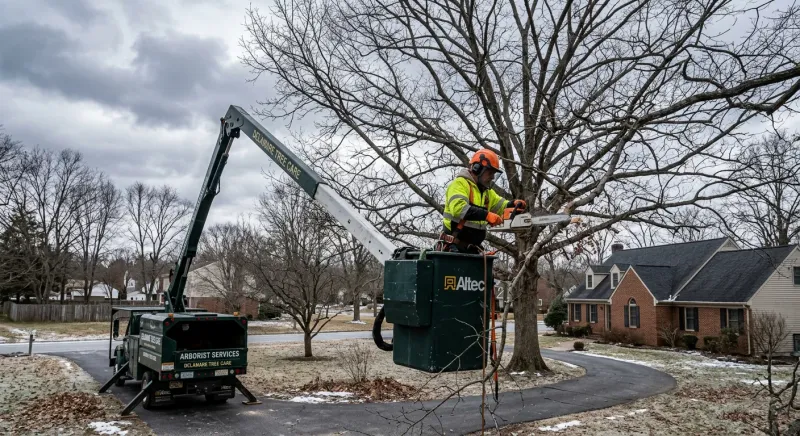
Safety comes next. Delaware’s Tree Owner’s Manual advises against pruning within 10 feet of utility lines.
It also says to hire an arborist if the work cannot be done with both feet on the ground or if it requires power equipment. Do not take on risky work yourself, and never climb or reach toward power lines.
Local rules can also matter. Rehoboth Beach, for example, requires a permit to remove a tree from private property, as explained on the city’s tree removal page.
That is one local example, not a statewide rule, and removing a tree is not the same as trimming an ordinary limb.
Call your town or county office to learn what applies where you live. Ask specifically about pruning and about removal, because the rules may differ.
The county’s own guidance on limited pruning, in its Tree FAQs, depends on not harming the tree, so keep cuts small and clean. For a serious dispute, a possible boundary tree, or a large proposed cut, get case-specific legal advice first.
Proceed cautiously when branches cross the property line
County guidance supports asking your neighbor and describes limited pruning from your own property, but Delaware case law leaves the self-help question unsettled. Storm cleanup, negligence, tree damage, and boundary-tree rules are each their own question, so keep them apart in your mind.
Start with a conversation, and bring in a qualified professional if the work or the dispute carries real risk. For more on the county’s view, see its tree guidance.
A branch over the fence is a small thing until someone treats it like a big one. A calm talk usually costs far less than a courtroom.
Share this story