Get the latest garden guides in your inbox →
Gardening Latest
  • General Gardening
  • Lawn Care
  • Plant Care
  • Composting
  • Soil Health
  • Backyard
  • Garden Muse Magazine
  • General Gardening
  • Lawn Care
  • Plant Care
  • Composting
  • Soil Health
  • Backyard
  • Garden Muse Magazine
  • News
  • Gardening Calendar
  • Garden Structures
  • Vegetable Garden
  • Vertical Garden
  • Raised Beds
  • Hydroponics
  • General Equipment
  • Community Gardens
Garden Themes
  • Spiritual Garden
  • Hydroseeding
  • Seeding and Laying Sod
  • Artificial Grass
  • Lawn Care Equipment
  • Plants
  • Trees
  • Planting Tools
  • Composting Basics
  • Fertilizer
  • Alternative Growing Mediums
  • Front Yard
  • Backyard Activities
  • Landscaping
Gardening Latest

Explore by state

Which state is your garden in?

Currently viewing North Carolina

All states

Northeast

  • Connecticut —
  • Delaware 18
  • Maine —
  • Maryland 4
  • Massachusetts 21
  • New Hampshire —
  • New Jersey 5
  • New York 14
  • Pennsylvania 14
  • Rhode Island —
  • Vermont —

Southeast

  • Alabama 4
  • Arkansas —
  • Florida 4
  • Georgia 5
  • Kentucky 18
  • Louisiana 3
  • Mississippi —
  • North Carolina 3
  • South Carolina 17
  • Tennessee 1
  • Virginia 4
  • West Virginia —

Midwest

  • Illinois 3
  • Indiana 6
  • Iowa 18
  • Kansas —
  • Michigan 5
  • Minnesota 3
  • Missouri 3
  • Nebraska —
  • North Dakota —
  • Ohio 5
  • South Dakota —
  • Wisconsin 19

Southwest

  • Arizona 4
  • Colorado —
  • Nevada —
  • New Mexico —
  • Oklahoma —
  • Texas 3
  • Utah —

West

  • Alaska —
  • California 4
  • Hawaii —
  • Idaho —
  • Montana —
  • Oregon —
  • Washington —
  • Wyoming —

No state matches that search.

Site menu

Gardening Latest
  • General Gardening
    • News
    • Gardening Calendar
    • Garden Structures
    • Vegetable Garden
    • Vertical Garden
    • Raised Beds
    • Hydroponics
    • General Equipment
    • Community Gardens
    Garden Themes
    • Spiritual Garden
  • Lawn Care
    • Hydroseeding
    • Seeding and Laying Sod
    • Artificial Grass
    • Lawn Care Equipment
  • Plant Care
    • Plants
    • Trees
    • Planting Tools
  • Composting
    • Composting Basics
  • Soil Health
    • Fertilizer
    • Alternative Growing Mediums
  • Backyard
    • Front Yard
    • Backyard Activities
    • Landscaping
  • Garden Muse Magazine

Explore

  • About GardeningLatest.com
  • Contact Us

Get the latest from the garden

New guides on lawn care, plants and backyard projects, sent when they go up.

Subscribe →

Follow

  • Facebook
  • X
  • Pinterest
  • YouTube
North Carolina Gardening

A Coyote Just Wandered Into Your North Carolina Yard: 7 Smart Moves and 3 Big Mistakes

You look out the kitchen window and spot a skinny, dog-like animal trotting across your lawn like it owns the place…

WD

By Wyatt Daniels

November 22, 2026 · 5 min read

A Coyote Just Wandered Into Your North Carolina Yard: 7 Smart Moves and 3 Big Mistakes

You look out the kitchen window and spot a skinny, dog-like animal trotting across your lawn like it owns the place. If you live in North Carolina, that visitor is probably a coyote, and they now live in all 100 counties of the state.

Most coyotes want nothing to do with people, but how you react can shape whether this one leaves for good or keeps coming back. Here are seven smart moves to make and three common mistakes to skip.

At a glance

Where
North Carolina Gardening
Hardiness zone
8 10 to 20°F
Read
5 minutes
Published
November 22, 2026

1. Stay Calm and Watch From a Safe Spot
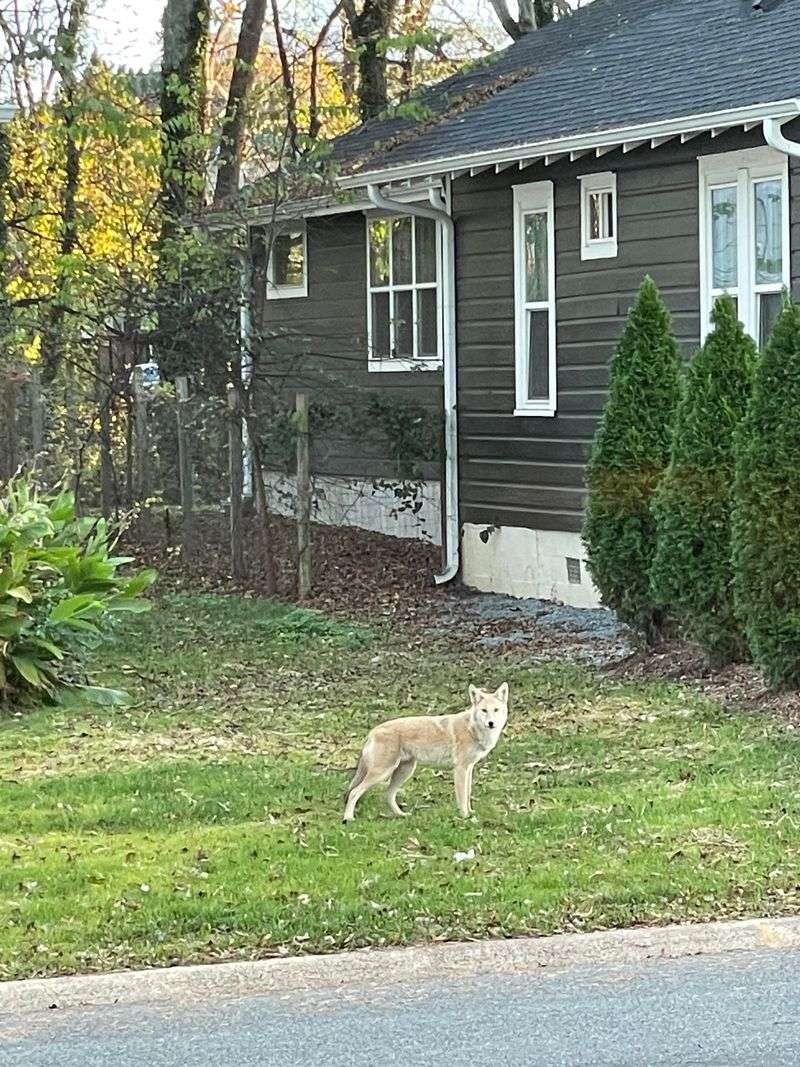
Stay Calm and Watch From a Safe Spot
© Reddit

Your heart might jump the first time you see one, and that’s normal. Still, a coyote crossing your yard is usually just passing through on its way somewhere else.

Panic rarely helps anyone.

Find a safe place, like a window or a porch with a door behind you, and simply observe. Notice whether the animal looks healthy, which way it is heading, and whether it seems bothered by you at all.

Most of the time, the coyote will glance around and move on within a minute or two. Watching quietly gives you useful information about its route, which helps you decide what to do next.

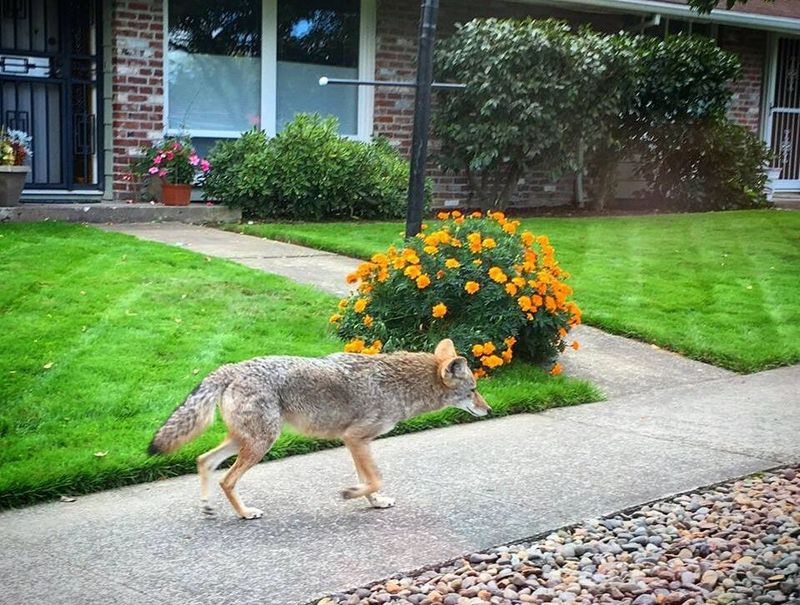
2. Bring Kids and Pets Inside Right Away
Bring Kids and Pets Inside Right Away
© Portland Urban Coyote Project

Small dogs and cats look a lot like lunch to a hungry coyote. That’s the hard truth many pet owners in Raleigh and Charlotte have learned.

As soon as you spot one, call your pets in and get young children indoors. Coyotes very rarely bother kids, but there’s no reason to take chances while the animal is close.

Going forward, keep an eye on small pets outside, especially around dawn and dusk. A short leash walk beats an unsupervised romp in the yard when coyotes are active nearby.

3. Haze It Like You Mean It
Haze It Like You Mean It
© WFRV

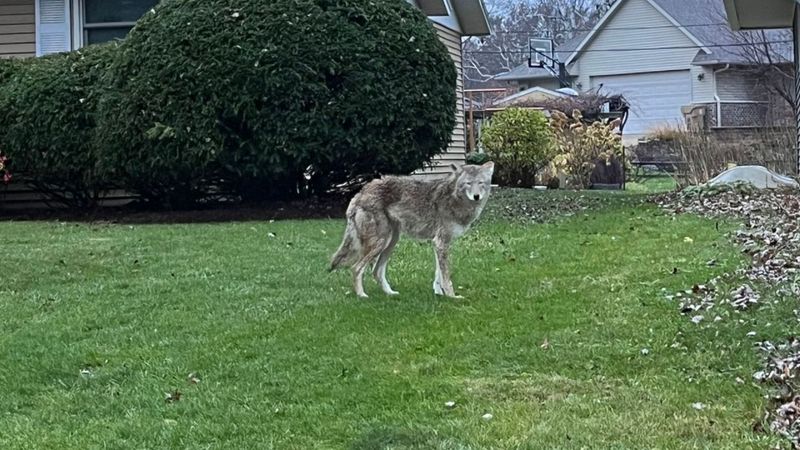
Wildlife biologists have a fancy word for scaring coyotes: hazing. It sounds silly, but it works.

Make yourself big, wave your arms, and yell in a loud, firm voice. Bang pots together, blow a whistle, or spray a garden hose in its direction.

A coyote that approaches people, stumbles, acts confused, or attacks pets should be reported.

The goal is to teach the coyote that your yard is a noisy, unpleasant place.

Keep going until the animal actually leaves. If you stop too soon, the coyote learns that people are all bark and no bite.

Consistency from you and your neighbors makes the lesson stick.

4. Lock Down Trash and Food Sources
Lock Down Trash and Food Sources
© Urban Hawks

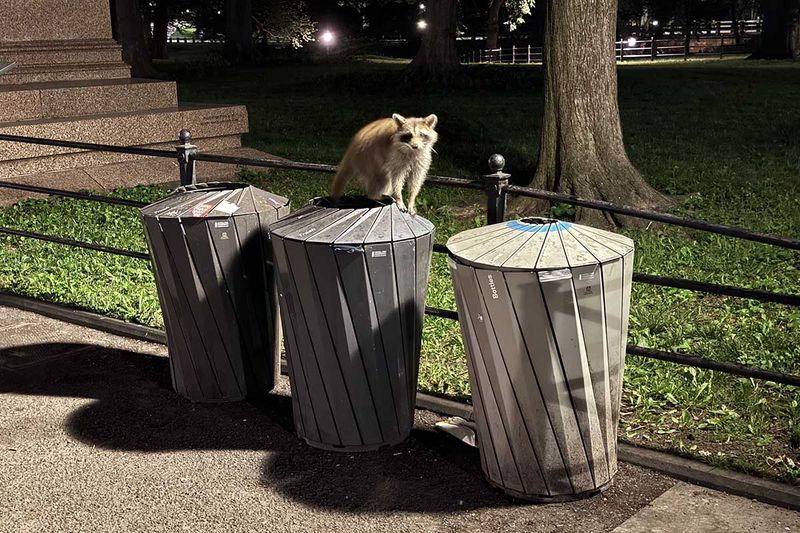
Picture a free buffet that opens every night. To a coyote, an open trash can, a bowl of dog food on the porch, or fallen fruit under a fig tree is exactly that.

Store garbage in sturdy cans with tight lids, and put them out the morning of pickup instead of the night before. Feed pets indoors.

Rake up birdseed spills and fallen fruit.

Compost piles can draw them in too, so avoid tossing meat or dairy scraps. When the snacks disappear, so does the reason to visit.

5. Clear Out Hiding Spots

Clear Out Hiding Spots
© All City Animal Trapping

Thick brush and the dark space under your deck might seem harmless. Coyotes see them as cozy resting areas or even den sites, especially in spring when pups arrive.

Trim back overgrown shrubs, haul away brush piles, and block openings under decks, porches, and sheds with sturdy wire mesh. Do this outside of pupping season, which runs roughly April through June in North Carolina, so you don’t trap a family inside.

A tidier yard gives coyotes fewer places to lounge, and it cuts down on the mice and rabbits they hunt.

6. Add Motion Lights and a Better Fence

Add Motion Lights and a Better Fence
© The Wildlife Specialist

Coyotes are night owls, or rather night dogs. A sudden blast of light can send one scrambling.

Motion-activated lights and sprinklers are easy upgrades that startle visitors without anyone lifting a finger. For a fence to truly keep coyotes out, it should be at least six feet tall and extend below ground, since they can both jump and dig.

Fun fact: some homeowners add rolling bars called coyote rollers along the top of fences. When a coyote tries to grip the top, the bar spins and it slides right off.

7. Report Strange Behavior to NC Wildlife
Report Strange Behavior to NC Wildlife
© WCTI

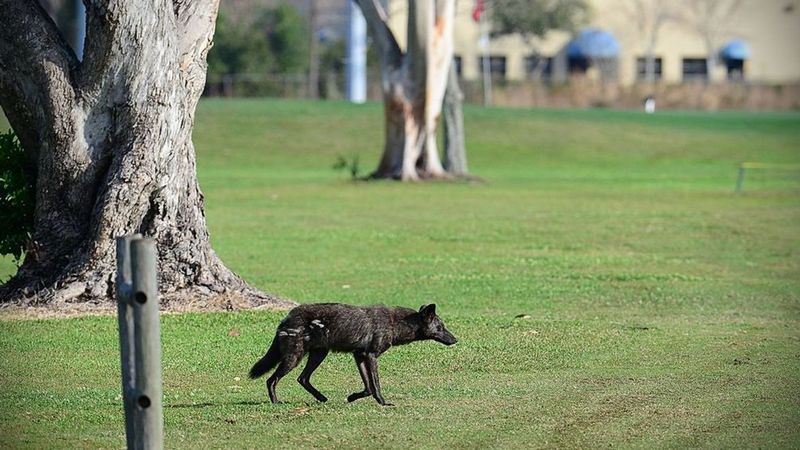
Seeing a coyote in daylight isn’t automatically a red flag. They sometimes roam during the day, especially when feeding pups.

But some things deserve a call. A coyote that approaches people, stumbles, acts confused, or attacks pets should be reported.

The North Carolina Wildlife Resources Commission runs a Wildlife Helpline at 866-318-2401 that can offer advice.

Local animal control can also step in. Sharing sightings helps experts track how coyotes are moving through your area.

8. Big Mistake: Feeding the Coyote

Big Mistake: Feeding the Coyote
© The Register-Guard

“It looked so hungry.” That kind heart has caused more coyote trouble than almost anything else.

Feeding coyotes, on purpose or by leaving food out, teaches them to link people with meals. Soon they lose their natural fear and may start approaching humans or grabbing pets.

Those bold coyotes often end up being removed, which is a sad ending nobody wants.

In North Carolina, feeding coyotes can also bring local penalties in some towns. The kindest thing you can do is keep them wild.

9. Big Mistake: Running Away or Turning Your Back
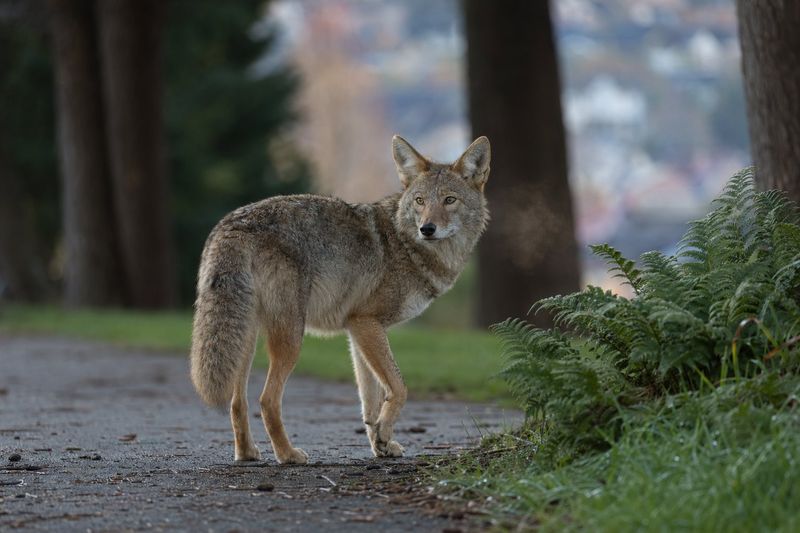
Big Mistake: Running Away or Turning Your Back
© The Natural History of the Urban Coyote

Instinct might scream at you to run. Don’t.

Running can trigger a chase response, the same way a dog chases a ball. Instead, stand tall, face the animal, and back away slowly while making noise if it gets close.

Hikers on greenways around Durham and Asheville are advised to do the same. Calm, confident body language tells the coyote you’re not prey.

10. Big Mistake: Thinking Trapping Solves Everything
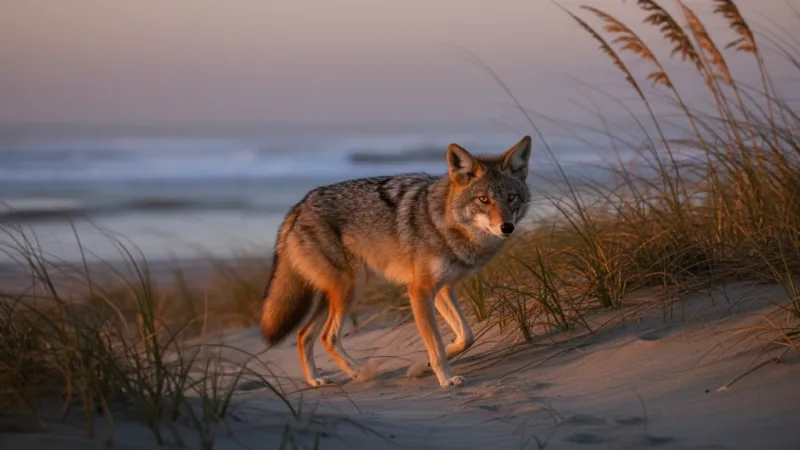
Big Mistake: Thinking Trapping Solves Everything
© Bioengineer.org

Here’s a surprising twist about coyotes. When some are removed, the rest often have bigger litters, and new ones move in to fill the empty space.

That means trapping or shooting one animal rarely fixes the problem for long. North Carolina allows coyote hunting and trapping under state rules, but local gun laws and permits still apply, and it can be costly.

Removing food, shelter, and easy targets works better over time. Make your yard boring, and coyotes will simply pass you by.

A little preparation goes a long way. Stay calm, stay loud, and let your new neighbor know it should keep moving.

Share this story
WD

Written by

Wyatt Daniels

More from Wyatt Daniels →

About Gardening Latest

Gardening Latest provides in-depth guides to maintaining and enhancing your garden and backyard. Learn how to make the most of the space you have and create a beautiful garden.

More about us →

Latest stories

  • Iowa GardeningIs a Northern Short-Tailed Shrew Hiding in Your Iowa Leaf Pile? What We Know About Its Venom

    Is a Northern Short-Tailed Shrew Hiding in Your Iowa Leaf Pile? What We Know About Its Venom

    Just now
  • Virginia GardeningThe Trees In Your Virginia Yard That Need A Permit Before The Chainsaw Comes Out

    The Trees In Your Virginia Yard That Need A Permit Before The Chainsaw Comes Out

    6 min ago
  • New Jersey GardeningThese Venomous Critters Are Hiding Closer To Your New Jersey Porch Than You Think

    These Venomous Critters Are Hiding Closer To Your New Jersey Porch Than You Think

    13 min ago
  • Michigan GardeningWhat Really Happens Inside a Michigan Yellowjacket Nest Once Hard Frost Hits

    What Really Happens Inside a Michigan Yellowjacket Nest Once Hard Frost Hits

    24 min ago
  • Massachusetts GardeningBrushed Against a Browntail Moth Caterpillar in Your Massachusetts Garden? Here’s What to Do Right Away

    Brushed Against a Browntail Moth Caterpillar in Your Massachusetts Garden? Here’s What to Do Right Away

    29 min ago

Gardening by state

Stories for your state, and the hardiness zone most of it gardens in.

Keep exploring

Read next

All North Carolina Gardening →
North Carolina GardeningIs That Leafy Ball in Your North Carolina Oak a Squirrel Drey? What to Look For
North Carolina Gardening

Is That Leafy Ball in Your North Carolina Oak a Squirrel Drey? What to Look For

3 hr ago
North Carolina GardeningWhat to Do With Your North Carolina Cannas and Elephant Ears Once Frost Turns the Leaves Black
North Carolina Gardening

What to Do With Your North Carolina Cannas and Elephant Ears Once Frost Turns the Leaves Black

Nov 12
Iowa GardeningIs a Northern Short-Tailed Shrew Hiding in Your Iowa Leaf Pile? What We Know About Its Venom
Iowa Gardening

Is a Northern Short-Tailed Shrew Hiding in Your Iowa Leaf Pile? What We Know About Its Venom

Just now

More from North Carolina Gardening

  • These Venomous Animals Share Your New York Backyard, Here’s How To Spot Them

    39 min ago
  • 9 Backyard Features Ohio Towns Are Quietly Starting to Ban

    45 min ago
Back to top

Leave a response Cancel

Your email address stays private. Required fields are marked with an asterisk.

Gardening Latest

In-depth guides to maintaining and enhancing your garden and backyard: how to make the most of the space you have, and how to make it beautiful.

  • Facebook
  • X
  • Pinterest
  • YouTube

We may earn a portion of sales from products or services that are purchased through our site as part of our affiliate partnerships with retailers.

Explore

  • About GardeningLatest.com
  • Contact Us
  • Terms and Conditions
  • Privacy
  • Editorial Note:
  • FTC Disclosure

Newsletter

New garden guides and seasonal tips, straight to your inbox.

We’ll email you a link to confirm. Unsubscribe any time.

Almost there! Check your inbox and tap the link to confirm.

© 2026 Gardening Latest. All rights reserved.

Back to top