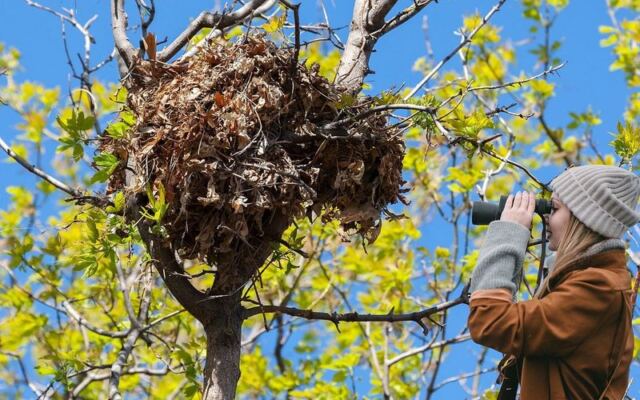
That ball of leaves and twigs high in your Alabama oak is most likely a squirrel drey, a nest built by squirrels rather than birds. Bare branches in winter make these bundles easy to spot, and many people wonder who built them.
A few simple clues can point you toward an answer. Just know that looking from the ground only gets you so far.
Why the bundle appears when leaves fall
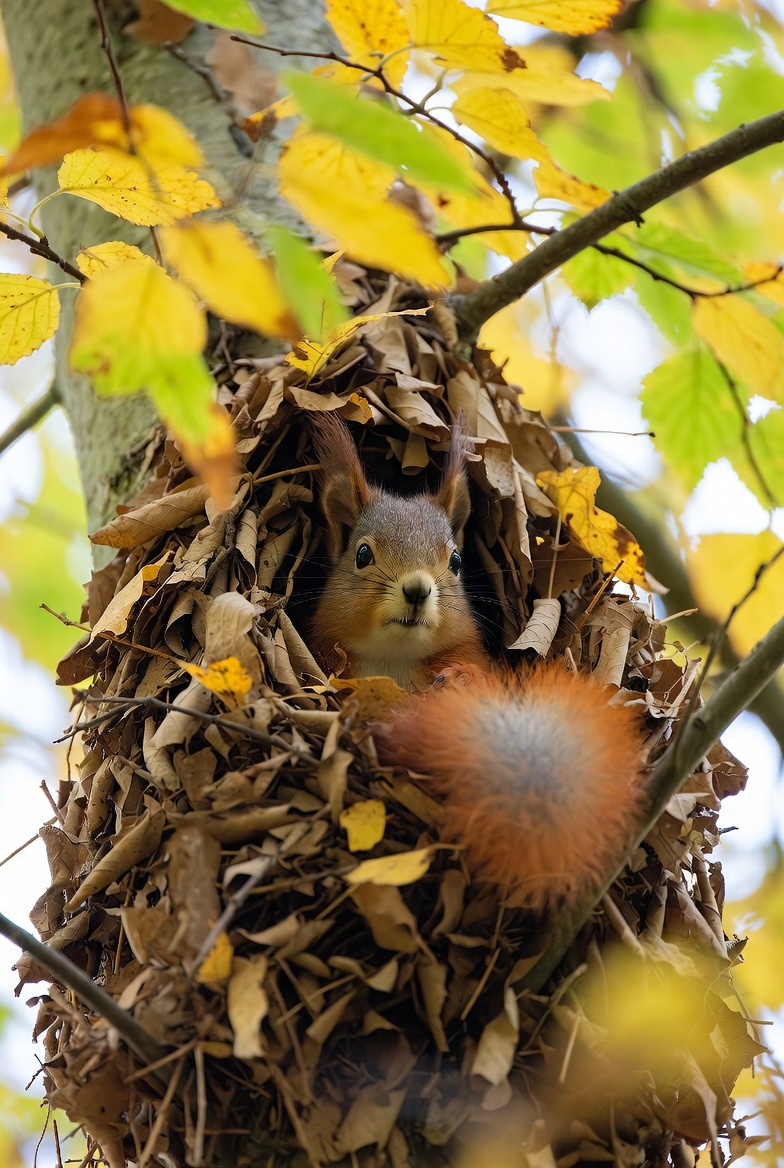
Late autumn brings a quiet reveal. As oaks drop their leaves, shapes that were hidden all summer show up against the sky, and a clump you never noticed suddenly looks like it appeared overnight.
It probably did not. Falling leaves make nests easier to see, but they say nothing about when the nest was built.
Squirrel nests can hang around for months, and some get patched up and reused for longer, according to Missouri Department of Conservation guidance.
Visibility also does not tell you whether anyone is home. A nest can sit empty, be used now and then, or be abandoned entirely, and a glance from the yard cannot sort those cases out.
So it helps to split the job into two steps. First, notice that a nest is there.
Second, treat the question of who built it, and who uses it, as a separate puzzle that needs more clues than a single look. The sections ahead walk through those clues, one at a time, and are honest about where they run out.
Read the shape and materials as clues
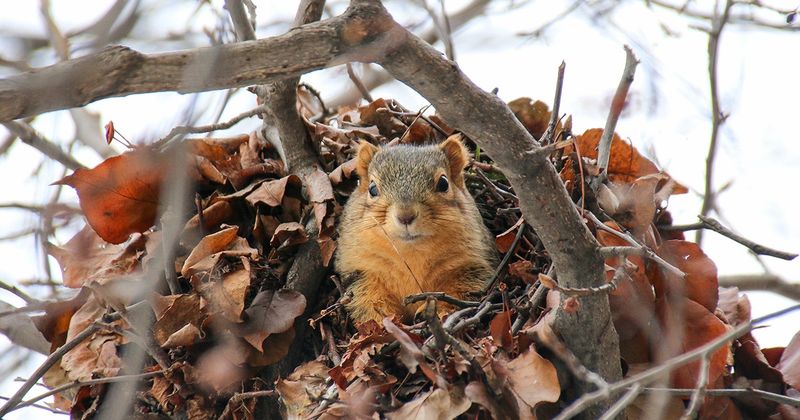
Start with the overall look. A drey is usually a leafy, twig-built ball, often roughly round, tucked into a sturdy fork of a branch.
Lots of leaves packed in with the twigs is a point in the squirrel column, as Audubon’s nest guide describes.
Birds build big, rough nests too. Crows make large nests that lean more toward twigs, and hawks, including red-tailed hawks, may use sticks mixed with leaves.
A bird nest can look more open on top, while a drey tends to look closed and bulky.
Placement offers another hint. Dreys often sit snug against the trunk or in a strong fork, and the bundle looks more like a lump of foliage than a neat cup.
Treat every one of these as a clue, not a verdict. From far below, a wad of leaves can fool you, and old nests change shape as they weather.
The Missouri Department of Conservation also notes that nests can linger and get refurbished, which blurs the picture further.
The honest summary is that a leafy ball is a likely squirrel drey, while a twiggy platform might be a crow or hawk. Neither call is proven until you see who actually uses it.
Alabama has three kinds of tree squirrels
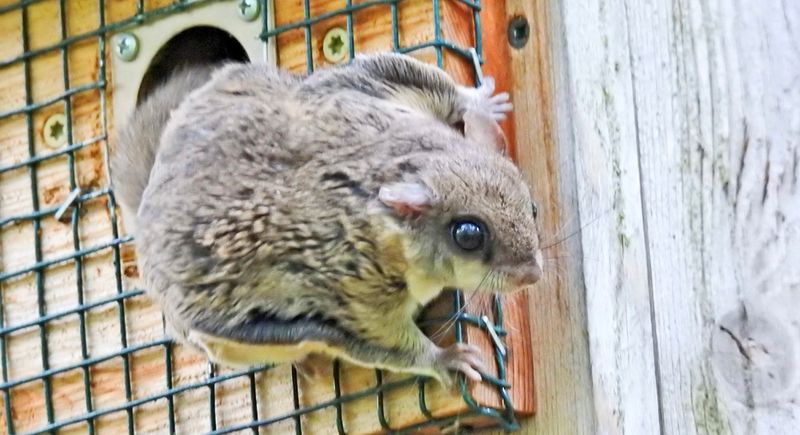
Alabama is home to three tree squirrels: the eastern gray, the fox squirrel, and the southern flying squirrel, as Outdoor Alabama explains. The gray squirrel is the most common and shows up statewide.
Gray and fox squirrels both build leaf nests, so a drey in your oak could belong to either one. Southern flying squirrels are different.
They are nocturnal, so you rarely see them, and they tend to use tree cavities instead.
That mix is why the phrase squirrel nest is not the same as gray squirrel nest. A tree nest cannot tell you which species built it, and it cannot tell you which one visits it now.
Size and color of any animal you spot can help, but a quick glimpse at dusk or from a distance is easy to get wrong. If you see a squirrel near the nest, note its size, tail, and fur color, and treat your guess as a guess.
The same caution applies to winter. Not every animal living in a tree through the cold months is a gray squirrel, and some of them are out of sight entirely.
Winter activity does not make a drey a permanent home
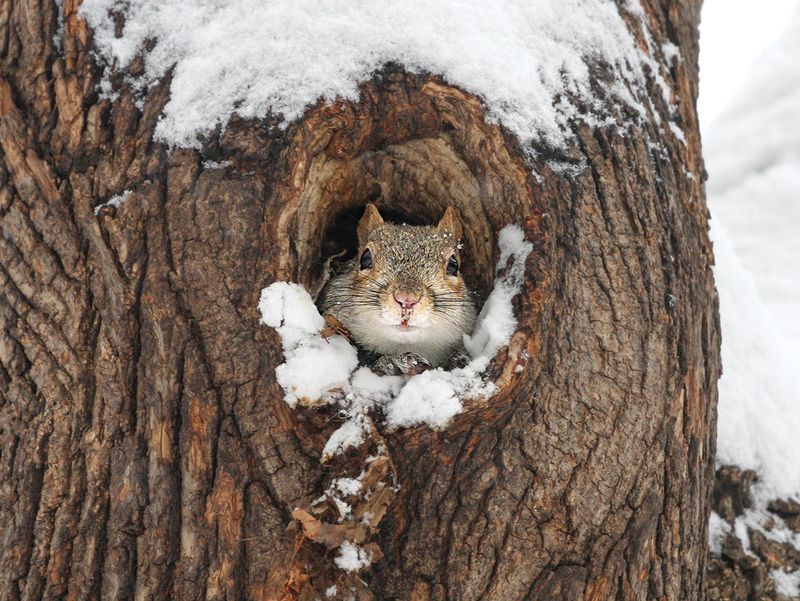
Gray squirrels do not hibernate. They stay active through winter, feeding on acorns and other nuts, and they bury nuts in fall and dig them back up in winter and spring, according to Alabama Extension.
So a squirrel seen on a cold morning tells you little about where it sleeps.
Squirrels use both dreys and tree cavities. Extension says cavities give better protection from cold, wet weather and predators, and they are often preferred.
The state wildlife agency describes dens as more permanent and dreys as more temporary, as laid out in Outdoor Alabama’s management page.
That means a visible drey is not automatically a squirrel’s winter home. It might be used on mild days, for a short time, or not at all, while the animal spends cold nights in a hollow limb or trunk.
Cavities also matter for other species. Alabama’s wildlife agency notes that flying squirrels may gather in groups in tree cavities during winter.
That is a cavity story, not a drey story, so do not assume a crowd of them is in the leafy ball.
If you want to help wildlife, an old oak with natural hollows is worth more than any one drey. Dead or hollow limbs often shelter more animals than they appear to.
What watching from the ground can tell you
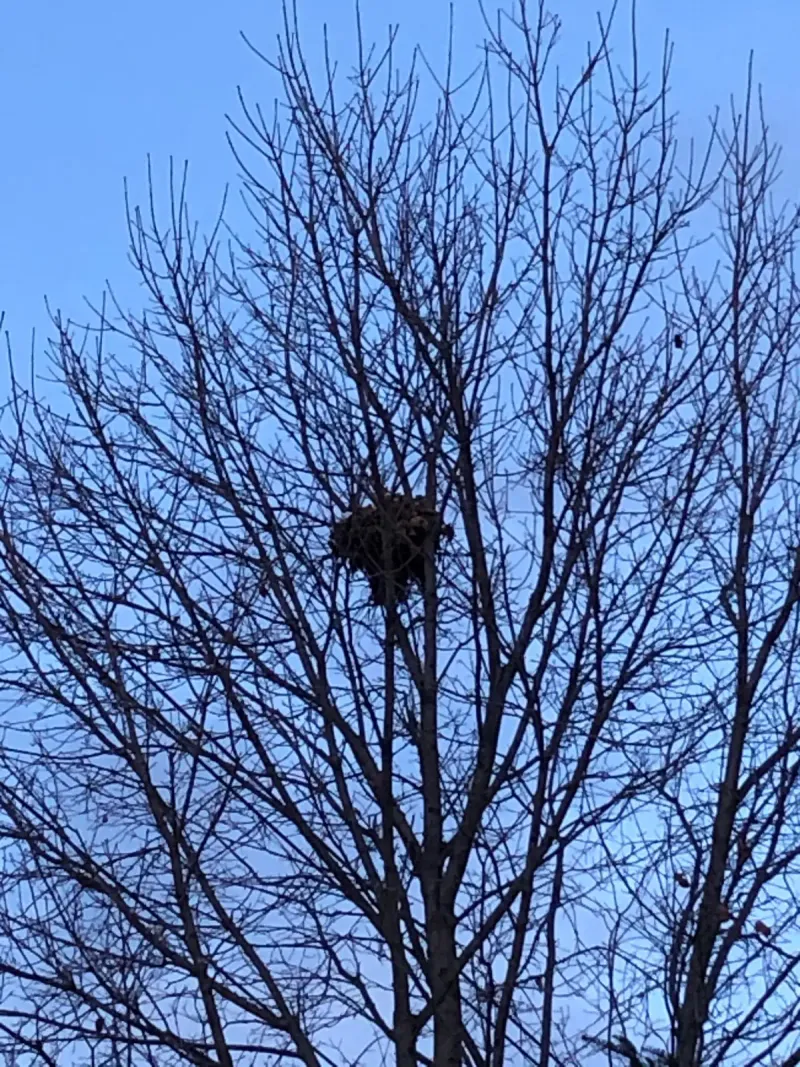
Patience is your best tool. Watch from a distance, ideally with binoculars, at different times of day.
If you see an animal slip into the nest, that is good evidence it uses it.
Evidence of use is not proof of residence, though. One visit does not show that the animal stays all winter, or that the same animal returns each night.
It might be passing through, resting for an afternoon, or checking out a spare shelter.
Squirrels running along limbs or burying nuts nearby also show that squirrels are around. That is different from showing that this particular nest is occupied, and the two should not be blended together.
Observation will not always name the species either. A fast gray shape at the top of a tree may not give you enough detail, and Audubon points to seeing who actually uses a nest as the surest clue.
Even then, a drey may switch hands over time.
Gray squirrels typically have two litters a year, with peaks around January and June according to Alabama Extension, though other sources give slightly different ranges. Late winter activity near a nest could involve young, so keep your distance and your expectations modest.
Leave a suspected nest undisturbed
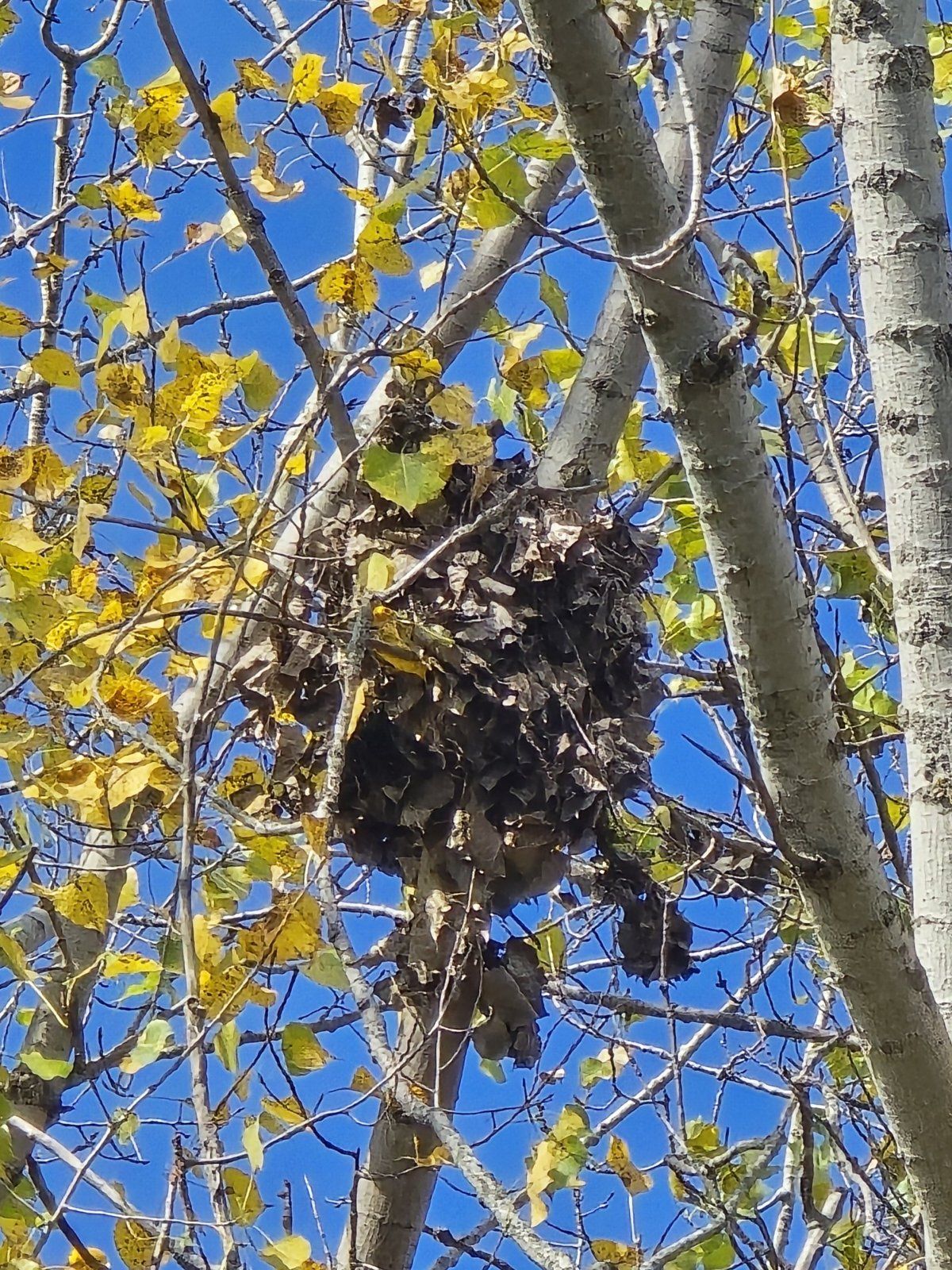
Curiosity is fine, but keep your feet on the ground. Do not climb to a suspected nest, poke it, pull it apart, or knock it down to see what is inside.
You could hurt an animal, upset a protective parent, or get hurt yourself.
If tree trimming or removal is planned, check for wildlife first. When it is unclear whether a nest is in use, ask a qualified tree professional to look before cutting.
Tufts Wildlife Clinic’s yardwork advice encourages checking for animals before work begins and waiting or getting help when activity is uncertain.
If you find an animal that looks injured or orphaned, resist the urge to carry it home. Alabama generally requires a permit to possess native wildlife for rehabilitation, and Outdoor Alabama’s rehabilitation page advises leaving animals alone unless help is clearly needed and then contacting a permitted rehabilitator for guidance.
A nest that stays untouched costs you nothing, and by spring it may be fixed up, abandoned, or swallowed by new leaves. Some mysteries are best left up in the branches.
Share this story