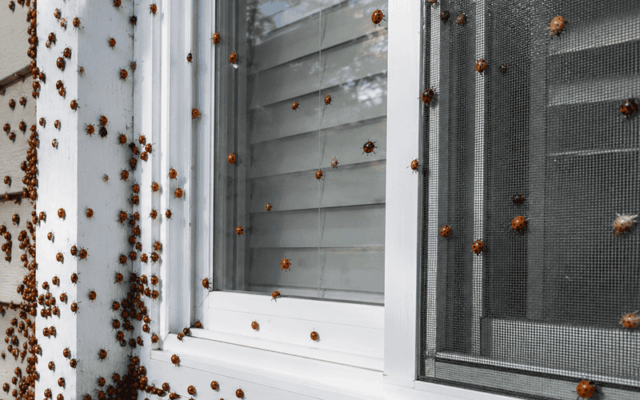
Those orange beetles on your walls and windows are looking for a place to wait out winter, and your house looked like a good spot. Asian lady beetles gather on buildings in fall, and some of them slip inside through tiny gaps.
Some homes get more visitors than others, though the reasons are not as simple as house color or age. Here is how to understand what is happening and how to make your home less inviting.
Why Asian lady beetles gather on buildings in fall
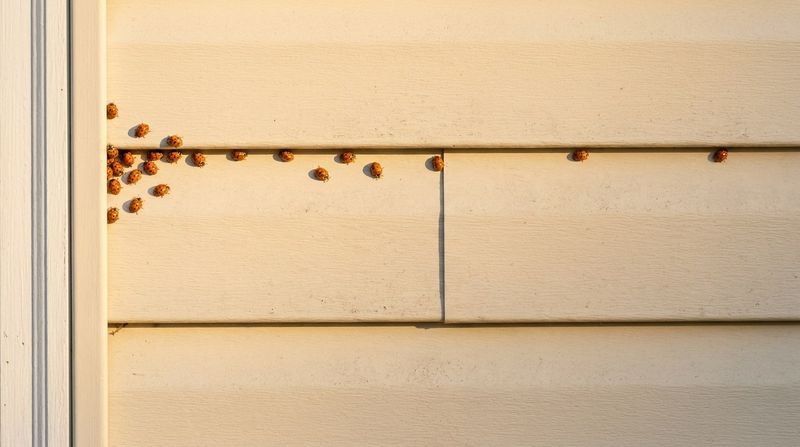
When fall arrives, adult Asian lady beetles start looking for protected places to spend the winter. Before they find shelter, they often gather on the outside of buildings.
Cornell’s New York State fact sheet describes this fall gathering and says the species became common in the state. That fact sheet is an older source, updated in 2008, so it explains the behavior but is not a current count of beetles across New York.
They are not picking your home because it is new, because they want people, or because they want your food. They are simply hunting for cracks and crevices that will keep them sheltered until spring.
It also helps to know that this explanation fits Asian lady beetles, not automatically every orange or yellow ladybug-like insect. Their look varies a lot.
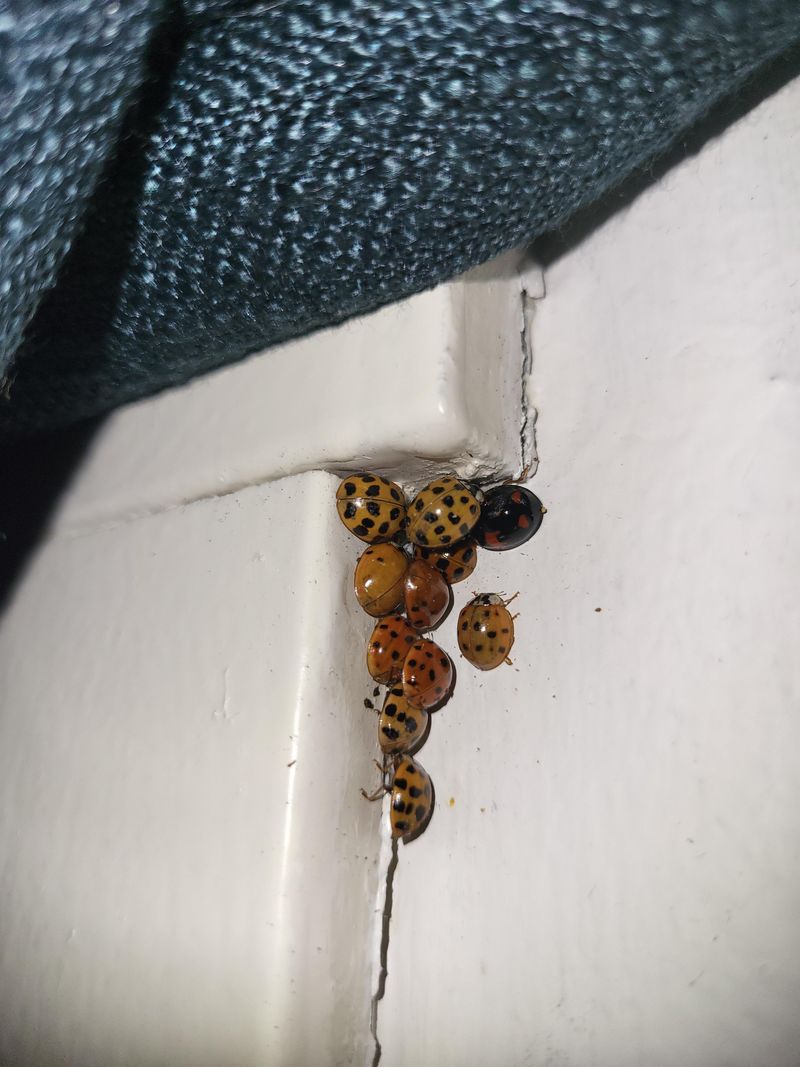
University of Minnesota Extension notes they can range from orange to pale yellow-orange, with many spots, a few spots, or none at all.
The best identification clue is a black M-shaped marking on the white area right behind the head. If you can see that mark, you are very likely looking at an Asian lady beetle.
If you cannot tell, treat the seasonal explanation as a good guess rather than a sure answer, and consider asking your local extension office to take a look at a sample.
What can make some homes more inviting
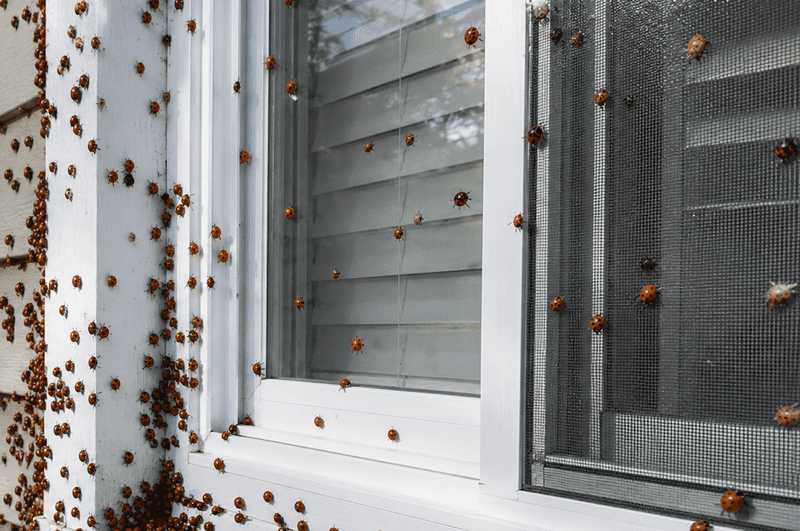
Picture two houses on the same street. One has beetles crowding the siding every October, and the other barely sees any.
Several things may explain the difference, though none of them is a guarantee.
University of Kentucky guidance points to sunny, prominent surfaces, especially walls that catch afternoon sun. In the Northern Hemisphere, that usually means the southwest side.
Warm walls may draw beetles that are looking for a good place to land and settle.
Nearby habitat may matter too. Minnesota Extension connects woods and fields close to a building with more beetles, probably because there are more beetles in the area to begin with.
A house at the edge of a forest or a farm field may see more traffic than one in the middle of a dense block.
Visual contrast, such as a light building standing out against dark trees, is another possible influence. Think of it as a hint, not proof of why your particular house is popular.
None of these factors decides things alone. A shaded house can still get beetles, and a sunny one may get few.
Use these clues to decide where to look first for gaps, not to predict exactly what will happen at your address.
What house age and paint color can tell you
You may have heard that beetles pick brand-new houses or white houses. The sources reviewed for this article do not establish newness as a reason for beetle gatherings, so that explanation is not supported.
An Ohio homeowner survey did not find house age or color to be a clear determinant of infestations. Older homes were slightly more likely to report high beetle counts, but that is a small pattern, not a rule.
The survey also does not prove that age or color never matter in any single case.
Color is where sources differ. Some guidance, such as the Kentucky fact sheet, says light and dark contrast may attract beetles.
That is a possible influence, not a promise that a white house or any other paint color will cause an invasion.
So repainting is not a sensible fix. Sun exposure, surrounding habitat, and especially openings in the walls tell you more about what you can actually change.
How beetles get inside and show up months later
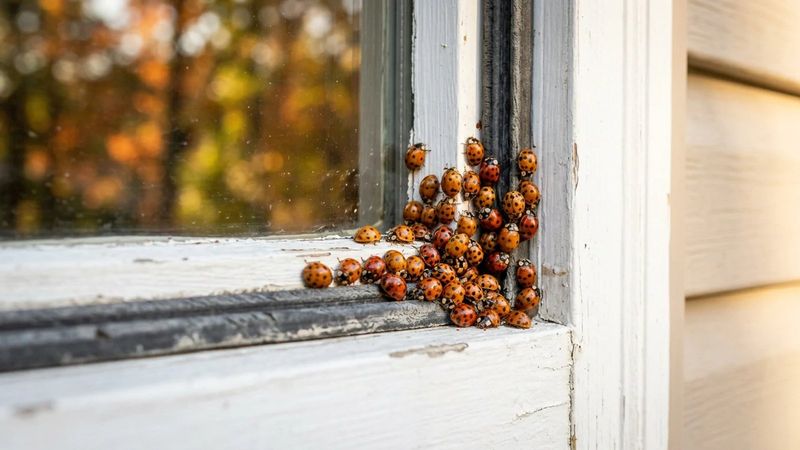
Once beetles land on a building, small openings do the rest. Minnesota Extension lists gaps around windows, doors, siding, vents, and utility lines as common ways in.
After that, the beetles settle into wall voids, attics, and other protected spaces.
That is why you may see them on a warm January afternoon or in early spring. Beetles seen indoors in winter or spring generally entered the previous fall.
They stayed tucked away, then became active when the building warmed up or the sun hit the wall.
Sometimes they wander into living spaces by mistake, often drawn toward light at windows. Cornell’s older New York fact sheet describes the same pattern of fall entry followed by activity during warm spells.
Here is the reassuring part. These beetles do not reproduce indoors, so spotting them in a room does not by itself mean you have a breeding infestation.
They also do not eat household food or damage the structure.
A handful on a sunny window in February is a sign they got in months ago. It does not mean a new wave is arriving from outside.
Seal gaps before fall arrivals
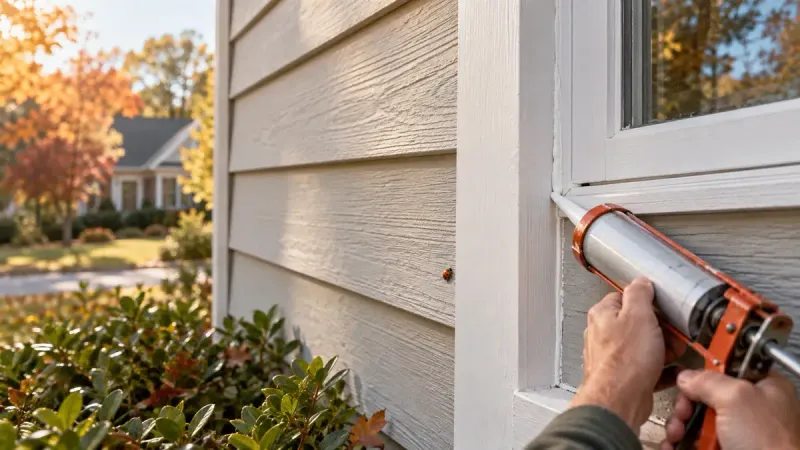
Timing matters most here. Late summer or very early fall is the best moment to walk around your house, before beetles start landing.
Minnesota Extension recommends making repairs before fall arrivals.
Start by checking around doors, windows, siding, fascia, pipes, utility lines, and vents. Look for cracks, loose trim, and gaps where lines enter the house.
Seal what you find with a suitable exterior caulk or other sealant.
Next, fix the weak spots in moving parts. Repair torn window and door screens, replace worn weather stripping, and consider adding door sweeps along the bottom of exterior doors.
Do not forget attic and crawl space vents, where screening can be damaged.
A flashlight at dusk can help you spot light leaking around a frame, which often marks a gap. Work from the sunny sides of the house first, since that is where beetles tend to gather.
Keep expectations realistic. Exclusion reduces how many beetles get in, but it may not stop every one.
Even a partly sealed house usually has far fewer visitors than one with obvious gaps, and the work also helps with drafts and other insects.
Remove indoor beetles without crushing or spraying
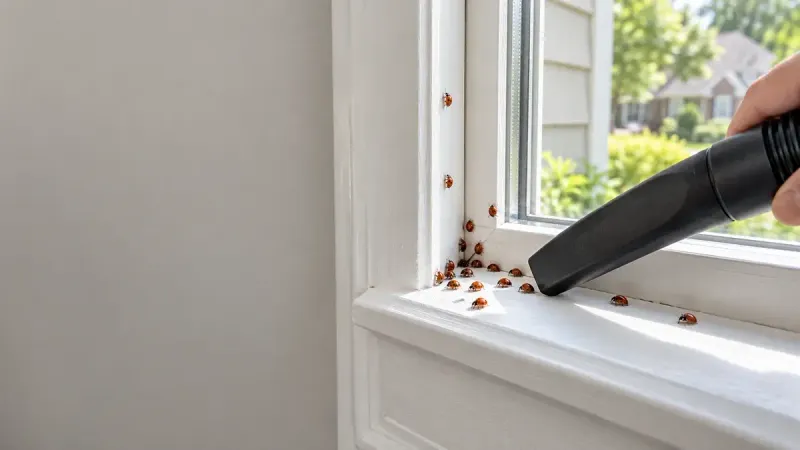
For beetles already in your living space, a vacuum or a soft broom works well. Cornell’s fact sheet advises emptying the vacuum bag afterward, so the beetles do not crawl back out or leave a smell inside the machine.
Minnesota Extension also describes securing a stocking inside the hose to catch them.
Try not to crush them. A disturbed beetle can release a yellowish defensive fluid that smells and may stain walls or fabric.
Gentle sweeping into a dustpan and releasing them outdoors is a fine alternative.
Spraying is not the answer either. Penn State Extension says routine indoor spraying, foggers, or spraying into wall voids do not prevent further emergence and are not recommended as long-term solutions.
If you ever consider a pesticide, follow the product label and use it only in the places and ways the label allows. The EPA suggests choosing nonchemical methods where possible.
As for safety, these beetles are mostly a nuisance. They may pinch, and some people report allergic reactions, but most encounters are harmless.
Poison Control notes that contact with their fluid or eating them can irritate skin or mouth, so keep pets from eating clusters and call for advice if something seems wrong.
Start with the building, not a quick fix
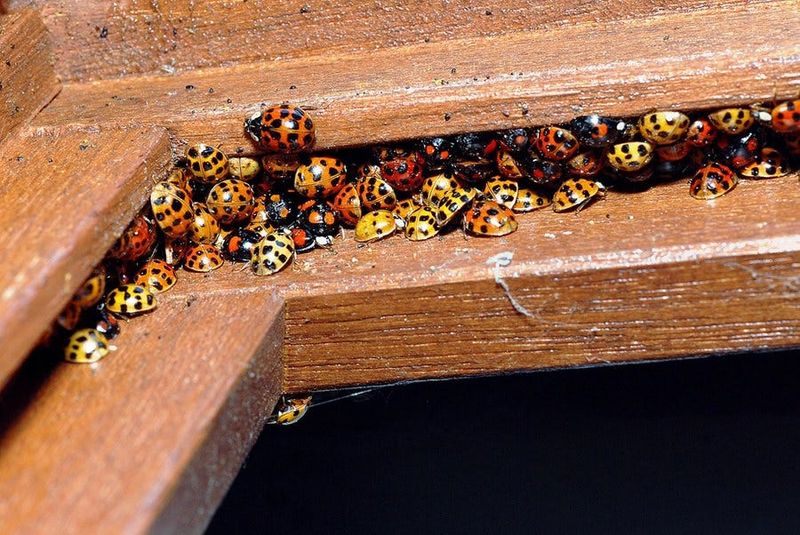
Asian lady beetles show up because fall sends them looking for shelter, and buildings offer plenty of it. Sun, nearby trees, and small gaps may make your house a likelier stop, but none of that is a verdict on your home.
The most useful step is the least dramatic one: close the openings before the season turns, as Minnesota Extension advises. A few stragglers may still appear, and a vacuum handles those easily.
Think of it as locking the door before guests arrive, rather than chasing them out afterward.
Share this story