Get the latest garden guides in your inbox →
Gardening Latest
  • General Gardening
  • Lawn Care
  • Plant Care
  • Composting
  • Soil Health
  • Backyard
  • Garden Muse Magazine
  • General Gardening
  • Lawn Care
  • Plant Care
  • Composting
  • Soil Health
  • Backyard
  • Garden Muse Magazine
  • News
  • Gardening Calendar
  • Garden Structures
  • Vegetable Garden
  • Vertical Garden
  • Raised Beds
  • Hydroponics
  • General Equipment
  • Community Gardens
Garden Themes
  • Spiritual Garden
  • Hydroseeding
  • Seeding and Laying Sod
  • Artificial Grass
  • Lawn Care Equipment
  • Plants
  • Trees
  • Planting Tools
  • Composting Basics
  • Fertilizer
  • Alternative Growing Mediums
  • Front Yard
  • Backyard Activities
  • Landscaping
Gardening Latest

Explore by state

Which state is your garden in?

Currently viewing Michigan

All states

Northeast

  • Connecticut —
  • Delaware 21
  • Maine —
  • Maryland 7
  • Massachusetts 24
  • New Hampshire —
  • New Jersey 8
  • New York 17
  • Pennsylvania 17
  • Rhode Island —
  • Vermont —

Southeast

  • Alabama 7
  • Arkansas —
  • Florida 7
  • Georgia 8
  • Kentucky 21
  • Louisiana 6
  • Mississippi —
  • North Carolina 6
  • South Carolina 20
  • Tennessee 4
  • Virginia 7
  • West Virginia —

Midwest

  • Illinois 6
  • Indiana 9
  • Iowa 20
  • Kansas —
  • Michigan 8
  • Minnesota 6
  • Missouri 6
  • Nebraska —
  • North Dakota —
  • Ohio 8
  • South Dakota —
  • Wisconsin 22

Southwest

  • Arizona 7
  • Colorado —
  • Nevada —
  • New Mexico —
  • Oklahoma —
  • Texas 6
  • Utah —

West

  • Alaska —
  • California 7
  • Hawaii —
  • Idaho —
  • Montana —
  • Oregon —
  • Washington —
  • Wyoming —

No state matches that search.

Site menu

Gardening Latest
  • General Gardening
    • News
    • Gardening Calendar
    • Garden Structures
    • Vegetable Garden
    • Vertical Garden
    • Raised Beds
    • Hydroponics
    • General Equipment
    • Community Gardens
    Garden Themes
    • Spiritual Garden
  • Lawn Care
    • Hydroseeding
    • Seeding and Laying Sod
    • Artificial Grass
    • Lawn Care Equipment
  • Plant Care
    • Plants
    • Trees
    • Planting Tools
  • Composting
    • Composting Basics
  • Soil Health
    • Fertilizer
    • Alternative Growing Mediums
  • Backyard
    • Front Yard
    • Backyard Activities
    • Landscaping
  • Garden Muse Magazine

Explore

  • About GardeningLatest.com
  • Contact Us

Get the latest from the garden

New guides on lawn care, plants and backyard projects, sent when they go up.

Subscribe →

Follow

  • Facebook
  • X
  • Pinterest
  • YouTube
Michigan Gardening

The Michigan Trees That Bring Owls to Your Yard and Keep Mice Out of Your Garage

Every fall, Michigan mice start looking for a warm place to spend the winter, and your garage is right at the top…

NL

By Nora Lindqvist

November 23, 2026 · 6 min read

The Michigan Trees That Bring Owls to Your Yard and Keep Mice Out of Your Garage

Every fall, Michigan mice start looking for a warm place to spend the winter, and your garage is right at the top of their list. Traps and poison can help, but there is a smarter helper that works for free all night long: the owl.

Owls need the right trees for roosting, nesting, and hunting, and many of the best ones already grow wild across Michigan. Plant a few of them, and you may soon hear hooting in the dark while the mouse problem quietly shrinks.

At a glance

Where
Michigan Gardening
Hardiness zone
6 −10 to 0°F
Read
6 minutes
Published
November 23, 2026

1. Eastern White Pine

Eastern White Pine
© nybg

Michigan’s state tree is also one of the best owl hotels around. Its soft, bundled needles and layered branches create thick cover where great horned owls and long-eared owls can rest all day without being bothered by crows.

White pines grow fast, often two feet or more per year once settled in. That speed matters if you want results in your lifetime instead of your grandkids’.

Mature trees also offer wide, sturdy limbs that great horned owls sometimes use for old hawk nests.

Fun fact: lumber from Michigan white pines helped rebuild Chicago after the Great Fire of 1871. Today, a single tree near your property line can do a different kind of rebuilding by restoring the natural balance between hunters and rodents.

2. Bur Oak
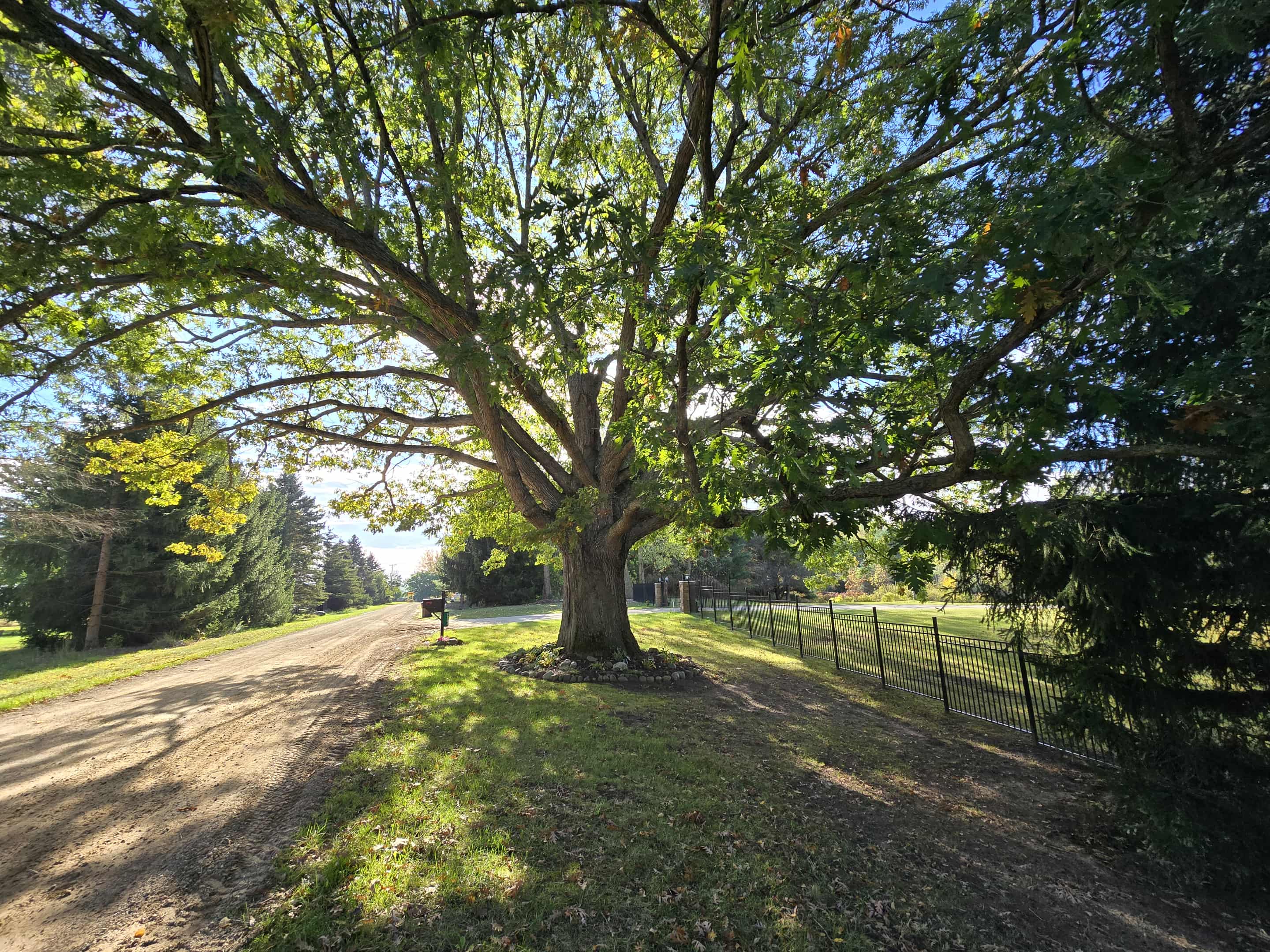
Bur Oak
© Private Lands Wildlife

Picture a tree that has outlived three or four generations of families on the same land. Bur oaks can live 300 years, and as they age, they develop the hollows and cavities that barred owls and screech owls love for nesting.

Here is the clever part. Bur oaks drop big, fringed acorns that draw in mice, voles, and chipmunks.

That might sound like a bad idea, but it actually pulls rodents out into the open lawn, where owls overhead can spot them easily.

Plant one away from the garage, maybe at the edge of the yard. You will be creating a hunting ground that keeps mice busy far from your stored lawn seed and birdseed bags.

3. Eastern Hemlock
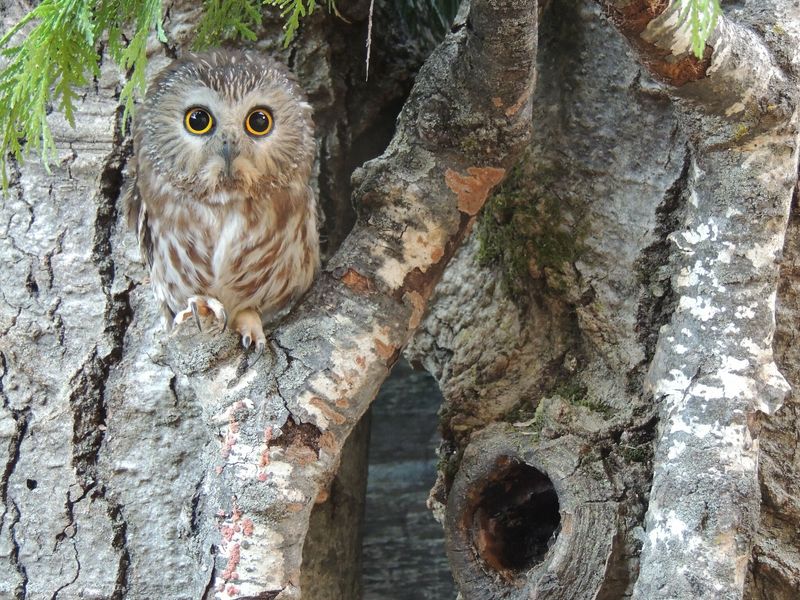
Eastern Hemlock
© Midland Daily News

Ever walked into a hemlock grove on a hot summer day? The temperature seems to drop ten degrees, and everything goes quiet.

Owls notice that too.

Hemlocks have dense, flat sprays of short needles that block wind, snow, and prying eyes. The tiny northern saw-whet owl, barely the size of a soda can, often tucks itself into hemlocks to sleep.

Tough, scrappy, and not picky at all, the eastern red cedar will grow in sandy, rocky soil where other trees give up.

These little hunters eat mostly deer mice, the same critters that chew wiring in garages.

Hemlocks love shade and moist soil, so a north-facing spot works nicely. Keep an eye out for the hemlock woolly adelgid, an invasive pest now found in west Michigan, and check with your local extension office before planting.

4. American Sycamore
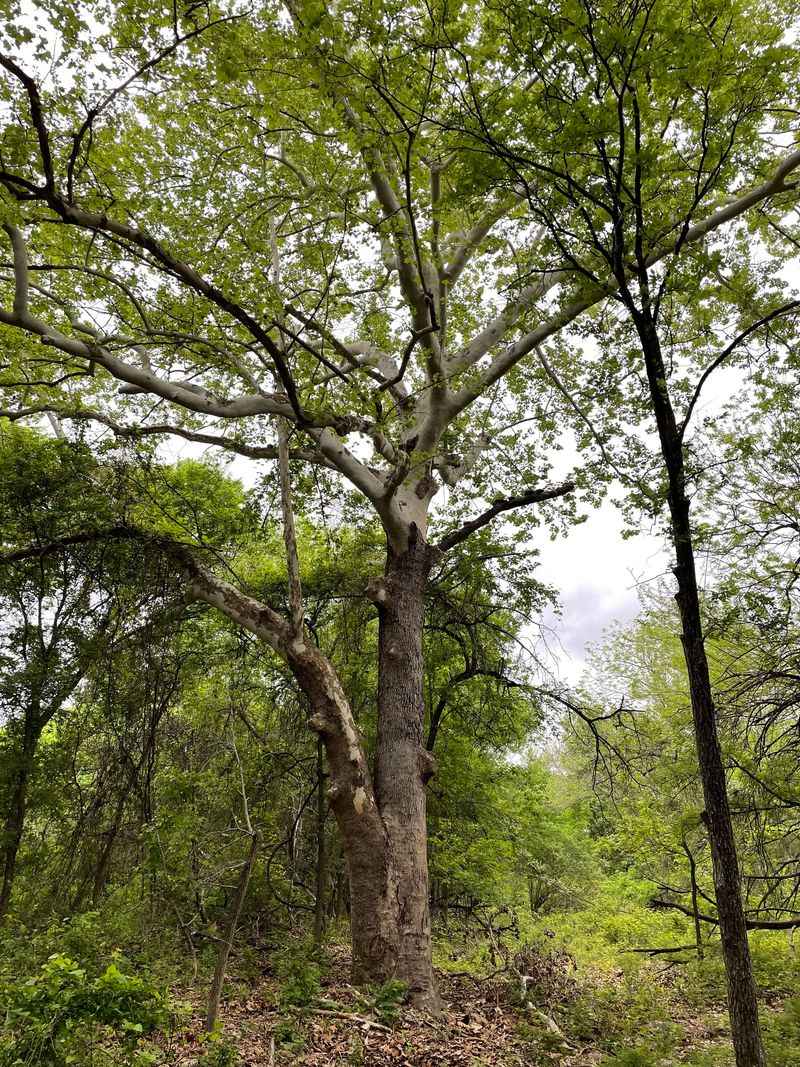
American Sycamore
© Forest Service Research and Development – USDA

Ghostly white branches glowing against a winter sky make the sycamore easy to spot from far away. Inside those giant trunks, something else is often going on.

Sycamores tend to rot from the center out, leaving roomy hollows while the tree stays alive and strong.

Eastern screech owls jump at the chance to move into these natural apartments. Even though they are small, screech owls are fierce little hunters that grab mice, insects, and even small snakes.

Sycamores like wet ground, so they shine near ponds, ditches, or low spots in southern Michigan yards. Give them plenty of space, since they can grow over 100 feet tall.

5. Norway Spruce Alternative: White Spruce
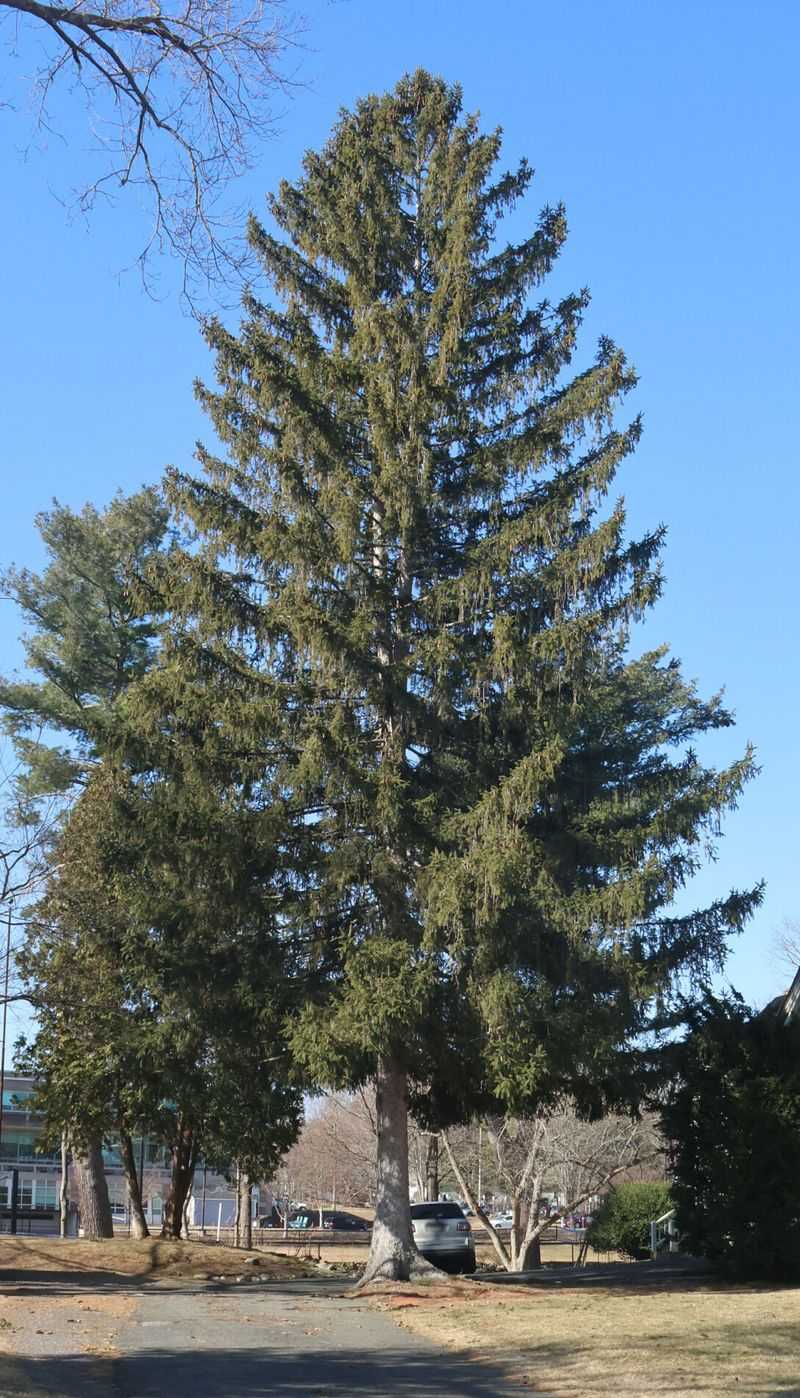
Norway Spruce Alternative: White Spruce
© Community Advocate

Lots of Michigan homeowners plant Norway spruce for windbreaks, but the native white spruce deserves a closer look. It handles cold northern winters like a champ and grows in a neat, cone-shaped form.

A row of white spruce creates the kind of thick evergreen shelter that long-eared owls use for winter roosts. In some years, several of these owls will gather together in the same patch of conifers.

Bird watchers get very excited when they find one.

Bonus: a spruce windbreak on the west side of your property blocks harsh winter wind. That makes your yard more comfortable for you and more appealing to owls looking for a quiet place to rest between hunts.

6. Sugar Maple
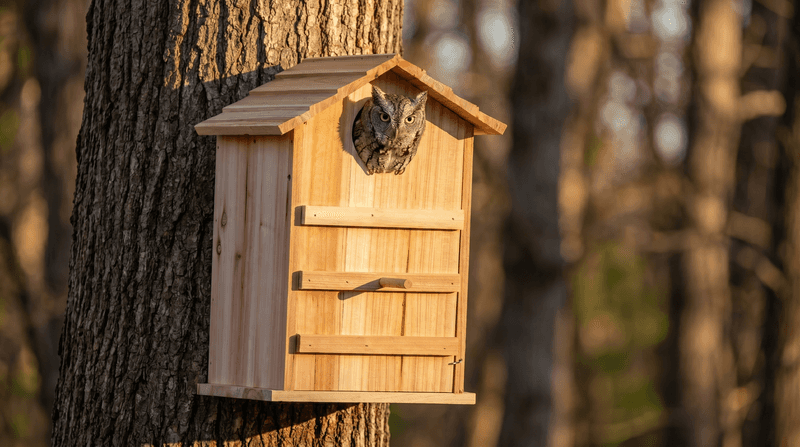
Sugar Maple
© Marlow Market

Most people think of syrup and fall colors when sugar maples come up. Owl fans think about something else: strong, straight trunks perfect for hanging nest boxes.

If your yard lacks old trees with natural cavities, a screech owl or barred owl box mounted 10 to 20 feet up a sugar maple can fill the gap. The maple’s leafy canopy shades the box in summer, keeping baby owls from overheating.

Sugar maples also grow old gracefully. As branches drop over the decades, they leave knotholes that become future homes.

It is a long game, but a rewarding one.

7. Eastern Red Cedar
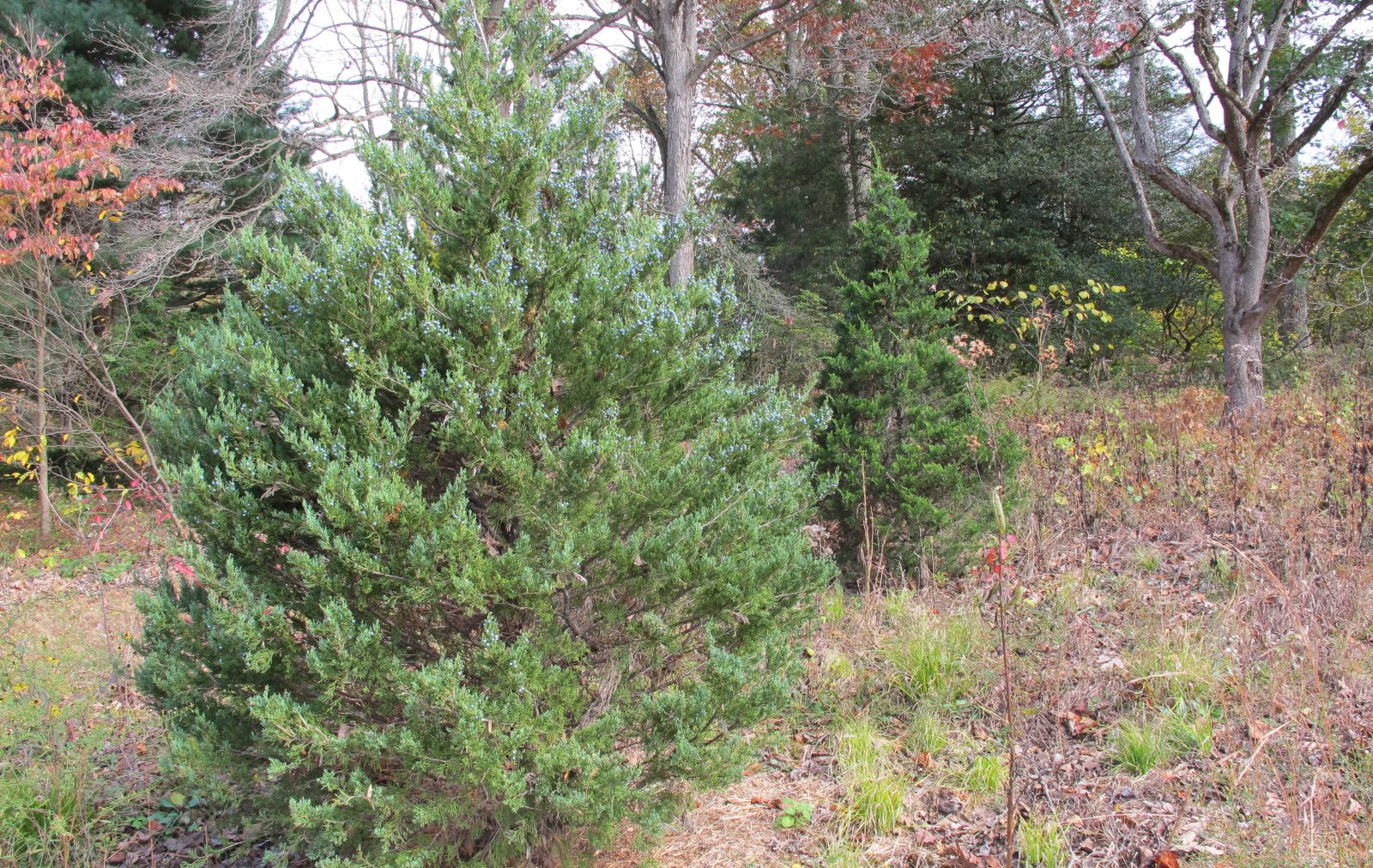
Eastern Red Cedar
© Mt. Cuba Center |

Tough, scrappy, and not picky at all, the eastern red cedar will grow in sandy, rocky soil where other trees give up. Southern Michigan homeowners with poor soil should take note.

Its dense, prickly foliage makes a cozy daytime hideout for screech owls, especially in winter. Songbirds also flock to its blue berries, which keeps the yard lively.

One caution: red cedar can host cedar-apple rust, a fungus that spots apple tree leaves. If you grow apples, plant your cedars a good distance away.

Otherwise, this hardy evergreen is a low-effort way to add owl shelter fast.

8. American Beech
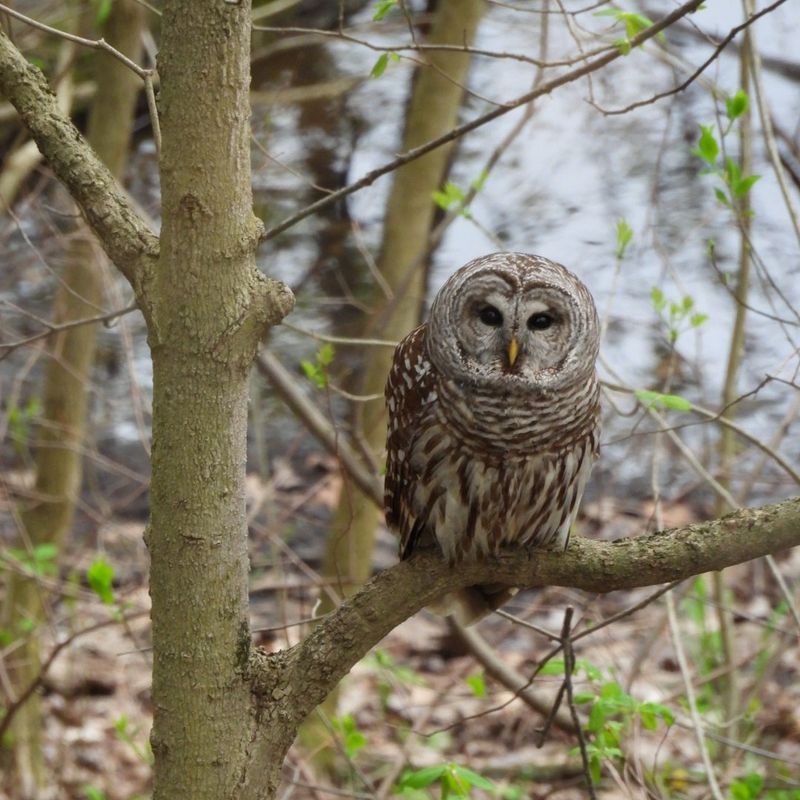
American Beech
© michigannature

Smooth gray bark that looks like elephant skin gives the beech a personality all its own. Barred owls, the ones that hoot “who cooks for you,” often hunt from beech woods.

Beechnuts feed mice, squirrels, and wild turkeys. Again, that pulls rodent traffic into the open where owls can strike.

Young beech trees also hold their dry leaves all winter, giving small owls a rustling screen to hide behind.

Sadly, beech bark disease and beech leaf disease have hurt Michigan beeches. Buy healthy nursery stock and plant them in mixed groups with other species for the best chance of success.

9. Quaking Aspen
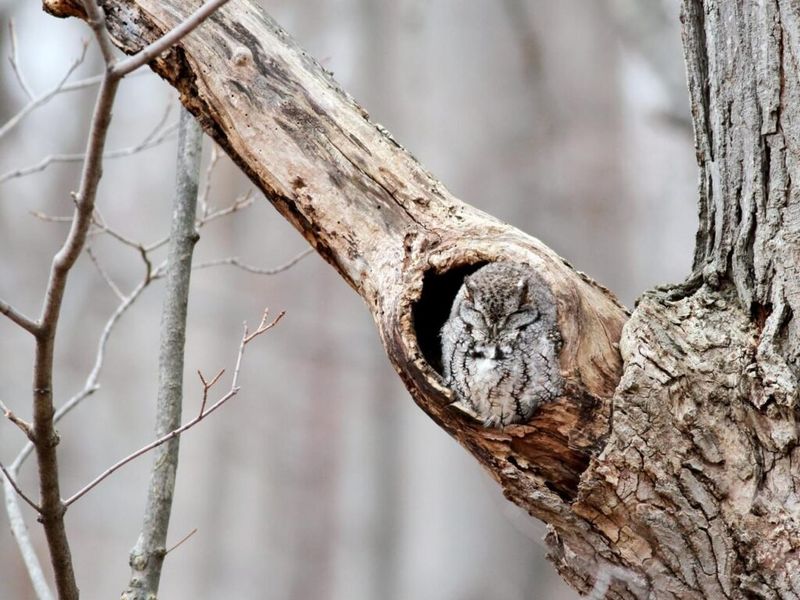
Quaking Aspen
© Wild Birds Unlimited of GPW

Listen closely on a breezy afternoon and aspen leaves sound like soft rain. That shimmer is lovely, but the real owl magic happens in the trunk.

Aspens have soft wood that woodpeckers love to excavate. Old flicker and pileated woodpecker holes become ready-made nest sites for saw-whet and screech owls.

Basically, the woodpeckers do the construction and the owls move in.

Aspens spread by root suckers and live a fairly short life, around 60 to 80 years. Give them a corner where a small grove can form, and you will build a nesting neighborhood over time.

10. Dead Snag Trees
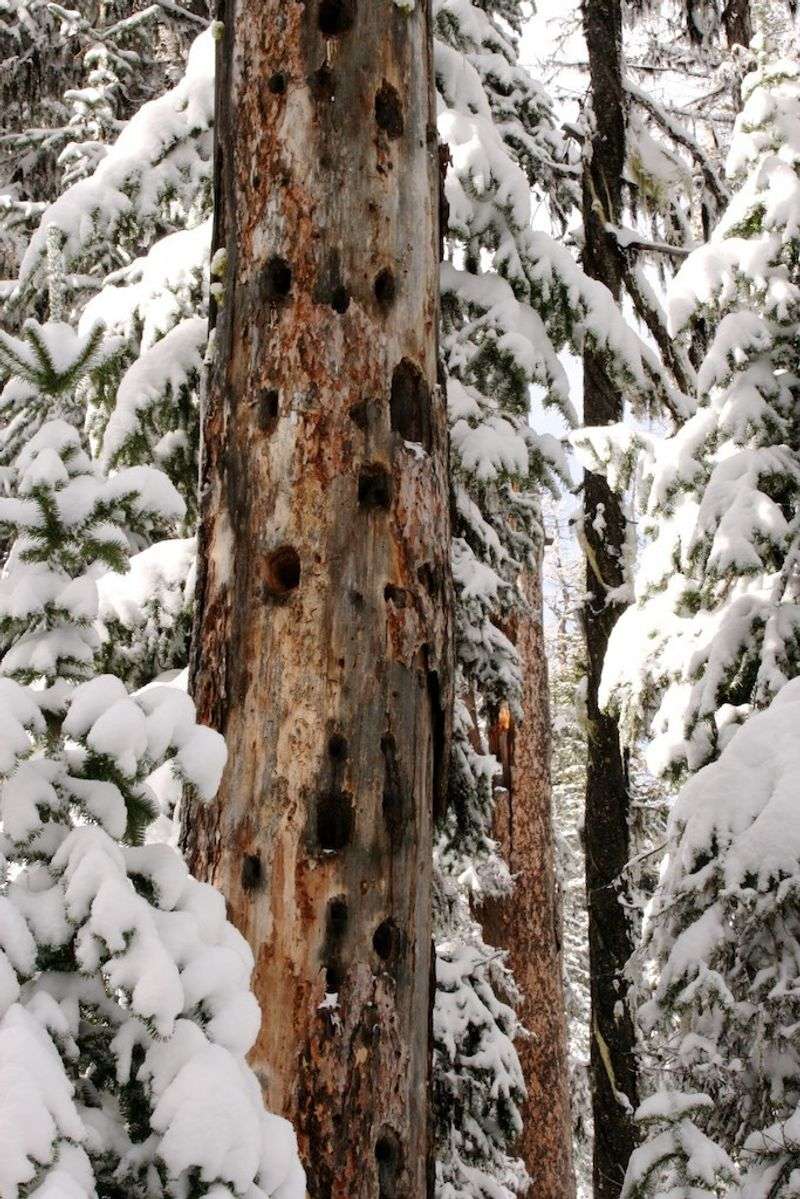
Dead Snag Trees
© Naturally North Idaho

Sometimes the best owl tree is one that already died. Before you call the tree service, think about leaving a safe snag standing.

Dead trees give owls open perches with a clear view of fields and lawns below. Great horned owls love to scan for mice from these high lookouts at dusk.

Snags also develop cavities quickly as the wood softens.

Only keep snags that cannot fall on your house, garage, driveway, or power lines. Have an arborist trim one down to a safe height if needed.

Pair it with a few living trees from this list, and your yard becomes a full owl hunting zone that keeps garage mice on the run.

Share this story

NL

Written by

Nora Lindqvist

More from Nora Lindqvist →

About Gardening Latest

Gardening Latest provides in-depth guides to maintaining and enhancing your garden and backyard. Learn how to make the most of the space you have and create a beautiful garden.

More about us →

Latest stories

  • Virginia Gardening5 Smart Moves When A Coyote Wanders Into Your Virginia Yard, And 3 Big Mistakes

    5 Smart Moves When A Coyote Wanders Into Your Virginia Yard, And 3 Big Mistakes

    3 min ago
  • New Jersey GardeningDon’t Scrape Off Those Papery Tan Clumps On Your New Jersey Shrubs, They’re Full Of Baby Garden Helpers

    Don’t Scrape Off Those Papery Tan Clumps On Your New Jersey Shrubs, They’re Full Of Baby Garden Helpers

    10 min ago
  • North Carolina Gardening8 Trees and Shrubs North Carolina Gardeners Can Prune Now and 4 You Should Leave Alone

    8 Trees and Shrubs North Carolina Gardeners Can Prune Now and 4 You Should Leave Alone

    16 min ago
  • Massachusetts GardeningSnakes Aren’t the Only Venomous Animals in Massachusetts Yards, and This Mouse-Sized Shrew Proves It

    Snakes Aren’t the Only Venomous Animals in Massachusetts Yards, and This Mouse-Sized Shrew Proves It

    26 min ago
  • New York GardeningThose Ladybug Look-Alikes Crawling Inside Your New York Home Chose It For A Reason

    Those Ladybug Look-Alikes Crawling Inside Your New York Home Chose It For A Reason

    36 min ago

Gardening by state

Stories for your state, and the hardiness zone most of it gardens in.

Keep exploring

Read next

All Michigan Gardening →
Michigan GardeningWhy Some Michigan Towns Are Overrun With Black Squirrels While Others Never See One
Michigan Gardening

Why Some Michigan Towns Are Overrun With Black Squirrels While Others Never See One

15 hr ago
Michigan GardeningIs Putting Out Corn for Deer in Your Michigan Yard Actually Legal This Winter
Michigan Gardening

Is Putting Out Corn for Deer in Your Michigan Yard Actually Legal This Winter

17 hr ago
Michigan GardeningWhat Really Happens Inside a Michigan Yellowjacket Nest Once Hard Frost Hits
Michigan Gardening

What Really Happens Inside a Michigan Yellowjacket Nest Once Hard Frost Hits

21 hr ago

More from Michigan Gardening

  • 5 Smart Moves When A Coyote Wanders Into Your Virginia Yard, And 3 Big Mistakes

    3 min ago
  • Don’t Scrape Off Those Papery Tan Clumps On Your New Jersey Shrubs, They’re Full Of Baby Garden Helpers

    10 min ago
Back to top

Leave a response Cancel

Your email address stays private. Required fields are marked with an asterisk.

Gardening Latest

In-depth guides to maintaining and enhancing your garden and backyard: how to make the most of the space you have, and how to make it beautiful.

  • Facebook
  • X
  • Pinterest
  • YouTube

We may earn a portion of sales from products or services that are purchased through our site as part of our affiliate partnerships with retailers.

Explore

  • About GardeningLatest.com
  • Contact Us
  • Terms and Conditions
  • Privacy
  • Editorial Note:
  • FTC Disclosure

Newsletter

New garden guides and seasonal tips, straight to your inbox.

We’ll email you a link to confirm. Unsubscribe any time.

Almost there! Check your inbox and tap the link to confirm.

© 2026 Gardening Latest. All rights reserved.

Back to top