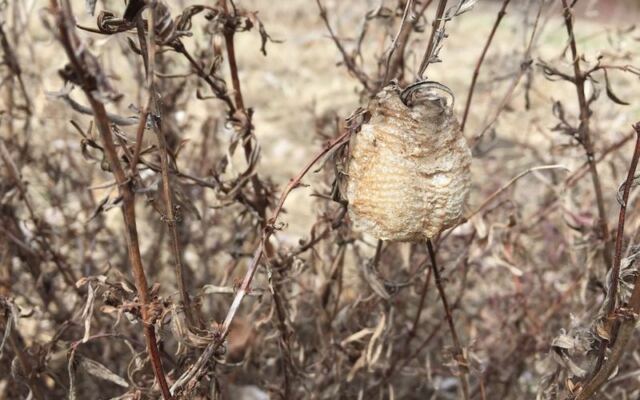
That tan, papery lump on your shrub may well be a praying mantis egg case, packed with young mantids waiting for spring. Leaving it alone gives those eggs a chance to get through winter and hatch.
Mantids are fun to have around, though they are not the pest-control army many people expect. Here is how to tell what you have found and what to do about it.
A papery clump on a twig may be a mantis egg case
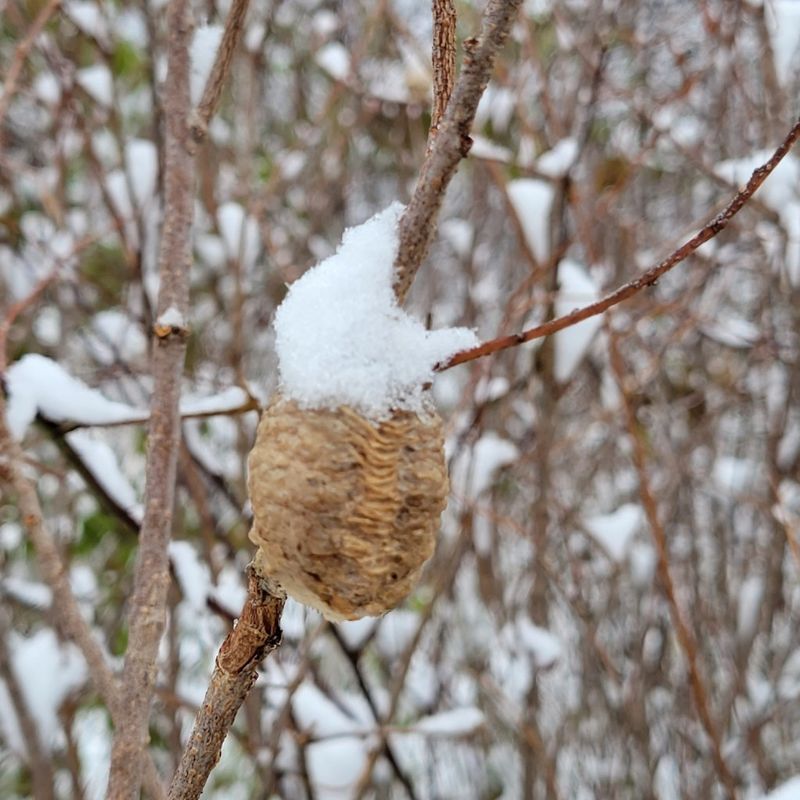
Winter strips the leaves off shrubs and suddenly odd little lumps show up on the bare twigs. A mantis egg case, called an ootheca, is one possibility.
It usually looks like hardened foam, often tan or light brown, with a papery or Styrofoam-like surface.
Texture and attachment are good starting clues. A mantis case is firm, dried, and stuck right to a twig or stem, a bit like spray insulation that set into a lump.
Fresh cases are laid in fall, so they are easy to spot once the foliage drops.
Looks alone do not settle the question, though. Other things can resemble a tan clump, including galls, dried debris, and cocoons from other insects.
A case also does not have to be on a shrub. As NC State Extension notes, mantids can attach cases to other plants and surfaces, such as herbaceous stems and fence posts.
A shrub is a believable spot, but it is not proof of anything.
Think of the shape and feel as a starting point. University of Maryland Extension describes these cases as overwintering egg masses attached to plants, which matches what many New Jersey gardeners find.
If you are unsure, take a photo and compare it with extension pictures before touching it.
The case carries eggs through winter and may hatch in spring
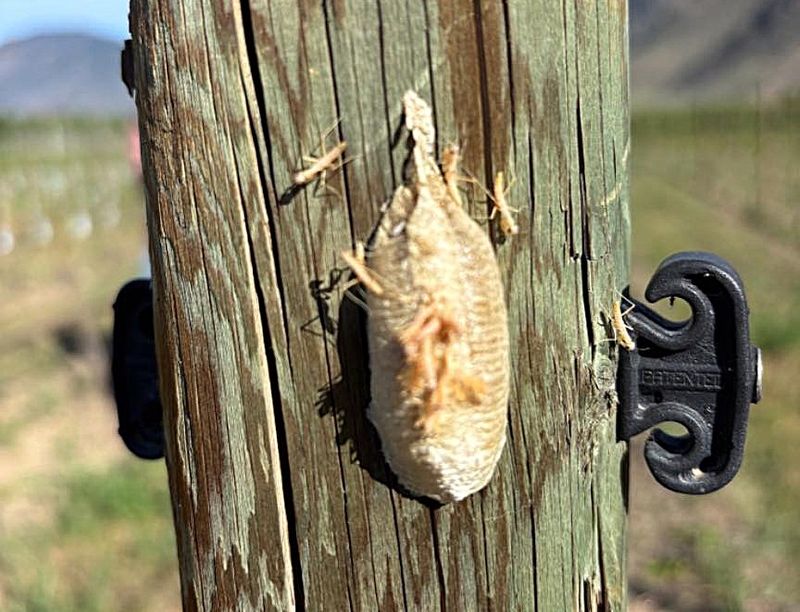
Fall is when the story starts. A female lays her eggs inside a foamy mass that hardens into the protective shell you see on the twig.
The adults die with the cold, but the eggs inside stay put and ride out the winter.
When spring warms up, the eggs typically hatch. Tiny nymphs, which look like miniature wingless mantids, wriggle out and spread through nearby plants.
They start hunting small prey almost right away.
How many eggs are inside? Sources give a wide spread.
Utah State Extension gives a broad estimate of 12 to 400 eggs per case, and other extension sources say dozens to hundreds. That is a range of potential, not a forecast.
Plenty can go wrong between egg and adult. Iowa State Extension points out that some eggs never hatch, and young mantids may eat one another once they emerge.
Add in weather, birds, spiders, and other predators, and only a small share of any hatch will grow up.
So a big case does not guarantee a big crowd of adults in your garden. It simply means there is a chance of some young mantids when the weather turns warm.
New Jersey is home to native and introduced mantids
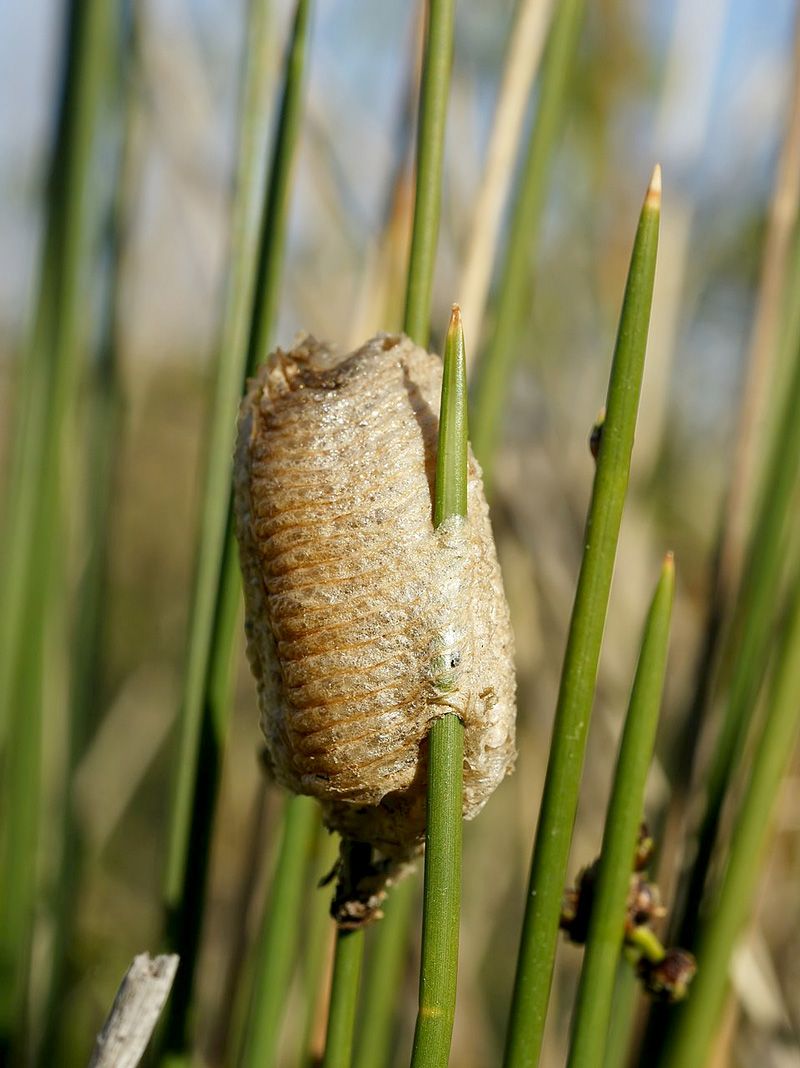
Not every mantis in the Garden State has been here forever. The Carolina mantis is the native species.
The Chinese mantis and the European mantis were brought in from elsewhere and now live in the eastern United States.
Egg cases can offer hints. According to NC State Extension, Carolina cases tend to be longer and narrower, while Chinese cases are larger and more box-shaped.
Treat these as clues only. Size and shape vary, and a quick glance can easily lead you astray.
Words matter here too. Native means a species belongs to the region naturally.
Introduced means people brought it in. Invasive is a stronger label for species that cause harm or spread aggressively.
New Jersey Audubon calls the Chinese and European mantids invasive in the state, but that does not make every mantis case you find an invasive one.
Experts also do not speak with one voice about these introduced species. University of Maryland Extension takes a gentler approach and advises leaving mantids undisturbed.
That mix of views is a good reason to identify first and decide later.
Mantids hunt pests, but they are not targeted pest control
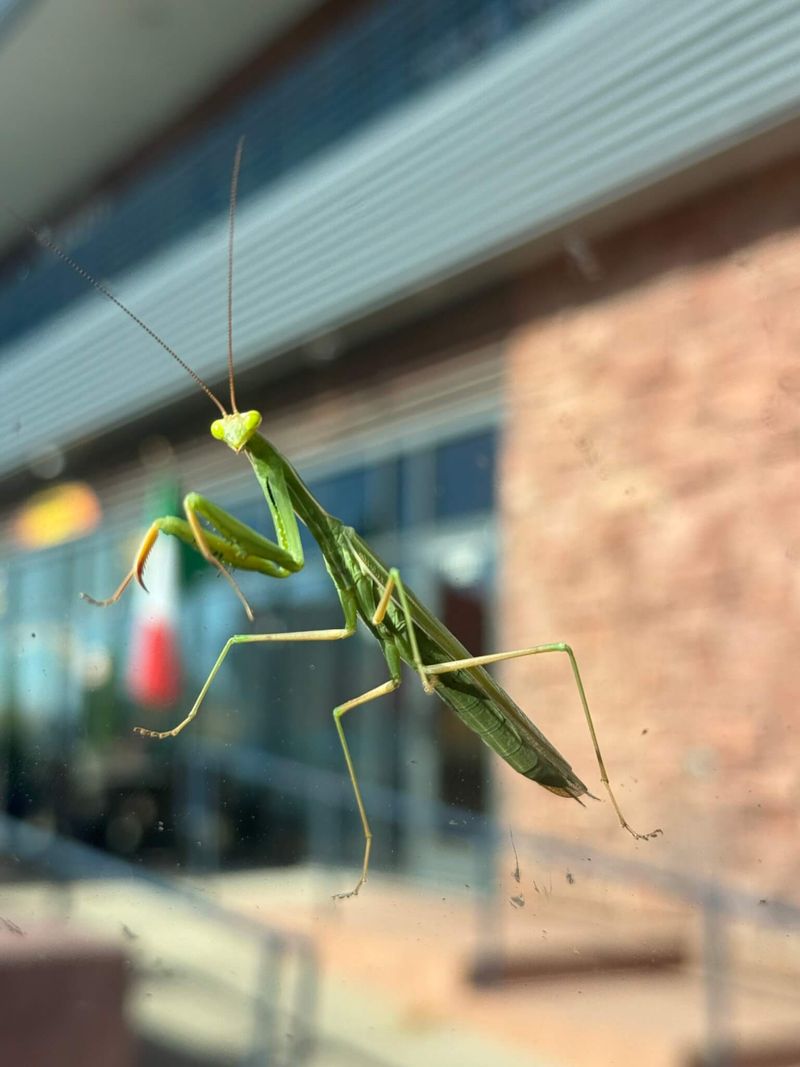
A mantis will happily grab an aphid or a caterpillar. It will just as happily grab a bee, a butterfly, or a lacewing.
These insects are generalist predators, which means they eat whatever comes within reach and fits in their grasp.
That wide appetite is why gardeners get mixed results. University of Maryland Extension says their pest-control value is limited, since they also eat pollinators and other helpful insects.
Iowa State Extension goes further and calls their overall impact on a garden probably negligible.
The same point shows up in New Jersey Audubon’s description of the mantis as an indiscriminate predator. It does not pick out the bugs you wish it would.
There is a difference between a mantis eating a pest and a case solving a pest problem. The first happens.
The second is not something anyone can promise. Utah State Extension lists them among beneficial insects, but even there the case for them rests on eating some pests, not on guaranteed relief.
If you leave a case in place, do it because you enjoy watching these odd, entertaining hunters. Treat any pest reduction as a possible bonus.
Identify the case before deciding whether to remove it
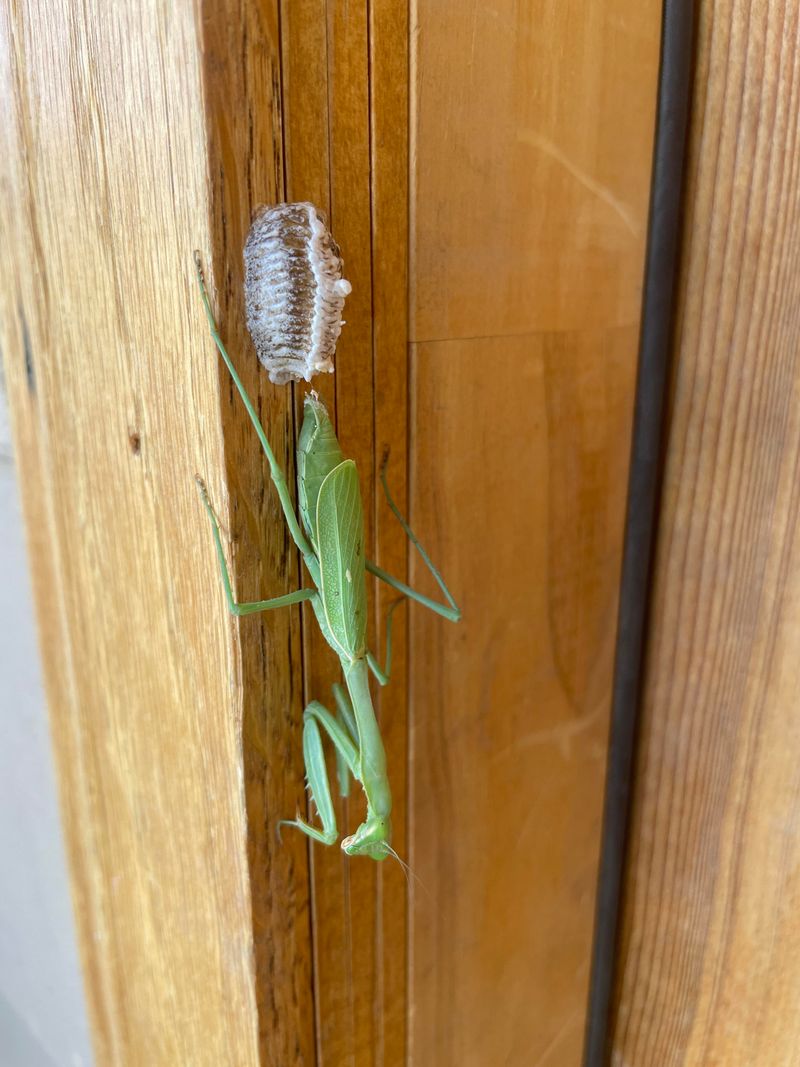
Spotted an unfamiliar lump? Start by not scraping it off just because it looks strange.
Leaving it where it is lets the eggs get through winter, and you can always remove it later if you decide that is best.
If knowing the species matters to you, ask for help. A local extension office or an insect-identification service can look at a clear photo and tell you more than a color or shape guess can.
Include a coin or ruler for scale and a shot of where it is attached.
Why does species matter? Removal advice depends on it.
The Carolina mantis is native, as NC State Extension explains, while New Jersey Audubon calls the Chinese and European mantids invasive in New Jersey. Some sources discuss removing introduced species, while University of Maryland Extension advises leaving mantids alone.
You will not find a magic number here. The sources reviewed give no set count of cases, and no pest-control cutoff, at which removal makes sense.
The choice comes down to what you learn about the case and what you want from your yard.
Keep an outdoor egg case out of the heated house
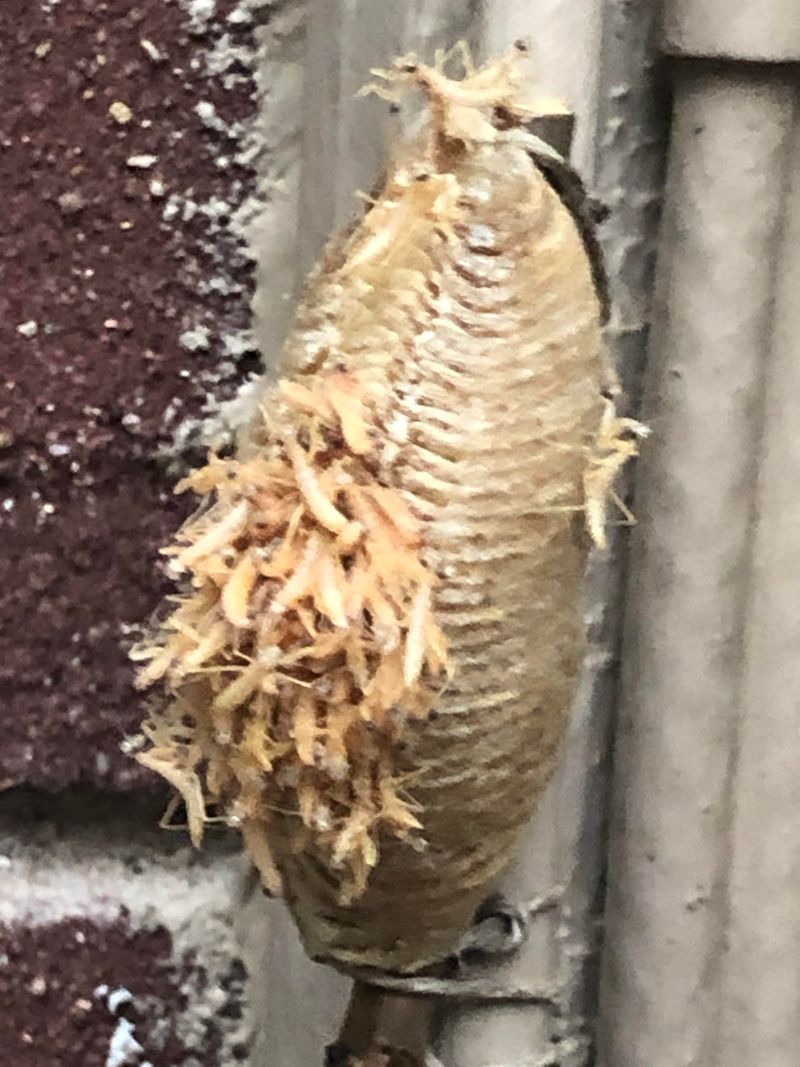
It is tempting to rescue a case from the snow and set it on a shelf. Resist that urge.
Indoor warmth acts like a false spring.
When a case heats up, the eggs can hatch months too early. Tiny nymphs then emerge in the middle of winter, when your yard has no insects for them to eat.
University of Maryland’s Ask Extension answer on indoor hatching warns that these young mantids can be hard to feed and are not suited to release outdoors.
Feeding is the sticking point. Newly hatched nymphs need live prey small enough to catch, and they need it every few days.
That usually means a household with a swarm of hungry mantids and nothing appropriate to serve them.
Crowding adds to the trouble. Iowa State Extension notes that young mantids may eat one another, so a container of hatchlings can shrink fast.
The simplest plan is to keep the case outside, on the plant where it was found, and let the weather set the schedule.
Make the decision with identification, not guesswork
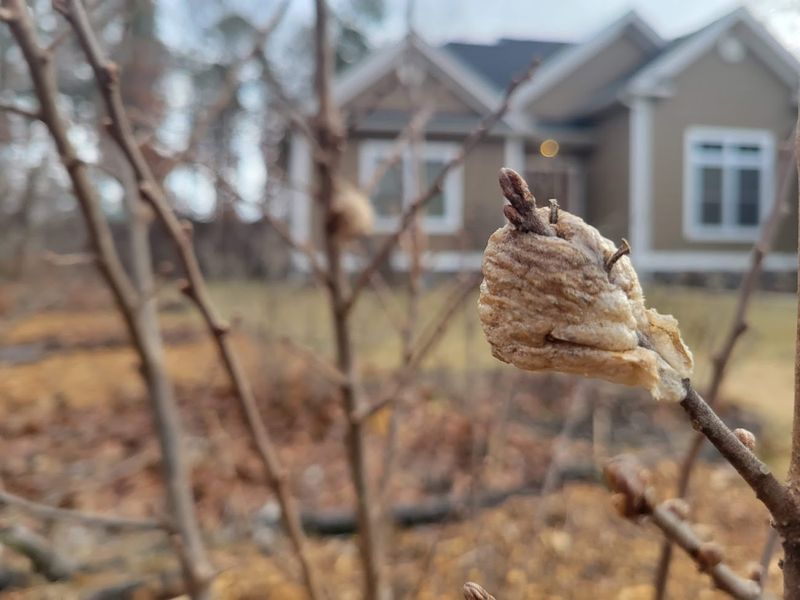
A tan clump on a twig might be a mantis case, but looks cannot confirm the species or promise pest control. If you are unsure, leave it in place while you get an answer, as University of Maryland Extension suggests for mantids you find.
Keep it outdoors, too, because indoor warmth can trigger a hatch at the wrong time.
Some winter mysteries are best solved by waiting and looking closely.
Share this story