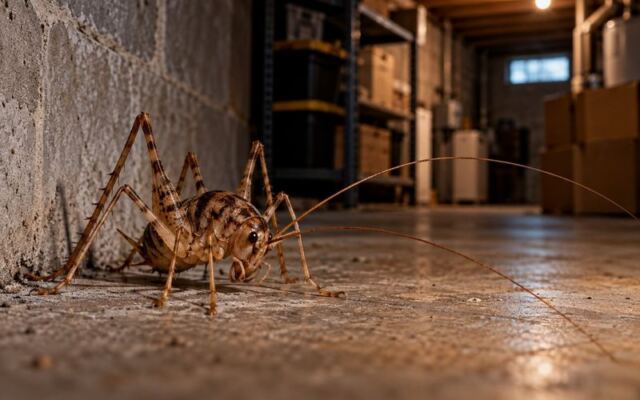
You flip on the basement light and something big leaps out of nowhere, landing near your boots. It has a humped back, long feelers, and legs that look far too large for its body.
Many Alabama homes get a visitor like this as fall arrives. Here is what it might be, why it showed up, and what to do about it.
Could the hopper be a camel cricket?
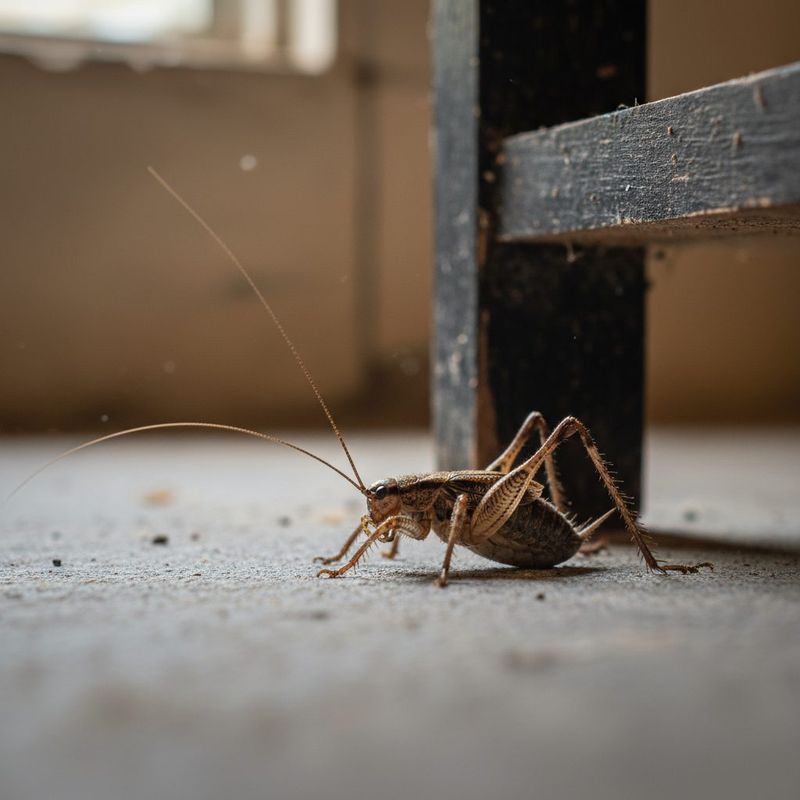
Start with what you can see. Camel crickets are typically hump-backed, have no wings, carry very long antennae, and have large hind legs built for jumping.
If the insect you saw matches that list, a camel cricket is a good possibility.
Notice the word possibility. Adults vary in size and color, so a description from memory cannot confirm what the insect was.
University of Georgia extension guidance describes these features, but a clear photo or a captured specimen is what really settles the question.
Your ears can offer a clue too. Camel crickets do not chirp.
If you hear chirping inside the house at night, another kind of cricket, such as a field cricket, is the more likely source.
Think about how the insect moved. Camel crickets are known for sudden, springing jumps, often in no clear direction, which is why they startle people so much.
Fast jumping alone does not prove anything, though, because other hoppers can do the same thing.
If you want a firmer answer, try gently trapping the insect under a clear cup and snapping a few photos from above and from the side. Then you can compare it with extension photos or send the images to your county Extension office.
That small step is far more reliable than guessing based on a quick glimpse in a dim basement.
A “spider cricket” is a cricket, not a spider
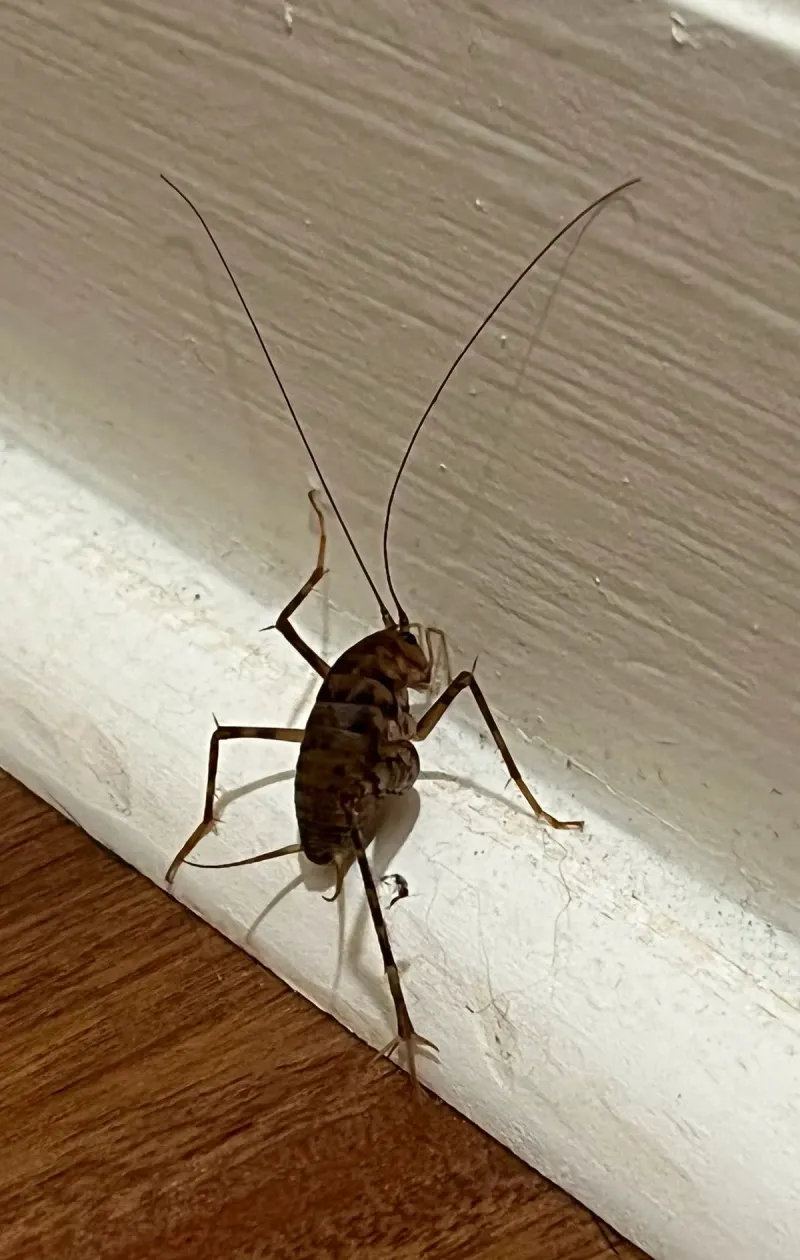
The nickname causes most of the confusion. Camel crickets are sometimes called spider crickets because their long, bent legs can remind people of a spider.
That is where the resemblance ends.
These insects are crickets. They belong to the insect order Orthoptera, the group that also includes grasshoppers and katydids, and the Orthoptera Species File places them in the family Rhaphidophoridae.
A quick counting check can help. Insects have six legs and two antennae, while spiders have eight legs and no antennae.
A camel cricket has those two long feelers sweeping out in front, which a spider lacks.
So the claim that this bug is not a cricket gets it backward. The better way to put it is that it may be a camel cricket, a cricket and not a spider.
Keep in mind that the nickname does not identify any one insect. Plenty of other long-legged creatures get compared to spiders, and a name on its own tells you little.
The body shape, antennae, and leg count are what extension identification guides use to sort them out.
Fall shelter and basement conditions both matter
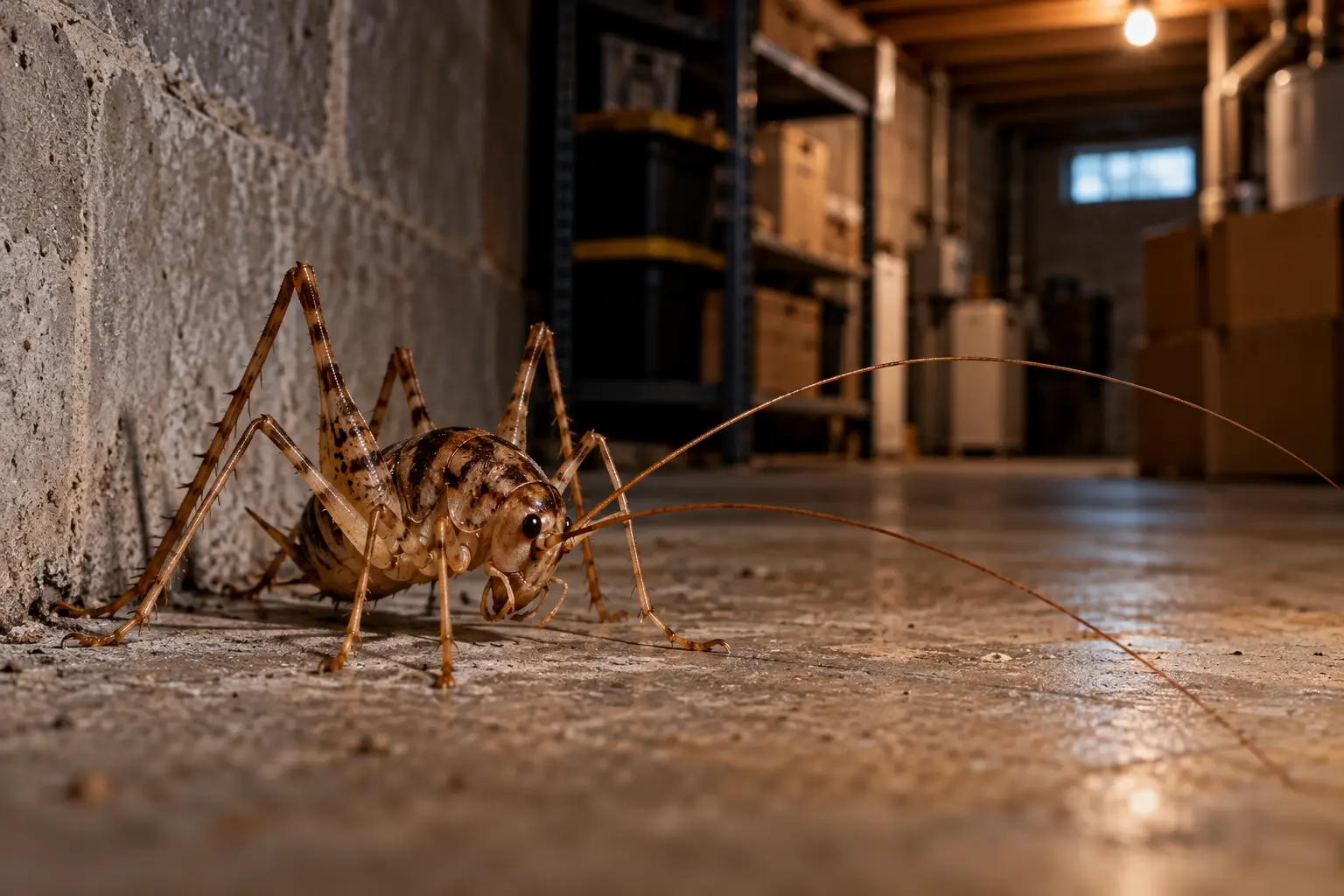
Autumn is when many people first notice camel crickets indoors. According to University of Missouri Extension, house-invading crickets may move into buildings in fall to find a suitable place to spend the winter.
Falling temperatures are only part of the story, though. Cooler weather does not push every cricket indoors, and a basement that stays dry and sealed may never see one.
Camel crickets favor cool, damp, dark spots, both outdoors and in buildings. Southeastern extension guidance lists basements, crawlspaces, wall voids, sheds, and garages as common hiding places.
Picture two houses on the same street. One has a damp crawlspace, a gap near the door sill, and a stack of cardboard boxes on the floor.
The other is dry and tightly sealed. The first is far more likely to be a comfortable stopover.
So think of it as two ingredients working together. The season sends the insects looking for shelter, and the building decides whether it offers what they want.
Moisture and open access are the parts you can actually change.
Most are nuisance pests, but stored fabrics can be at risk
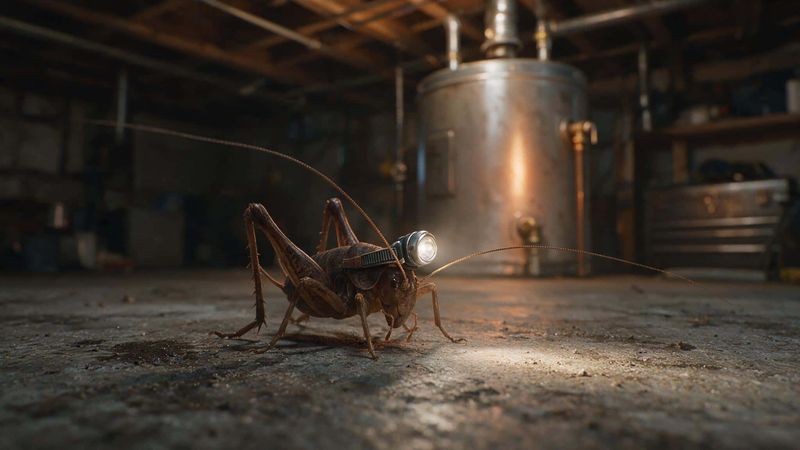
Seeing one camel cricket is not a sign your house is overrun. Extension sources describe them mainly as nuisance pests, and University of Missouri Extension notes that they seldom damage household items.
They do not threaten the structure of your home.
Harmless does not mean incapable of any damage, though. NC State Extension says a persistent population may damage stored garments or linens if other food is scarce.
That is a specific situation, not a guarantee. It matters most if you keep clothing, blankets, or old linens in a basement or crawlspace and see crickets there week after week.
A practical example helps. If you spot a single cricket near the washing machine, a quick cleanup is all that is needed.
If you find many crickets around boxes of stored sweaters, it makes sense to check those items for chewed spots and move them somewhere drier.
Plastic bins with tight lids can protect fabrics better than open cardboard boxes. That small change keeps your belongings safer whether or not crickets ever show up again.
Dry damp areas and close likely entry points
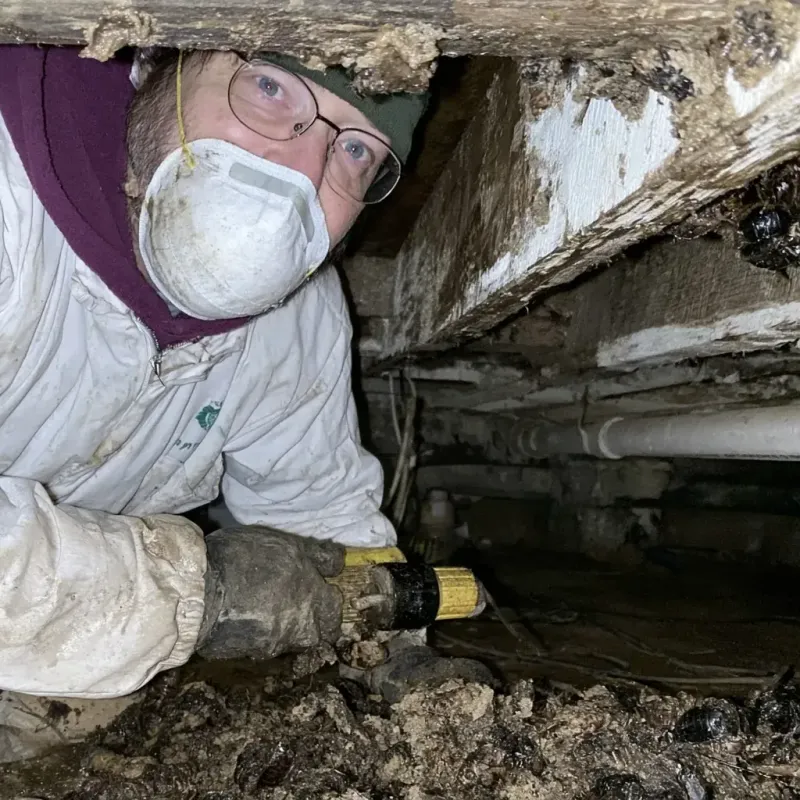
The most lasting fix starts with the building, not the bug. NC State Extension recommends looking for leaks or excess humidity and drying out damp areas.
Alabama summers leave plenty of moisture behind, so this step often matters most.
Walk through your basement or crawlspace with a flashlight. Check under sinks, around water heaters, along pipes, and near the base of walls for drips, damp patches, or a musty smell.
Fixing a slow leak or running a dehumidifier can make the space far less inviting.
Next, look for ways in. Seal gaps around foundations, doors, vents, and utility lines, and replace worn weatherstripping at the bottom of doors.
Even a small crack can serve as an entrance for a determined cricket.
Then look outside. Move clutter, wood scraps, and firewood away from the foundation, because piles next to the house create cool, sheltered spots right where the insects want to be.
All of these steps go after habitat and access rather than only the insects already inside. A dry, sealed space with fewer hiding places nearby gives crickets less reason to come in, and it helps with other moisture-loving pests too.
Remove individual crickets and use pesticides cautiously
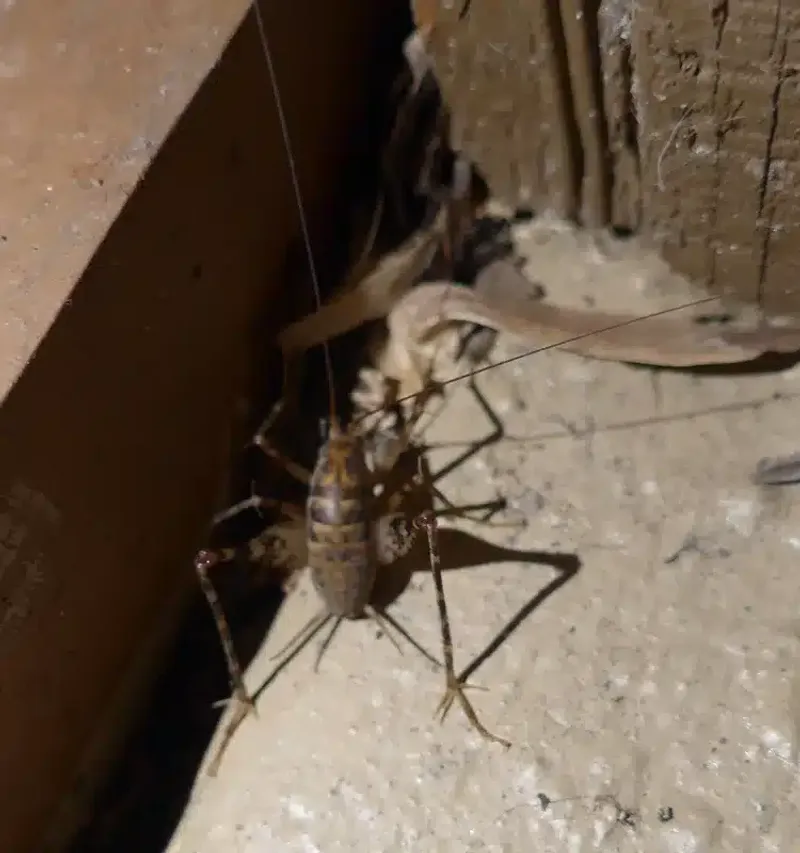
For the crickets already inside, simple tools work well. According to University of Missouri Extension, a vacuum can remove individual crickets, and sticky boards can catch them.
Place boards along walls and in corners where you have seen activity.
Keep their limits in mind. Neither tool fixes dampness or closes an open gap, so new crickets may keep arriving until those problems are handled.
Sticky boards also work as a check. If you catch only a few insects, that points to a small problem.
If the boards fill up quickly, it is a signal to look harder at moisture and entry points.
Pesticides should be a careful last step, not a first reaction. NC State Extension emphasizes exclusion and moisture management, and it advises using only products labeled for the intended pest and site, following the current label.
Take particular care in confined crawlspaces, where fumes and residues can linger and where you may be working in tight quarters. Spraying across your whole house is not recommended.
If you are unsure, your county Extension office or a licensed pest professional can help you choose a safe approach.
A basement stays quiet when it stays dry and sealed.
Share this story