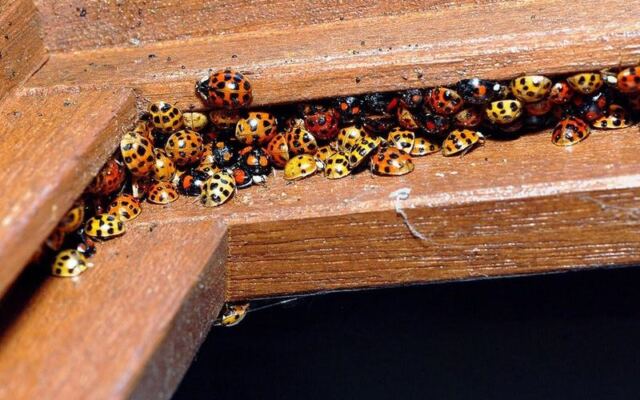
Ladybugs show up inside Minnesota homes every winter because many of them are multicolored Asian lady beetles that slipped in during fall. They crawl into small gaps, settle into protected spaces, and wander out on mild, sunny days.
They are mostly a nuisance, but how you handle them matters, especially if you want to avoid stains. Here is what is going on and what actually helps.
Why do they appear when it is cold?
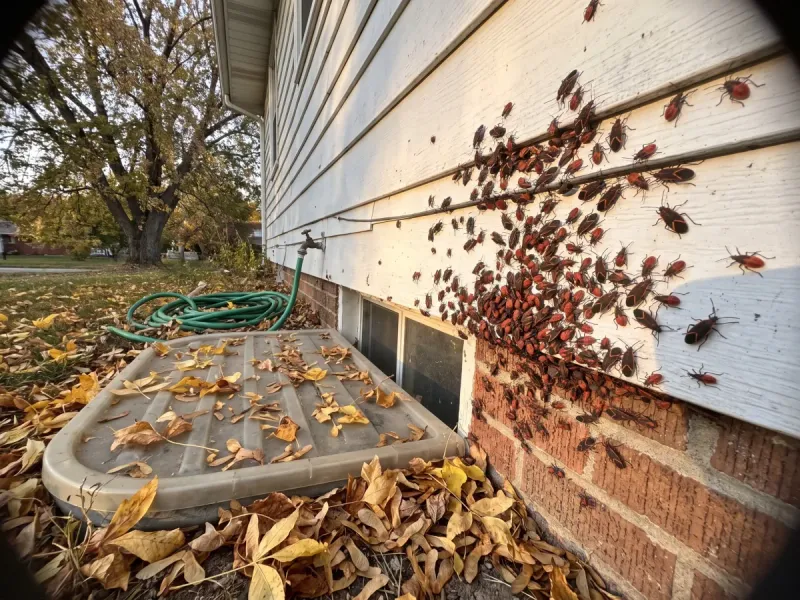
Winter sightings start back in fall. Each year, adult lady beetles fly to buildings, and University of Minnesota Extension says this typically happens from late September through late October.
Multicolored Asian lady beetles are a likely explanation for the crowds many homeowners see.
The beetles look for a protected place to spend the cold months. They squeeze through small gaps around windows, doors, rooflines, and other openings, then settle into spaces you rarely see.
Sunny sides of buildings and homes near wooded areas may draw more of them.
Then comes a mild, sunny day in January or March. The warmth can wake some beetles, and they may move toward windows and light.
To you it looks like they just arrived, but a beetle seen in winter generally got inside the previous fall. It did not come in from the snow that morning.
One caution is worth keeping in mind. Not every lady beetle indoors is the same species, so the seasonal pattern is a strong clue rather than proof.
Other lady beetles can also wander indoors, though the fall gathering at buildings and the winter window visits are classic habits of the Asian species.
Knowing the timing helps you plan. The beetles you see now are already inside, so the best cleanup is calm and gentle.
The best prevention happens months earlier, before the next fall flight begins.
A mark behind the head offers a useful clue
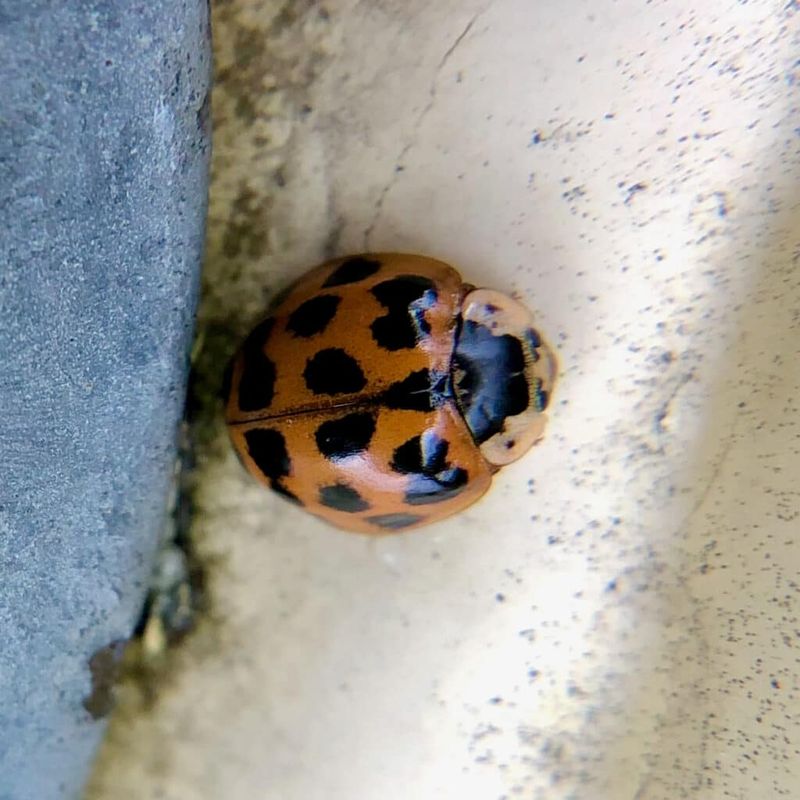
Take a close look at the area just behind the beetle’s head. Multicolored Asian lady beetles usually have a white patch there with a black M-shaped mark, sometimes described as an M or W depending on how the beetle is facing.
It is a helpful clue, and a magnifying glass or phone camera zoom makes it easier to spot.
Treat it as a clue, not a final answer. The mark can be faint or broken, so a beetle without a crisp M is not automatically a different species.
Checking a few beetles gives you a better picture than judging just one.
Color and spots vary too. According to University of Minnesota Extension, these beetles range from tan or orange to deep red, and some have many spots while others have few or none.
That is why color alone is a poor guide.
Where you find the beetle does not settle the question either. Being indoors in winter does not prove the species, and the word ladybug is a common name used for many kinds of lady beetles.
If most of the beetles in your house show the M-shaped mark, the Asian lady beetle is a sensible conclusion. If they look quite different, a different lady beetle may be involved.
They shelter indoors but do not breed there
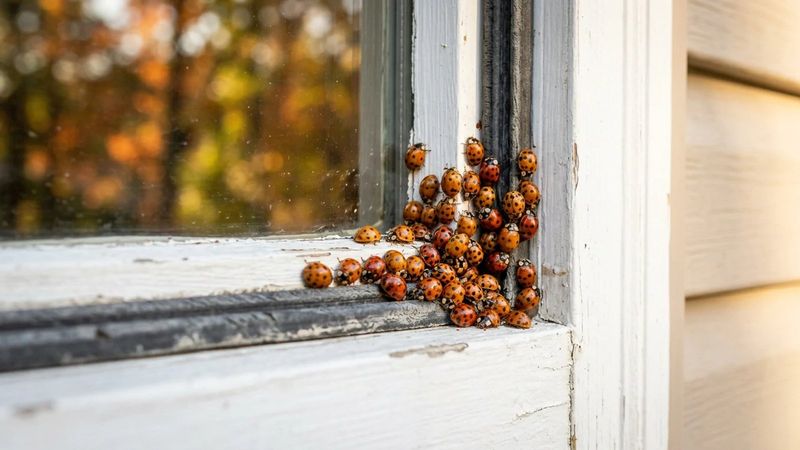
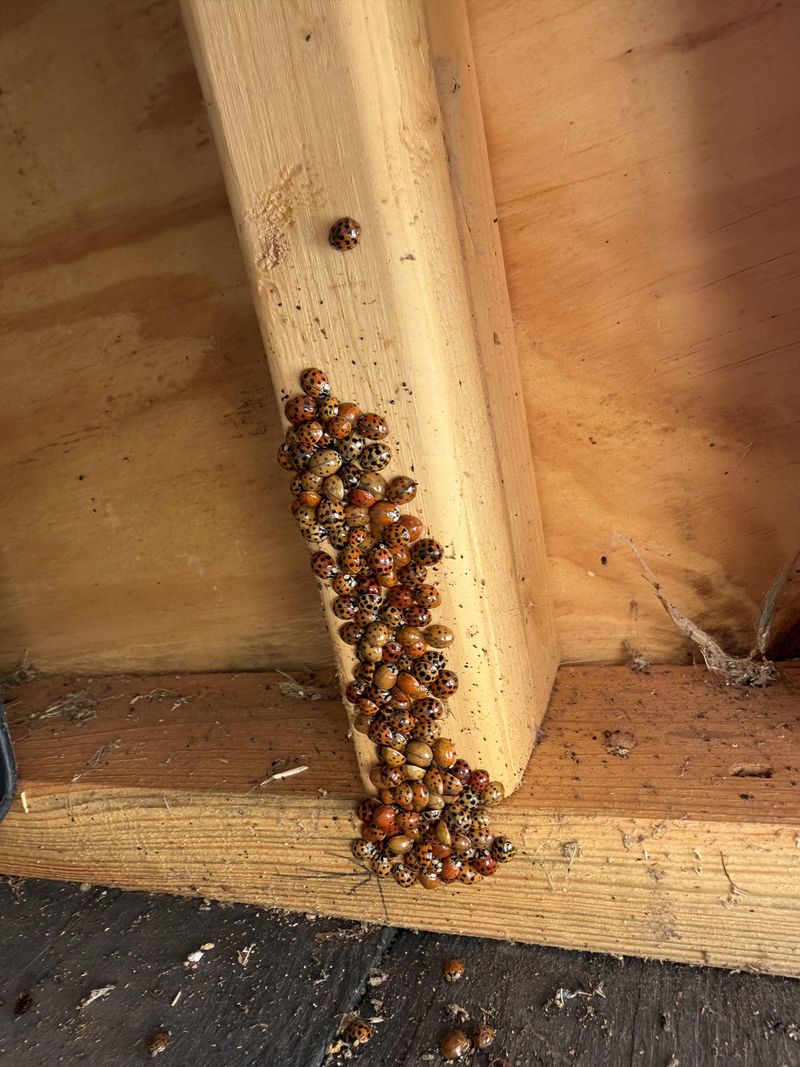
After they get in, the beetles look for tight, protected spots. Wall voids, attics, and similar sheltered spaces work well for them, which is why you may see few for weeks and then a sudden handful at a window.
Many people worry that a colony is growing inside the walls. That is not what happens.
University of Minnesota Extension says the beetles do not reproduce indoors. Beetles that show up in winter or spring generally entered the previous fall.
Because they are not breeding, the numbers do not climb through the season. If anything, you will see fewer as time goes by, as beetles leave in spring or finish their season indoors.
The house itself is safe from them as well. They do not infest wood, eat stored food, or destroy fabrics, and they do not damage other household materials.
Finding them is not a sign of a structural problem, a leak, or rot.
Think of them as temporary guests that came in looking for shelter. They are annoying, but they are not remodeling your home.
That makes calm, low-mess removal a perfectly good strategy.
Crushing them can leave a stain
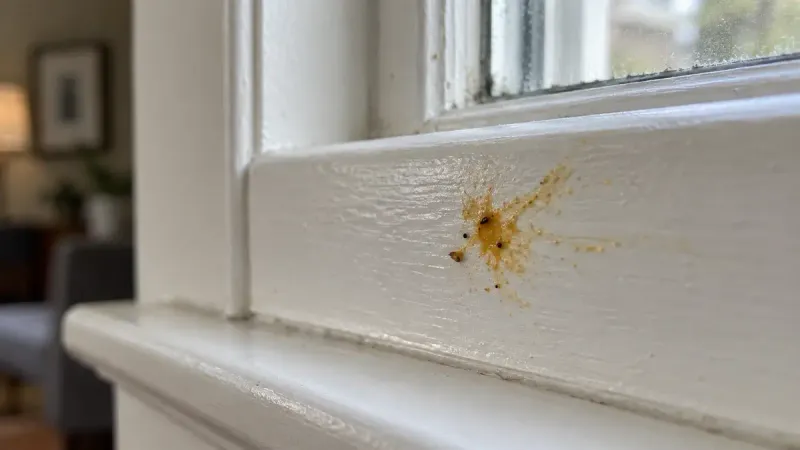
Swatting feels natural, but it is the worst option. When crushed, these beetles can release a yellowish defensive fluid.
It smells unpleasant and can stain light-colored surfaces such as walls, curtains, and window sills.
Vacuuming is the better choice. A vacuum picks the beetles up without squashing them, so there is far less odor and mess.
A handheld or hose attachment works well around window frames.
University of Minnesota Extension suggests a simple trick. Put a knee-high nylon stocking over the end of the vacuum hose and secure it inside, so beetles collect in the stocking instead of the machine.
This helps limit odor and keeps live beetles from crawling around in the vacuum.
When you finish, remove the stocking promptly and close it, for example with a knot. Then dispose of it outdoors or in a sealed bag.
You may wonder about safety. The beetles do not sting or carry disease.
Some can bite hard enough to break skin, but this is occasional, and the discomfort is usually minor and short-lived. Gentle handling and a vacuum keep encounters simple.
Sealing gaps before fall reduces entry
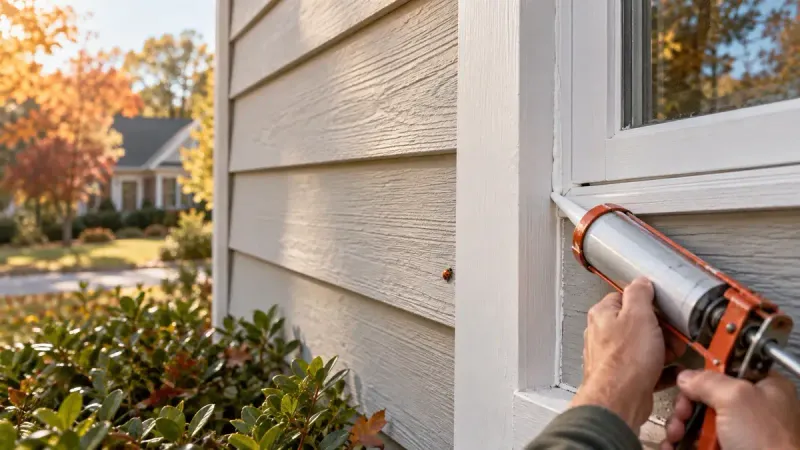
The most useful step is stopping beetles before they get inside. Aim to do the work early, since University of Minnesota Extension advises finishing repairs by the end of September, before the main fall flight.
Gaps can be tiny. The beetles can fit through openings as small as 1/8 inch, so walk around the house and look closely rather than only checking for large holes.
Seal cracks around doors, windows, siding, fascia, and places where utilities enter the house, such as pipes and cables. Repair torn screens, and add door sweeps or weather seals where there is light under or around a door.
Start with the sunny sides of the house. Sunny building sides and homes near wooded areas may attract more beetles, so those spots deserve extra attention.
Set realistic expectations. Sealing reduces entry, but it may not stop every beetle.
A few stragglers can still slip in, and the vacuum is ready for them. If you find gaps in winter, make a note and fix them next summer, when caulk works best and you have time to be thorough.
Why indoor sprays rarely solve the problem
A spray can seems like a quick fix, but it misses the main target. Most of the beetles are not out in the room.
They are tucked inside wall voids, where an indoor spray simply cannot reach them.
That is why University of Minnesota Extension calls indoor sprays ineffective once the beetles have settled into those spaces. You might knock down a few visible beetles, but more can keep appearing from behind the walls on warm days.
You would also add chemical residue to your living space for little benefit.
There is a different option outdoors. The Extension describes exterior residual treatments applied before the fall arrival period as one possible approach.
It is an option, not a guarantee, and beetles may still find a way in.
If you consider a treatment, read the label first. Use only products labeled for the intended application, and follow the directions on the label exactly, including where and how much to apply.
For most households, sealing gaps and vacuuming do more good than pesticides, with less risk and less mess.
They also help control pests outdoors

Outside, the story changes. These beetles prey on aphids and other soft-bodied plant pests, so a garden full of them is not a problem to fix.
Their habit of crowding into houses is the trouble, not their presence in the yard.
The beetle is also nonnative to North America, and you will see it called invasive. Sources differ on that word.
A peer-reviewed review discusses possible effects on other insects, while University of California Agriculture and Natural Resources says it is not considered invasive in California. So the label is not settled everywhere.
For your home, the plan is simple. Vacuum the beetles you find, skip the crushing, and put your effort into sealing the house before next fall, rather than trying to remove beetles from the yard.
A beetle on the window is a small guest from a helpful family, and a good seal keeps it outside where it does its work.
Share this story