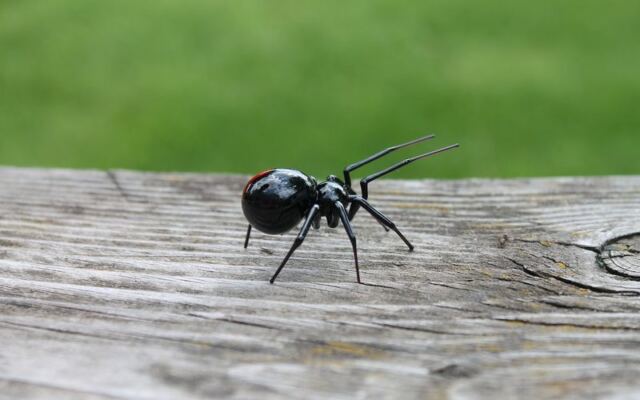
A glossy black spider with a red mark on its belly can spend the winter tucked into a sheltered spot, and a New Jersey deck is a place worth checking. Black widows look for dry, quiet cover when the weather turns cold, and a deck has plenty of that.
Knowing what to look for makes fall and winter cleanup safer for you and your family. Here is how to check your deck and storage areas without taking risks.
Why sheltered spaces deserve a seasonal check
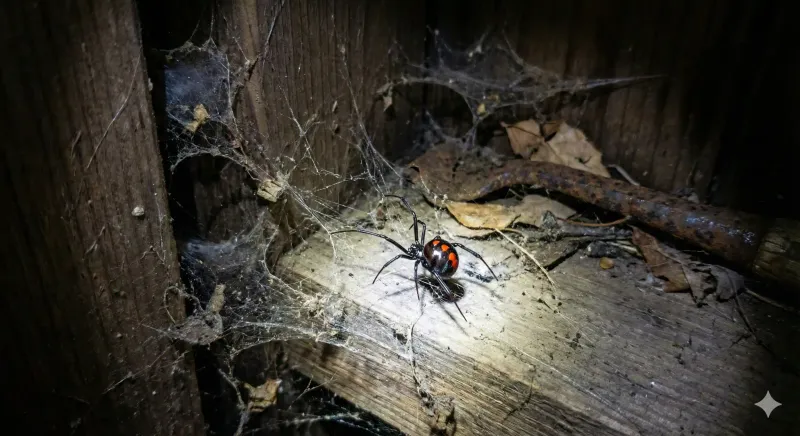
Cold weather changes how black widows live outdoors. Colorado State University Extension explains that outdoor development stops in the cold and that widows look for protected cover to wait out winter.
That means a widow does not need to leave the neighborhood to survive; it just needs a safe, tucked-away spot.
New Jersey guidance points the same way. The state’s pest management document recognizes black widows in New Jersey and describes them in dry, quiet, sheltered places, often near the ground.
Stones, woodpiles, and spaces around buildings all fit that description.
A deck has protected crevices, so it is one sensible place to look. Still, the sources we have do not show that New Jersey widows regularly gather under decks every winter.
There is no record of a local surge, and nobody should assume one.
The better way to think about it is simple housekeeping. When you tidy up for the cold months, treat the dark, undisturbed corners around your deck as spots that deserve a careful look.
That small habit is a smart precaution, not a reaction to an alarming trend.
You may find nothing at all, and that is a perfectly good result. The goal is to know what shares your outdoor space before you stick a hand into it.
Red markings can vary
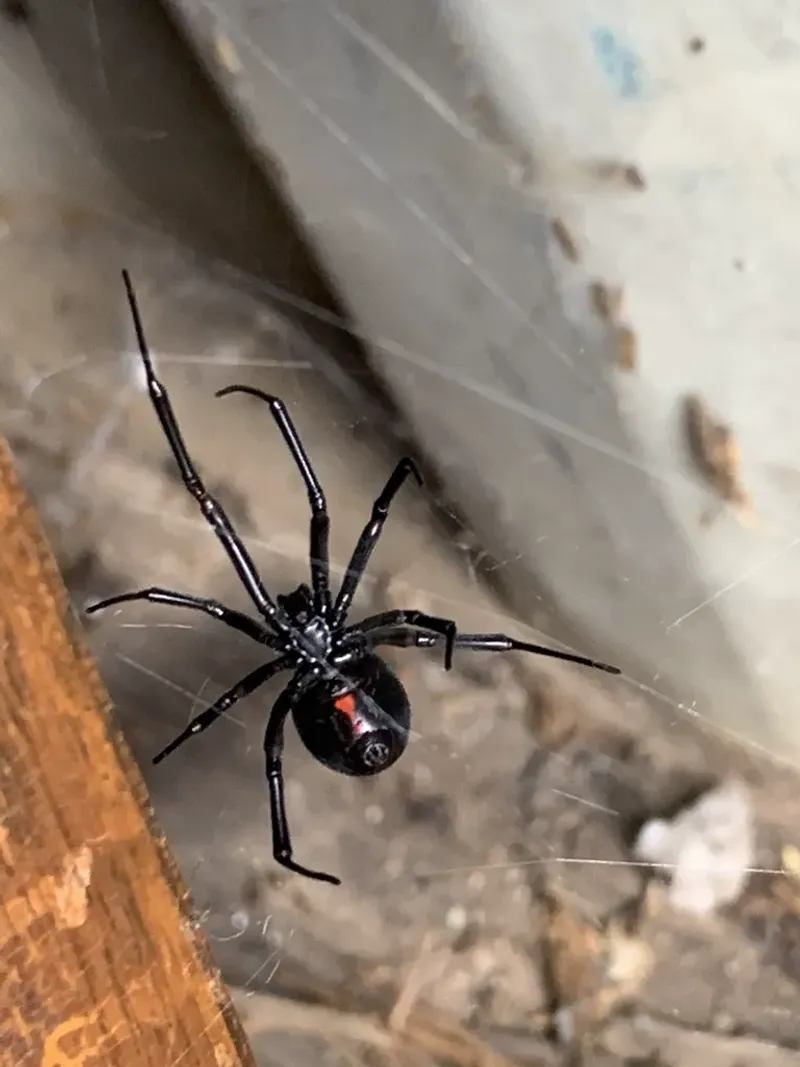
Adult female black widows are often described as shiny black with a reddish mark on the underside. New Jersey’s pest guidance uses that description.
Those are useful clues for an adult female, but they are not proof on their own.
The red mark is not always a neat, complete hourglass. Connecticut’s Agricultural Experiment Station notes that the northern black widow can have a mark that is split in the middle.
Young spiders can also look quite different from adults, with pale and red patterns instead of an all-black body.
So a spider without a perfect hourglass might still be a widow, and a glossy black spider with something red is not automatically one. Poison Control also treats these features as clues rather than a guarantee.
Which widow species lives where in New Jersey is not something one older state document settles. That document and Connecticut’s northeastern description do not line up neatly, so it is wise to stay flexible about names.
If knowing matters, take a clear photo from a safe distance and ask a qualified local expert, such as a pest professional or extension office. Never pick up or poke a spider to get a better look.
Where to look around a deck
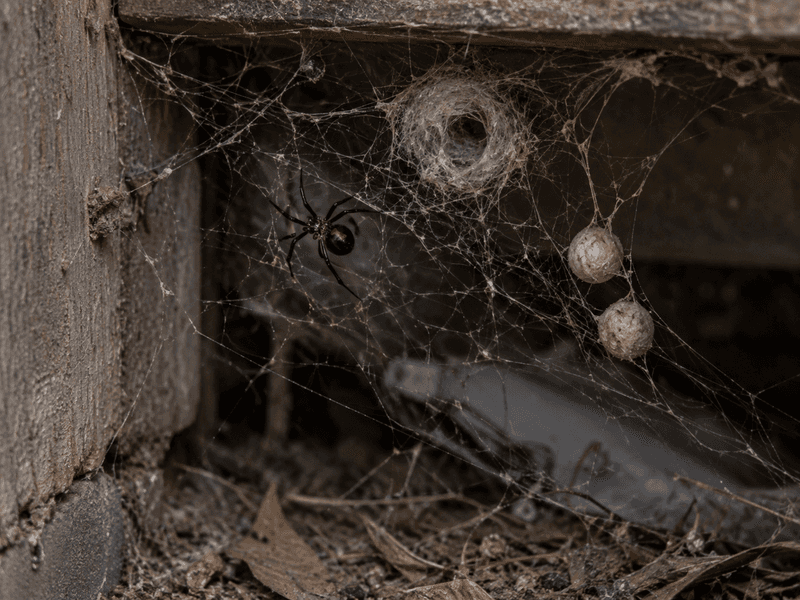
Think low, dry, and quiet. The state guidance describes irregular, tangled webs in sheltered spots near the ground, so that is where your search should start.
Corners beneath the deck frame, gaps near the foundation, and the edges of lattice skirting all fit the pattern.
Stored items count too. Flowerpots, stacked firewood, folded furniture covers, grill covers, and old lumber leaning against the structure create the kind of still, shadowy space that UC Statewide IPM Program links with widow hiding places.
Meter boxes and the undersides of outdoor furniture are worth a glance as well.
A messy, tangled web is a clue, but only that. Plenty of harmless spiders build webs that look similar, and a web alone does not prove a black widow lives there.
It also does not show that the spider moved there for the season.
Treat your list as places to inspect, not places where spiders are surely hiding. A flashlight helps, since you can shine it into gaps from a comfortable distance and look before you reach.
Work in daylight when you can, and keep your face and hands back from tight openings. Looking first is the habit that keeps cleanup uneventful.
Inspect before clearing
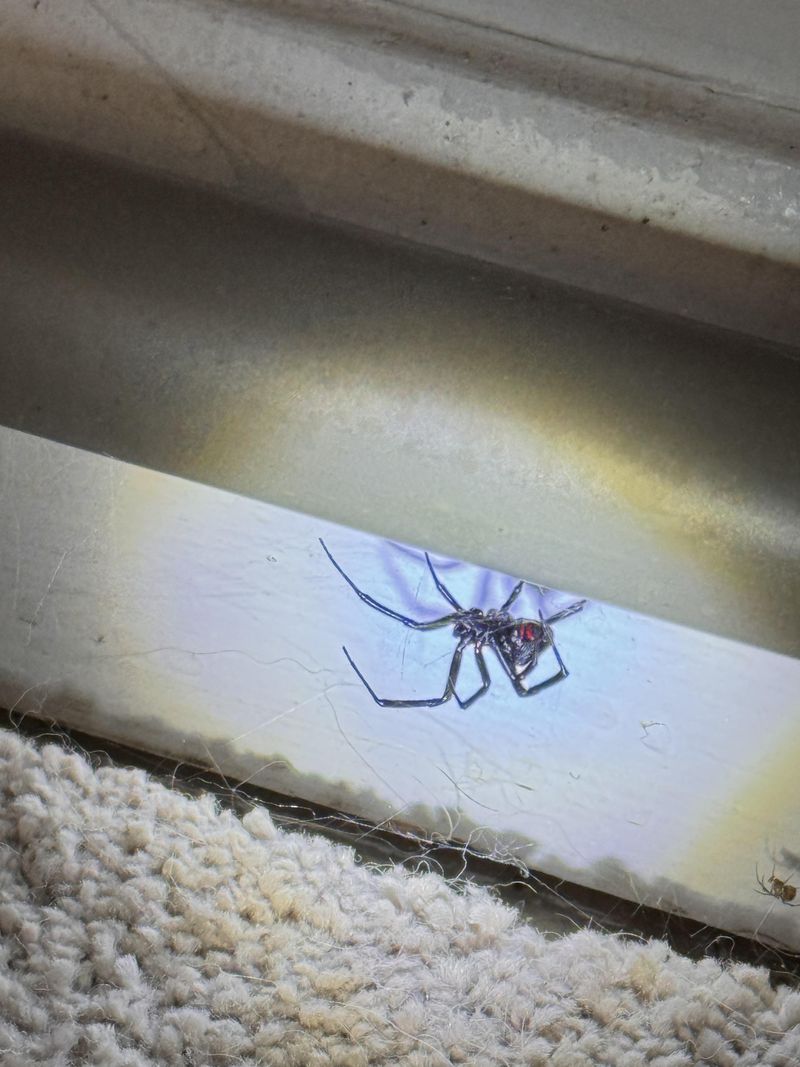
Start with your eyes, not your hands. Shine a flashlight into cracks, gaps, and the spaces behind stored items before you touch anything.
If something looks like a widow or you cannot tell, stop and step back.
Dress for the job. Mississippi State University Extension advises gloves and long sleeves when moving items in places where widows may live.
Closed shoes are a sensible addition too.
Then let tools do the close work. A broom can knock down accessible webs, and a vacuum with a hose attachment can clear webs and egg sacs from spots you can reach easily.
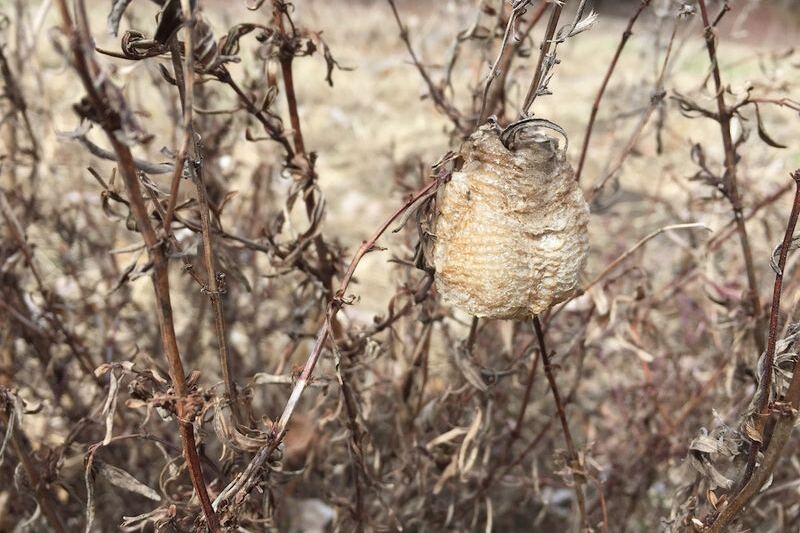
New Jersey’s school pest guidance notes that removing webs and egg sacs can discourage spiders.
A few things to skip: do not reach bare-handed into webs, do not push your hand blindly into a crack, and do not lift boards or pull out stored items without looking first. Poison Control stresses that bites happen when a spider is disturbed or pressed against skin, so avoiding surprise contact is the whole point.
Keep this to areas you can see and reach from a normal standing or kneeling position. Skip tight crawl spaces and dark gaps you cannot view clearly.
Those are jobs for a professional.
Keep clutter and hiding places to a minimum
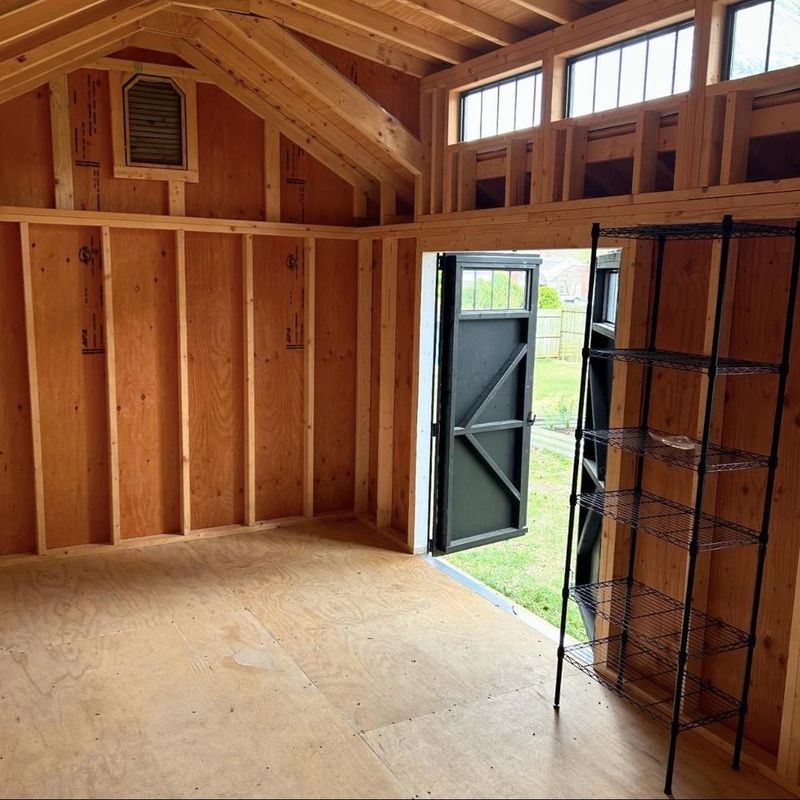
Fewer cluttered corners mean fewer quiet places to settle. Clearing piles of leaves, scrap wood, old boxes, and unused items near the deck takes away the undisturbed cover that UC Statewide IPM Program associates with widows.
Raising firewood off the ground and moving it a bit away from the structure helps as well.
Plastic bins with tight lids work better than open cardboard boxes for outdoor storage. Giving stored items a shake-out and a look each season keeps them from becoming long-term hideouts.
In ordinary situations, simple steps can be enough. The New Jersey school IPM guidance says that vacuuming, removing webs and egg sacs, and cutting down on the insects spiders feed on are often sufficient.
Turning off or shielding bright lights that draw bugs can reduce that food supply.
None of this promises a spider-free yard, and it does not need to. The aim is to make your deck a less appealing place to hang around.
Know when to hand it off. If you suspect a widow in a hard-to-reach spot, or somewhere people and kids use often, avoid handling it and consider a licensed pest-control professional.
The same goes if you cannot tell what you are looking at, a point Poison Control supports by encouraging care with identification.
What to do after a bite
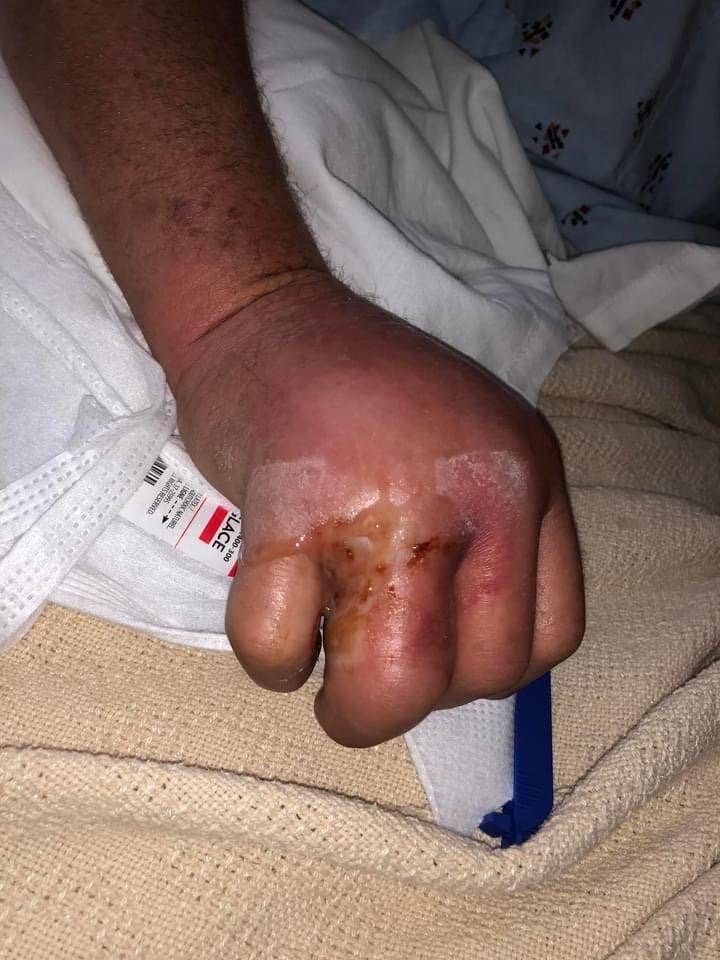
Black widows are not out hunting for people. CDC and NIOSH describe bites as happening when a spider is accidentally touched, trapped, or pressed against skin.
That is why slow, careful cleanup matters more than fear.
A bite can still hurt. It can cause significant pain and muscle cramps, which is reason enough to take it seriously.
Fatal outcomes are rare, though. Poison Control reports no deaths in a review of more than 15,000 exposures reported to U.S. poison centers, so a bite is not usually deadly.
If someone is bitten, get guidance right away from webPOISONCONTROL online or by calling 1-800-222-1222. Trained specialists can walk you through next steps for that person’s situation.
If symptoms seem severe or you are worried, getting medical help is always reasonable.
It helps to keep that number saved in your phone before you start any outdoor cleanup. A clear photo of the spider, taken safely, can help with identification later, but do not try to catch it.
A little preparation and a good pair of gloves turn a spooky headline into a manageable chore.
Share this story