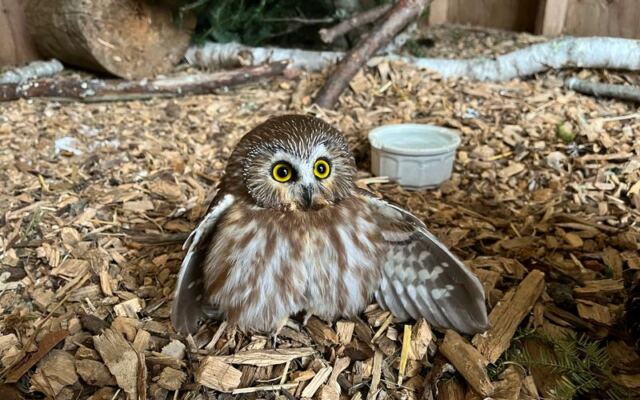
New Jersey’s smallest owl, the northern saw-whet, is about as light as a stick of butter, and it spends winter tucked into thick evergreen cover. A yard conifer could offer the kind of shelter this little bird likes.
Knowing what the owl looks like and how it hides can make a winter walk more interesting. It also helps you enjoy the idea of this tiny neighbor without bothering it.
Wintering in New Jersey does not mean living in every yard
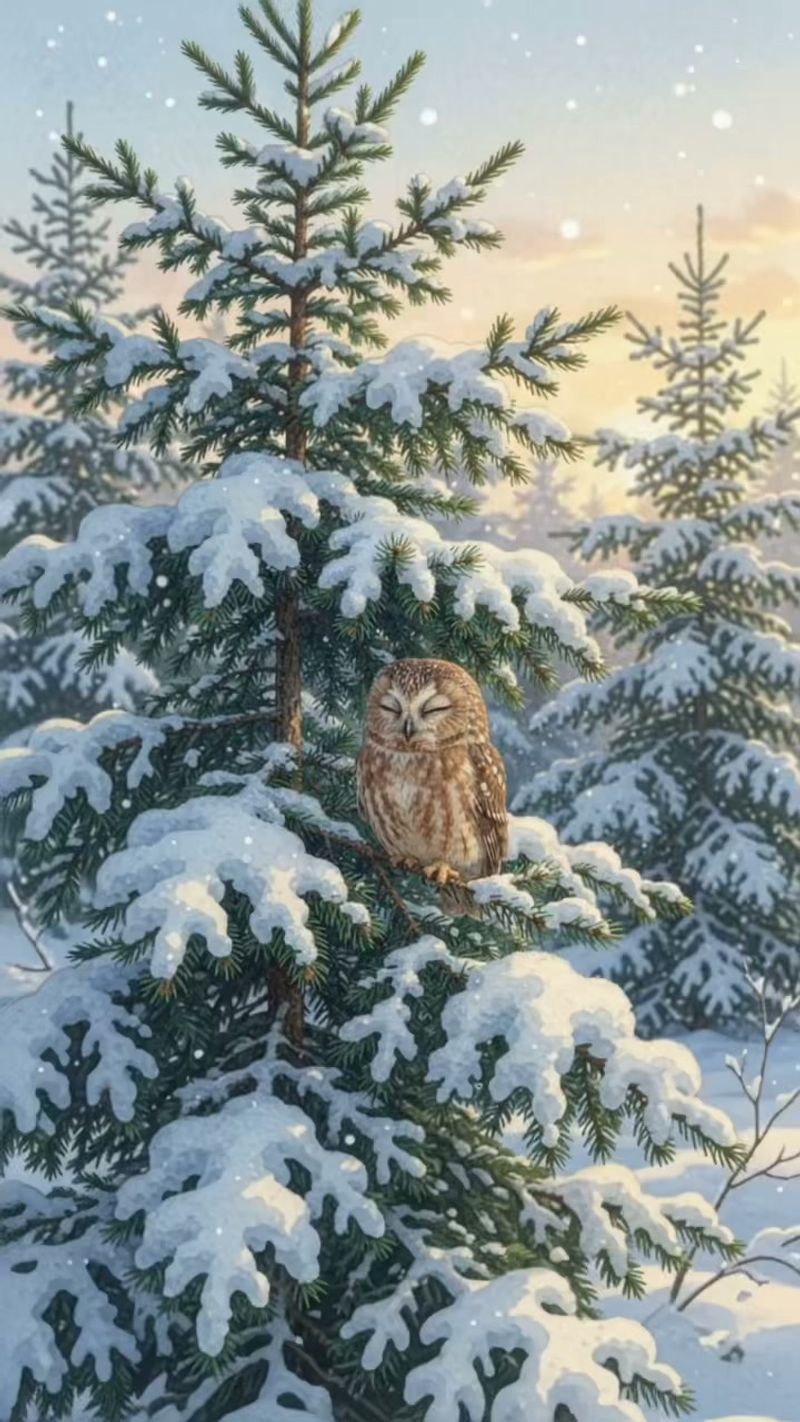
Northern saw-whet owls spend the cold months in New Jersey. The state’s bird checklist lists the species as a winter resident, so the bird belongs on the state’s winter roster.
A wildlife group in the state says wintering owls are more likely to be observed from November through April. That is a window for the whole state.
It describes when owls are around in general, not when one is sitting in your yard.
Think of it like a weather forecast for a whole region. Rain may be likely across the state, yet your street can stay dry.
In the same way, a statewide winter pattern cannot tell you whether an owl is at a particular home this season.
Backyard evergreens enter the picture as possible cover. A thick spruce, cedar, or pine can give a small bird shelter from wind and from sharp eyes.
That makes a conifer a reasonable feature to appreciate, but it is not evidence that anyone is home.
Sightings in yards are not something to count on. These owls are small, quiet, and good at staying hidden, so most people never notice one even when they live nearby.
Treat the idea as a pleasant possibility and keep your expectations modest.
How the owl’s weight compares with a butter stick
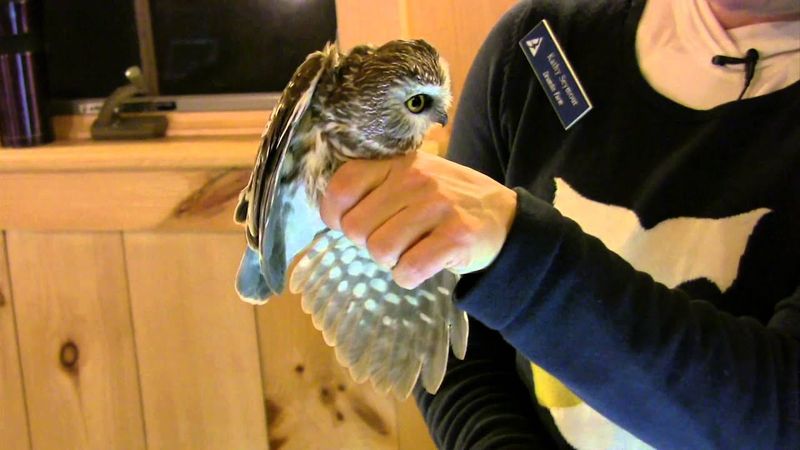
Cornell’s All About Birds lists the northern saw-whet owl’s weight at 2.3 to 5.3 ounces. That is a wide spread for such a small bird.
Individual owls differ, so no single number fits them all.
A U.S. stick of butter is listed by the USDA at 113 grams, or about 4 ounces. That sits inside the owl’s range, which is why the comparison works as a picture in your mind.
The range includes birds lighter than a stick of butter and birds near or above its weight. The sources do not say how many owls fall on either side, or what a typical bird weighs.
So the butter comparison is a handy approximation, not a standard weight.
Size is also what earns the species its title in this state. A New Jersey conservation group calls it the smallest owl in New Jersey.
That claim is about this state’s owls, not about every owl in the world.
Picture a bird you could hold in one hand if it were not wild, which you should never try. It is a compact package of feathers, with a body far smaller than most people expect from an owl.
Dense cover can make a winter roost
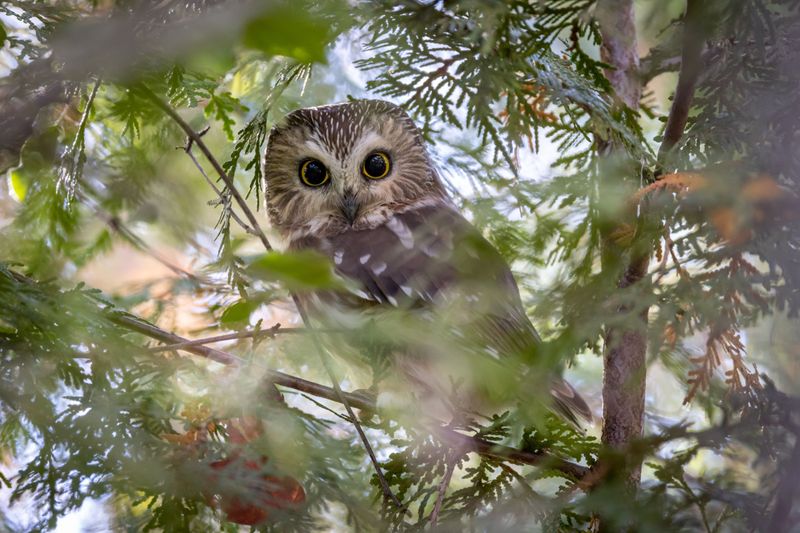
During the day, a saw-whet wants to be hard to see. Descriptions of the species’ winter habitat from the National Audubon Society stress dense cover, and conifers are a common part of that picture.
Pennsylvania’s wildlife agency gives more detail. It notes that winter roosts can be in junipers, other evergreen conifers, and vine tangles.
Thick branches break up the owl’s outline, and the needles hold off some wind.
Notice the mix in that list. Vine tangles and other thick growth can work too, so evergreens are one pattern, not the only rule.
Choices also shift with place and season, and a university thesis on winter habitat is one example of research that looks at how roost choices vary.
For a homeowner, the takeaway is about appreciating habitat. A mature cedar or a tight row of evergreens can offer the kind of shelter these owls use.
That does not mean any given conifer holds one.
There is no need to go tree to tree searching. Pushing into branches or peering into every evergreen would only stress wildlife.
Letting your plantings grow thick and undisturbed is a gentler way to support winter birds.
Look for a rounded head and a streaked belly
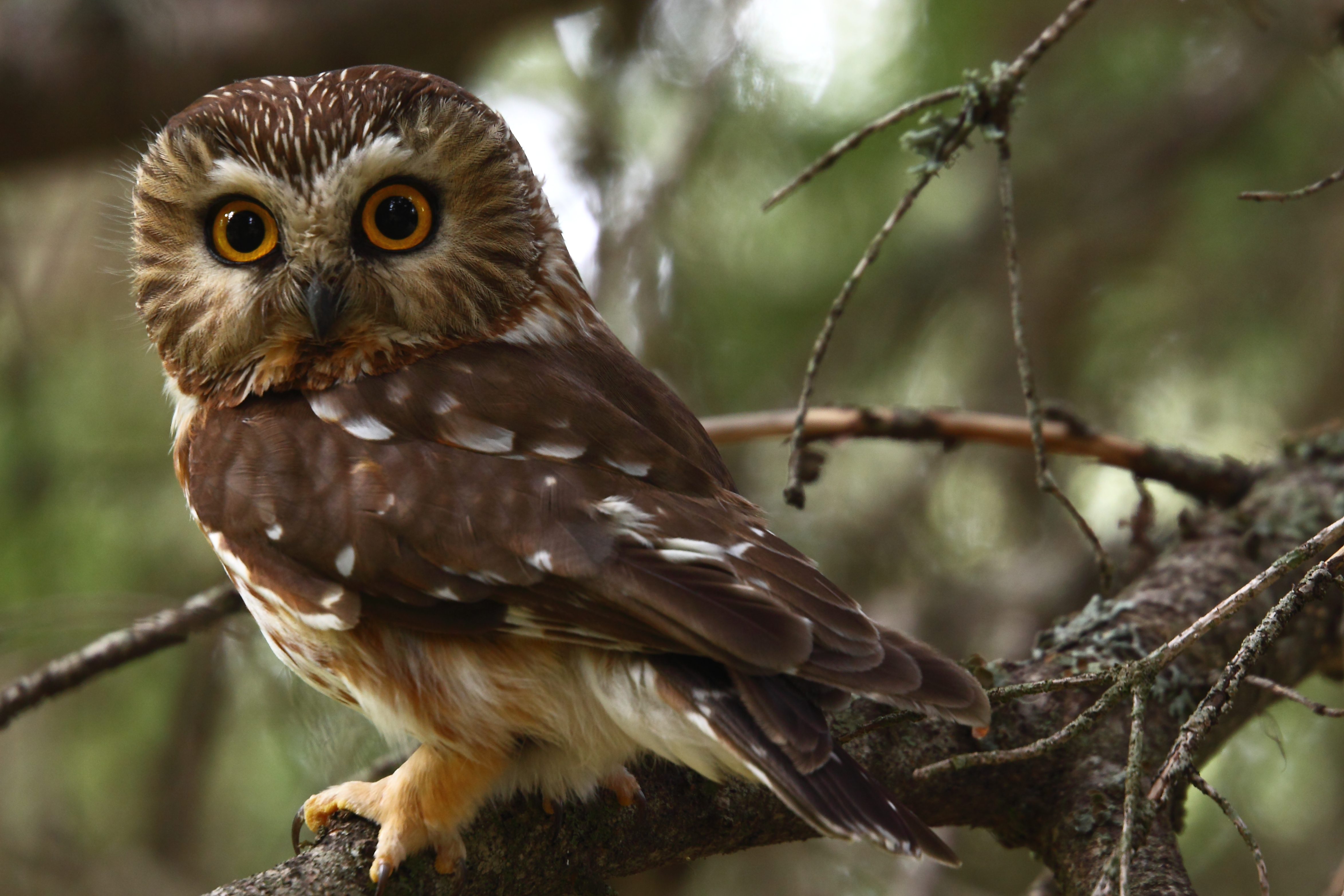
If a saw-whet does come into view, a few features stand out. The Illinois Department of Natural Resources describes a rounded head with no ear tufts and brown streaking on the belly.
The missing ear tufts matter because several familiar owls have them. A round, smooth head on a very small owl is a helpful clue.
The streaked belly adds a second check.
Keep in mind that these owls are highly nocturnal. Cornell’s species overview notes how hard they can be to see.
That means these marks help you read a sighting if you get one, not guarantee that you will.
Try a simple habit if you ever spot a small, hidden owl. Note its size, head shape, and belly pattern from where you stand.
Jot the details down rather than moving closer for a better look.
Binoculars do the work that footsteps should not. A few seconds of careful viewing from a distance can be enough to tell whether the bird matches the description.
If it does not, that is fine, and the owl stays calm either way.
Other signs can point to an owl, not its species
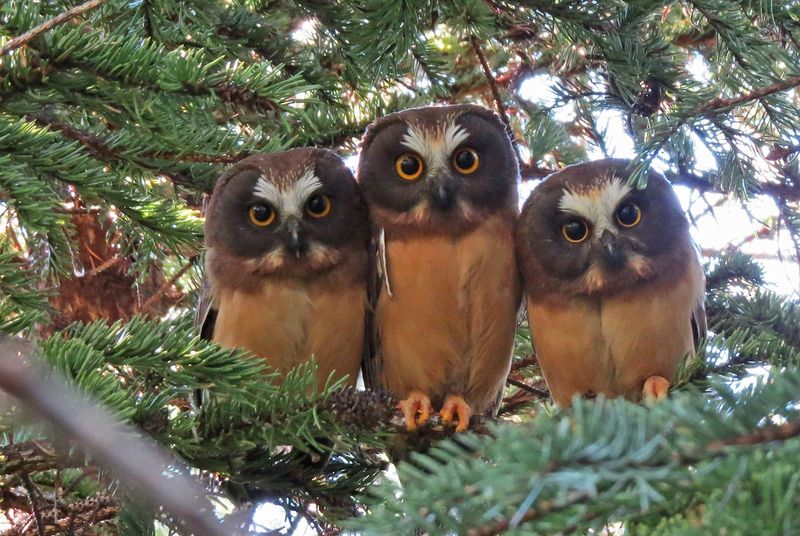
Sometimes the first hint of an owl comes from other birds. Small songbirds will gang up on a hidden owl in a behavior called mobbing, which Cornell’s overview connects to these owls.
A noisy cluster of chickadees can be a reason to glance over from a distance.
The behavior does not name the owl, though. Songbirds mob many predators, so a commotion could mean a different owl, a hawk, or something else.
It is a nudge to look, not an identification.
Droppings and pellets are another possible clue. The New Jersey Conservation Foundation mentions such signs as hints of an owl roost nearby.
Audubon’s explainer on owl pellets shows what these coughed-up bundles are.
Even so, a pellet or a whitewash of droppings cannot establish which species left it. Many animals leave marks that look similar to a casual glance.
Treat them as a general sign and nothing more.
Resist the urge to investigate. Walking up to a suspected roost to check the ground or the branches can flush the bird from its daytime rest.
If you notice a sign, note it and leave the area calmly.
Watch briefly and give the owl space
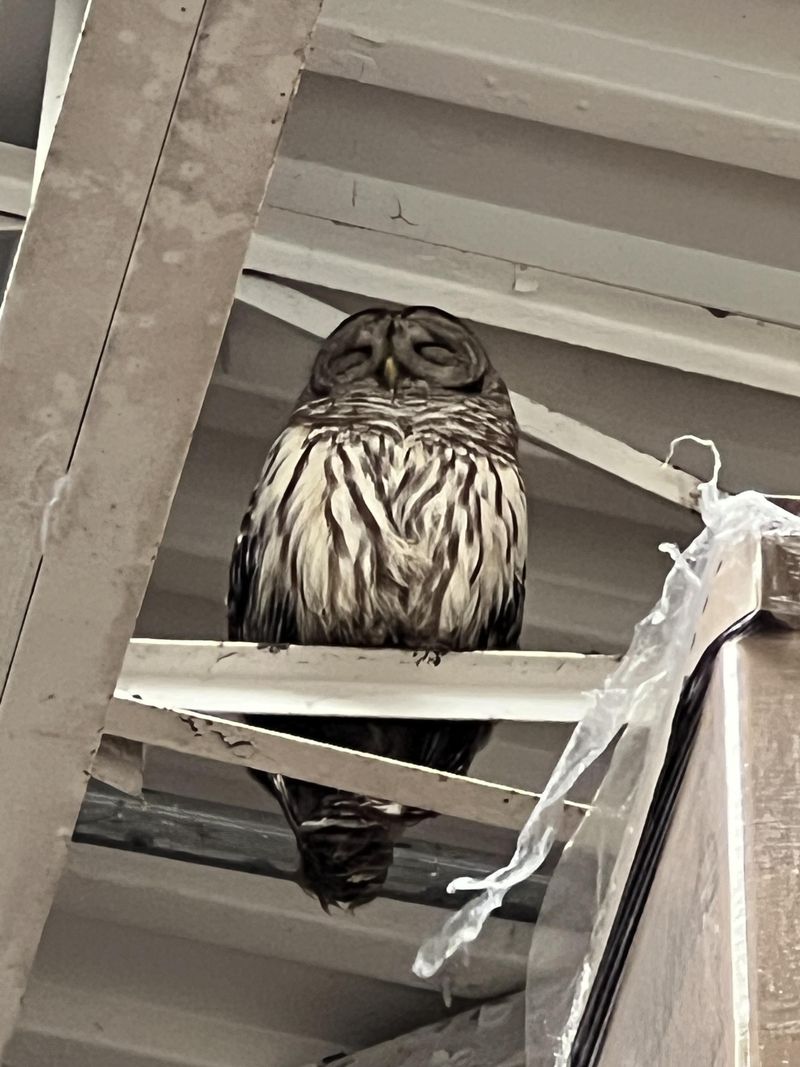
Good owl watching is quiet and short. Use binoculars or a scope from a distance, and keep your visit brief.
Guidance from the International Owl Center on respectful observation points the same way.
Watch the owl’s body for signs of stress. If it flushes, shifts its posture, or changes its behavior, back away right then.
A bird that must keep moving loses rest it needs during winter days.
Skip the tools that push for a better view. Do not play recorded calls, fly drones, use flash on a nocturnal bird, or cut branches to open a sightline.
Audubon’s guide to ethical bird photography covers these cautions.
Also keep the exact roost location to yourself. Posting it online can draw crowds to a spot the owl may use again and again.
Sharing a general area is kinder than naming a tree.
You never need to get close to enjoy a wild owl. A glimpse through binoculars, then a quiet walk away, leaves the bird exactly as you found it.
Share this story