Get the latest garden guides in your inbox →
Gardening Latest
  • General Gardening
  • Lawn Care
  • Plant Care
  • Composting
  • Soil Health
  • Backyard
  • Garden Muse Magazine
  • General Gardening
  • Lawn Care
  • Plant Care
  • Composting
  • Soil Health
  • Backyard
  • Garden Muse Magazine
  • News
  • Gardening Calendar
  • Garden Structures
  • Vegetable Garden
  • Vertical Garden
  • Raised Beds
  • Hydroponics
  • General Equipment
  • Community Gardens
Garden Themes
  • Spiritual Garden
  • Hydroseeding
  • Seeding and Laying Sod
  • Artificial Grass
  • Lawn Care Equipment
  • Plants
  • Trees
  • Planting Tools
  • Composting Basics
  • Fertilizer
  • Alternative Growing Mediums
  • Front Yard
  • Backyard Activities
  • Landscaping
Gardening Latest

Explore by state

Which state is your garden in?

Currently viewing Iowa

All states

Northeast

  • Connecticut —
  • Delaware 22
  • Maine —
  • Maryland 9
  • Massachusetts 25
  • New Hampshire —
  • New Jersey 9
  • New York 18
  • Pennsylvania 18
  • Rhode Island —
  • Vermont —

Southeast

  • Alabama 8
  • Arkansas —
  • Florida 9
  • Georgia 9
  • Kentucky 23
  • Louisiana 7
  • Mississippi —
  • North Carolina 7
  • South Carolina 21
  • Tennessee 5
  • Virginia 8
  • West Virginia —

Midwest

  • Illinois 7
  • Indiana 10
  • Iowa 22
  • Kansas —
  • Michigan 9
  • Minnesota 7
  • Missouri 7
  • Nebraska —
  • North Dakota —
  • Ohio 9
  • South Dakota —
  • Wisconsin 23

Southwest

  • Arizona 8
  • Colorado —
  • Nevada —
  • New Mexico —
  • Oklahoma —
  • Texas 7
  • Utah —

West

  • Alaska —
  • California 8
  • Hawaii —
  • Idaho —
  • Montana —
  • Oregon —
  • Washington —
  • Wyoming —

No state matches that search.

Site menu

Gardening Latest
  • General Gardening
    • News
    • Gardening Calendar
    • Garden Structures
    • Vegetable Garden
    • Vertical Garden
    • Raised Beds
    • Hydroponics
    • General Equipment
    • Community Gardens
    Garden Themes
    • Spiritual Garden
  • Lawn Care
    • Hydroseeding
    • Seeding and Laying Sod
    • Artificial Grass
    • Lawn Care Equipment
  • Plant Care
    • Plants
    • Trees
    • Planting Tools
  • Composting
    • Composting Basics
  • Soil Health
    • Fertilizer
    • Alternative Growing Mediums
  • Backyard
    • Front Yard
    • Backyard Activities
    • Landscaping
  • Garden Muse Magazine

Explore

  • About GardeningLatest.com
  • Contact Us

Get the latest from the garden

New guides on lawn care, plants and backyard projects, sent when they go up.

Subscribe →

Follow

  • Facebook
  • X
  • Pinterest
  • YouTube
Iowa Gardening

Yes, Iowa Yards Have Venomous Snakes And Spiders, And Here’s How To Spot Each One

Most Iowa backyards are full of harmless critters, but a few residents pack real venom.

LP

By Lyle Petersen

November 23, 2026 · 4 min read

Yes, Iowa Yards Have Venomous Snakes And Spiders, And Here’s How To Spot Each One
Yes, Iowa Yards Have Venomous Snakes And Spiders, And Here's How To Spot Each One

Most Iowa backyards are full of harmless critters, but a few residents pack real venom. Iowa is home to four venomous snakes and a couple of spiders that deserve your respect.

Knowing what they look like helps you stay calm, keep kids and pets safe, and avoid hurting the many helpful creatures that only look scary. Here is a simple guide to the seven you should be able to recognize.

At a glance

Where
Iowa Gardening
Hardiness zone
5 −20 to −10°F
Read
4 minutes
Published
November 23, 2026

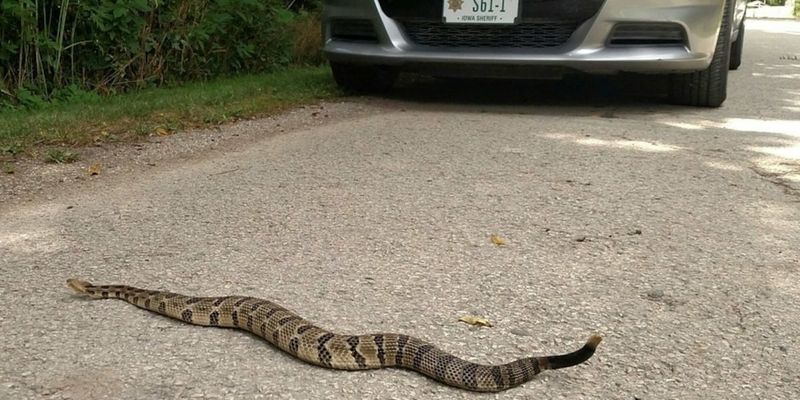
1. Timber Rattlesnake

Timber Rattlesnake
© KCRG

Picture a heavy-bodied snake sunning on a rocky bluff above the Mississippi River. That is the timber rattlesnake, the largest venomous snake in Iowa, sometimes stretching close to five feet long.

Look for dark, wavy bands shaped like the letter V or M across a yellow, tan, or gray body. The tail is solid black and ends in a rattle, which is the giveaway.

Many have a rusty stripe running down the middle of the back.

Timbers live mostly in eastern and southern Iowa, on wooded hillsides with rocky dens. They are calm snakes that would much rather freeze or slide away than strike.

If you hear that buzzing sound, simply back off slowly and give it room.

2. Prairie Rattlesnake

Few Iowans will ever see one, and that is what makes the prairie rattlesnake so special. It survives only in a tiny pocket of the Loess Hills in far western Iowa.

Its body is greenish brown or tan, covered in dark, rounded blotches with thin white edges. Two pale stripes run along each side of the face, almost like a mask.

Glossy, round, and coal black, the female black widow looks like a little shiny bead with legs.

Like all rattlers, it carries a rattle at the tip of the tail.

This species is endangered in Iowa and protected by law, so admire it from a safe distance. Hikers in the Loess Hills should watch the trail and step over logs rather than reaching blindly into tall grass.

3. Eastern Massasauga
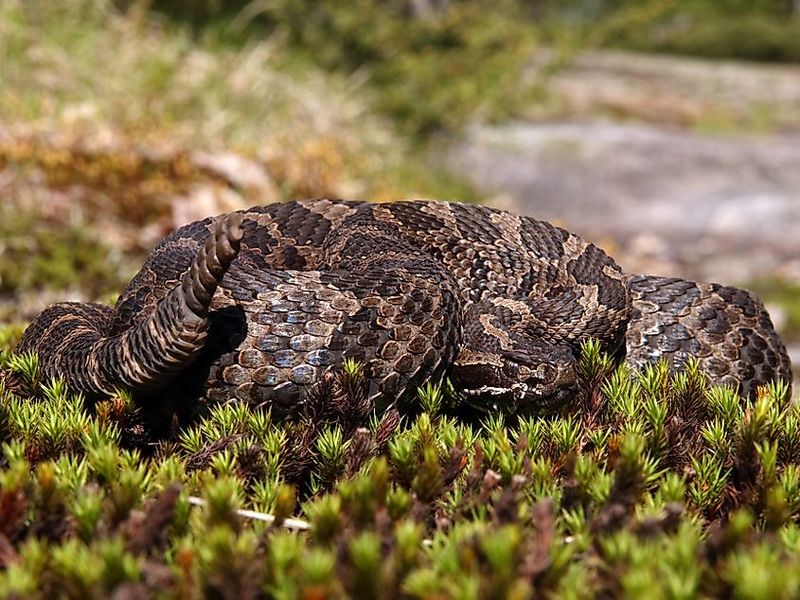
Eastern Massasauga
© Animals

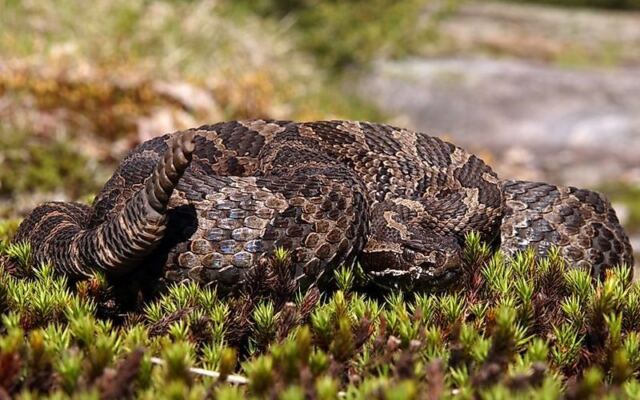
Swamp rattler. That nickname tells you exactly where to find the eastern massasauga, which loves wet prairies and marshy edges.

It is small, usually about two feet, with a thick gray or tan body and rows of dark brown blotches. The rattle is tiny and can sound like a buzzing insect.

Its head has nine large scales on top, though you should never get close enough to count them.

Massasaugas are extremely rare in Iowa today and protected as endangered. Fun fact: their name comes from an Ojibwe word meaning great river mouth.

Spotting one is a lucky moment, not a reason to panic.

4. Copperhead
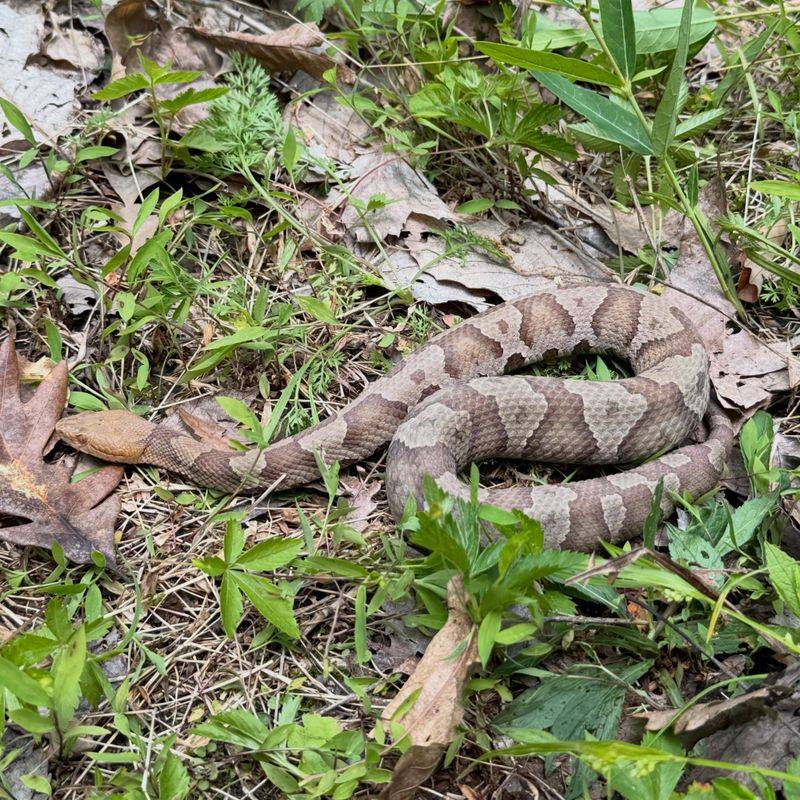
Copperhead
© adventure_gavon

Did you know a copperhead can disappear in a pile of fallen leaves right in front of you? Its pattern is that good at camouflage.

The easiest clue is the hourglass bands. They are wide on the sides and skinny across the back, in chestnut brown over a lighter tan body.

The head is a plain coppery color with no spots, and young ones have a bright yellow tail tip used to lure frogs.

In Iowa, copperheads are rare and found only in a few southeastern counties. Bites are seldom serious for adults, but they still need medical care.

Wear gloves when moving woodpiles or brush in that corner of the state.

5. Black Widow Spider
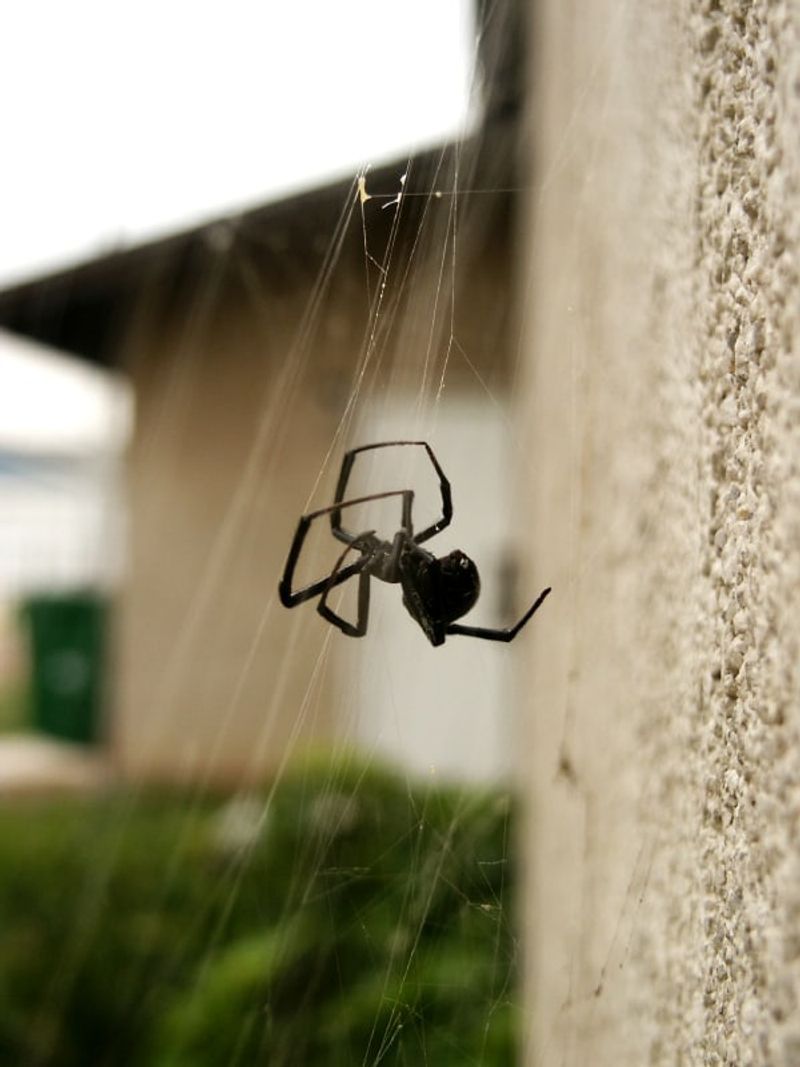
Black Widow Spider
© Budget Brothers

Glossy, round, and coal black, the female black widow looks like a little shiny bead with legs. Flip her over and you will see the famous red hourglass on her belly.

Iowa actually has the northern black widow, whose hourglass is often split into two red marks. She builds messy, tangled webs low to the ground in woodpiles, window wells, garden sheds, and under patio furniture.

Males are smaller, lighter, and harmless.

Her bite can cause painful muscle cramps, so get medical help if you are bitten. The good news is she is shy and bites mostly when pressed against skin.

Shake out gloves and boots that sit in the garage, and you will avoid most trouble.

6. Brown Recluse Spider
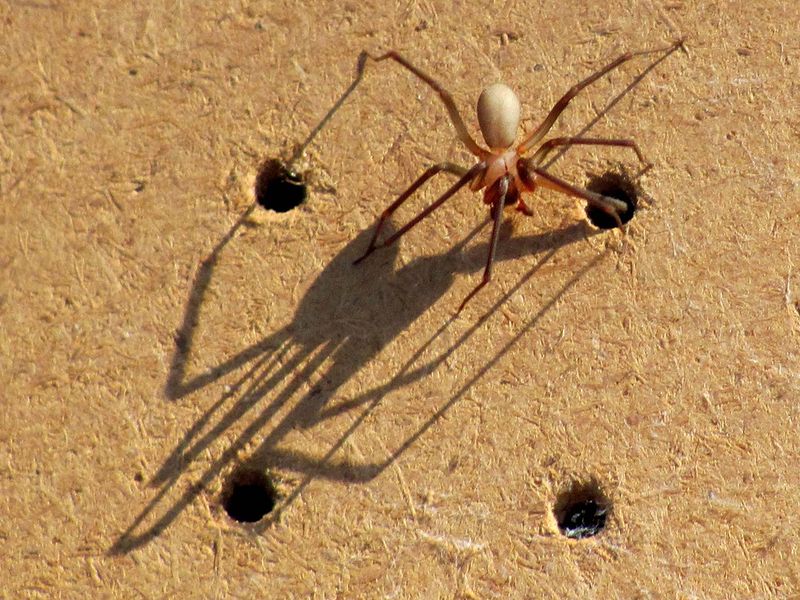
Brown Recluse Spider
© Catseye Pest Control

Here is a twist: lots of spiders get called brown recluses in Iowa, but very few really are. True recluses show up mostly in the southern part of the state, often tucked inside old houses.

Check three things. A recluse is plain tan with a dark violin shape on its back, the neck of the violin pointing toward the rear.

It has six eyes in pairs instead of eight, and its legs have no stripes or spines.

They hide in cardboard boxes, closets, and seldom-used clothes. Bites can sometimes cause a slow-healing sore.

Store items in sealed plastic bins and shake out bedding in spare rooms.

7. Harmless Look-Alikes
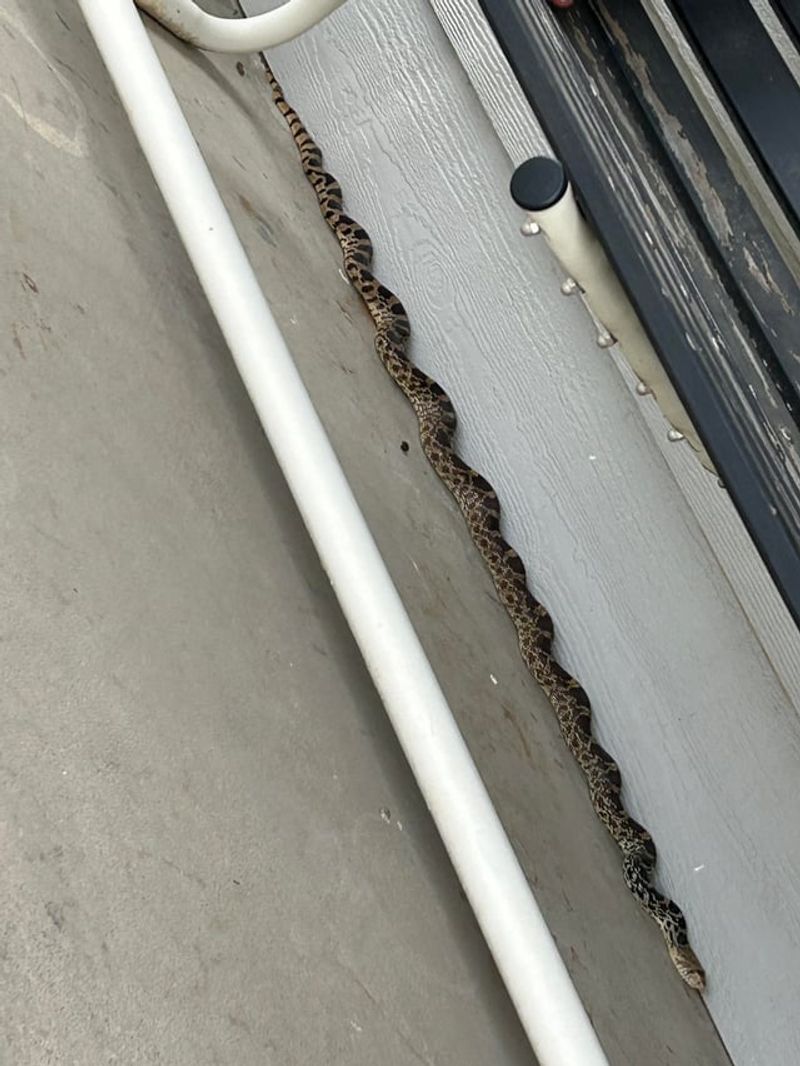
Harmless Look-Alikes
© Reddit

Most of the scary things in your yard are actually on your side. Iowa has around 28 snake species, and the vast majority are harmless.

Bullsnakes hiss loudly and shake their tails in dry leaves to imitate rattlers, but they have no rattle. Hognose snakes flatten their necks and even play dead.

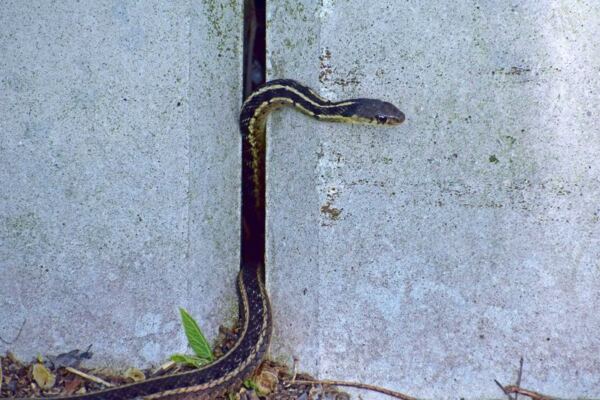
Garter snakes, with their neat yellow stripes, are the ones you will meet most often.

On the spider side, wolf spiders and fishing spiders are big and hairy but not dangerous. Leave these helpers alone, since they eat mice, insects, and pests.

When unsure, take a photo from a distance and check it against a trusted Iowa wildlife guide.

Share this story
LP

Written by

Lyle Petersen

More from Lyle Petersen →

About Gardening Latest

Gardening Latest provides in-depth guides to maintaining and enhancing your garden and backyard. Learn how to make the most of the space you have and create a beautiful garden.

More about us →

Latest stories

  • Kentucky GardeningThis Invasive Tree Is Spreading Through Kentucky Neighborhoods Faster Than You Can Pull It

    This Invasive Tree Is Spreading Through Kentucky Neighborhoods Faster Than You Can Pull It

    4 min ago
  • Florida GardeningCan Your Florida Neighbor Make You Pay for Cutting Their Overhanging Branches? Here’s What the Law Says

    Can Your Florida Neighbor Make You Pay for Cutting Their Overhanging Branches? Here’s What the Law Says

    10 min ago
  • Maryland GardeningThose Leafy Green Balls Stuck In Leafless Maryland Trees Aren’t Squirrel Nests At All

    Those Leafy Green Balls Stuck In Leafless Maryland Trees Aren’t Squirrel Nests At All

    17 min ago
  • Virginia GardeningUse These Scents To Keep Spiders Out Of Your Virginia Home All Winter

    Use These Scents To Keep Spiders Out Of Your Virginia Home All Winter

    29 min ago
  • New Jersey GardeningThat Glossy Black Spider With A Red Hourglass Is Spending The Winter Tucked Under New Jersey Decks

    That Glossy Black Spider With A Red Hourglass Is Spending The Winter Tucked Under New Jersey Decks

    36 min ago

Gardening by state

Stories for your state, and the hardiness zone most of it gardens in.

Keep exploring

Read next

All Iowa Gardening →
Iowa GardeningWhat Can Eating Celery Every Day Really Do for Your Body?
Iowa Gardening

What Can Eating Celery Every Day Really Do for Your Body?

3 hr ago
Iowa GardeningSeven Animals Quietly Spending the Winter Under Your Iowa Deck, and Which Ones You Should Evict
Iowa Gardening

Seven Animals Quietly Spending the Winter Under Your Iowa Deck, and Which Ones You Should Evict

18 hr ago
Iowa GardeningWhy an Opossum Shows Up Near Your Iowa Home in Winter, and What to Do
Iowa Gardening

Why an Opossum Shows Up Near Your Iowa Home in Winter, and What to Do

20 hr ago

More from Iowa Gardening

  • That Tiny Venomous Hunter Under Your Iowa Leaf Litter Is the Northern Short-Tailed Shrew

    Nov 21
  • Hearing Coyotes Howl Near Your Iowa Home Late at Night? Here’s What It Really Means

    Nov 20
Back to top

Leave a response Cancel

Your email address stays private. Required fields are marked with an asterisk.

Gardening Latest

In-depth guides to maintaining and enhancing your garden and backyard: how to make the most of the space you have, and how to make it beautiful.

  • Facebook
  • X
  • Pinterest
  • YouTube

We may earn a portion of sales from products or services that are purchased through our site as part of our affiliate partnerships with retailers.

Explore

  • About GardeningLatest.com
  • Contact Us
  • Terms and Conditions
  • Privacy
  • Editorial Note:
  • FTC Disclosure

Newsletter

New garden guides and seasonal tips, straight to your inbox.

We’ll email you a link to confirm. Unsubscribe any time.

Almost there! Check your inbox and tap the link to confirm.

© 2026 Gardening Latest. All rights reserved.

Back to top