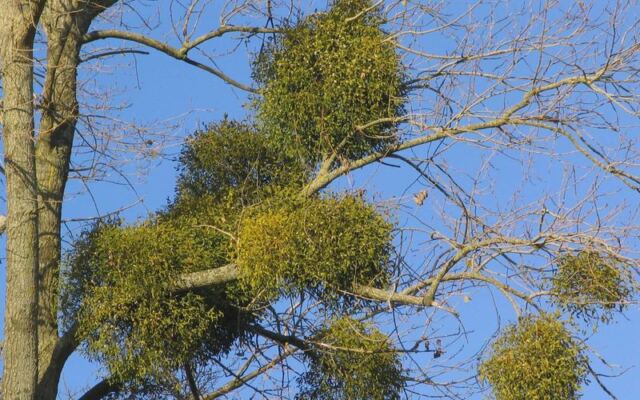
Look up on a gray winter day in Maryland and you may spot round green clumps in the bare branches. Many of them are American mistletoe, a plant that stays green while its host tree goes bare.
Squirrel nests look quite different once you know what to check. A few simple clues can help you tell the two apart and decide if the tree needs any attention.
A leafy evergreen clump on a bare branch
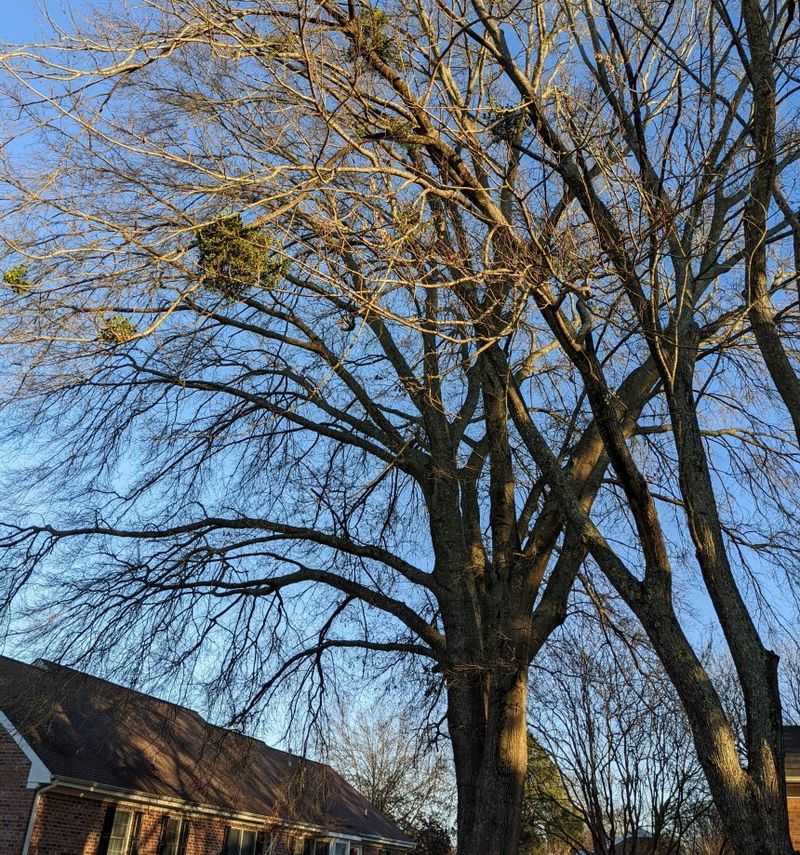
Winter strips the leaves from oak, maple, hickory, and other hardwoods, and suddenly the sky is full of green surprises. Many of those round, smooth clumps are American mistletoe (Phoradendron leucarpum), a native evergreen that grows right on tree branches.
It was there all summer, hidden by the host tree’s own foliage.
According to the Maryland Biodiversity Project, this plant is recorded in the state, especially across the Coastal Plain and near the Fall Line. If you live on the Eastern Shore or in the southern counties, you have likely seen it more than once without knowing what it was.
Look for thick, leathery, oval leaves that stay green and grow in a dense, rounded ball. The stems are woody at the base and branch repeatedly, which gives the clump its tidy, globe-like shape.
In late fall and winter, you may also see small, pale, sticky berries tucked among the leaves.
A caution is in order. A glimpse from a moving car or across a field cannot confirm every clump, and not every green ball in a bare tree is mistletoe.
A photo, binoculars, or a closer look from the ground will give you a much better answer than a quick guess.
If you read older plant guides, you might see the name Phoradendron serotinum. The USDA’s GRIN-Global database lists that as a synonym for the same plant, so the two names point to one species.
Look at the structure, not just its height
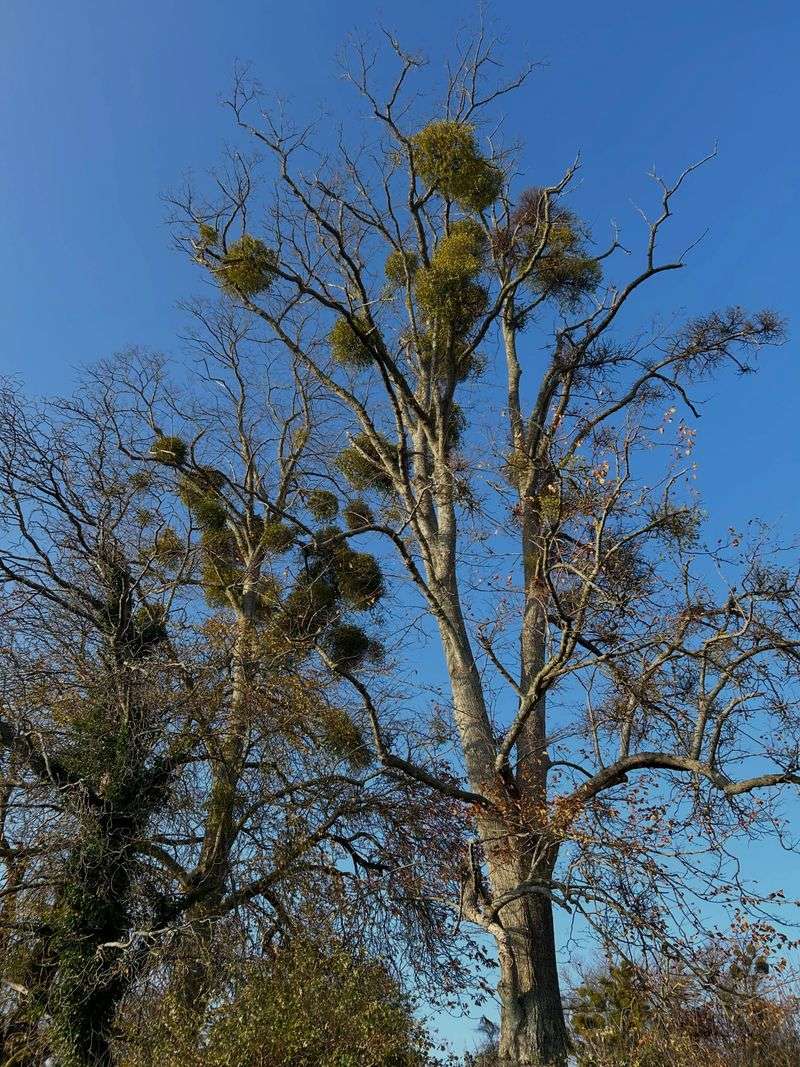
Plenty of people assume anything round and high up must belong to a squirrel. Squirrels do build nests in treetops, so height tells you very little.
The better clue is what the thing is made of.
A squirrel nest is a built structure. According to University of Maryland Extension, squirrels assemble nests from sticks, leaves, and stripped bark.
By midwinter those materials look brown, tangled, and a bit ragged, and the nest usually sits in a fork or against the trunk.
Mistletoe is a living plant, not a pile of material. Its foliage is fresh green and leathery, and the whole clump grows out of a single point on a branch.
The Maryland Biodiversity Project describes it as an evergreen growing in ball-shaped clumps.
Try a quick checklist when you look. Is the clump green or brown?
Do you see individual leaves on stems, or a jumble of twigs and dead leaves? Is it fixed to the branch itself, or wedged into a fork?
Binoculars help a lot here. Even so, a distant view will not always give a clear answer, so a second look on a different day is a fair way to settle it.
How mistletoe lives and spreads
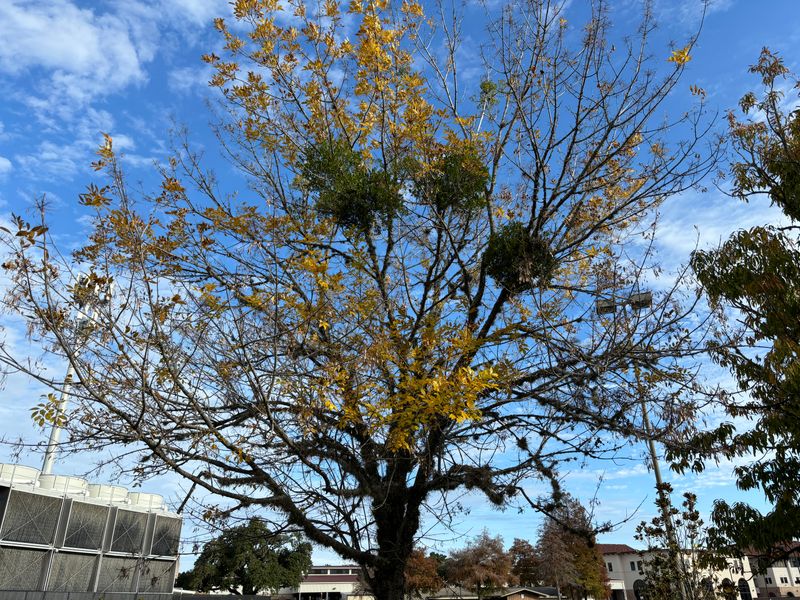
Mistletoe lives a double life. It has green leaves and makes some of its own food through photosynthesis, yet it also taps into the tree that holds it up.
Scientists call that kind of plant a hemiparasite.
The tapping happens through haustoria, specialized feeding organs that push into the host branch. Through them the plant draws water and nutrients from the tree, according to the Maryland Biodiversity Project.
So mistletoe is neither fully independent nor fully dependent on its host.
Spreading is a job for birds. The plant produces white, sticky fruits, and birds eat them in the cold months when other food is scarce.
Seeds cling to beaks and feathers or pass through the bird, and they end up stuck to branches far from the parent plant.
A seed that lands on a suitable branch can sprout and start sending haustoria into the wood. That is why you may notice several clumps in one tree, or a cluster of infected trees along a hedgerow where birds like to perch.
Not every host reacts the same way. Some trees carry mistletoe for years with little sign of trouble, and others respond differently depending on their health and conditions.
What mistletoe means for the tree
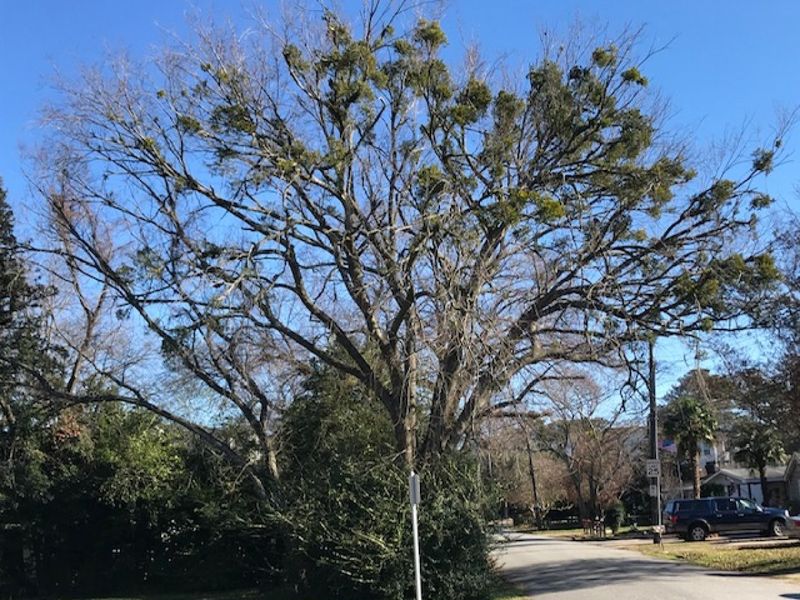
Winter makes mistletoe look like a bigger problem than it often is. The leaves fall from the host, the mistletoe keeps its green, and every clump becomes visible at once.
That contrast can make a lightly affected tree seem overrun.
The USDA Forest Service describes the effects as variable. A light infection does not automatically call for treatment, and many trees live with a few clumps for years.
Heavy infestations are another story. A tree with many clumps has to share water and nutrients with all of them, and that stress can contribute to branch dieback.
The clumps also add weight to branches, which can matter on limbs already struggling.
Drought can make things worse. A tree short on water has less to spare for a plant drawing from it, so dry summers are a good time to look closely at trees that carry a lot of mistletoe.
Mistletoe does not invariably kill a tree, so there is no need to panic. Watch for thinning leaves, dead twig tips, or limbs that look weighed down, and note whether the clumps are increasing from year to year.
When pruning may be the right choice
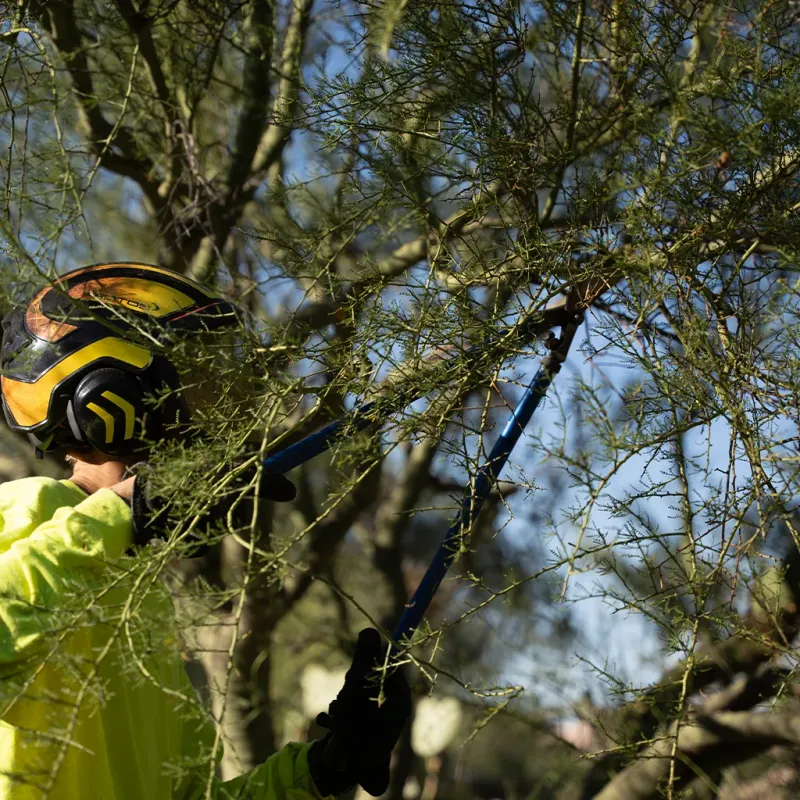
Sometimes removal does make sense, such as when a tree is heavily infested or the mistletoe is crowding an otherwise stressed limb. If you decide to act, skip the quick fix of pulling off the visible clump.
The embedded plant structures stay in the branch and can send up new shoots.
The USDA Forest Service favors pruning the infected branch instead. Cutting the whole branch takes out the part of the plant living inside the wood.
How far below the mistletoe should you cut? Published advice varies.
A guide from the New Mexico State University Plant Diagnostic Clinic and other sources range from at least six inches to a foot below the attachment point, so no single distance is universal.
Be careful with large limbs and heavy cuts. Severe topping or removing big limbs can hurt a tree more than the mistletoe would, and working high up with a saw carries its own risks.
When the infected branch is large, high, or near power lines, ask a certified arborist for advice before cutting anything. Winter, when the tree is bare and the clumps are easy to find, is a handy time to get an assessment.
Keep plant parts away from children and pets
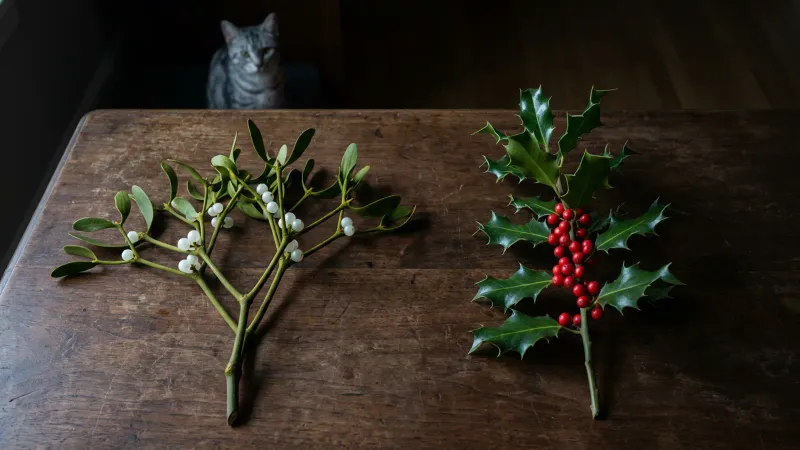
Mistletoe looks festive, but sprigs, berries, and fallen leaves belong out of reach of kids and pets. Do not use the plant to decorate food, either, since berries can end up on plates or cakes where someone might eat them.
The picture is more nuanced than the plant’s reputation. Poison Control reports that in the U.S. data it cites, most American mistletoe exposures caused no symptoms, and one study of 1,754 exposures reported no deaths.
That does not make the plant safe to eat, because the species, the amount, and the person all matter.
If a child or adult may have swallowed some, contact Poison Control right away rather than waiting for symptoms. Have the plant details handy, and describe how much was eaten if you can.
Pets call for their own plan. The ASPCA Animal Poison Control lists American mistletoe among its plants of concern, so call a veterinarian or an animal poison-control service after a dog or cat chews on it.
Fallen clumps under a backyard tree are an easy thing to miss. A quick rake or pickup after a windy day keeps curious noses from finding them.
American mistletoe and holiday traditions
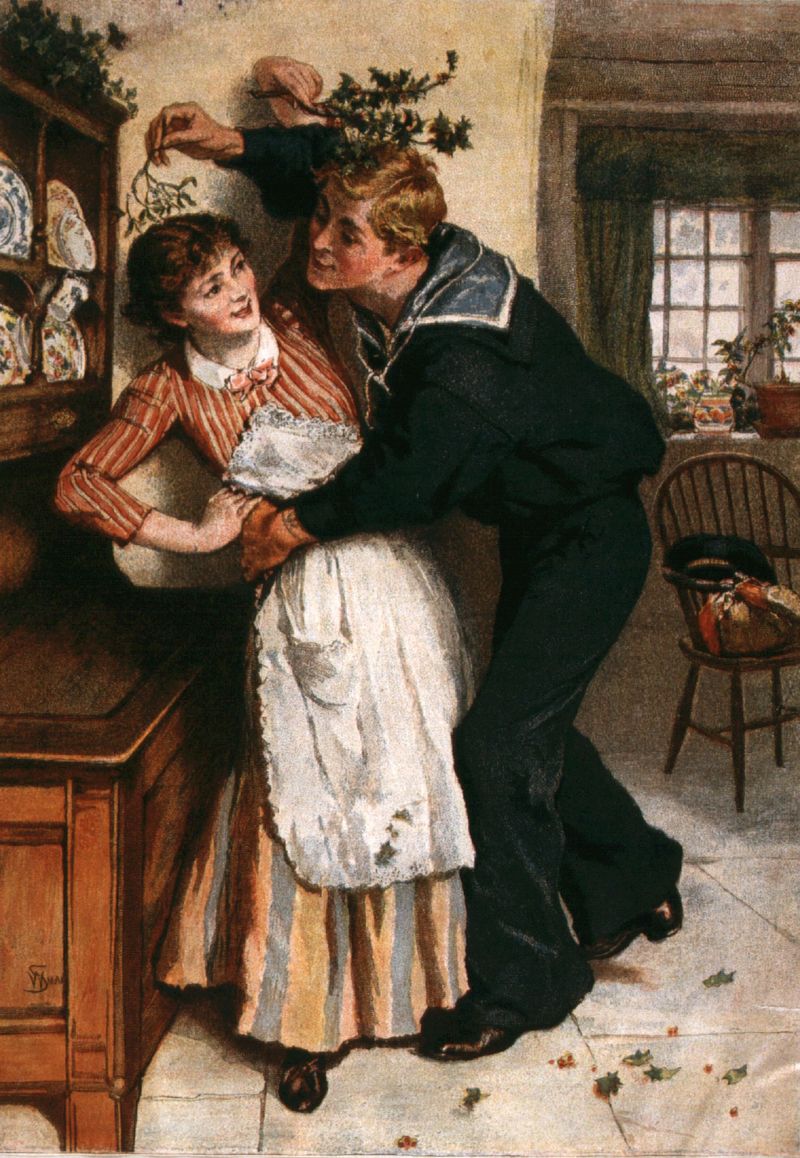
The mistletoe hanging in a doorway at Christmas has a story that runs across the Atlantic. In North America, American mistletoe has long filled that role, and the Maryland Biodiversity Project notes its use in Christmas decorations and related customs.
European mistletoe is a different plant, Viscum album. It is the species behind the older traditions in Britain and Europe, and Poison Control treats the two separately when discussing toxicity.
The history of kissing under mistletoe is less tidy than many people think. English Heritage records the kissing custom in an English work from 1784.
It also points out that the famous Druid account concerns Gaul, so it does not prove a British Christmas tradition.
That means a straight line from ancient Druids to your holiday doorway is not established history. What we can say is that people have been bringing evergreen plants indoors in winter for a long time, and mistletoe joined the list.
So the next time you pass a green clump high in a bare Maryland tree, remember that the plant overhead is the same kind people hang for holiday cheer.
Share this story