A fast-growing invasive tree called tree-of-heaven is turning up around Massachusetts, and it is stubborn once it settles in. It grows in yards, along fences, and beside parking lots, and it can come back after you cut it.
Pulling works on some plants but fails on others, so the right move depends on what you are looking at. Knowing the difference can save you time, money, and a sore back.
What Massachusetts records show
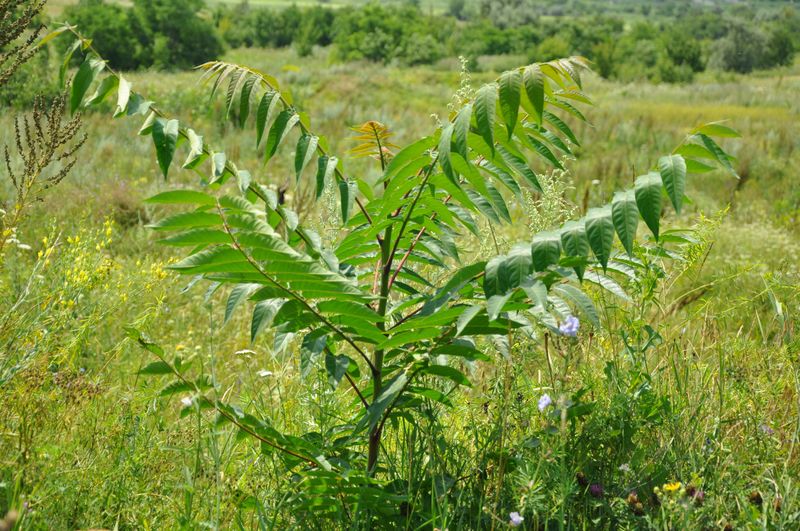
The tree most likely behind this story is tree-of-heaven, known to scientists as Ailanthus altissima. The Massachusetts Invasive Plants Advisory Group lists it as invasive and reports that it occurs in all regions of the state.
It turns up in upland, wetland, and coastal habitats, so it is not limited to one corner of Massachusetts.
The U.S. Forest Service adds another clue.
Its Fire Effects Information System review describes the tree as most common in urban areas. That fits what many residents see: seedlings in sidewalk cracks, saplings behind garages, and young groves along railroad edges and vacant lots.
Here is the careful part. Those sources show that the tree is present statewide and that it favors urban settings.
They do not measure how fast it has increased in any particular neighborhood, and no statewide neighborhood-by-neighborhood count exists in the sources used here.
So the plain takeaway is this: if you live in a Massachusetts city or suburb, finding tree-of-heaven nearby would not be surprising. Whether your own street has more of it than it did five years ago is something only local observation can answer.
Photos taken each season can help you track a patch on your own property.
Seeds and roots help it spread
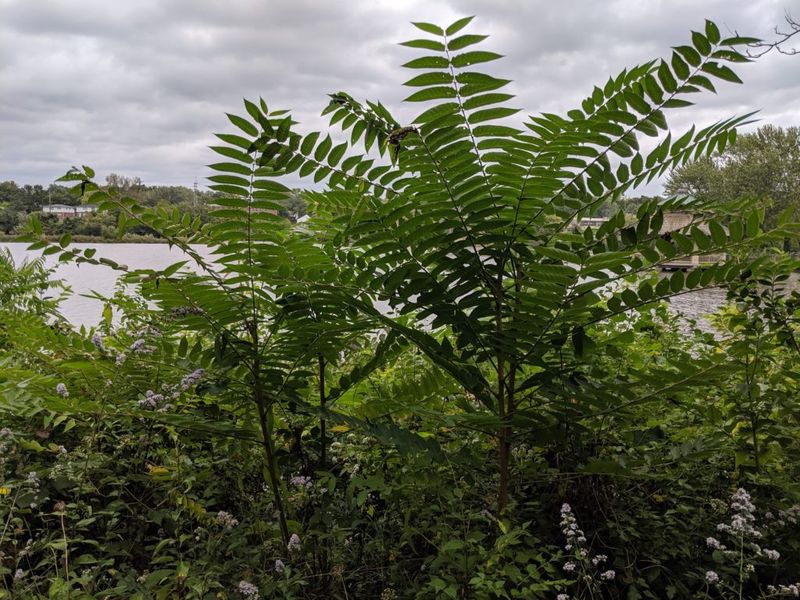
Tree-of-heaven has two main ways of moving around. Its seeds are carried by wind, so a single seed-bearing tree can scatter new plants across nearby ground.
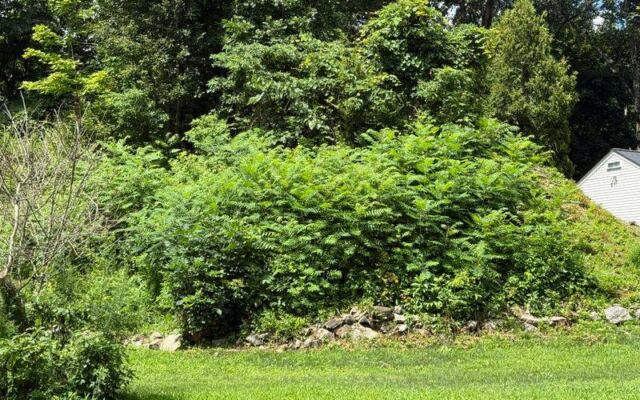
It also sends up shoots from its roots, called suckers, which can grow into dense stands.
The Massachusetts Department of Agricultural Resources explains in its tree-of-heaven fact sheet that established trees form colonies. It also says cut or injured trees may send up many stump and root sprouts.
A single stand of trees may therefore come from seeds, from root suckers, or from both, so a cluster does not always trace back to one parent.
Injury is the detail that surprises people. Chopping down a mature tree can feel like progress, yet the roots left behind may answer with a crowd of new shoots.
A freshly mowed patch that turns green again a few weeks later is a typical example.
The Massachusetts advisory group notes that the plant spreads aggressively by root suckers, particularly in disturbed areas. Disturbed ground is common in cities and towns, where construction, paving, and neglected corners are everywhere.
That helps explain why residents run into the tree in built-up places, even though the sources do not name specific favorite sites.
Pulling works only on the right plant
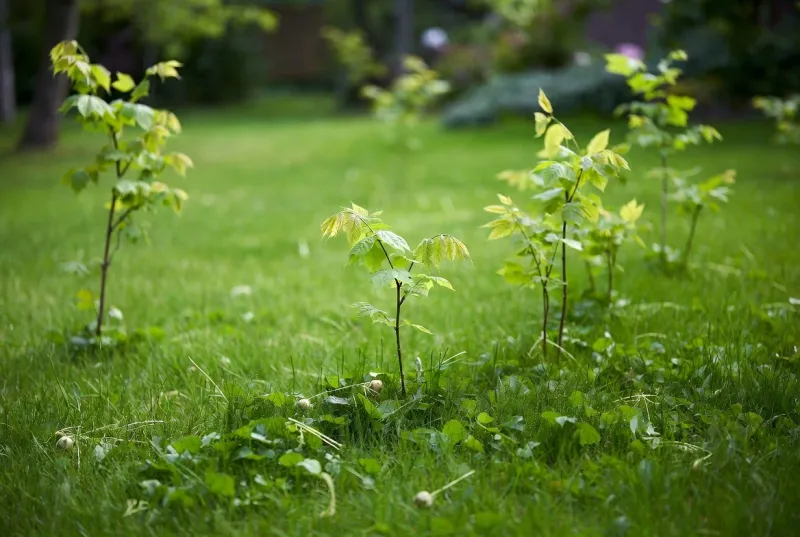
A hand pull can be a fine choice for the right plant. Massachusetts guidance in the state fact sheet supports pulling a young seedling only when the soil is moist and the entire root system comes out.
If the roots snap off and stay in the ground, the plant may regrow.
Root suckers are a different story. A sucker is a shoot attached to a larger root system underground, so tugging on it may do little more than snap the stem.
Seedlings and suckers can look alike, which makes it hard to know what you are holding.
A simple clue can help. Dig gently beside a small plant after a rain.
If the stem leads to a thin root of its own, it is probably a seedling, while a stem joined to a thick, long horizontal root points to a sucker.
The U.S. Forest Service review says repeated removal of shoots can weaken a plant over time, but one pull is not a dependable fix for established growth.
Do not pull every plant you see. Save hand pulling for confirmed young seedlings, and wear gloves and long sleeves while you work.
Established trees need follow-up
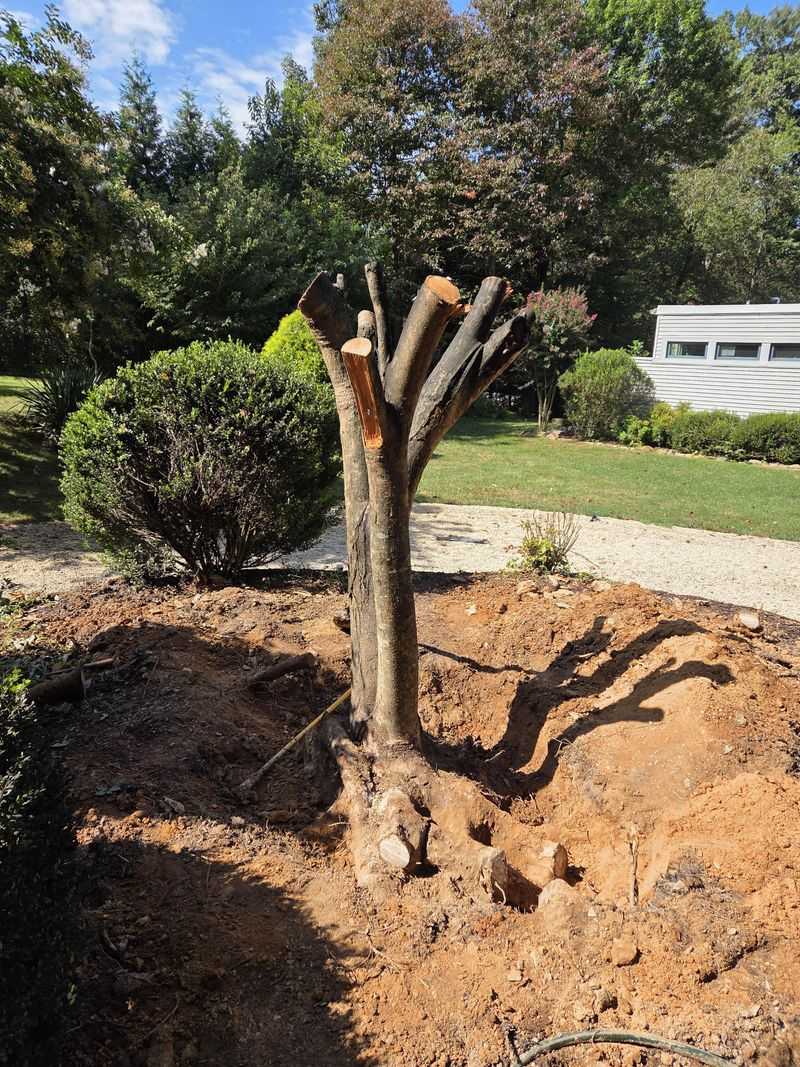
Cutting or mowing a mature tree-of-heaven rarely ends the story. Top-killing the plant can prompt stump or root sprouts, which means new shoots may appear the same season.
The U.S. Forest Service says mechanical-only control may require years of follow-up.
Extension guidance leans toward treating the living tree first. Rutgers Cooperative Extension favors targeted systemic herbicide methods applied before the tree is removed, rather than relying on herbicide on a cut stump alone.
Its timing advice points to late summer through fall, waiting at least 30 days before felling, and checking for regrowth afterward.
Treat that as regional guidance from New Jersey, not a universal recipe. Timing, products, and methods depend on your location, your site, and the product label.
Massachusetts guidance may differ in details.
The state’s page on herbicides for invasive plant control tells users to read and follow labels and to avoid harming desirable vegetation. The fact sheet also recommends professional application for large infestations and notes that removal may be difficult and costly.
A practical plan, then, is to confirm the species, call a licensed professional if the stand is large or near valued plants, and plan to check the site for sprouts for several seasons.
Identify it and protect your skin
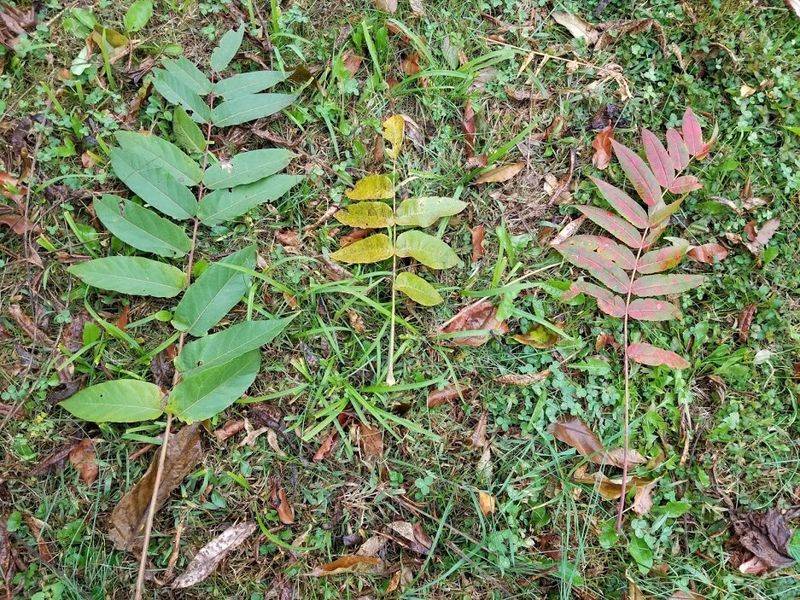
Misidentification is an easy mistake. Tree-of-heaven has long compound leaves, and so do native black walnut and staghorn sumac.
Penn State Extension’s guide to native look-alikes shows why leaf shape alone is not enough.
Check more than one feature before you remove or treat anything. Look at the bark, twigs, leaf edges, seeds, and how the whole tree is built, and compare them to a reliable guide.
If you are unsure, ask an arborist or your local extension or conservation office. An uncertain identification is not good grounds for cutting.
Skin safety matters too. The Massachusetts Department of Agricultural Resources warns about exposure to the tree’s sap, and the U.S.
Forest Service reports that the sap causes dermatitis, a skin reaction, in some people. Not everyone reacts the same way, but there is no easy way to know ahead of time whether you will.
Wear gloves, long sleeves, and eye protection when handling cut stems or broken branches. Wash tools and clothing afterward.
If your skin becomes irritated, a doctor or pharmacist can advise you.
Keep related concerns in perspective
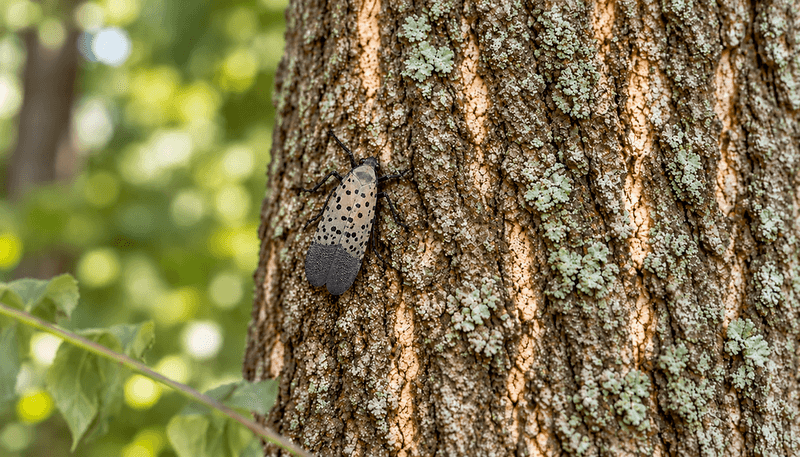
Tree-of-heaven gets a lot of attention because of the spotted lanternfly. It is a preferred host for the insect, but the lanternfly feeds on many plants.
The Massachusetts management guide says removing host trees may reduce honeydew and sooty mold but is unlikely to permanently reduce lanternfly numbers on a property.
Another worry is that the tree poisons its neighbors. The Forest Service review describes laboratory results showing growth inhibition and some field effects, and it also records studies where the impacts varied.
In short, allelopathy is documented in some settings, but it is not a universal rule.
Rules are the third concern. The state’s Prohibited Plant List covers the sale, import, trade, purchase, distribution, and propagation of listed plants.
Its FAQ page does not establish a requirement to remove trees already growing on private property.
Putting these in proportion helps. The tree is a real nuisance, yet it is neither a legal order to start chopping nor a single cause of lanternfly trouble.
Match the response to the tree
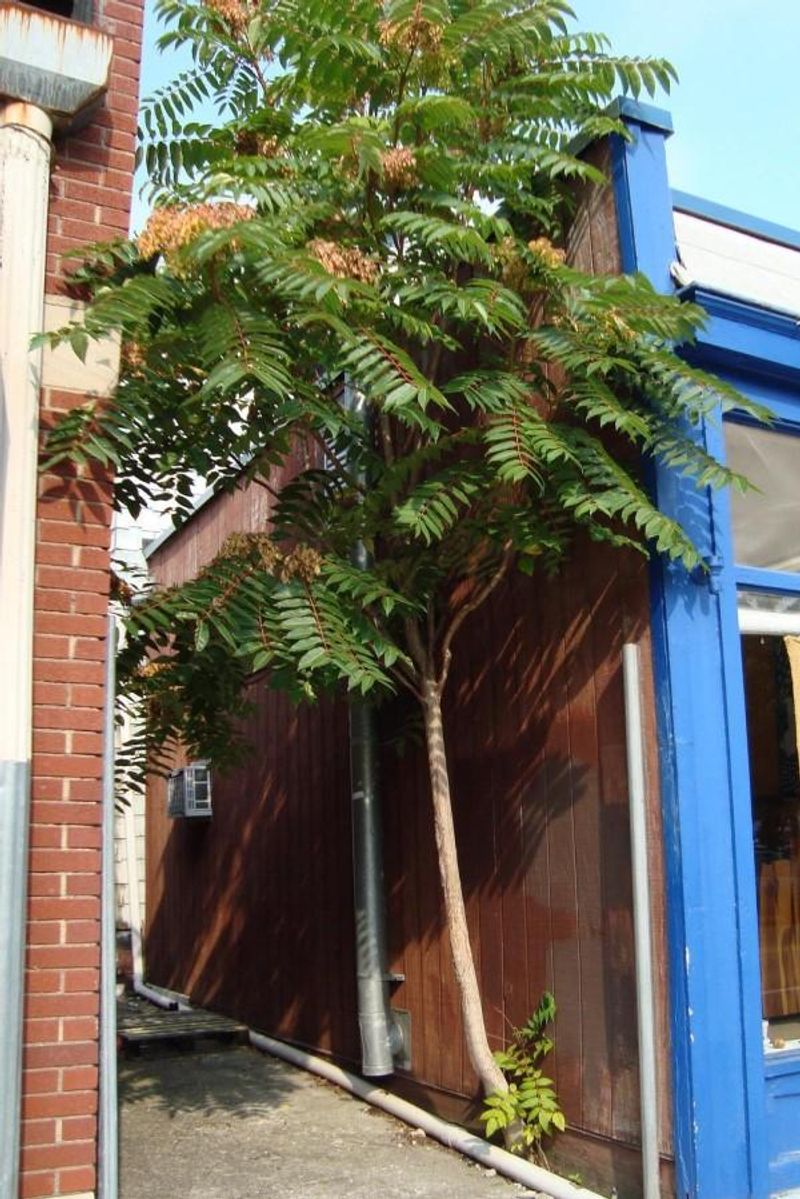
Start by confirming the species, then size up the plant in front of you. Pull a young seedling only when the whole root can come out of moist soil, and treat established trees and suckers as a multi-year project.
The state fact sheet and the herbicide guidance are good places to begin, and a professional can handle large stands.
Cutting alone is not dependable, as the Forest Service notes. This tree rewards patience far more than speed.
Share this story