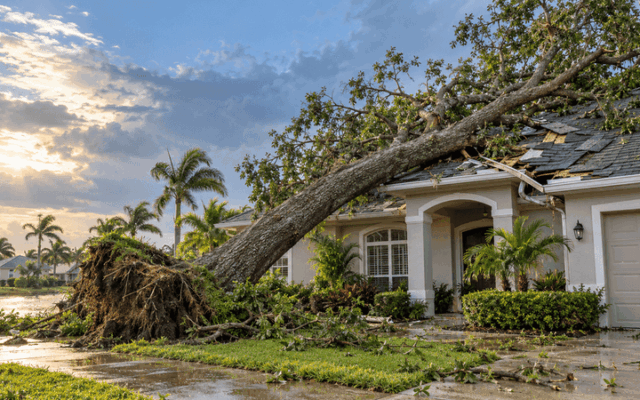
If your neighbor’s tree lands on your fence, roof, or car, you may be able to file a claim under your own homeowners policy if the loss is covered. The tree’s owner is not automatically on the hook just because the tree grew on their land.
Whether that owner can be held responsible depends on the facts, including what they knew and how they cared for the tree. Knowing how the rules and insurance work before a storm hits can save you time, money, and stress.
The Tree’s Owner Does Not Automatically Pay
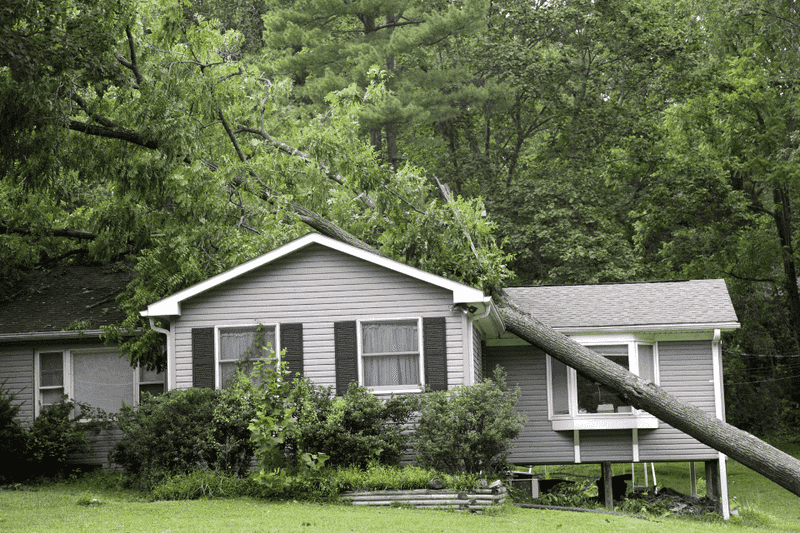
Many people assume Florida has a rule that makes a tree owner pay whenever their tree falls next door. It does not.
Florida has no enacted law that makes every tree owner automatically liable. In 2025, a Senate bill and a House companion proposed that kind of rule, but the Senate bill’s history and the House bill’s status page show they did not become law.
Without a special statute, these disputes fall under common-law negligence. That is a general legal idea about whether a person failed to use reasonable care and whether that failure helped cause harm.
A 2025 Senate Judiciary analysis of the proposal gives a useful look at how the current rules work and what the bill would have changed.
So where the tree started growing does not settle who pays. A tree owner might be responsible in one situation and not in another, depending on what they knew, what they did, and what can be proven.
Think of the tree’s location as the start of the conversation, not the answer.
This also means you should not count on a neighbor’s insurer paying just because the tree came from their yard. Many homeowners start by looking at their own policy, and the next sections explain why.
A Storm Does Not Automatically Settle Fault
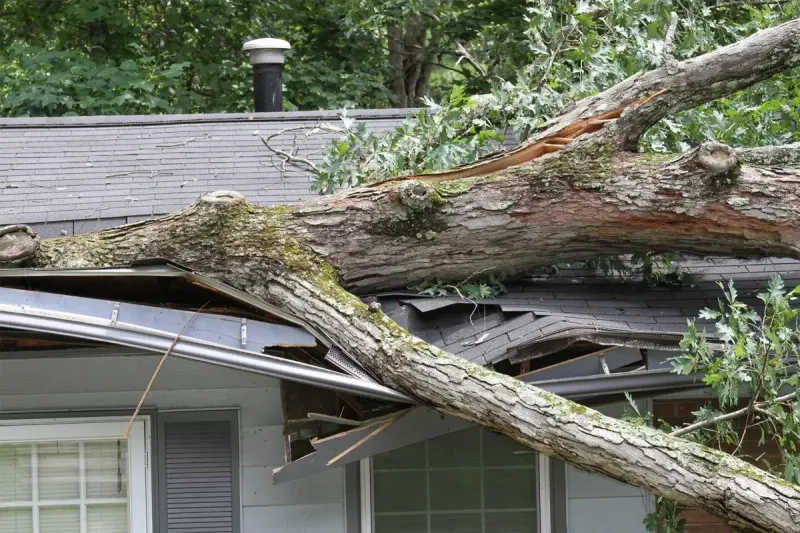
People often say a hurricane is an “act of God,” so nobody is to blame. That shortcut is too simple.
A storm is not an absolute defense when negligence also contributed to the damage.
A 1967 Florida appellate case, Rubin v. Appel, involved trees that fell onto a neighbor’s house during a tropical storm.
The court rejected the idea that the storm alone ended the matter when nature combined with a condition created by negligence. That is a principle about how a case can proceed, not a finding that any particular owner did something wrong.
You may also hear a popular rule of thumb: a healthy tree that falls in a storm is an act of God, while a dead tree is the owner’s fault. UF/IFAS describes this as a commonly cited approach, but it is general guidance and not a binding Florida court rule.
A seemingly healthy tree does not automatically make the neighbor responsible, and a storm does not automatically clear the owner.
In real life, a lot rides on the details. Was the wind unusually strong?
Did anyone see warning signs? Photos of the tree before the storm, if you have any, can help show its condition.
What a Known Tree Hazard Can Mean for a Claim
Evidence that an owner knew about a danger can change how a negligence claim looks. A recent Florida decision shows how.
In Vaughan v. USMI Properties Five, LLC, the complaint alleged that the owner knew for years that an oak was rotten and had received complaints about falling limbs.
The Sixth District Court of Appeal held that those allegations were enough to state that the owner had a duty to use reasonable care. It reversed a dismissal at the pleadings stage and sent the case back for further proceedings.
That means the case was allowed to continue.
It is not a final finding that the owner was negligent or liable. The court did not decide who would ultimately win, and it was a ruling from one appellate court, not the Florida Supreme Court.
The opinion also said it was not deciding whether Florida follows a categorical rule for healthy-tree encroachment.
The practical lesson is that knowledge, notice, reasonable care, and proof all matter. A dead, diseased, or leaning tree does not automatically make its owner liable.
But written complaints, earlier photos, and a record of warnings can matter if the facts are disputed. A local attorney can explain how these ideas apply to your situation.
Check Your Own Policy for Property Damage
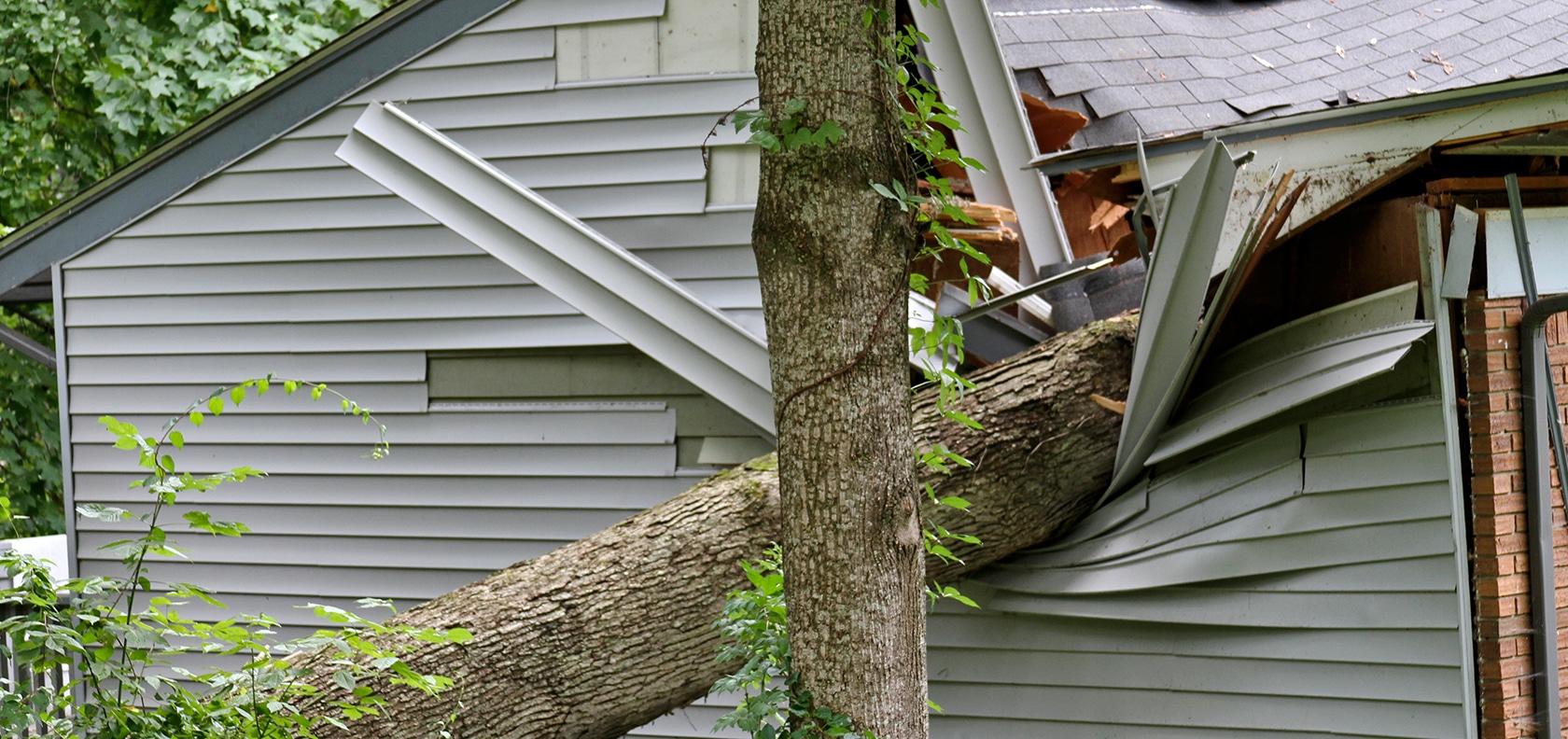
For many homeowners, the first stop is their own insurance policy. According to Florida’s Department of Financial Services, homeowners policies generally protect the insured home and certain other property against covered perils, subject to policy terms and limits.
A falling tree can be one of those perils, depending on your policy.
Read your declarations page and policy language for what is covered, your limits, and your deductible. Hurricane deductibles can differ from regular ones.
The cause of loss matters too, since coverage depends on how the damage happened.
Call your insurer promptly and ask how your policy treats the damage. Do not assume your own insurer will pay, and do not assume the tree owner’s insurer will either.
Whether anyone else pays depends on any established liability, and the answer may differ by situation.
Keep repair coverage separate in your mind from debris-removal costs. Fixing a roof, fence, or shed is one question, and hauling away the tree is another.
The next section explains how those can be treated differently.
Tree Removal Coverage Depends on What Was Damaged
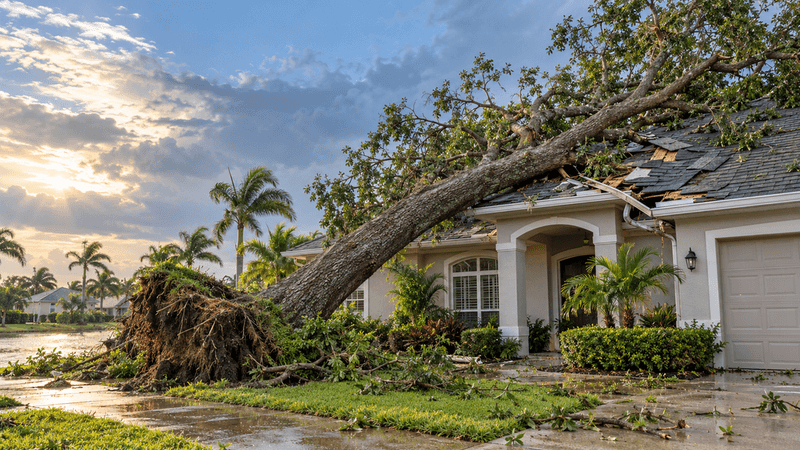
Removing a fallen tree is often treated differently from repairing what it hit. Florida DFS explains that most homeowners policies generally cover tree and debris removal when the tree damages insured property, usually subject to policy terms and limits.
These are general patterns, not a promise that your claim will be covered.
The flip side matters just as much. If a tree merely falls on the ground, such as onto your lawn without hitting a covered structure, removal is usually not covered.
That can surprise people who expect help with a large trunk in the yard.
There is one exception that shows up in some policies. Certain policies cover removal of a tree that blocks the main entrance to the home.
Check whether yours includes that, and what limit applies.
Say a limb lands on your carport and a second tree falls harmlessly in an empty corner of your yard. The first removal may fall within your coverage, while the second may not.
Your policy wording and your adjuster’s review will decide, so ask your insurer for specifics before you hire anyone.
Stay Safe and Document the Damage
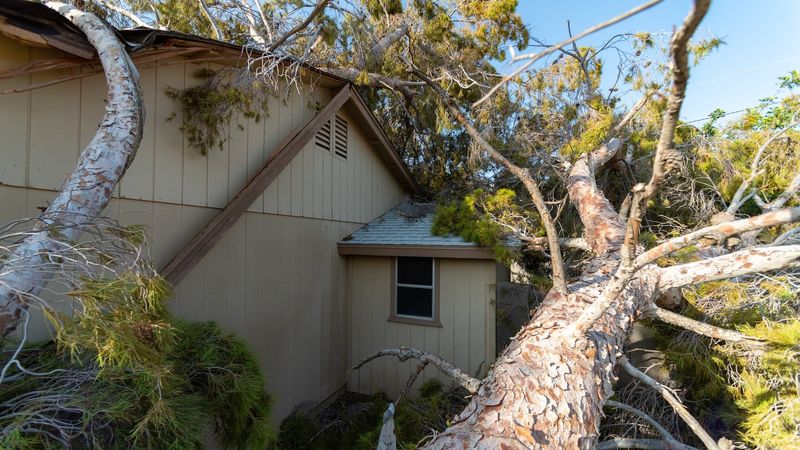
Safety comes before paperwork. Stay well away from downed power lines and from any unstable tree, and never touch anything that might be in contact with a line.
Citizens Property Insurance advises staying clear of downed lines and unstable trees and contacting the utility or a professional as appropriate.
Do not approach, handle, or cut a hazardous tree yourself. A partly fallen tree can shift without warning.
Leave the work to trained professionals.
Once it is safe, take photos or video of the damage from a safe location. Capture the tree, the damaged property, and the surroundings from several angles.
Write down the date and time, and save any messages with your neighbor.
Then contact your insurer promptly. Florida DFS also advises checking your policy’s post-loss duties, which spell out what you must do after a claim-worthy event, as its homeowners insurance overview explains.
Make reasonable temporary repairs to prevent more damage, such as covering a hole in the roof with a tarp, and keep every receipt.
Raise Specific Tree Concerns Before the Next Storm
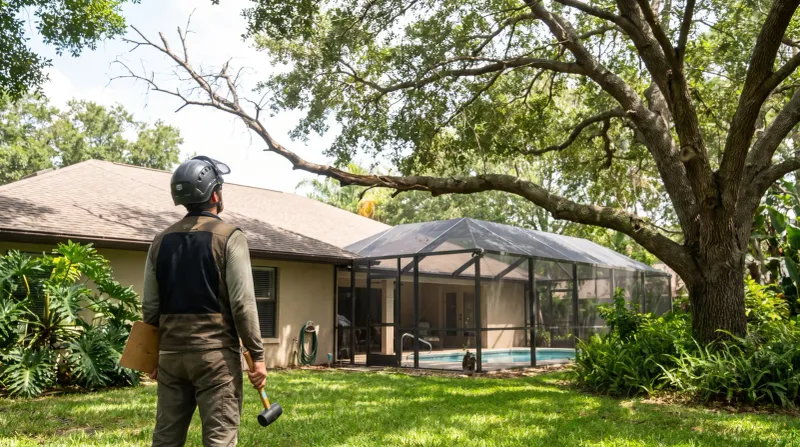
The best time to deal with a worrying tree is before it falls. If you spot a specific problem, tell your neighbor politely and in writing, and keep a copy.
Add dated photos and notes about any follow-up.
Citizens lists cracks, decay, significant leaning, and dead or hanging limbs among warning signs, and suggests using an arborist for assessment. A sign like these does not prove negligence or predict that a tree will fall.
It is simply a reason to ask a qualified arborist to take a look.
A fallen-tree claim is a different matter from trimming. Overhanging branches or roots are a separate issue.
UF/IFAS materials describe a neighbor’s ability to trim encroaching branches or roots up to the property line at their own expense, but there are limits, and the method and risk of harming the tree can matter.
Ownership can also be unclear. A tree on the boundary line can raise separate questions, as in Scott v.
McCarty. Get advice before cutting anything.
A tree is easiest to talk about while it is still standing.
Share this story