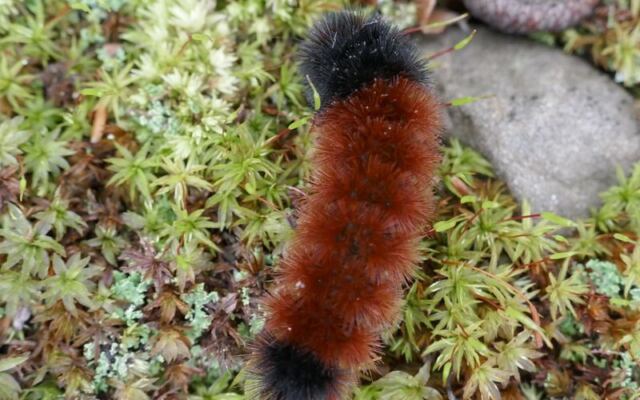
That fuzzy brown and black caterpillar on your driveway has a real cold-weather trick: it can survive some freezing and crawl off again in spring. Its body makes natural antifreeze-like chemicals, so parts of it can freeze without the whole animal turning to ice.
It is not guaranteed to make it through every winter, and the details matter if you want to help. Here is how the banded woolly bear pulls this off and what to do when you find one.
A driveway crossing may be a search for shelter
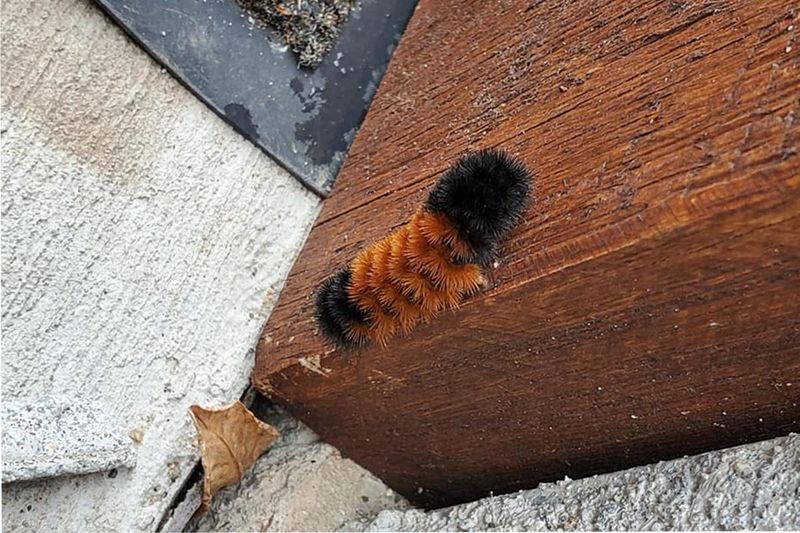
You pull in after work and spot a bristly black and rusty-orange caterpillar humping across the concrete. It is easy to guess where it is going, but a quick glance cannot tell you.
It may be hunting for a place to hide from the cold, and one look cannot show its destination or whether it will make it.
The banded woolly bear, the caterpillar of the Isabella tiger moth, lives across most of Minnesota, according to the Minnesota DNR. In fall, these caterpillars wander, and the USA National Phenology Network says they look for leaf litter or shelter under boards and rocks.
It also notes that many are killed on roads.
That fact does not predict what will happen to the one on your driveway. Some will find cover, some will not, and some will get stepped on or run over.
The bigger question is how a small caterpillar with no burrow or fur coat magic can sit outside through a Minnesota winter at all. The answer lies in its body chemistry, and the next sections walk through it step by step, including where the limits are.
Leaf litter shelters it through a changing winter
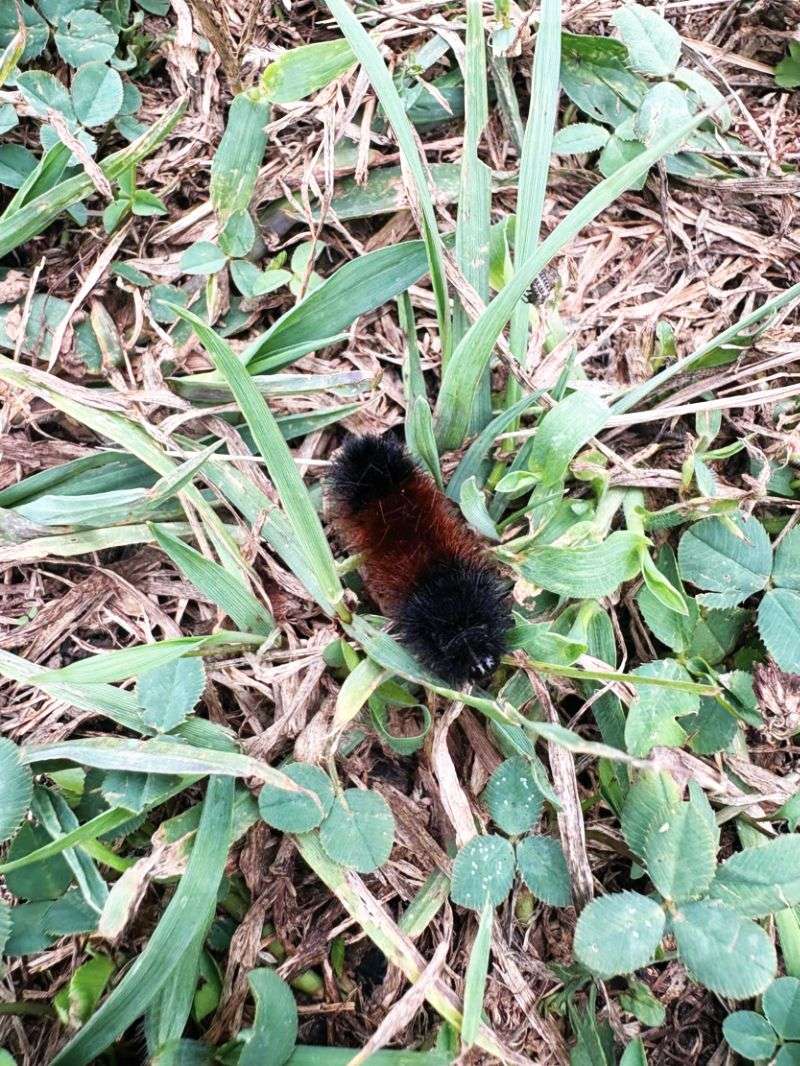
Once it finds cover, the woolly bear settles in as a caterpillar. The Minnesota DNR says woolly bears found at summer’s end overwinter beneath leaf litter and pupate in spring.
A pile of leaves, a log, or a spot under a board is where it spends the cold months.
That does not mean it sits in one long, unbroken freeze. Winter under leaves swings around.
A field study of these caterpillars, summarized in a report on woolly bear cold hardiness, recorded both freezing and thaws beneath leaf litter. So the caterpillar may freeze during a cold snap, warm up during a mild spell, and freeze again later.
Natural cover gives the caterpillar a buffer. Leaves, snow, and soil can soften the sharpest temperature swings compared with open pavement.
Shelter does not remove every risk, though. A bad stretch of weather, a hungry bird, or a disturbed leaf pile can still end a caterpillar’s winter.
Think of leaf litter as the better place to be, not a safe room.
This is why a raked-clean yard can matter. Leaving some leaves in a corner of the yard keeps possible winter shelter in place.
Some of its tissues freeze, but not the whole caterpillar
“Freezes solid” makes a great headline, but experiments paint a more careful picture. Researchers measured how much ice formed in the bodies of frozen woolly bears.
In a study by Layne and Blakely, tissue ice content was about 24 percent at -3 degrees C and about 49 percent at -10 degrees C.
Those numbers belong to that experiment, with its own chosen temperatures and setup. They are not a measure of what happens to every caterpillar in every Minnesota yard.
They do show something useful, though: even at the colder test temperature, about half of the measured tissue was ice, which is far from the whole animal.
So partial freezing is not the same as every part turning to ice. The caterpillar is built to let a share of its body water freeze while the rest stays liquid and protected.
In the same research, glycerol helped reduce how much water froze.
One more caution comes from the lab. Caterpillars could move soon after thawing, but that quick wiggle did not prove they were fine.
Some died later. A caterpillar that crawls after a thaw has passed the first test, not the final one.
Cold acclimation helps limit freezing damage
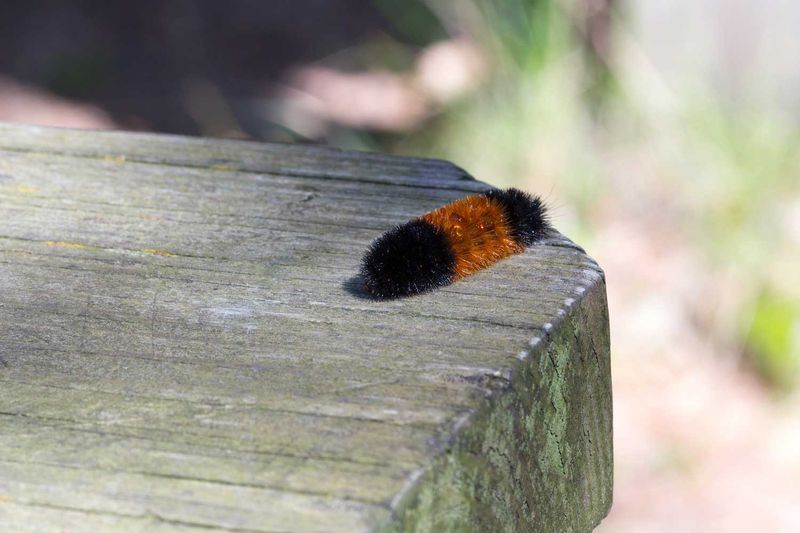
The caterpillar does not become cold tough overnight. Its toughness builds with seasonal acclimation, the slow adjustment that happens as days shorten and temperatures fall.
Research on long-term acclimation, including a Yi and Lee study in the Journal of Experimental Biology, found changes in body fluids and dissolved compounds as the caterpillars hardened to cold.
Glycerol is the best-known helper. The Minnesota DNR describes it as an antifreeze-like chemical.
Glycerol and other dissolved compounds help limit how much body water freezes and help protect tissues while ice is present.
Notice what is missing from that list: the hairs. The bristles are not what keep the caterpillar alive in winter.
The survival trick is chemistry inside the animal.
In the lab, acclimated caterpillars survived a week at -20 degrees C, but they did not survive -80 degrees C. That is a result from controlled conditions with prepared animals.
It is not a forecast for every caterpillar or every winter, and it is not a promise about what your driveway caterpillar will face.
Freeze tolerance does not guarantee survival
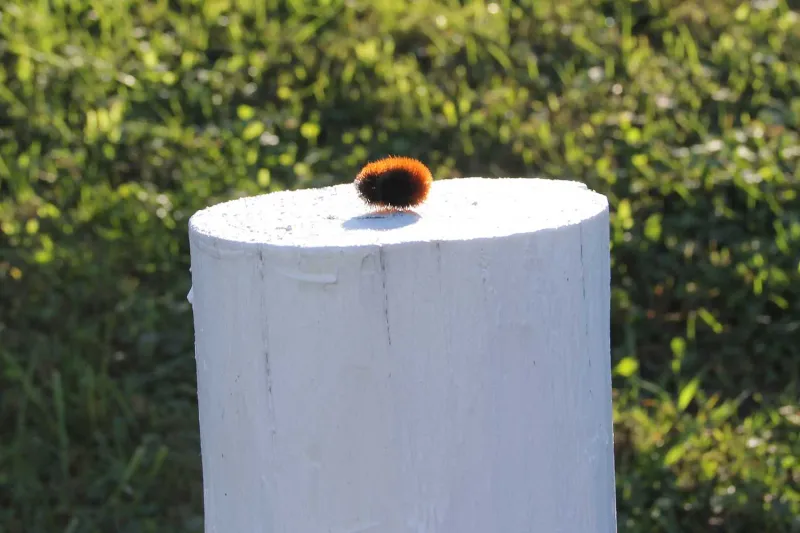
Being able to freeze and live is a clever skill, but it has limits. Survival depends on how well the caterpillar acclimated, how cold it got, how long the cold lasted, and how many times it froze and thawed.
That last factor matters in places with wobbly winters. In an experiment on repeated freezing, caterpillars that went through freeze-thaw cycles showed tissue damage, and nearly 30 percent died.
Repeating the stress took a toll that a single freeze did not.
Quick movement is not the finish line either. In the freeze temperature study, caterpillars could move soon after thawing, yet some died later and not all completed development.
A caterpillar that wriggles after a warm spell may still be in trouble.
It is also wise not to treat any lab temperature as a hard rule for the field. The -20 and -80 degree results from the acclimation research describe those experiments.
Real winters bring their own mix of cold, thaws, snow cover, and shelter. The woolly bear improves its odds.
It does not erase the risk.
Leave it near natural cover when you can
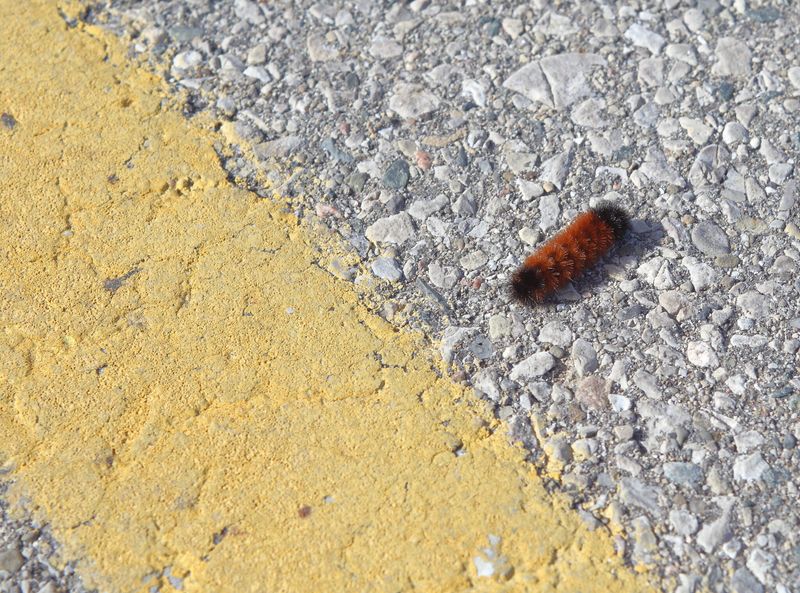
Here is the simple rule. If you have identified a banded woolly bear and it is safely off the walkway or driveway, leave it alone.
Leaf litter is its documented overwintering habitat, and it may already be where it wants to be.
If it is stuck on pavement where a tire or boot is about to land, a short move makes sense. Set it a short distance away in nearby leaf litter or beneath a log.
This is a practical guess based on where these caterpillars winter, not a tested rescue method. The National Phenology Network says they seek leaf litter or shelter under boards and rocks, which is why those spots are good targets.
Do not bring it indoors. Indoor warmth does not match its natural seasonal cycle, and that could disrupt the process it needs.
Keep handling advice for banded woolly bears only. NC State Extension describes the banded woolly bear as virtually harmless to people, but that does not make every hairy caterpillar safe.
If you are not sure what you found, or your skin is sensitive, do not touch it. Nudging it onto a leaf or a piece of bark works too.
Spring brings more caterpillar life before the moth
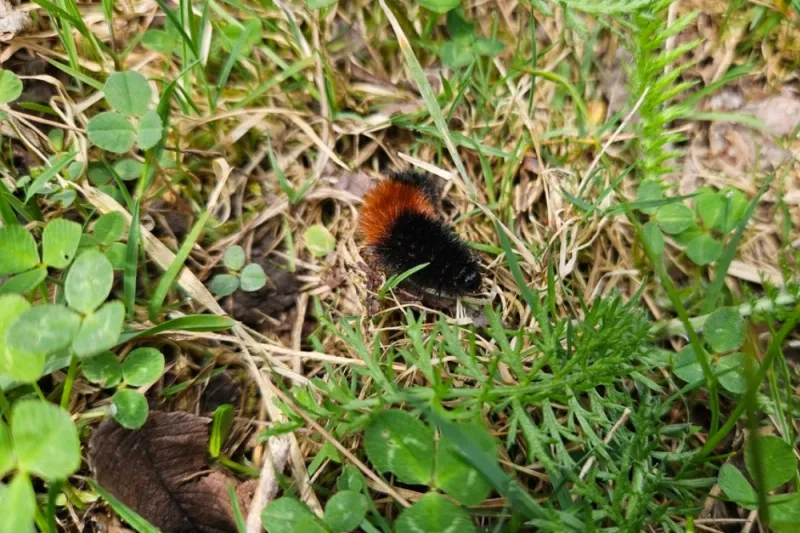
When snow melts and the ground warms, the woolly bear does not turn into a moth on the spot. It overwinters as a caterpillar, and the Minnesota DNR life-cycle account describes feeding and development before it spins a cocoon and pupates.
So the caterpillar you see crawling in spring still has work to do. It eats, grows, and finally cocoons before an Isabella tiger moth emerges.
That is the practical reason to give it space. A caterpillar tucked into leaf litter may still have a whole stage of life ahead of it.
Winter is only the middle of its story, not the end.
Share this story