Get the latest garden guides in your inbox →
Gardening Latest
  • General Gardening
  • Lawn Care
  • Plant Care
  • Composting
  • Soil Health
  • Backyard
  • Garden Muse Magazine
  • General Gardening
  • Lawn Care
  • Plant Care
  • Composting
  • Soil Health
  • Backyard
  • Garden Muse Magazine
  • News
  • Gardening Calendar
  • Garden Structures
  • Vegetable Garden
  • Vertical Garden
  • Raised Beds
  • Hydroponics
  • General Equipment
  • Community Gardens
Garden Themes
  • Spiritual Garden
  • Hydroseeding
  • Seeding and Laying Sod
  • Artificial Grass
  • Lawn Care Equipment
  • Plants
  • Trees
  • Planting Tools
  • Composting Basics
  • Fertilizer
  • Alternative Growing Mediums
  • Front Yard
  • Backyard Activities
  • Landscaping
Gardening Latest

Explore by state

Which state is your garden in?

Currently viewing Minnesota

All states

Northeast

  • Connecticut —
  • Delaware 25
  • Maine —
  • Maryland 11
  • Massachusetts 27
  • New Hampshire —
  • New Jersey 11
  • New York 20
  • Pennsylvania 20
  • Rhode Island —
  • Vermont —

Southeast

  • Alabama 11
  • Arkansas —
  • Florida 11
  • Georgia 11
  • Kentucky 25
  • Louisiana 10
  • Mississippi —
  • North Carolina 9
  • South Carolina 24
  • Tennessee 8
  • Virginia 10
  • West Virginia —

Midwest

  • Illinois 10
  • Indiana 12
  • Iowa 24
  • Kansas —
  • Michigan 11
  • Minnesota 10
  • Missouri 9
  • Nebraska —
  • North Dakota —
  • Ohio 11
  • South Dakota —
  • Wisconsin 25

Southwest

  • Arizona 10
  • Colorado —
  • Nevada —
  • New Mexico —
  • Oklahoma —
  • Texas 9
  • Utah —

West

  • Alaska —
  • California 10
  • Hawaii —
  • Idaho —
  • Montana —
  • Oregon —
  • Washington —
  • Wyoming —

No state matches that search.

Site menu

Gardening Latest
  • General Gardening
    • News
    • Gardening Calendar
    • Garden Structures
    • Vegetable Garden
    • Vertical Garden
    • Raised Beds
    • Hydroponics
    • General Equipment
    • Community Gardens
    Garden Themes
    • Spiritual Garden
  • Lawn Care
    • Hydroseeding
    • Seeding and Laying Sod
    • Artificial Grass
    • Lawn Care Equipment
  • Plant Care
    • Plants
    • Trees
    • Planting Tools
  • Composting
    • Composting Basics
  • Soil Health
    • Fertilizer
    • Alternative Growing Mediums
  • Backyard
    • Front Yard
    • Backyard Activities
    • Landscaping
  • Garden Muse Magazine

Explore

  • About GardeningLatest.com
  • Contact Us

Get the latest from the garden

New guides on lawn care, plants and backyard projects, sent when they go up.

Subscribe →

Follow

  • Facebook
  • X
  • Pinterest
  • YouTube
Minnesota Gardening

Spotting a Bald Eagle Near Your Minnesota Neighborhood in December Means More Than You Think

A bald eagle near your Minnesota neighborhood in December can be a clue about the winter habitat close by.

IO

By Ingrid Olson

November 24, 2026 · 6 min read

Spotting a Bald Eagle Near Your Minnesota Neighborhood in December Means More Than You Think

A bald eagle near your Minnesota neighborhood in December can be a clue about the winter habitat close by. It may point to open water, food that is within reach, or a flight path between places where eagles eat and rest.

Eagles stay active in Minnesota all year, so a winter sighting is not as odd as it might seem. Here is what that big dark bird can tell you, and what it cannot.

At a glance

Where
Minnesota Gardening
Hardiness zone
5 −20 to −10°F
Read
6 minutes
Published
November 24, 2026

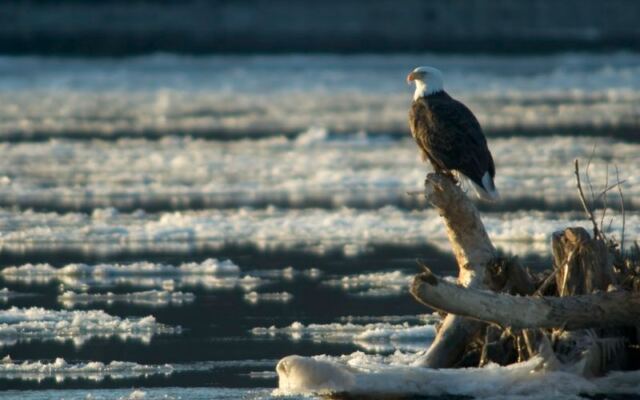
Open water makes some river areas useful in winter
Open water makes some river areas useful in winter
© Star Tribune

Most Minnesota lakes and rivers freeze solid by midwinter, so any stretch of moving water stands out. On the southeast Mississippi River, the Minnesota DNR says eagles are active year-round and are often seen in winter along open water, where currents keep the river from freezing over.

Locks and dams add to the effect. The Army Corps of Engineers explains that turbulence below Mississippi River locks and dams can keep water open and make fish available.

That makes those spots popular eagle-watching places.

Still, your neighborhood sighting does not have to be near a dam. An eagle might be over a small river, a pond, or a patch of moving water you have never noticed.

Open water and food can support a winter gathering of eagles, but they do not promise one at any particular site.

Think of open water as a possible reason, not a rule. If you see an eagle, it is worth asking where the nearest unfrozen water is.

The answer might be a creek bend, a river channel below a dam, or a spot where a storm sewer or current keeps ice thin.

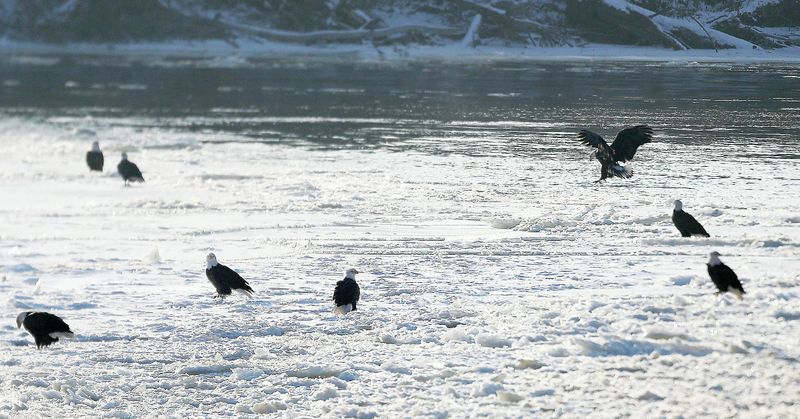
Accessible prey can draw eagles to open water
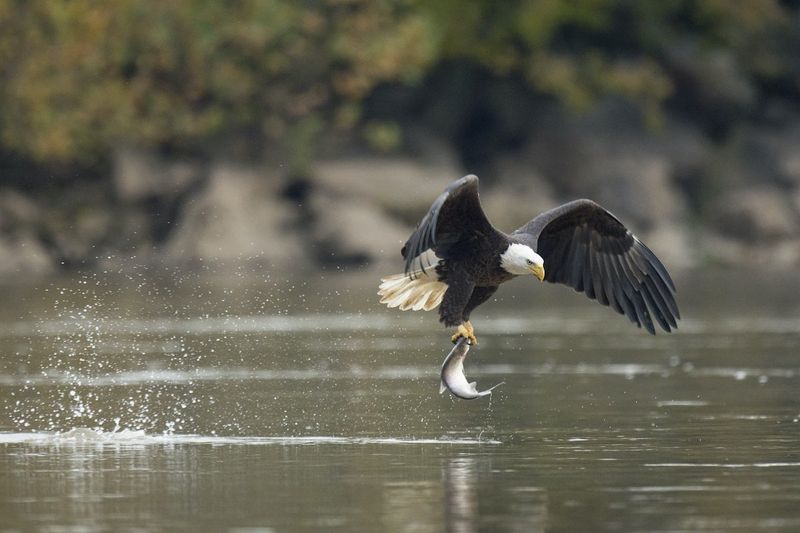
Accessible prey can draw eagles to open water
© Farmers’ Almanac

Eagles go where food is easy to reach. When ice covers a river, fish are out of sight and out of range.

Where water stays open, fish can be within reach, and the Corps notes that turbulence below locks and dams makes fish available to eagles, which helps explain winter gatherings at those spots.

The Army Corps reports that at its Mississippi River wintering areas, eagles can be seen from mid-December into early March.

Fish are only part of the menu, though. The U.S.

Fish and Wildlife Service describes bald eagles as opportunistic feeders. They may take waterfowl, other animals, and carrion, such as a dead deer near a road or field.

That variety matters when you spot an eagle in your area. A bird near a pond with ducks, or beside a farm field, may not be there for fish at all.

A sighting is not proof that the river is full of fish.

It also helps to know you usually cannot tell what a given eagle has eaten or plans to eat. Instead, look at the setting.

Open water, waterfowl, and nearby tall trees for perching together make a place more appealing in winter.

A December eagle may be local or on the move
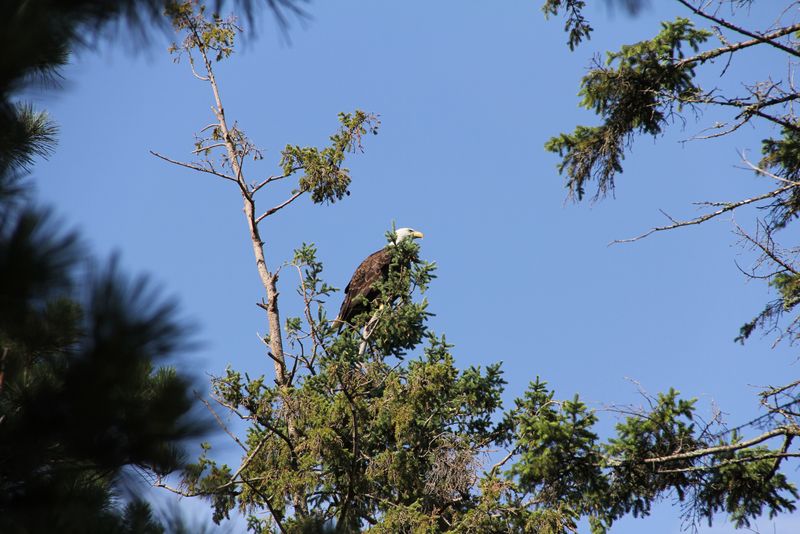
A December eagle may be local or on the move
© Minnesota Prairie Roots

Nobody can say where a December eagle came from just by looking at it. Minnesota eagles are active year-round, according to the DNR, so the bird overhead may well live in the region all winter.

Winter movements vary, and not every eagle heads south.

Some eagles do shift around as ice forms and food moves. The U.S.

Fish and Wildlife Service notes that winter roost sites are sometimes used all season and sometimes only briefly. An eagle crossing your neighborhood could be traveling between a feeding area and a roost.

That is one possibility among several. A single sighting cannot show whether the bird is feeding, roosting, nesting, staying nearby, or just passing through.

It also cannot tell you whether the eagle is part of a larger gathering.

If you want to learn more, repeat visits help. Note the time of day, the direction of flight, and the spot where it perches.

After a few days, a pattern might appear, such as a bird that always flies past at dawn.

Winter sightings vary with conditions
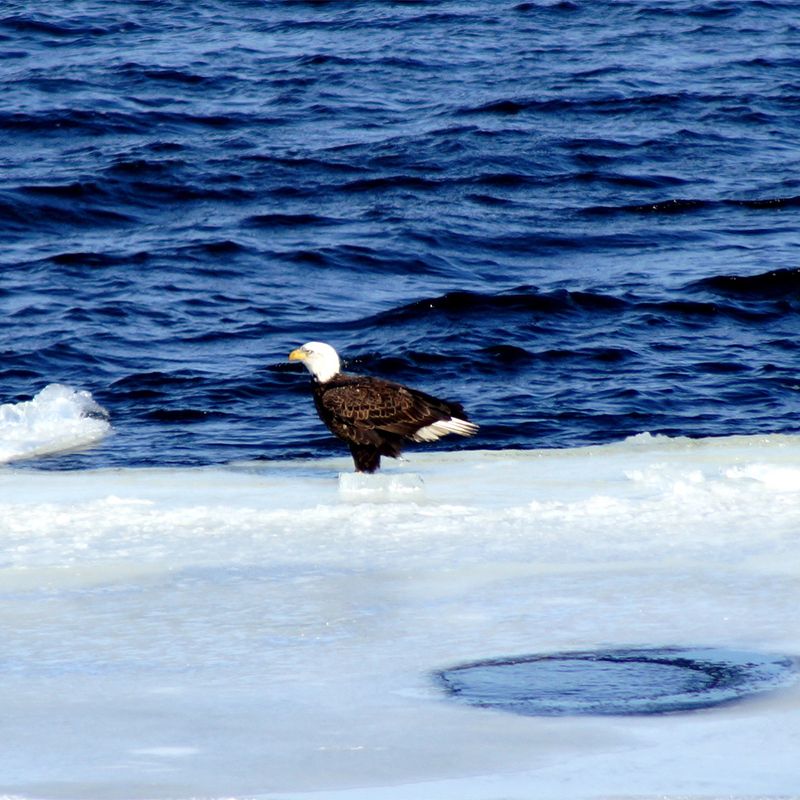
Winter sightings vary with conditions
© nationaleaglecenter

Eagle watchers like to have dates to plan around. The Army Corps reports that at its Mississippi River wintering areas, eagles can be seen from mid-December into early March.

Treat that as a reported seasonal window, not a prediction for every neighborhood or every year.

Numbers shift a lot. Weather, water conditions, food, and the movements of individual birds all play a part.

A cold snap that freezes a channel can send eagles elsewhere, while a thaw can open new feeding spots.

The DNR says eagles stay active all year, and the Fish and Wildlife Service describes winter roosts that are used for a whole season in some places and only a short time in others. So a good week of eagles at one river bend does not guarantee the same next week.

The practical lesson is patience. If you saw one bird in December, you might see none the next day, or several the following week.

Both results fit the usual winter pattern.

An eagle is a habitat clue, not a river test
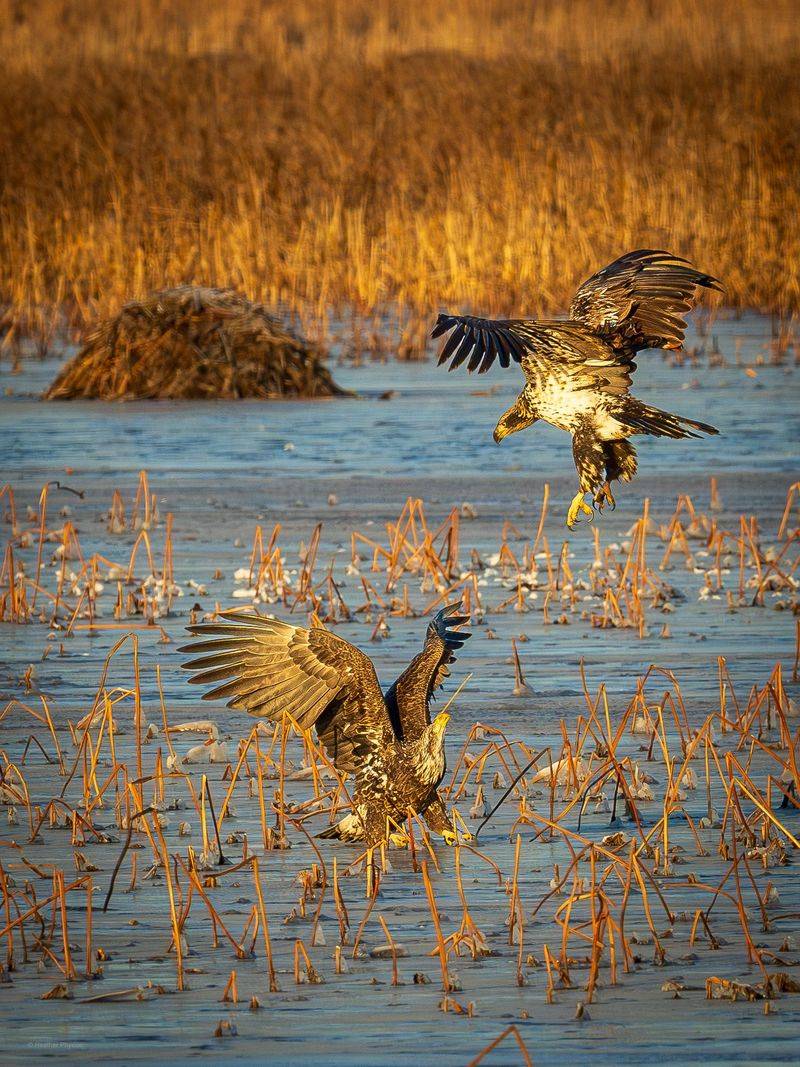
An eagle is a habitat clue, not a river test
© HP Conservation & Nature Stories

Seeing an eagle is a fun hint that something useful may be nearby. It might be open water, available food, or a good perch.

As the Fish and Wildlife Service notes, eagles eat a range of foods, including carrion, so they can show up in places for reasons that have little to do with water quality.

That is why an eagle cannot certify a clean river. A sighting does not prove fish are plentiful, and it does not show the water is free of pollution.

It is a clue about winter habitat, not a grade for the river.

Minnesota checks rivers in other ways. The Minnesota Pollution Control Agency’s long-term monitoring looks at biological communities, such as fish and aquatic invertebrates, along with water-quality measures.

So enjoy the eagle as a sign of local wildlife activity. If you care about your river, look up its monitoring results or join a local cleanup.

Those steps tell you far more than a bird on a branch.

Watch from a safe distance
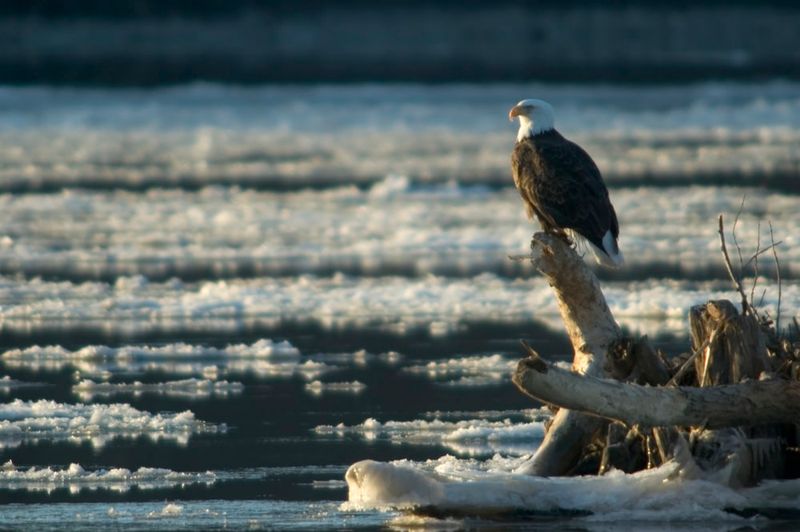
Watch from a safe distance
© Castle La Crosse

The best way to see an eagle is from far away. The Minnesota DNR recommends binoculars or a spotting scope, slow and quiet movement, and staying put rather than moving closer.

It also says not to harass, touch, or feed wildlife, and not to trespass.

Winter eagles may seem less bothered by people than nesting eagles, but that is no invitation to crowd them. Federal eagle guidance covers disturbance to foraging and roosting birds as well as nesting ones.

A flushed eagle wastes energy it needs in cold weather.

Choose public viewing areas, and obey the barriers and closures near dams. Restricted zones below locks and dams are there for a reason.

Never step past a fence for a better photo.

Ice needs respect too. The Corps warns that river ice conditions can change, so stay on solid ground near the water.

A quiet eagle that ignores you is a bird you watched well.

Share this story
IO

Written by

Ingrid Olson

More from Ingrid Olson →

About Gardening Latest

Gardening Latest provides in-depth guides to maintaining and enhancing your garden and backyard. Learn how to make the most of the space you have and create a beautiful garden.

More about us →

Latest stories

  • Tennessee GardeningWho Actually Pays After a Neighbor’s Tree Crashes Down on Your Tennessee Property

    Who Actually Pays After a Neighbor’s Tree Crashes Down on Your Tennessee Property

    Just now
  • Alabama GardeningAlabama’s Southern Short-Tailed Shrew: A Tiny, Seldom-Seen Mammal With Possibly Venomous Saliva

    Alabama’s Southern Short-Tailed Shrew: A Tiny, Seldom-Seen Mammal With Possibly Venomous Saliva

    6 min ago
  • Illinois GardeningCopperheads, Timber Rattlesnakes, And Brown Recluses All Turn Up In Illinois Yards, So Here’s How To Tell Them Apart

    Copperheads, Timber Rattlesnakes, And Brown Recluses All Turn Up In Illinois Yards, So Here’s How To Tell Them Apart

    18 min ago
  • Louisiana GardeningFrom Cottonmouths To Brown Recluses, Here’s How To Identify The Venomous Creatures In Louisiana Yards

    From Cottonmouths To Brown Recluses, Here’s How To Identify The Venomous Creatures In Louisiana Yards

    24 min ago
  • Delaware GardeningThat Giant Flower Stalk on Your Delaware Rhubarb Is Telling You Something, and Here’s Whether to Cut It

    That Giant Flower Stalk on Your Delaware Rhubarb Is Telling You Something, and Here’s Whether to Cut It

    30 min ago

Gardening by state

Stories for your state, and the hardiness zone most of it gardens in.

Keep exploring

Read next

All Minnesota Gardening →
Minnesota GardeningThat Tiny Shrew Isn’t the Only Weird Animal Sleeping Under Your Minnesota Snow
Minnesota Gardening

That Tiny Shrew Isn’t the Only Weird Animal Sleeping Under Your Minnesota Snow

2 hr ago
Minnesota GardeningSeven Minnesota Birds That Stick Around All Winter and What They’ll Eat From Your Feeder
Minnesota Gardening

Seven Minnesota Birds That Stick Around All Winter and What They’ll Eat From Your Feeder

6 hr ago
Minnesota GardeningWhy Ladybugs Keep Showing Up Inside Your Minnesota House Every Winter
Minnesota Gardening

Why Ladybugs Keep Showing Up Inside Your Minnesota House Every Winter

9 hr ago

More from Minnesota Gardening

  • Minnesota Has a Venomous Mammal Under an Ounce, and It Might Be in Your Yard

    Nov 15
  • The Lightning-Fast Basement Bug Minnesota Homeowners Panic Over Is Actually Eating Your Spiders and Roaches

    Nov 15
Back to top

Leave a response Cancel

Your email address stays private. Required fields are marked with an asterisk.

Gardening Latest

In-depth guides to maintaining and enhancing your garden and backyard: how to make the most of the space you have, and how to make it beautiful.

  • Facebook
  • X
  • Pinterest
  • YouTube

We may earn a portion of sales from products or services that are purchased through our site as part of our affiliate partnerships with retailers.

Explore

  • About GardeningLatest.com
  • Contact Us
  • Terms and Conditions
  • Privacy
  • Editorial Note:
  • FTC Disclosure

Newsletter

New garden guides and seasonal tips, straight to your inbox.

We’ll email you a link to confirm. Unsubscribe any time.

Almost there! Check your inbox and tap the link to confirm.

© 2026 Gardening Latest. All rights reserved.

Back to top