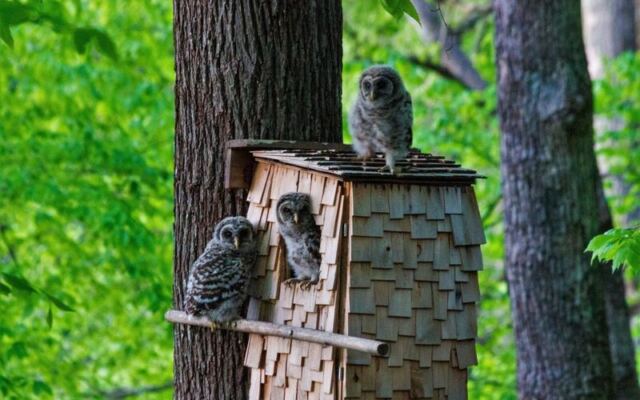
Building a barred owl nest box this winter is a simple way to invite one of Georgia’s most striking owls to nest near your home. These big, round-faced birds with the “who cooks for you” call need a safe hollow to raise their young, and old cavity trees are not always easy to find.
A well-made box gives them another choice, and the work can be finished in a weekend. Here is how to build it, where to hang it, and how to treat any owls that move in.
A box can help where wooded habitat already supports owls
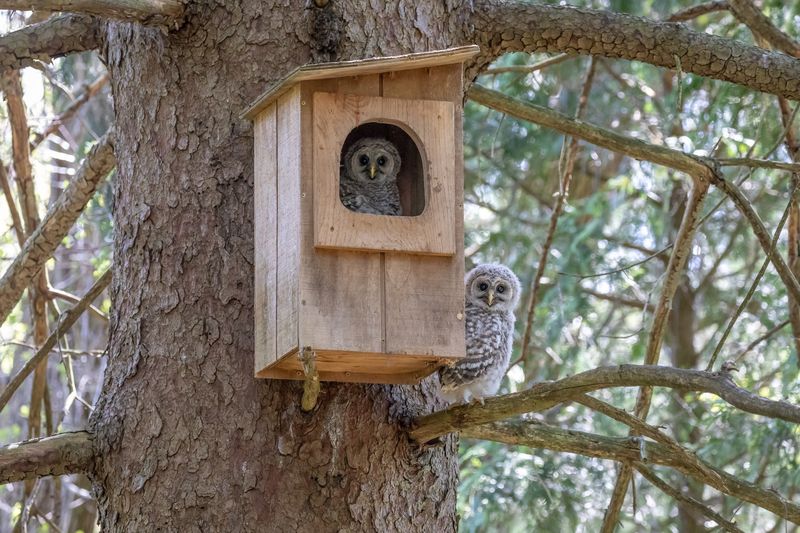
A properly made box can offer barred owls another place to nest, but the woods around it matter a great deal. Barred owls use natural tree cavities, old nests built by other birds, and human-made nest boxes, according to Cornell Lab of Ornithology life history notes.
They are tied to mature forests, often near water, and Cornell describes them as especially at home in large, mostly unbroken blocks of older woods.
That means a box is an add-on to good habitat, not a way to create it. A yard that backs up to a creek bottom, a mixed pine and hardwood stand, or a wooded greenway is a far more plausible site than an isolated, treeless lot.
Installing a box also does not tell you owls are living nearby.
Start with a walk. Look for large old trees, a mix of woods and clearings, and moving water within a short distance.
Listen at dusk for the classic eight-note hoot, since hearing owls close by is a good clue that your area suits them.
Owls also need food. University of Florida IFAS Extension notes a varied diet that includes mice and voles, along with squirrels, rabbits, birds, and amphibians.
Healthy woods with plenty of these animals make your site stronger.
If your property fits this picture, the species-specific design from Cornell NestWatch is a good place to begin. If it does not, your efforts may do more good protecting the large trees you already have.
Build to barred owl dimensions
Barred owls are large birds, so their box is much bigger than a bluebird house. Following one tested plan keeps the size right, and Cornell NestWatch lists the dimensions for this species.
The entrance should be 7 inches across. The interior floor should measure about 13 by 13 inches, and the inside depth should be 23 inches.
Those numbers give an adult owl room to enter, turn around, and settle over eggs or chicks.
Inside, add 3 to 4 inches of wood chips. Owls do not bring in much nesting material of their own, so the chips act as the bedding that cushions eggs and holds the nest in place.
Stick with these figures as a set. If you find another plan online, resist the urge to borrow a measurement from it, because mixing sizes can leave you with a box that no longer matches the species guidance.
Print the NestWatch specifications and keep them beside you while you cut lumber.
Before you head to the garage, make a short checklist: entrance size, floor size, depth, and wood chips. Check each item twice before assembly.
A winter weekend is plenty of time to build a box this way, and finishing it early leaves you free to choose a good spot without rushing.
Mount the box high and keep the entrance clear
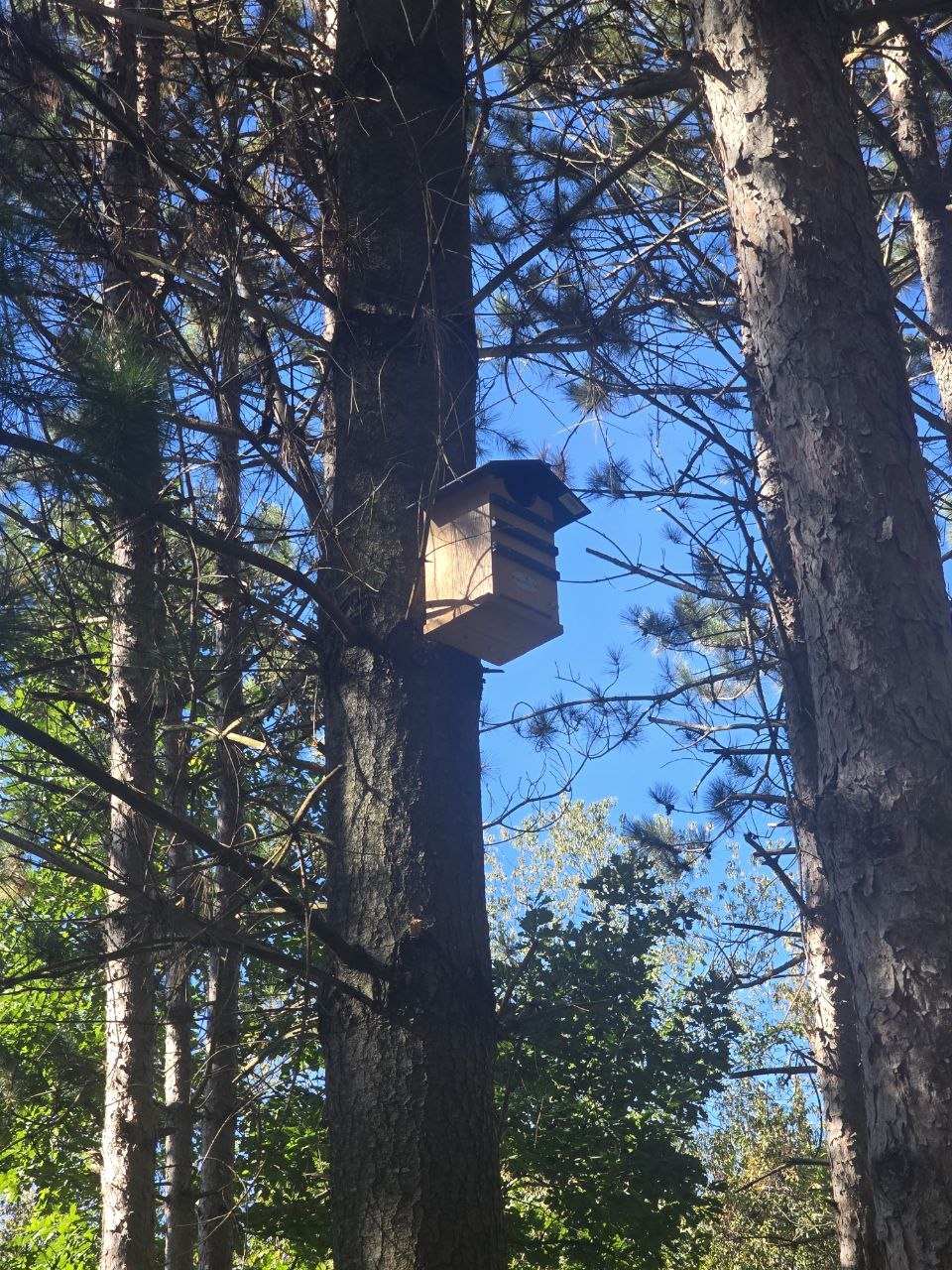
Where you hang the box counts as much as how you build it. Cornell NestWatch recommends mounting a barred owl box 12 to 15 feet off the ground, keeping the opening unobstructed, and placing it within 200 feet of water if possible.
Height is the part that surprises people. A box at that level will need a sturdy ladder and a helper to steady it, so plan the job with safety in mind.
Natural cavities are often higher, but sticking to this one recommendation keeps your plan consistent.
Walk the area and picture an owl approaching on silent wings. Branches, vines, and dense twigs directly in front of the hole can block that flight path, so trim only what is needed to open a clear line.
Choose a solid tree or post that will carry the weight without swaying.
Water is a bonus, not a requirement. A pond, creek, or wet swale within 200 feet fits the guidance, but if none exists on your land, a well-placed box in good woods is still reasonable.
None of these steps can promise discovery. They simply put the box in the kind of setting where an owl searching for a cavity is more likely to notice it, and they make it safer and easier for you to maintain.
Install before nesting season and give owls time
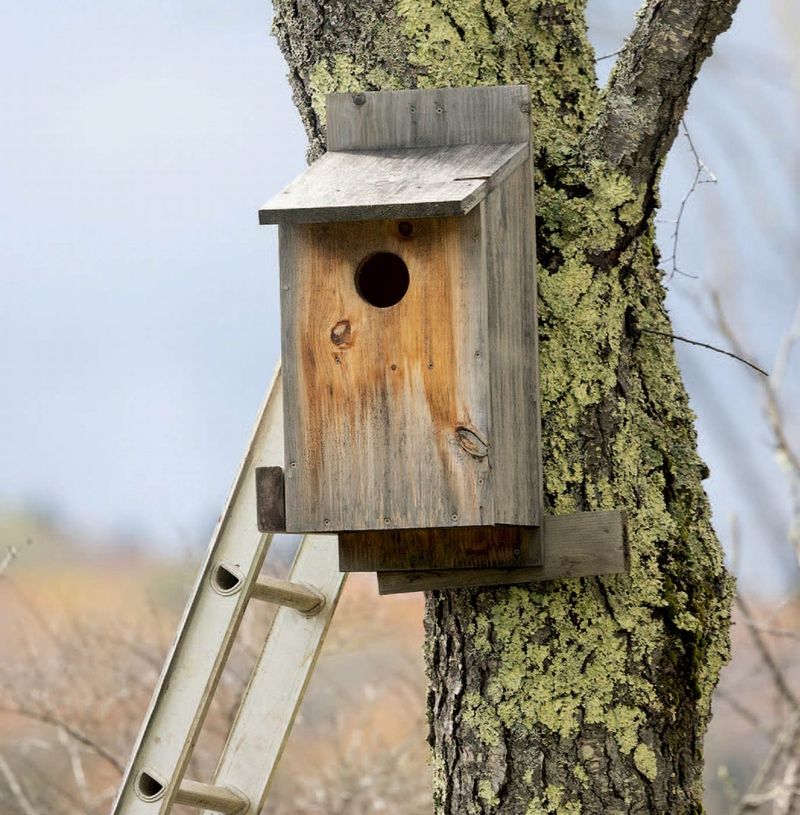
Timing is why this is a winter project. Cornell NestWatch advises putting up boxes well before breeding season, and in southern regions that means by February.
Treat that as general regional guidance rather than a firm deadline for every Georgia property.
For a rough sense of how early owls get started, Florida wildlife officials report barred owls beginning to nest in late January or early February. That is regional context only, but it shows why waiting until spring can mean missing the start of the season.
Even with a perfectly timed box, patience matters. NestWatch notes that boxes can take time to be discovered.
Cornell also reports that barred owls may scout a nest site as early as a year before they use it, as described in its barred owl life history.
So an owl might use the box this spring, or it might only inspect it this year. A quiet season is not a failure, and it does not mean you built it wrong.
Use the waiting time well. Check from a distance that the box is still secure after storms, and note any owl calls you hear at dusk.
Leave the area calm and undisturbed so a curious owl feels comfortable investigating.
Owls may eat rodents, but a nest box is not pest control
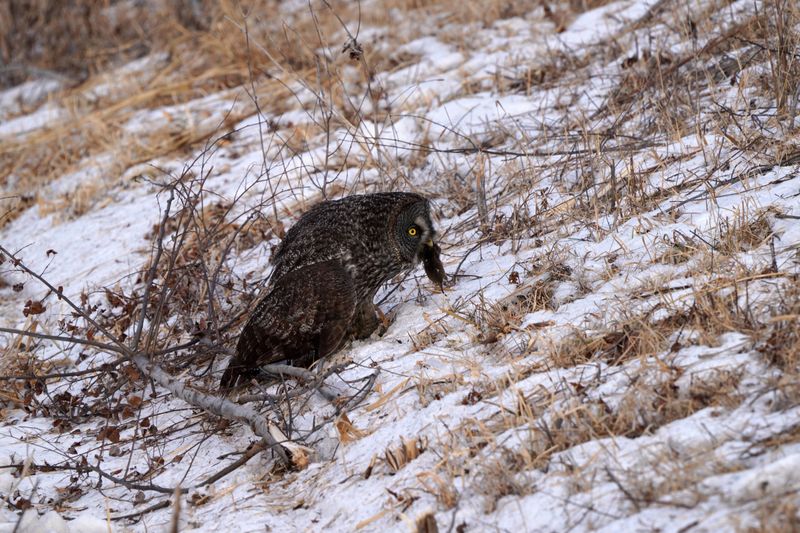
Barred owls do hunt rodents, and that is part of the appeal. According to Cornell, mice and voles are on the menu, but so are squirrels, rabbits, birds, frogs, and other prey.
Because the diet is so broad, no one can promise that a nesting pair will cut down the rodents around your home. An owl may eat plenty of mice one week and mostly something else the next.
Think of the box as a way to help wildlife, not as a pest service.
If you have mice or rats in your garage or shed, deal with the cause first. Seal gaps, store food in tight containers, and keep birdseed off the ground.
These steps work whether or not an owl ever shows up.
Be careful about poison. The EPA’s rodent control safety review explains that predators and scavengers that eat poisoned rodents can be harmed by secondary exposure.
An owl that catches a sick mouse can end up sick too.
If you hope to host owls, avoid relying on rodent poison anywhere near the woods and yard they hunt. Traps and prevention keep the food chain safer for the very birds you want to welcome.
Give nesting owls space
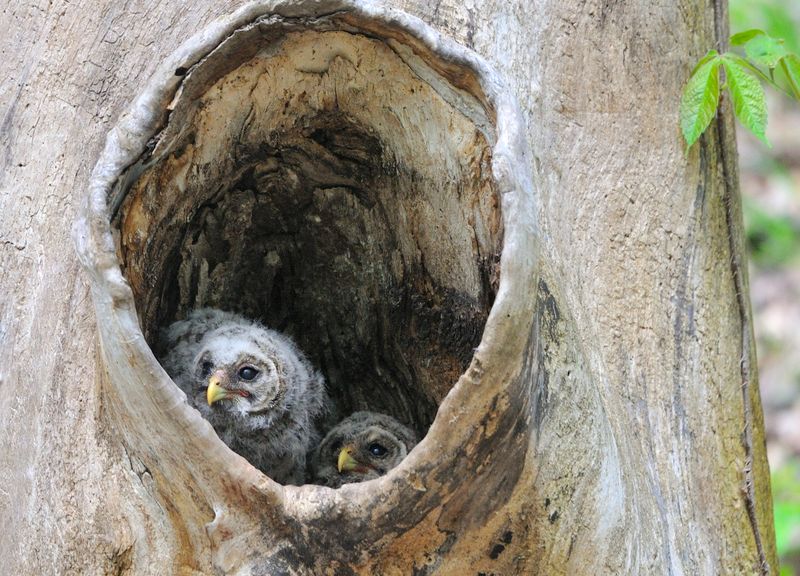
Once owls start nesting, your job shifts from builder to respectful neighbor. Cornell’s barred owl camera guidance says visits must stop once nesting begins, so do not climb up or peek inside to check on them.
Keep your distance and enjoy the nest from afar. Parents may defend a nearby nest, and the Florida Fish and Wildlife Conservation Commission advises people to stay away from nesting owls and to keep pets back.
Walk dogs on a leash, and keep cats indoors.
There is a legal side too. The Migratory Bird Treaty Act protects migratory birds and prohibits unauthorized take.
Separately, the U.S. Fish and Wildlife Service explains in its bird nest guidance that nests holding eggs or dependent young have specific protections.
In plain terms, do not disturb or casually remove an active nest. For questions about a particular situation, contact wildlife officials rather than guessing.
A quiet yard is the best gift you can give a nesting owl.
Share this story