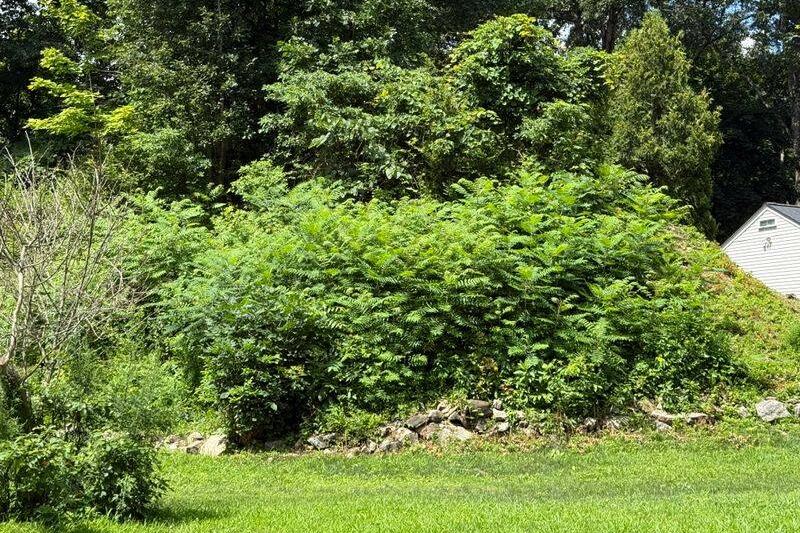
A fresh ant mound in your lawn tells you that ants have been moving soil up from underground, and that is a useful clue about what is happening beneath your grass. Those small piles often show up after wet weather, which makes them easy to notice.
Knowing what they do and do not mean can save you time, money, and needless worry. Here is how to read them and decide what, if anything, to do.
A mound shows activity, not a weather forecast
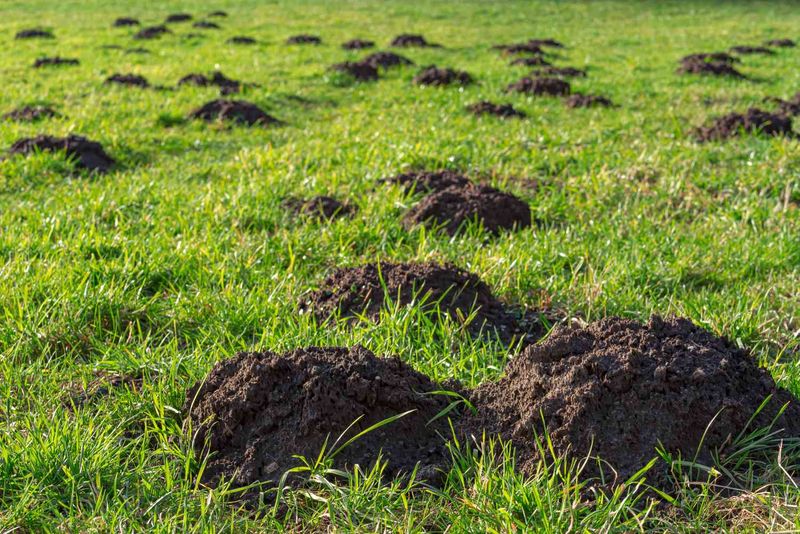
Ants moved soil up near the surface, and that is exactly what a fresh mound shows. It does not forecast rain, and it does not prove that a particular storm caused it.
A Charles Sturt University report says it has not been scientifically proven that ants can predict rain, though some species respond to weather cues and seasons.
Wet spring weather does tend to go along with busy mound-building. Extension guidance from UMass Extension and Iowa State Extension describes ants creating mounds as they dig and maintain underground nests.
Neither source says that a given Massachusetts mound appeared because of a given storm. Ants may have been digging for days, and the soil may simply have been easier to spot once the lawn was damp and the dirt looked dark.
There is some real research on rain and ants, but it needs careful reading. A study in Scientific Reports found that Dorylus indicum colonies in West Bengal changed their nest entrances and built soil mounds after rainfall.
That is a good example of one species responding to water during the monsoon.
It is not a general rule for the ants in a Massachusetts yard. Different species behave differently, and the common turf ants here were not the ones studied.
So treat that research as an interesting possibility, not an explanation for the mound by your mailbox.
What the soil can tell you
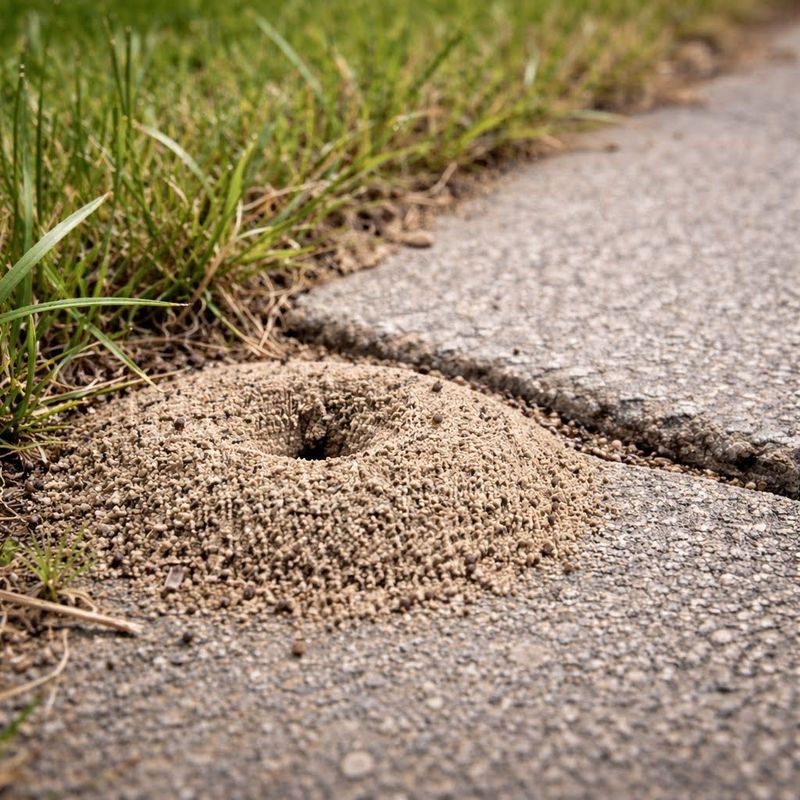
Ants dig, and the soil has to go somewhere. As colonies build or maintain tunnels and chambers, workers carry loose earth up and drop it around an entrance.
Iowa State Extension describes colonies expanding underground and bringing soil to the surface.
That means the mound is a pile of excavated dirt, not a map of the whole nest. Most of the colony stays below, and a mound does not prove that ants just arrived.
They may have lived there all along.
In New England turf, a common culprit is the cornfield ant. University of Maine Cooperative Extension describes it as a small brown ant whose workers leave excavated soil around tunnel entrances.
It is a likely suspect, but a mound alone cannot tell you which species made it. Watching the ants themselves is the only way to start narrowing it down.
It also helps to keep local ants separate from the famous mound builders of the South. The turf ant described by UMass Extension is not automatically the same as the red imported fire ant covered in North Carolina State Extension’s fire ant biology material.
Fire-ant habits and treatment advice should not be carried over to a Massachusetts lawn.
Most lawn ants do little harm
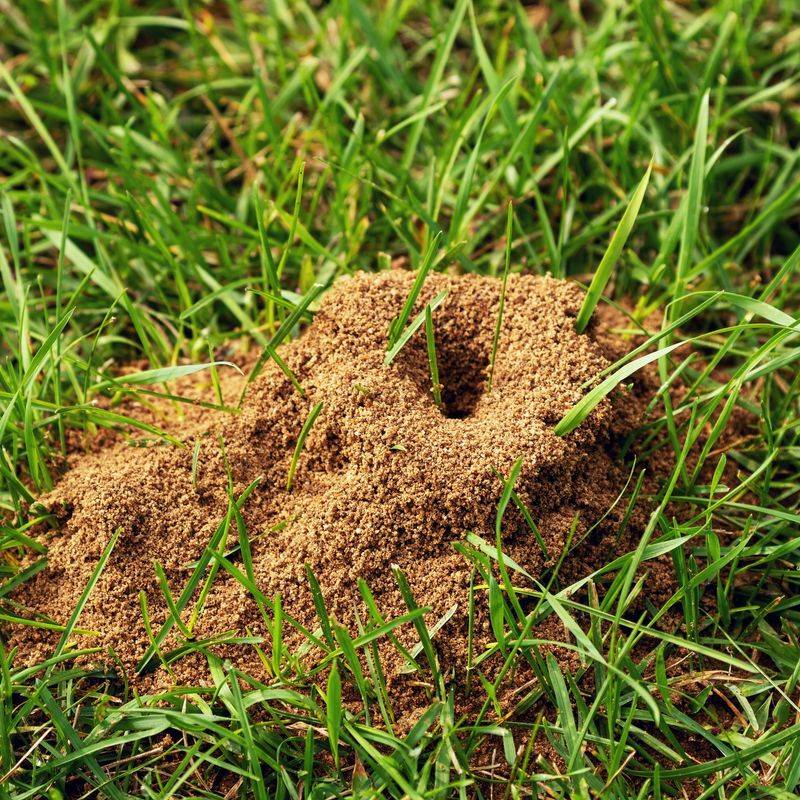
Take a breath before reaching for any product. UMass Extension calls ants generally negligible pests in New England lawns and says they seldom reduce the vigor of a moderately maintained lawn.
For most yards, a few mounds are more of a sight than a problem.
There are exceptions, and they are easy to check by eye. Ant tunneling and large mounds can thin or smother turf, leaving brown or bare patches where grass struggles.
Big piles can also catch the mower deck, scalp the grass around them, and make mowing bumpy.
The key is to look at what is actually happening in the yard. Are the mounds covering patches of grass?
Is the turf around them thinning out? Does the mower keep clipping soil piles?
If the answer is no, the ants are probably just part of the living ground beneath your feet.
Ants are not automatically a threat, and a lawn full of small mounds can still be a healthy lawn. Judge them by their effects over time, not by how many show up on one wet morning.
When a mound deserves attention
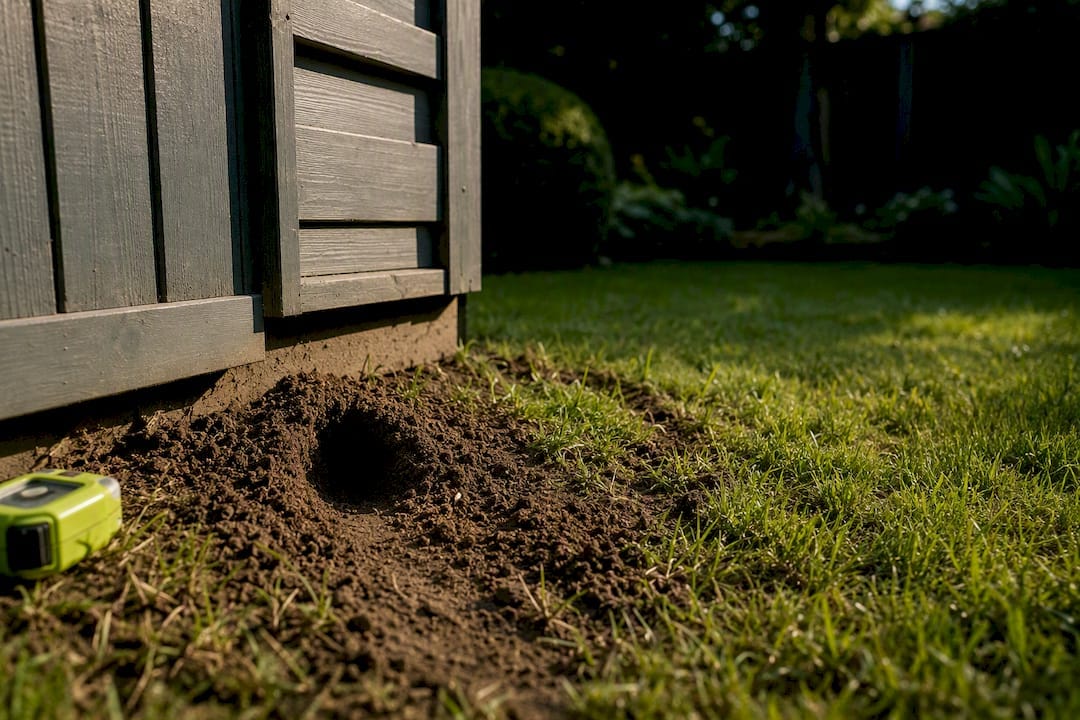
Persistent damage or disruption is the standard worth using. Timing and looks do not count.
A mound that popped up the morning after a storm is no more worrying than one that appeared during a dry week.
Several signs suggest it may be time to act. Turf that stays thin or dead around mound clusters is one.
Mowing that keeps getting interrupted by soil piles is another. In garden beds, ants tunneling under young plants can expose the roots of transplants, as described by Iowa State Extension, and exposed roots can dry out fast.
Compare that with a merely cosmetic mound. A small pile of soil on healthy grass does not hurt the lawn, and it does not require treatment on its own.
UMass Extension notes that lawn ants are often negligible pests.
A practical way to decide is to watch for a couple of weeks. Take a quick photo of the problem spot, and check whether the damage grows or the same plants keep getting disturbed.
If the trouble persists, move on to the next steps. If not, leave it be.
Raking moves the soil, not the colony
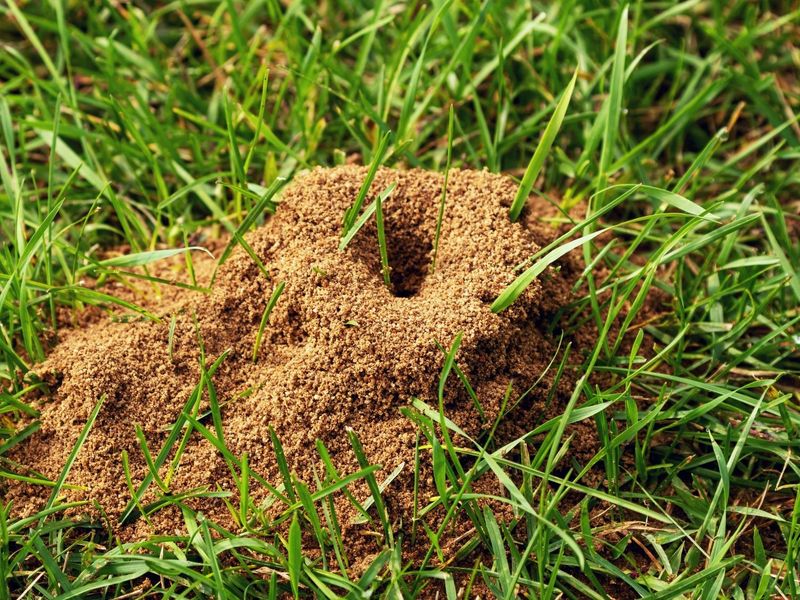
For a mound that is only an eyesore, a rake does the job. Iowa State Extension recommends raking or washing down lawn mounds when they rise above the grass.
It is cheap, quick, and keeps chemicals out of the picture.
Spread the soil thinly so the grass can grow up through it. A light spray from a hose can also break up a mound and settle the dirt into the turf.
Doing this when the soil is a bit dry makes it crumble more easily than wet, clumpy dirt.
Keep expectations realistic, though. Raking disperses the visible soil, but it does not show that the underground colony is gone.
The ants may keep working and push up fresh soil in the same spot.
That is fine for a cosmetic nuisance. If new mounds keep returning, simply rake again as needed.
This approach is separate from what you would do about persistent turf damage, so only move on to stronger steps if real harm shows up.
Use pesticides only when needed and as labeled
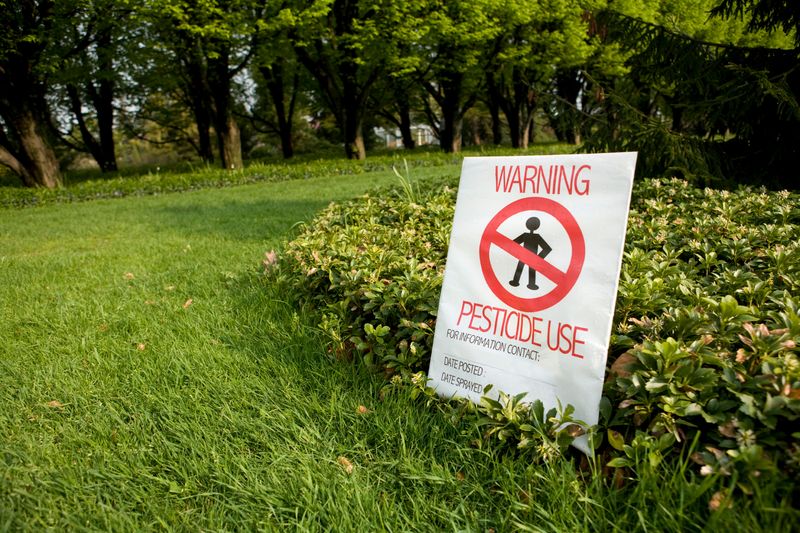
Treating every mound is not a good plan. UMass Extension warns that broad-spectrum insecticides can harm helpful predatory insects.
Save pesticides for a genuine, ongoing problem.
If you get there, start by identifying the pest. Then choose a product labeled for both that pest and the place you will apply it, such as a lawn or a garden bed.
Follow every direction and precaution on the label, and read it before you buy as well as before you use it. The Massachusetts Department of Agricultural Resources guide for homeowners offers best practices for applying pesticides.
Massachusetts also requires that pesticide products used in the state be registered here, so check using the state’s pesticide product registration page. Keep children and pets away for the period the label specifies, as the EPA’s pesticide safety tips advise.
A few things to avoid are worth stating clearly. Do not pour household chemicals into a mound.
Do not add extra pesticide hoping for a stronger result. Do not apply outdoor pesticides in rain or wind, because runoff and drift can carry the product where you do not want it.
This article does not recommend a particular product, and older treatment details found in dated fact sheets should not be treated as current advice.
Let the yard’s condition guide your response
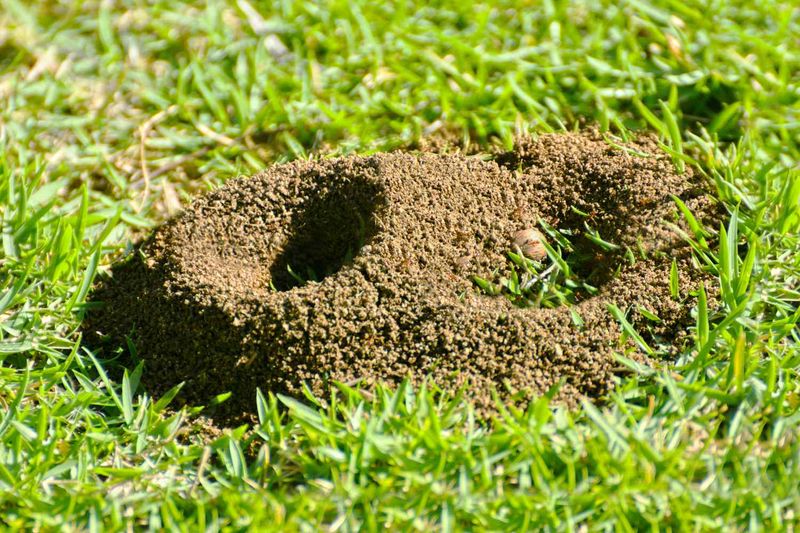
Start by treating a fresh mound as proof that ants are moving soil near the surface. Next, look at whether turf or plants are actually suffering.
If the mound is just a cosmetic nuisance, rake it flat, as Iowa State Extension suggests. Keep pesticides for a justified, label-compliant response to lasting damage, which UMass Extension says is uncommon.
The mound is a small clue from below the lawn, and your grass will tell you the rest.
Share this story