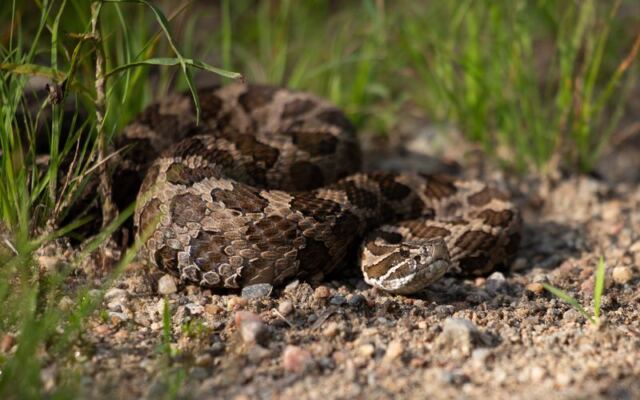
Minnesota lists the massasauga rattlesnake as endangered, yet federal reviewers concluded in 2016 that the snake was likely extirpated from the state, meaning it has probably disappeared here. The few old records come from the southeast, and no confirmed sighting has turned up in a very long time.
So why does a snake that may be gone still have legal protection? Here is what the records, surveys, and laws actually say, and what to do if you ever think you have seen a rattlesnake.
Minnesota lists the massasauga as endangered, but that does not show it lives here
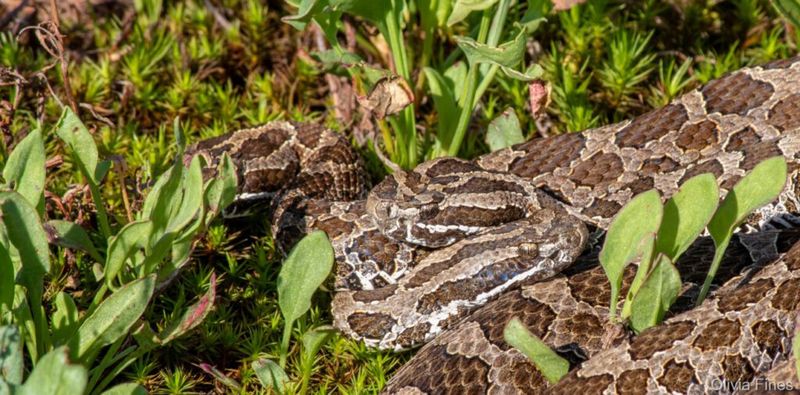
Minnesota’s administrative rules classify the massasauga (Sistrurus catenatus) as an endangered species, according to the state’s animal species rule. That is a legal label, and it is easy to read it as a promise that the snakes live here.
It is not.
In 2016, the U.S. Fish and Wildlife Service reached a different kind of conclusion.
In its listing decision, the agency treated Minnesota as outside the snake’s current range. Its reviewers found the massasauga likely extirpated from the state, which means probably gone locally.
That is not the same as declaring it extinct or proving it can never be found here.
The state and federal labels also differ. Minnesota says endangered.
Federal reviewers classified the species as threatened, and the Endangered Species Act protects it wherever it is found. That protection covers the species as a whole and does not show that a population lives in Minnesota.
A federal species assessment adds the historical picture, which the next sections cover. For now, keep two questions apart.
One asks what the law says about a species. The other asks whether anyone has found that species lately.
In this case the answers point in different directions.
Historical records point to a few southeastern sites
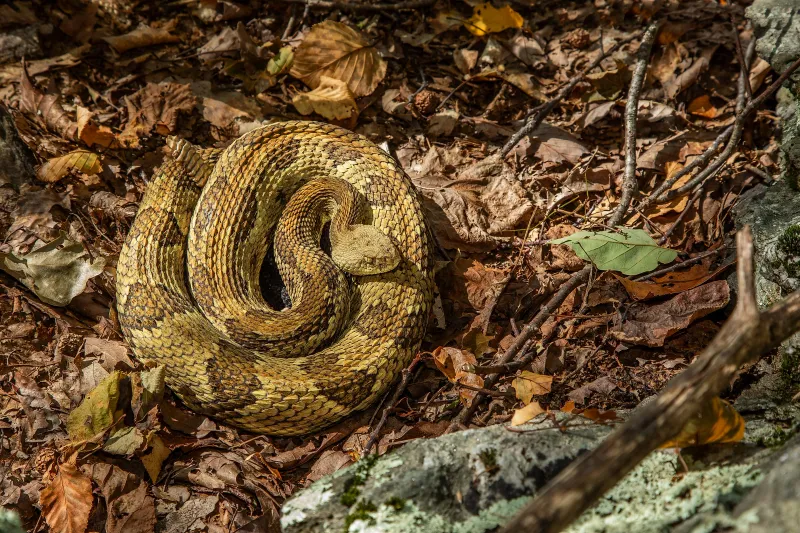
The historical evidence is thin. The federal assessment identifies one site in Wabasha County backed by a specimen, meaning a preserved snake.
It also lists reports from reputable scientists at four other sites: two in Wabasha County, one in Houston County, and one in Goodhue County.
The same assessment says the exact historical distribution is hard to determine. It suggests the snake occurred at least along the Mississippi River.
That is a cautious statement, and it does not describe a range that covered all of southeastern Minnesota.
The DNR’s amphibian and reptile distribution maps show even less. They display just two Minnesota records, both in the southeast.
One is a specimen from before 1960, and the other is a sighting or literature report.
Why do the numbers differ? The sources have different scopes and count different kinds of evidence.
The federal review includes scientist reports, while the DNR map shows a smaller set of records.
A handful of records can show that the snake was reported here at some point. They cannot show that a lasting, resident population ever lived in the state.
If you hike the river bluffs and bottomlands, treat these records as history, not as a field guide to what you might meet.
The records leave a long gap, and specific surveys found no snakes
Two dates often get mixed up. The DNR field guide says the massasauga has not been documented in Minnesota since before 1960 and that reported sightings have not been confirmed.
The federal assessment, by contrast, lists a last reported sighting in 1986. A report is not a confirmation, so the 1986 date should not be read as a verified record.
Searches happened only at certain points. The federal assessment notes a 1994 survey that failed to find the snake.
Then DNR-funded surveys in 2002 and 2003 looked for it again, as described in the 2004 survey report.
Those later surveys targeted suitable habitat and historic records in Houston, Winona, and Wabasha counties. Crews checked Mississippi River meadows, forest edges, and areas along major tributaries.
They found no evidence of massasaugas.
Notice what is missing: any sign of searching every year between those efforts. These were specific projects, not decades of constant monitoring.
The takeaway is measured. Current presence is unconfirmed, and several targeted searches came up empty.
But a few negative surveys do not prove the snake is absolutely gone or that it could never turn up again. The federal reviewers’ phrase, likely extirpated, fits the evidence well.
State law protects endangered species, but the reason for this listing is unclear
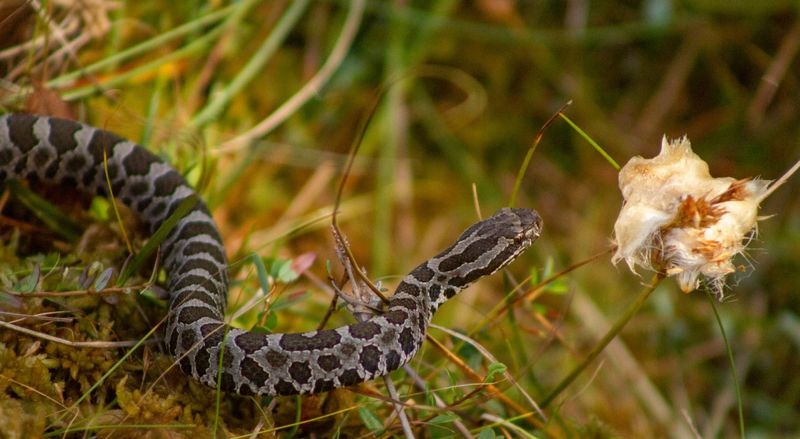
Current state rules still list the massasauga as endangered, as shown in Minnesota’s animal species rule. The timber rattlesnake appears on the same list as threatened, which is a separate classification.
Under Minnesota Statutes section 84.0895, the law generally prohibits taking, importing, transporting, or selling parts of endangered or threatened wildlife. Those rules come with statutory exceptions, so they are not absolute.
The same statute provides for reevaluating the designated-species lists every three years.
It is tempting to connect those dots and say the state keeps the listing for a reason, such as hoping the snake will return. The sources reviewed do not say that.
They show that the massasauga remains on the current rule list, but they do not explain why it has stayed there despite the federal finding of likely extirpation.
Neither the protections nor the three-year review schedule is a documented rationale for this listing. They describe how the system works, not why this species is still in it.
Nothing reviewed describes a plan for recolonization either.
So the honest answer is short: the listing is real, the reason is not stated in the sources, and readers should be wary of anyone who claims to know it.
Give a suspected rattlesnake plenty of space
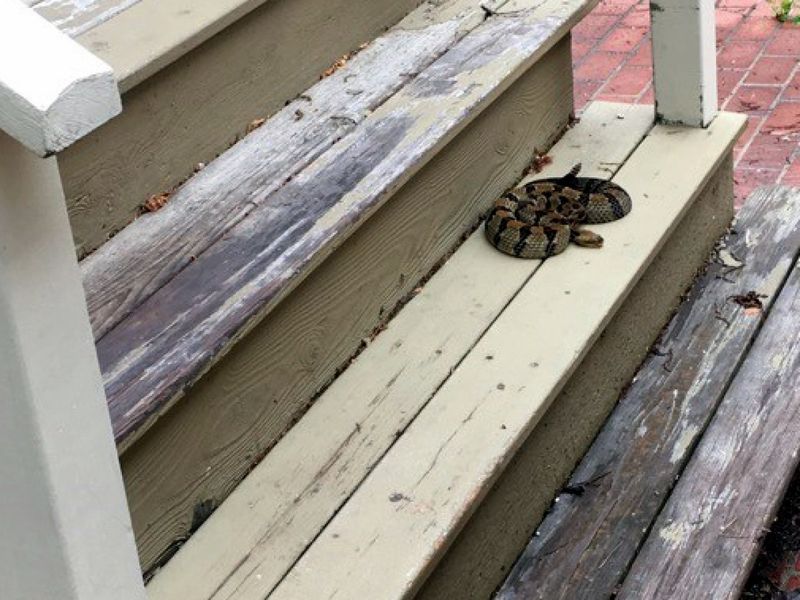
Reported massasauga sightings in Minnesota have not been confirmed, and the species is considered likely extirpated. Even so, a snake that looks like a rattlesnake deserves caution.
Plenty of harmless snakes mimic rattlers by flattening their heads or shaking their tails in dry leaves.
If you think you see one, stop and back away. Leave the snake alone, and keep children and pets well away from it.
Do not walk up to it for a better look, and do not try for a close-up photo. A zoomed picture from a safe distance is fine, but getting near for a shot is not.
Never try to handle, catch, or kill it. Most bites happen when people try exactly that.
Minnesota also protects all snakes as wild animals, according to the DNR’s snake page, so harming one is not a good option anyway.
Give it room to move on, and take a different path. A snake given space almost always wants to leave.
A suspected venomous bite needs prompt medical care
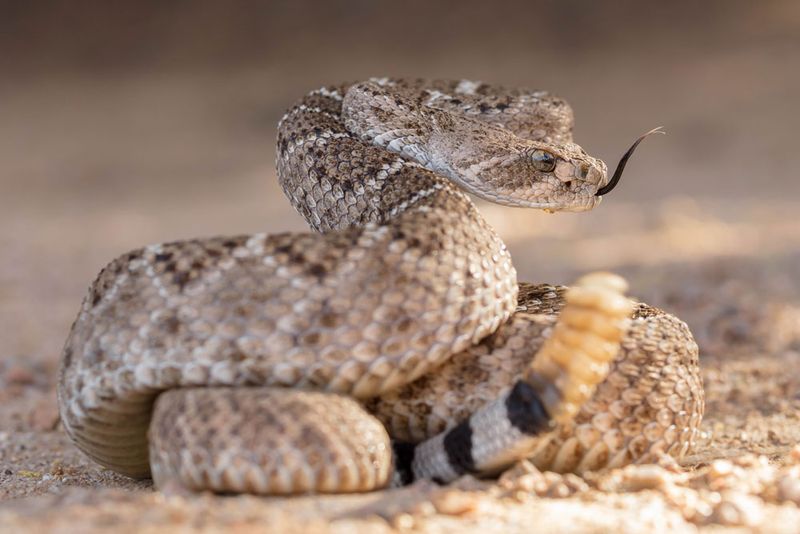
If a snake you suspect is venomous bites you or someone with you, get emergency medical attention promptly. Call 911 or head to the nearest emergency room.
Do not wait to see whether symptoms develop, and try to stay calm and keep the bitten person as still as possible.
CDC guidance advises against several popular first aid moves. Do not cut the wound.
Do not try to suck out the venom. Do not apply a tourniquet.
These actions can cause more harm and do not replace medical treatment.
Beyond getting help quickly, there is no need to improvise. Medical teams know how to assess a bite and decide on treatment, and that is not something to attempt in the field.
Bites from a rattlesnake in Minnesota would be very unlikely given what the surveys found. Still, a plan costs nothing, and knowing it ahead of time makes a stressful moment simpler.
The snake may be a ghost of the bluffs, but good habits work for every trail.
Share this story