
A red fox trotting across your Illinois yard on a cold morning is part of your neighborhood’s wildlife, at least for that moment. The fox is not just a stranger who wandered in by accident, because foxes stay active all winter and use the spaces around people.
What the sighting means, though, depends on details you can learn to read. Here is how to make sense of the visit and what to do about it.
What one winter visit actually shows

The plain answer is that the fox was in your yard when you saw it. That is what one sighting proves, and it is a real piece of information.
It cannot tell you whether the animal was passing through, comes by regularly as part of a neighborhood route, or has a den somewhere close.
Red foxes live in every part of Illinois, so a sighting is not a surprise. Illinois Department of Natural Resources materials describe them as found statewide, and they are mostly active at night.
They mark their territory with scent, which people never notice, so a fox can move through a neighborhood many times without leaving obvious signs.
Foxes also adapt well to towns and suburbs. Wildlife Illinois notes that they use urban and suburban habitat, not just farmland and woods.
Backyards, alleys, golf courses, and creek corridors can all work as part of a fox’s daily path.
Think of three different statements. The fox was seen in the yard.
The fox regularly uses the neighborhood. The fox is denning on the property.
Each one needs more evidence than the one before it, and a single winter glimpse supports only the first. The rest of this article explains how to tell these apart and what to do in each case.
Winter can widen a fox’s search for food

Cold months make food harder to find, and that can push a fox to roam. A U.S.
Forest Service review reports that red fox home ranges are largest in winter. A bigger range means a fox covers more ground, and that ground can include your street.
A University of Wisconsin extension project on urban canids says much the same thing, noting that foxes may travel farther in search of food during the colder season. So the fox in your yard may be working a long loop through many properties rather than staying near yours.
Diet fits this picture. According to Illinois DNR, what foxes eat changes with the seasons, and mammals are a big part of the menu in winter and spring.
Mice, voles, and rabbits living under brush piles, bird feeders, or garden edges can make a yard worth a look.
Wider travel is a reasonable explanation for a visit, but it does not tell you where this particular fox sleeps. A fox that crosses your lawn at dusk could be heading home a half mile away, or it could be on a route it follows only now and then.
Without more information, treat wider movement as one likely reason rather than a sign that the animal has moved in.
Repeated visits still do not establish a den
Seeing the same fox several times is a good reason to say it uses the area. It is not enough to say there is a den on your property.
Those are separate claims, and mixing them up leads to needless worry or to wrong decisions about your yard.
A den has a specific job. Wildlife Illinois explains that foxes use dens to raise young or to shelter in bad weather.
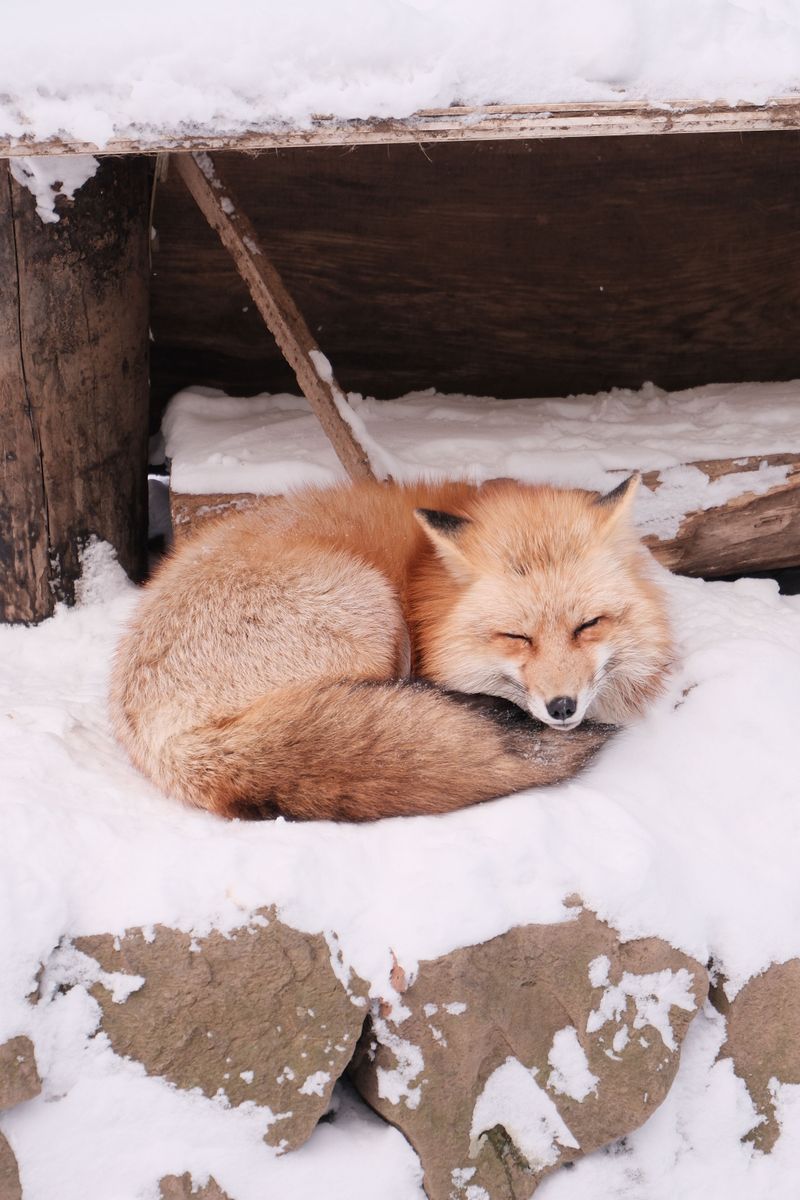
Outside of those times, foxes often sleep above ground, curled up under a shrub, in tall grass, or on open snow with their tails wrapped over their noses.
That means a fox does not need a den to get through winter, and it does not have to be denning just because you can see it from your window. Foxes stay active in the cold months, as the Forest Service species review makes clear through its description of winter movement and feeding.
They do not hibernate and they do not vanish until spring.
Ordinary yard visits cannot establish a den, and there is no reliable list of behaviors that lets a homeowner diagnose one from the kitchen window. If you are truly unsure whether animals are living under a structure on your property, ask a wildlife professional rather than guessing.
A study in Urbana shows denning is possible
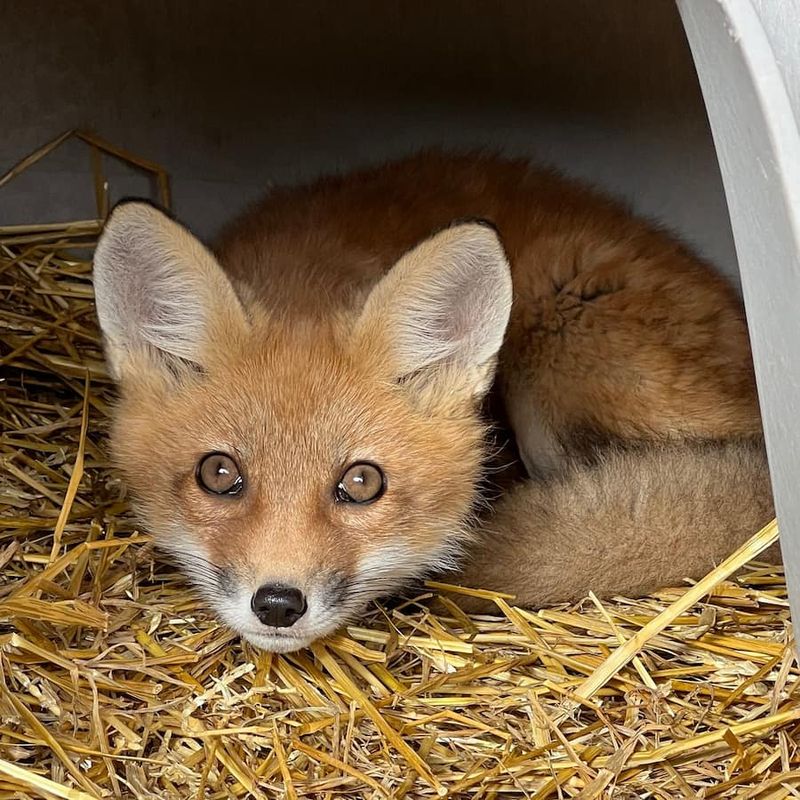
Urban denning does happen, and Illinois has a documented case. University of Illinois researchers described a pair of red foxes using a barn as a den in Urbana in a study of prey before, during, and after denning in an urban landscape.
The study is useful because it shows that foxes can raise a family close to people. It is also a single site.
One barn in one city does not show that urban foxes typically den in yards or buildings, and it does not mean a fox you see in winter has settled nearby.
Timing gives helpful background. Illinois DNR lists the breeding period as January and February, with young born in March and April.
That is why dens matter more as late winter turns to spring, since a den may be used to raise young.
Treat those dates as context only. They are not evidence that a den exists at your home.
If you keep the study in mind as one real example, you can stay open to the possibility without assuming it applies to the fox you saw this morning.
Remove attractants and secure vulnerable areas

Most fox problems start with easy food. The Illinois Department of Public Health advises people not to feed wildlife, to store animal feed securely, to feed pets indoors, to tightly secure garbage, and to keep pets from roaming.
Do not feed, touch, adopt, or try to trap a fox yourself.
If you keep chickens or other poultry, use a secure enclosure with sturdy fencing. Wildlife Illinois notes that foxes can climb and dig, so a flimsy run is not enough.
Close coops at night and check the base of the fence.
When a fox is in your yard, let it leave on its own. Keep children and pets back, and do not approach or handle it.
If a fox seems to be using space under a deck or shed, do not seal the opening while animals may be inside. An active den may contain young, and Rutgers Extension specifically cautions against closing off an active den.
Once you are sure the space is empty, Illinois Extension recommends wire fencing or mesh to prevent future access.
Illinois guidance lists no approved fox repellents, and frightening devices are typically ineffective, so do not count on either. A permit may be required to remove a fox.
Contact an IDNR district wildlife biologist or a nuisance wildlife control operator instead of setting traps yourself.
Daylight alone is not a diagnosis

Many people assume a fox out in daylight must be sick. Sources do not agree on that.
The Illinois Department of Public Health lists unusual daytime appearance among possible warning signs of rabies, while Rutgers Extension says red foxes may be active by day and that a daytime sighting is not abnormal by itself.
So a fox in the afternoon sun does not prove illness or rabies. Pay more attention to how it behaves.
Concerning signs include difficulty walking, an apparently sick look, unusual tameness, or unprovoked aggression.
If you see those signs, keep children and pets away, avoid contact, and call your local animal control. Rabies is a real risk in wild animals, foxes included, but it is not inevitable.
If someone is bitten, wash the wound and seek medical attention immediately. Also notify local health authorities or animal control.
If a pet fights with a wild animal, contact a veterinarian, even if the pet looks fine afterward.
Treat the sighting as a clue, not a verdict
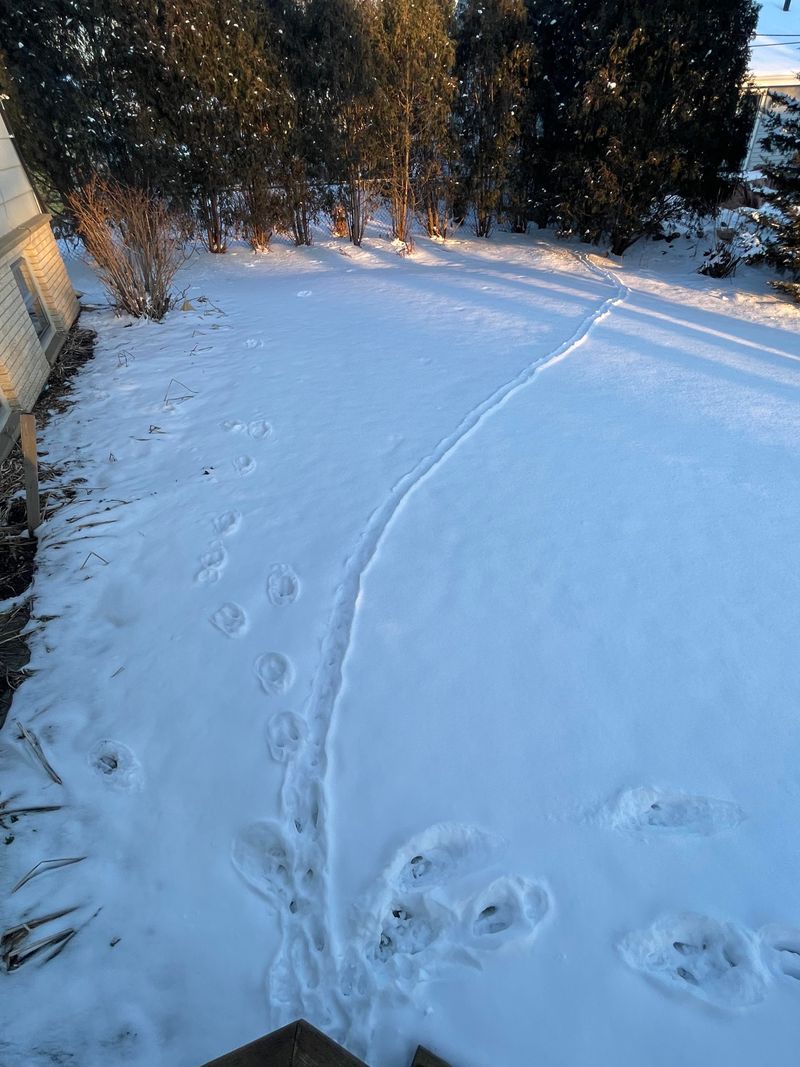
A fox in your yard tells you it was there, and that it may use your neighborhood as part of its range. Even repeated visits do not by themselves prove a den nearby.
Keep your response simple: remove food attractants, follow Illinois wildlife guidance, and keep a safe distance.
If behavior looks wrong or something about your property worries you, call animal control or a wildlife professional, and follow state health guidance after any bite. Otherwise, enjoy the view.
A quiet footprint line in fresh snow is a small story, and you only need to read as much of it as it actually tells.
Share this story