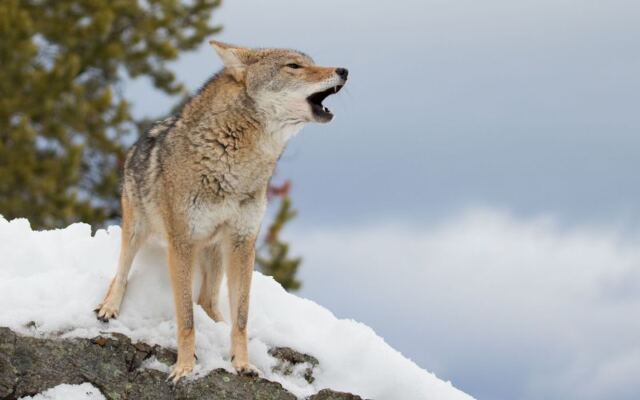
If coyotes are howling outside your Indiana home at night, the usual reason is the season. Winter breeding and late-fall young coyotes leaving their families can make calling more likely.
Coyotes also use howls and yips to talk to each other and keep track of their territory. Here is what those sounds can and cannot tell you, and how to respond calmly.
When seasonal changes can bring more calling
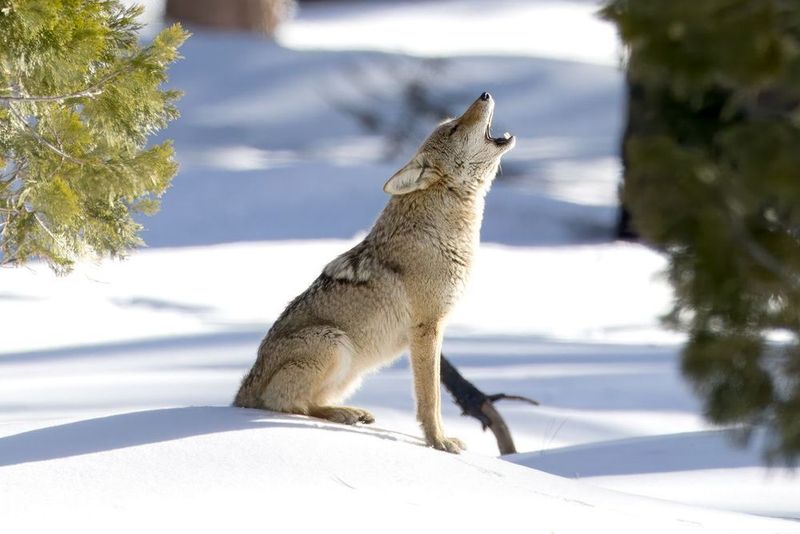
Winter is the season most tied to louder nights. Indiana DNR says coyotes mate in February, and the average litter of four to six pups arrives in April.
Purdue Extension gives a wider window of January through March. Both are approximate, so there is no single start date for every coyote in the state.
Late fall can add another reason for more noise. Young coyotes may leave their family groups around then to find places of their own.
Research cited in a 2017 peer-reviewed study found that howling is most common during breeding and dispersal periods.
Think of these periods as clues that make more calling likely, not as an answer for any single night. University of California extension experts say coyotes may bark and howl through most of the year, with less calling while pups are very young.
So a chorus in July is not strange, and a quiet January night is not strange either. The season sets the stage, but it cannot tell you what a particular group of coyotes was up to when you heard them.
Howls help coyotes communicate and maintain territory
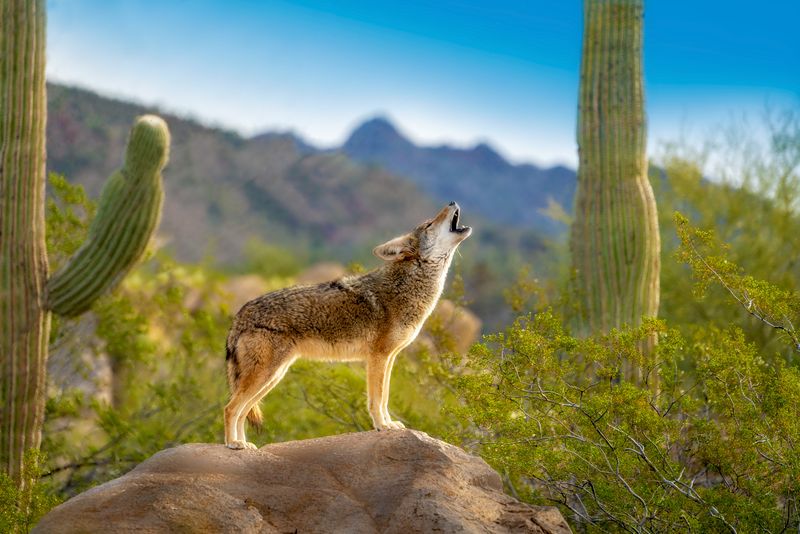
A coyote howl works a bit like a voice carried across a neighborhood. Indiana DNR says coyotes communicate by barking, yipping, and howling.
Those sounds help family members keep in touch across open ground and thick brush.
The calls also say something about land. Research describes howls and yips as a way to announce that a territory is occupied and to keep groups spaced apart.
Nearby coyotes may answer, which is why one call often turns into several.
You may have heard that coyotes pair up for life. Indiana DNR notes that they may, and that is a nice fact about their family life.
It does not mean the howl outside your window is a courtship song or proof that a pair is bonding.
The safest way to hear it is as communication between coyotes. Your yard is simply within earshot of a conversation that is mostly about them, their space, and their relatives.
That can make the sound easier to live with. A call that carries across a field at midnight is usually coyotes checking in, not coyotes sending a message to you.
A chorus may sound larger than it is
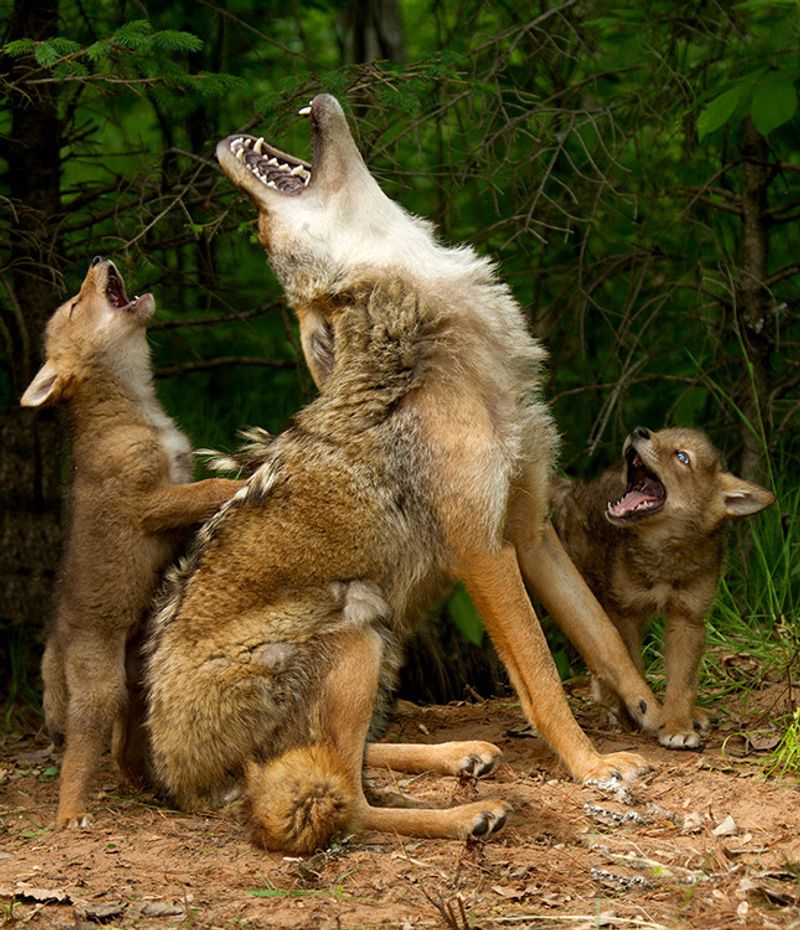
Ever hear a chorus and picture a whole pack? Your ears can fool you.
In a Texas study, 427 people listened to recordings of one to four coyotes and tried to say how many were calling.
Many guessed too high, especially when the recording held three or four coyotes. You can read the details in the Human-Wildlife Interactions paper.
There is a limit to what this tells us. The recordings came from captive coyotes, and the listeners were Texas residents, not Indiana neighbors.
It supports caution about how people perceive sound, but it is not a count of the coyotes near any Indiana home.
Indiana DNR makes a similar point: once several coyotes are vocalizing, it becomes hard to tell how many are calling. Yips and overlapping howls blend into a wall of sound.
If you hear what seems like a big group, the honest answer is that nobody can say from the sound alone. It might be two coyotes, or it might be a few more.
Either way, the number is not something to worry about.
A howl cannot tell you exactly what coyotes are doing
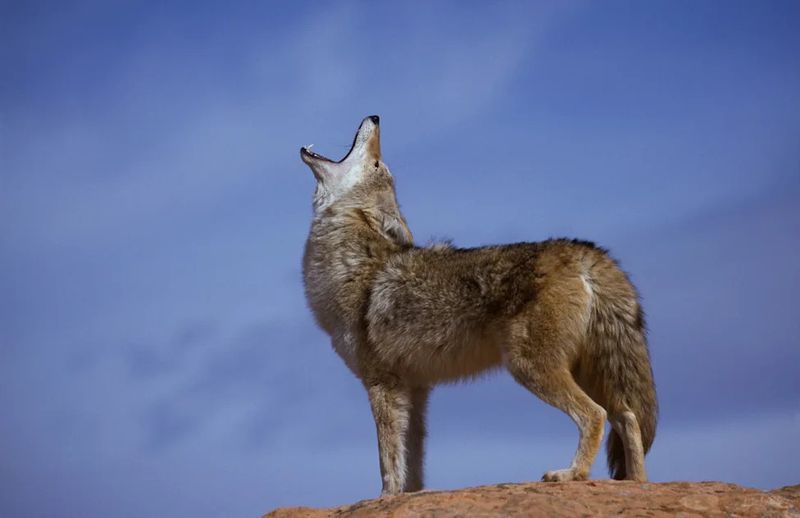
Season can make some explanations more plausible. A winter howl might fit breeding, and a late-fall one might fit young coyotes leaving home.
Still, a call by itself cannot prove either.
It also cannot show that coyotes are hunting, heading toward your house, or being aggressive. Indiana DNR describes howls and yips as communication, not as a warning of what comes next.
Nobody can predict an attack from a call.
Coyotes vocalize for several reasons across much of the year, according to UC IPM. That is why a single night’s chorus has no single meaning.
As for the moon, the old story that coyotes howl at it does not hold up. The peer-reviewed study cites earlier research reporting no link between howling and moonlight intensity.
A useful habit is to treat the sound as background information. It tells you coyotes are somewhere in the area, and that is about all it tells you.
Coyotes live near people across Indiana
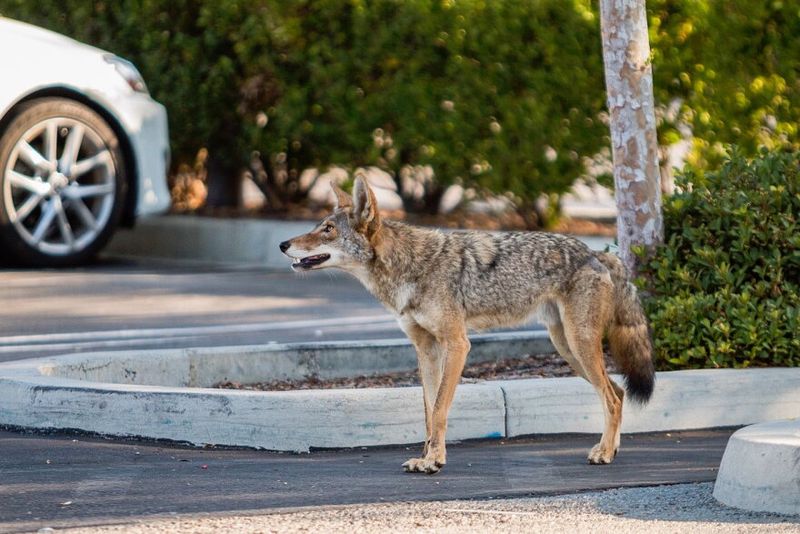
Coyotes are not newcomers waiting outside town. Indiana DNR says they live throughout the state, including urban areas.
They are typically most active at dawn and dusk, though they can be out day or night.
That means a call after dark often just confirms something that was already true. Coyotes have probably been moving through nearby fields, parks, and creek corridors for a long time, mostly unseen.
Seeing one is a different question from facing a problem. Indiana DNR says in its common questions guidance that a sighting alone is not cause for concern, and that human attacks are unlikely.
Pets are where trouble can happen. Conflicts with pets can occur, so small dogs and cats left outside deserve some thought.
Keep the two ideas apart. Coyotes being around is general presence, and a specific risk would come from a specific situation, such as an unattended pet or food left out.
The next sections cover how to handle both.
Reduce the chances of conflicts around your home
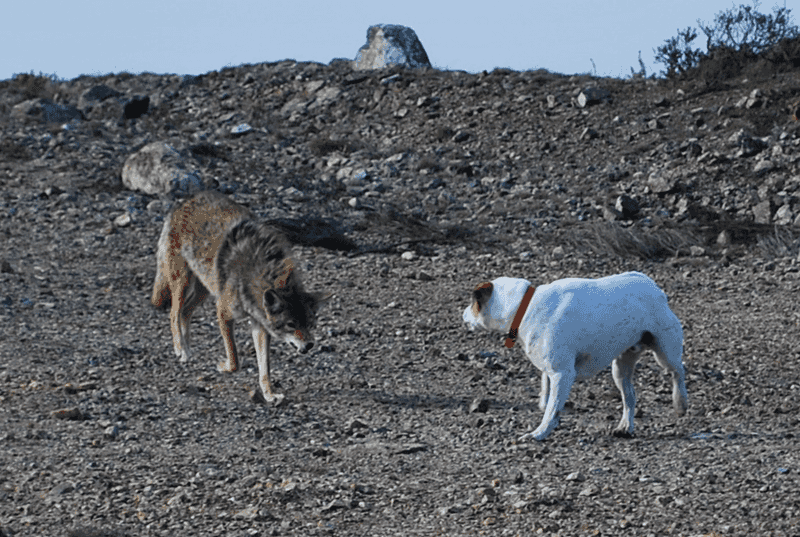
A few simple habits go a long way. Indiana DNR recommends several steps in its coyote guidance, and most take only minutes.
Bring pet food indoors so a bowl on the porch does not become a nightly stop. Secure your garbage as well, since an open can is an easy meal for many animals.
Keep pets leashed when you are outside, especially around dawn and dusk. If a pet lives outdoors, give it secure housing at night.
These steps are aimed at conflicts. They are not a guarantee that coyotes will stop calling, and they will not keep every coyote from passing through your neighborhood.
You may still hear a chorus after you do everything right.
What the steps do is remove reasons for a coyote to linger near your door. A yard with no free food and well-protected pets is a much less interesting place, and that is the outcome you are after.
If a coyote comes close, give it space
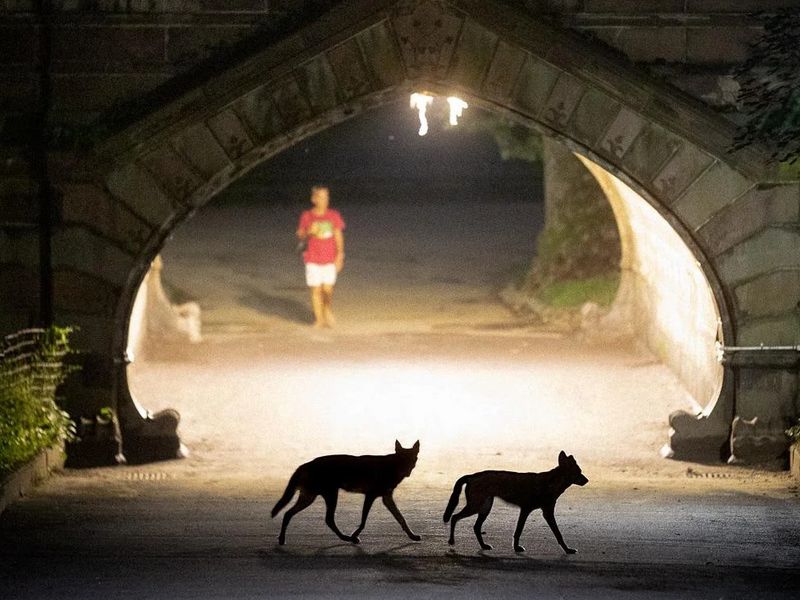
Most coyote moments are quiet, but it helps to know what to do. National Park Service guidance says not to approach a coyote, run from it, or call it closer.
Bring pets and children close, then back away. If a coyote walks toward you, make loud noises and try to look bigger by raising your arms.
For a coyote seen around your home, Indiana DNR suggests making noise to discourage it while leaving it an escape route. Do not corner it, and never feed it.
Calling a coyote closer, even out of curiosity, works against everything above. Let it keep its distance and let it leave.
The howls themselves are a different matter. As the Texas study showed, ears are poor counters.
The next time the yips drift across your yard, you can just listen. It is the sound of wild neighbors keeping in touch.
Share this story