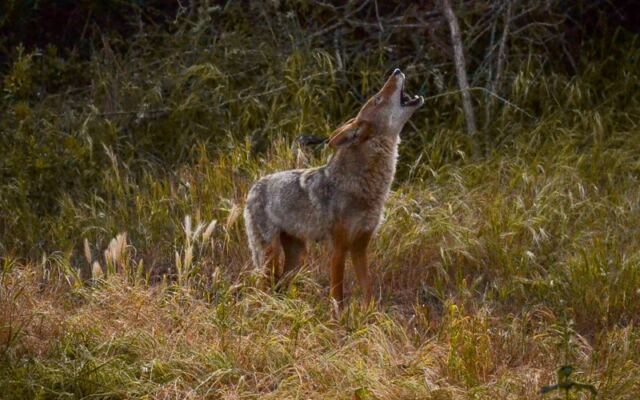
Those howls at night are real communication, and coyotes are talking to each other about territory and where their neighbors are. Coyotes live in every corner of Ohio, so many people hear them from their own backyards.
The sounds can feel spooky, but they are usually just coyotes keeping in touch. Here is what the calls can tell you, what they cannot, and what to do if a coyote ever comes into your yard.
What coyote calls can communicate
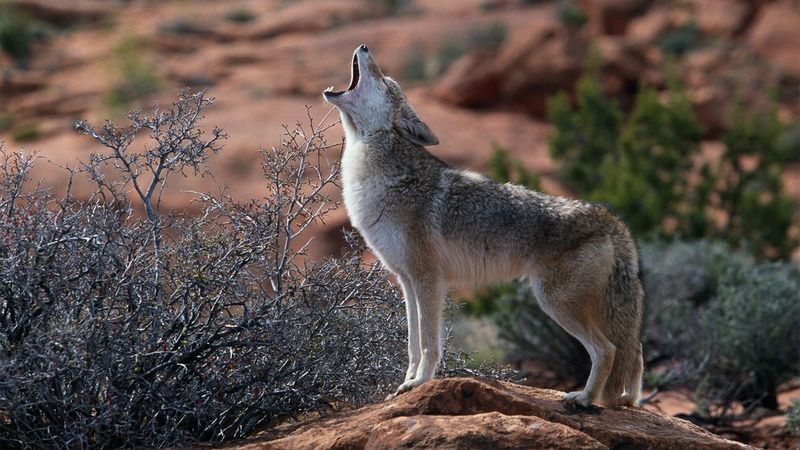
Step outside on a quiet Ohio night and you might catch a mix of howls, yips, and barks drifting across the fields. Coyotes use all of these sounds, plus other calls, to communicate with each other.
According to Cuyahoga Valley National Park, vocalizing can help coyotes announce or maintain a territory and keep track of other coyotes nearby. Think of it as a way of saying, here I am, and checking who else is out there.
Those are possible jobs for the sounds, not a decoder ring. Calls serve more than one purpose, and a person listening from a porch cannot tell which purpose a particular howl is serving.
That is why it is a stretch to say one howl means mating, another means a warning, and a third means a den is being defended. Each of those can be a guess dressed up as fact.
A yip-filled burst of sound might be a family member checking in, a neighbor answering, or something else entirely.
The same goes for the old story that coyotes howl to celebrate a kill. Wildlife guidance describes that as unlikely, and a sound alone cannot show whether a kill happened at all.
A better way to listen is with curiosity. You are hearing wild animals stay in contact, which is normal behavior for a species that has made a home across the state.
The meaning is real, but it is general rather than a message aimed at you.
A chorus is not a head count
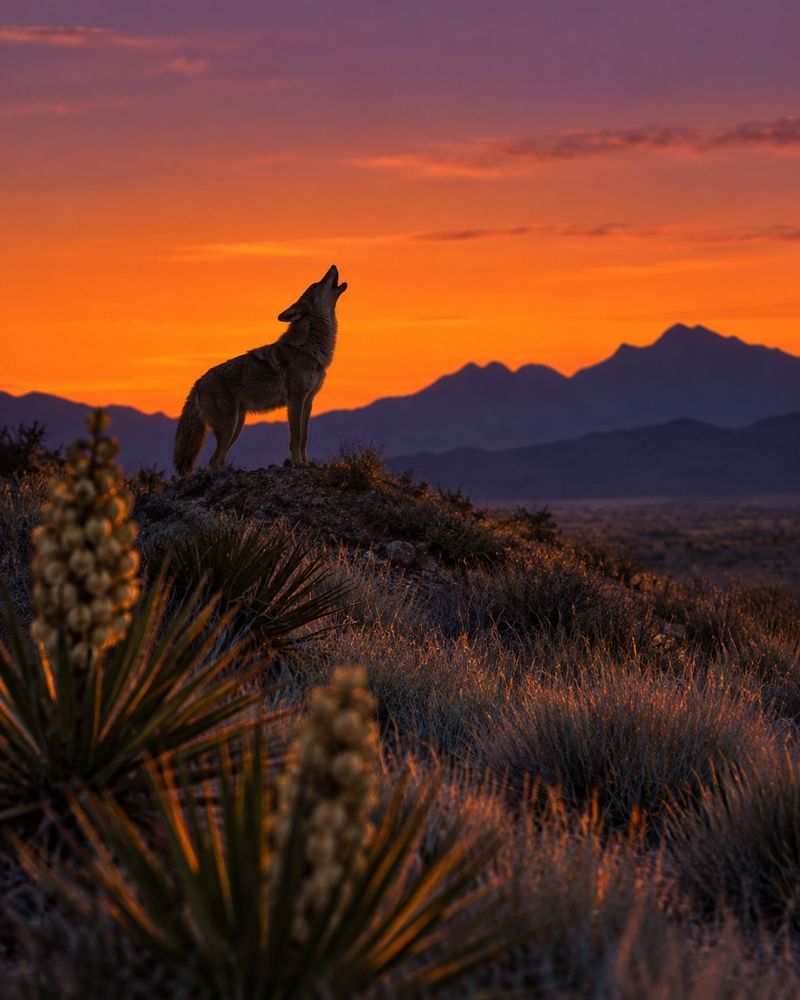
A burst of overlapping howls can sound like a crowd. It is tempting to picture a big gang of coyotes just past the fence line, but howling is not a dependable way to count them.
Researchers tested this in a 2017 study of human perception of coyote group size. They played recordings of one to four coyotes to 427 people in southern Texas.
On average, listeners overestimated the number of coyotes by nearly twofold.
Coyotes can produce a lot of varied sound, and calls can overlap and shift in pitch. That can make two or three animals sound like a much larger group to human ears.
It helps to remember what the study was. It was an experiment with recorded calls and listeners in southern Texas, not a field study of coyotes in Ohio.
Still, the lesson carries over in a practical way: counting by ear is unreliable.
So the next time a chorus rings out, try not to settle on a number. You can enjoy the sound without deciding that a large group has moved in next door.
A small family can sound surprisingly big on a still night.
Ohio coyotes live statewide in family units
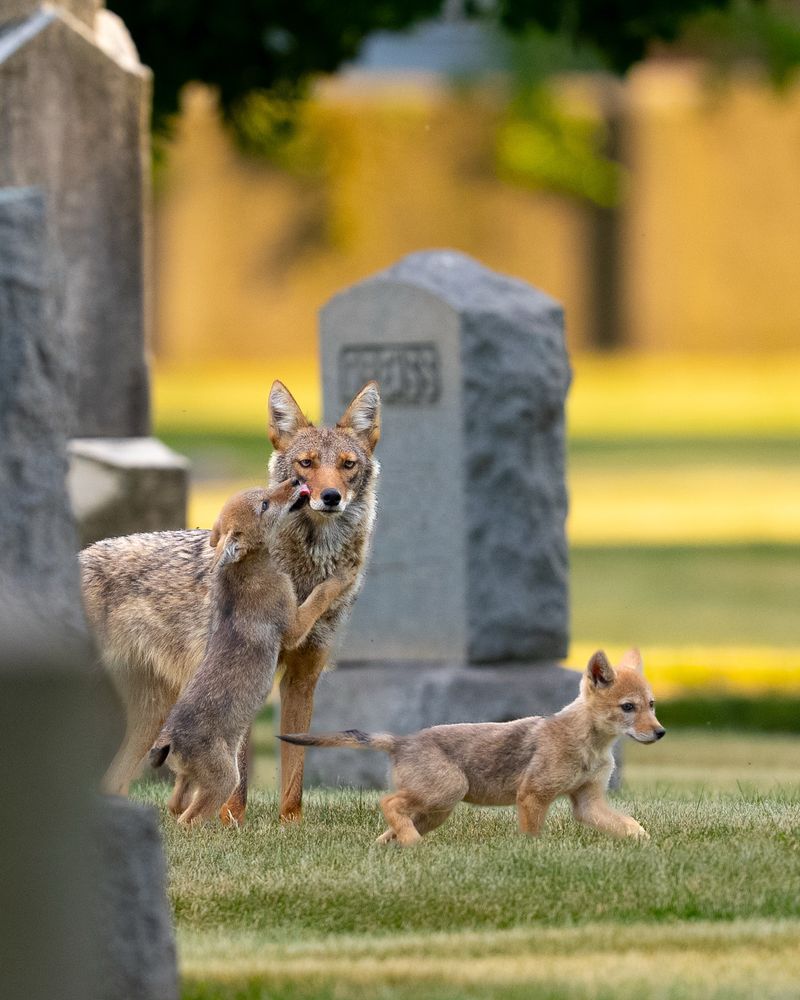
Coyotes are not just a rural story in Ohio. According to the Ohio Coyote Research Project, they are established in all 88 counties, in both urban and rural areas.
The animals you hear are often called eastern coyotes. That is a handy regional label, but it is not a separate species.
These animals have some genetic mixing with other canids, yet they remain predominantly coyote. They are not simply wolves, and they are not best described as a distinct hybrid species.
As for who is calling, Ohio sources describe coyotes as living in family units. The project’s behavior page and park guidance describe these groups as commonly an adult pair and their young, and these families defend territories.
That is a different picture from a large wolf-style pack. A family group is usually modest in size, and the calling you hear may involve only a few animals.
Territory is where the howling fits in. A family that holds ground near your neighborhood may call to keep in touch with its own members and with coyotes beyond its borders.
Hearing them is a sign that wildlife shares your area, much like the deer, foxes, and owls that already do.
Ohio’s breeding season comes later in winter
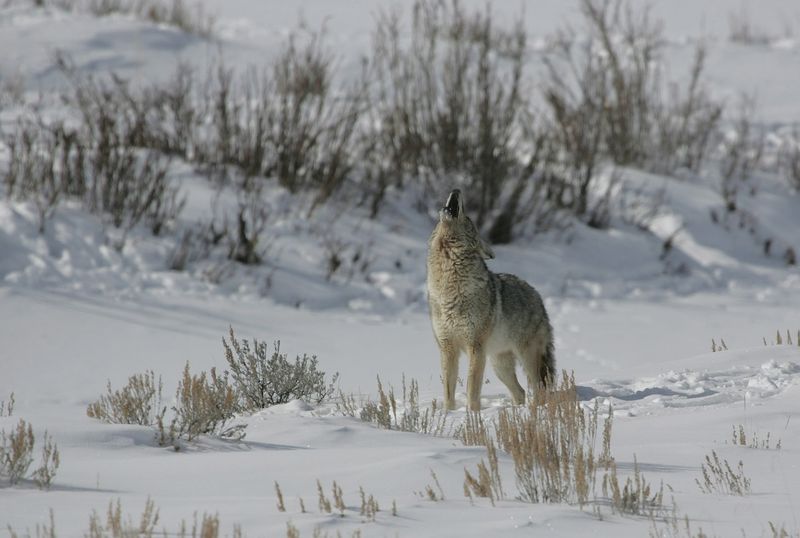
Today is November 25, 2026, and the main coyote breeding period in Ohio has not started yet. A howl heard this week is not a sign that breeding season is underway.
An Ohio State University Extension fact sheet places coyote breeding in January through March, with February as the peak. ODNR’s backyard guide words it slightly differently, saying mating occurs from late January through March.
Sources also differ on when pups arrive. Some Ohio materials point to March and April, while others say April and May.
Rather than fixing on one date, it is safer to think of spring as the general pups season.
Winter is when you may hear more activity and territorial behavior as the season approaches. Even then, timing cannot tell you what an individual howl means.
A call on a January night could be about territory, staying in touch, or something a listener cannot know.
So the season is useful background, not a translator. Late fall calls are simply coyotes being coyotes, ahead of a busier stretch of winter.
A howl near home is not proof of danger
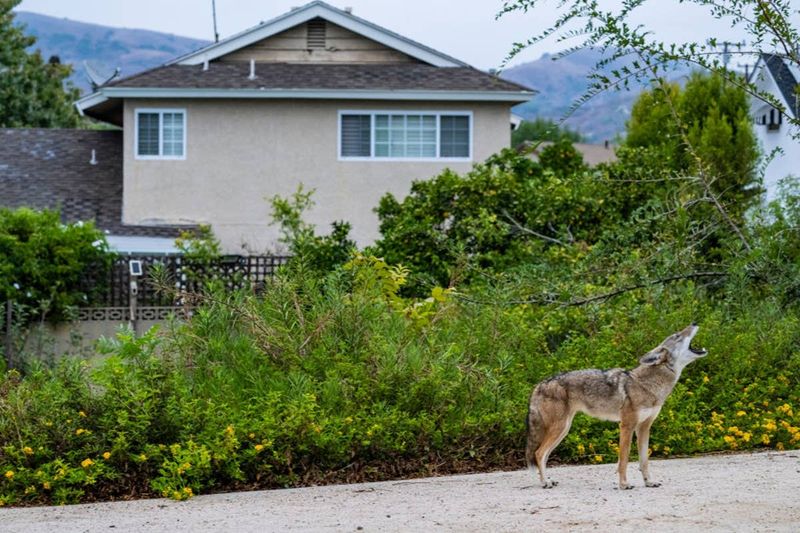
Sound travels oddly at night, and a howl can seem to come from right behind the garage. Where you hear a call is one thing, and what the coyote is doing is another.
A howl by itself does not show that a coyote is approaching, that it poses a threat, or that it is reacting to some specific event. It tells you coyotes are in the area and communicating, nothing more.
Calls can also be set off by everyday noise. Cuyahoga Valley National Park notes that sirens and train whistles can trigger coyote calls.
If an ambulance races by and a chorus follows, the siren is a likely explanation.
Judging how far away a coyote is by ear can be tricky, so it is best not to read too much into how close a howl seems. A call that feels near does not mean the animal is heading your way.
Signs that matter more are things you can see. A coyote walking across your lawn, lingering near the house, or showing no fear of people deserves attention.
Sound alone does not.
If all you have is a howl drifting in through the window, you can usually go back to what you were doing. Reasonable caution is fine, but a call by itself is not an emergency.
When a coyote investigates the yard, take practical steps
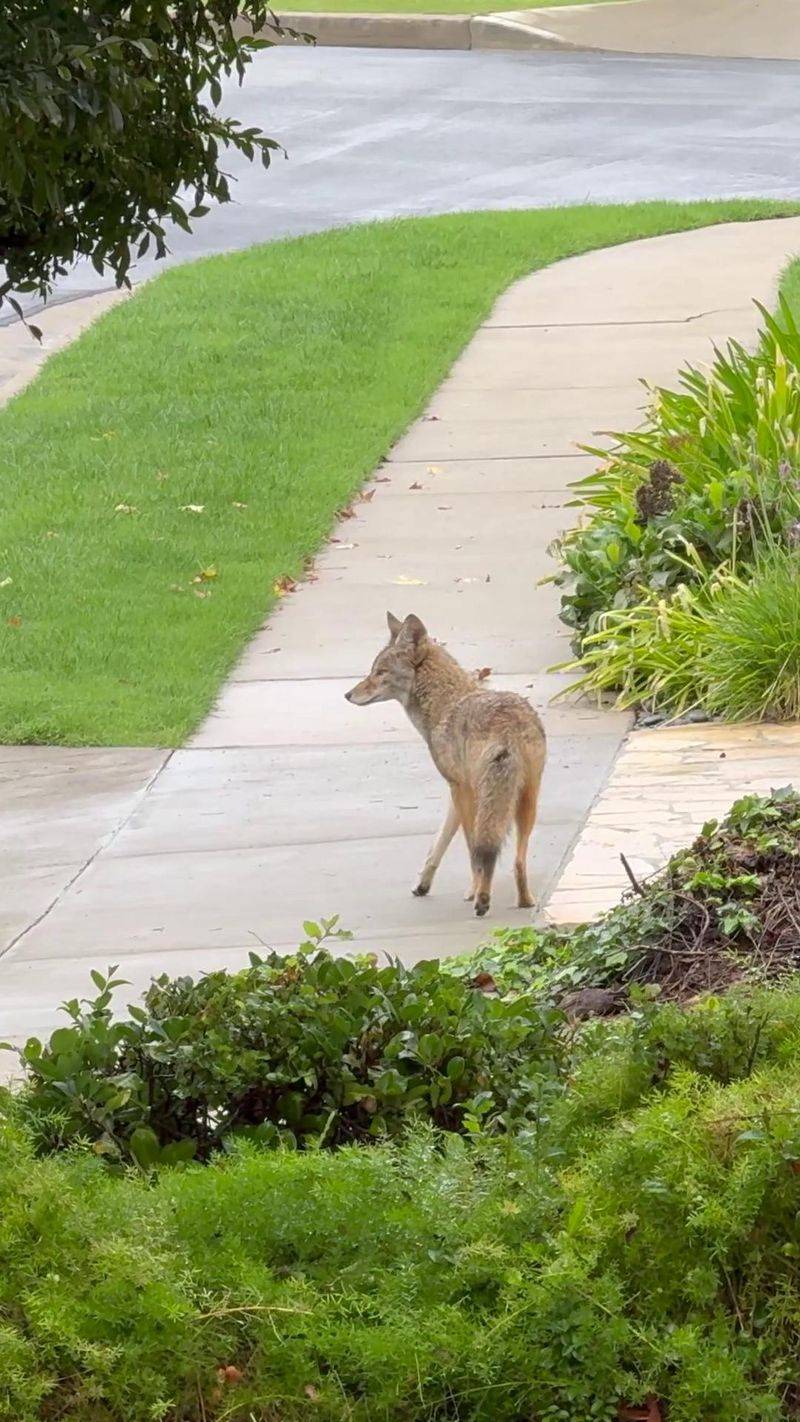
Hearing a coyote far off is very different from seeing one poke around your property. When one is actually investigating your yard, a few simple steps can help.
According to ODNR, you should remove attractants such as garbage and pet food, and clean up around grills. Keep small pets indoors or supervised.
If a coyote is in the yard, clapping or shouting can scare it off.
Encounters up close call for a bit more care. Cleveland Metroparks advises keeping dogs leashed and not letting them chase coyotes.
If a coyote approaches you, do not run. Make noise, appear larger, and slowly back away.
Some things are best avoided. Do not approach a coyote, feed it, call back to it, or release a dog toward it.
Each of those can turn a passing visit into a problem.
Most visits end once a coyote finds nothing interesting and gets startled. If one repeatedly seems to lack fear of people, or keeps causing trouble after you have removed attractants, contact ODNR or a nuisance wildlife professional.
These are steps for a coyote that is actually in your space. They are not needed just because you can hear howling from inside the house.
Listen for communication, not a coded warning
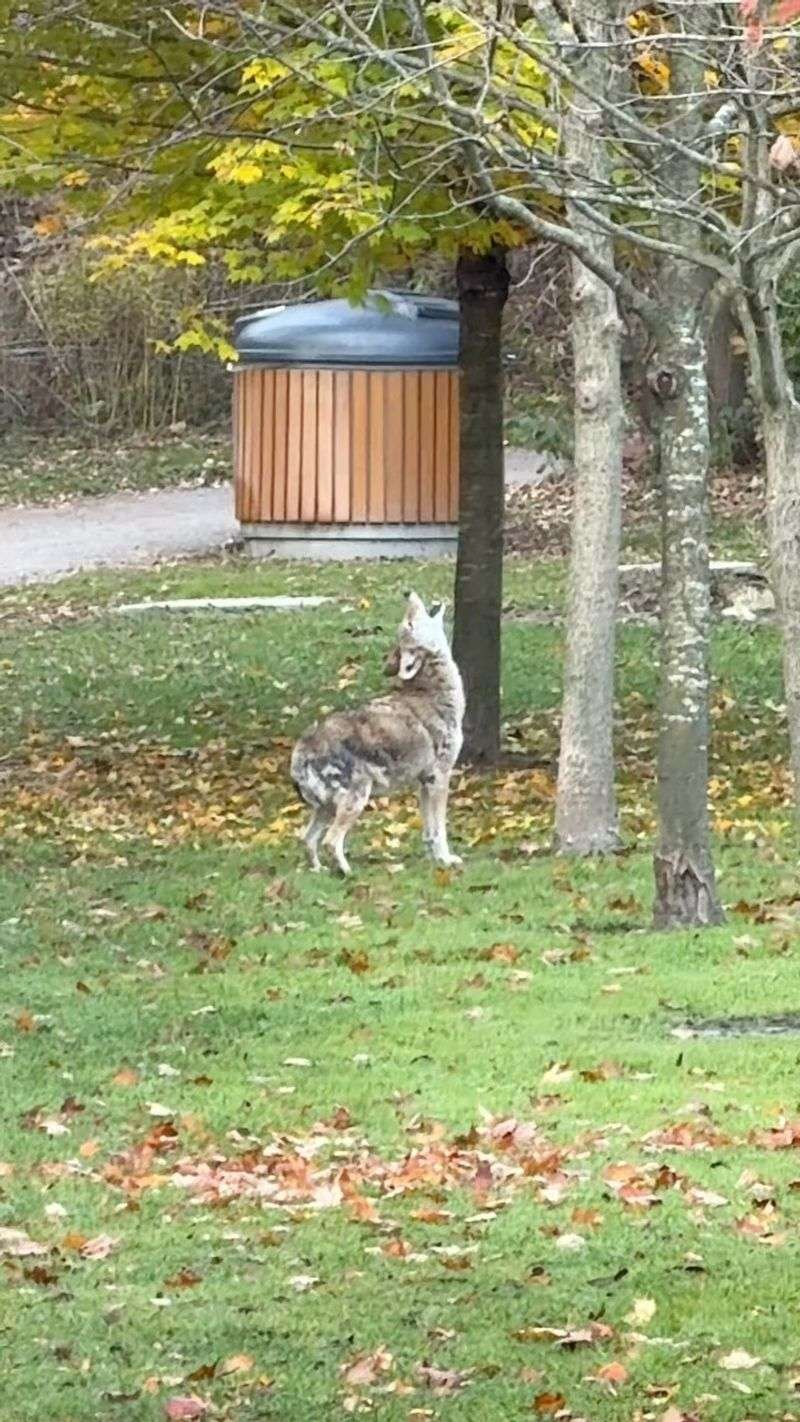
Coyote calls are real communication, often tied to territory and keeping track of other coyotes, but they do not reveal an exact activity, an animal count, or a specific threat. November 25 falls before the main breeding period that begins in late winter.
Save the yard precautions for a coyote that is truly on your property, using the ODNR guidance.
Until then, the howls are simply the sound of Ohio’s wild neighbors keeping in touch.
Share this story