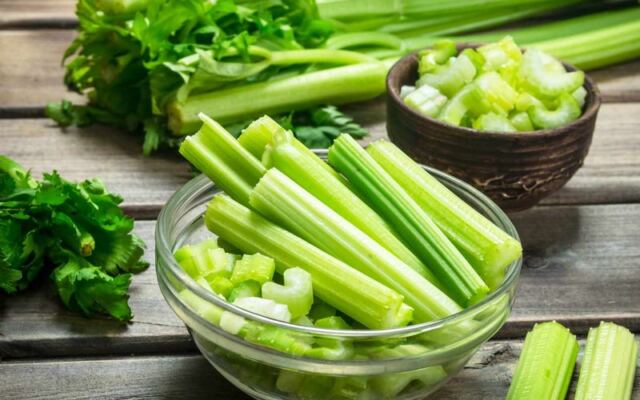
Celery on the plate every day adds crunch, a little fiber, and a good bit of potassium for very few calories. That is what it does for your body, and it is a fair reason to keep a bag of stalks in the fridge.
It will not work miracles, but it makes an easy, steady habit. Here is what a serving gives you, what research says, and what Hoosier gardeners and market shoppers should know.
What a two-stalk serving provides
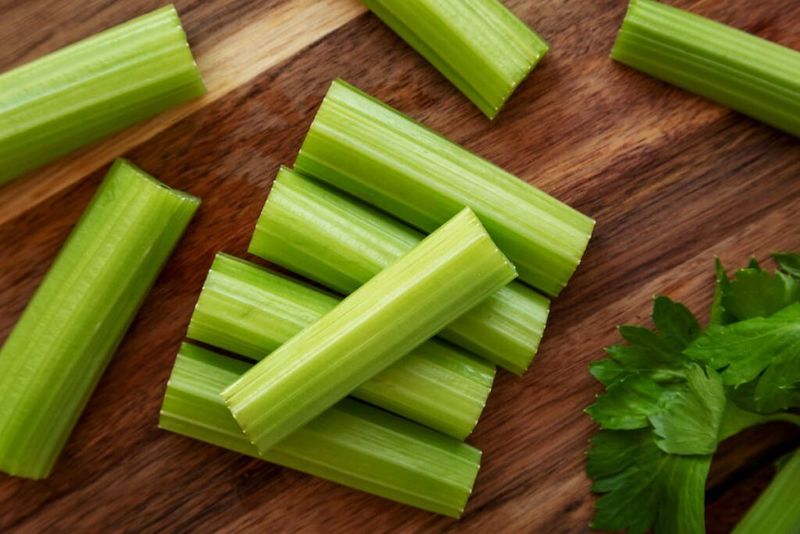
Start with a number you can picture: two medium raw stalks, about 110 grams. The FDA’s raw vegetable table lists that portion at 15 calories, 2 grams of fiber, 260 milligrams of potassium, and 115 milligrams of sodium.
That is a handy reference portion, not a daily target. Nobody has set a celery quota, and your body does not need exactly two stalks to stay on track.
The figures simply tell you what shows up on the plate when you snack on a couple of stalks or chop them into a salad.
Fifteen calories is very little energy, so celery fits easily next to bigger dishes. Two grams of fiber is a modest contribution, nothing like what beans, oats, or whole grains deliver.
The potassium is a nice bonus, though it is one small piece of the day’s total.
Celery is also not a nutritionally complete food. It has almost no protein and will not carry a meal by itself.
Think of it as a crisp, watery extra that rounds out a plate. Pair it with peanut butter, hummus, chicken salad, or a pot of soup, and it adds texture and a bit of nutrition without crowding out anything else you need.
If you watch sodium, note that the 115 milligrams is naturally occurring. Dips and spreads usually add more than the stalks do, so the toppings deserve a glance too.
Low in calories does not mean calorie-burning
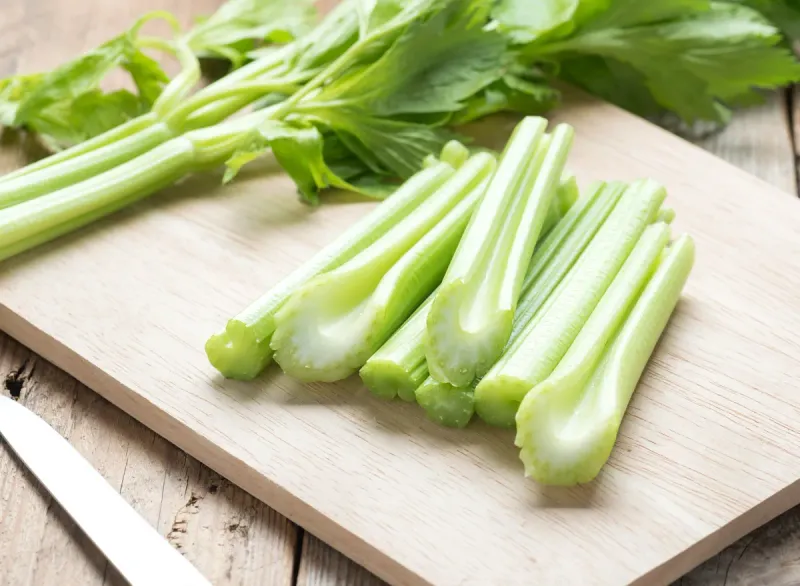
Reach for celery when the afternoon slump hits, and you get a satisfying crunch for about 15 calories per two stalks. That makes it a handy stand-in for a more calorie-dense snack, like chips or crackers, when you want something to munch on.
It also bulks up soups, tuna salad, and stir-fries without adding much energy.
You may have heard that celery has negative calories, meaning you burn more chewing it than it supplies. Tufts Health & Nutrition Letter calls that a myth.
Celery has calories like any other food, and digesting it does not wipe them out.
What works is a simple swap. If celery with a thin smear of nut butter replaces a handful of chips, you may take in fewer calories that afternoon.
That is a food choice, not a special calorie-burning trick.
Keep expectations realistic, too. Celery will not melt weight on its own, and eating nothing but stalks would leave you short on protein and other nutrients.
The same two-stalk serving the FDA lists simply makes a light, crunchy side. Use it where you enjoy it, and let the rest of the meal supply the staying power.
What research says about blood pressure

Headlines about celery and blood pressure get attention, so here is what the studies actually looked at. A 2025 review in Frontiers in Nutrition pooled 10 trials with 511 participants.
It found reductions in some measured outcomes, including blood pressure and fasting glucose, but no overall effect on total, LDL, or HDL cholesterol.
The catch is in the details. The trials used varied preparations, including capsules, powders, and decoctions, rather than plain stalks on a plate.
The authors reported small samples and substantial heterogeneity, which means results differed a lot from study to study. They called for larger, longer trials.
One example shows why that matters. A small hypertension trial tested 1.34 grams a day of celery-seed extract capsules for four weeks in 52 patients.
That is a concentrated product, not a daily crunch of stalks, so its results cannot tell us what ordinary celery does.
So the signal is promising but unsettled. Nothing here shows that eating celery stalks daily lowers blood pressure, prevents disease, or treats it.
If you have high blood pressure, keep taking prescribed medicine and follow your clinician’s plan. Celery can sit on the plate beside that plan, never in place of it.
Juice changes what you get

A glass of celery juice and a few crisp stalks are not the same thing. Most juicing strips out the fiber, and fiber is part of what whole celery offers.
Drinking the juice leaves the pulp behind.
That does not make juice bad. Mayo Clinic says juice can fit into a balanced diet, but it is not healthier than eating whole fruits and vegetables.
If you enjoy it, go ahead, just do not expect it to beat the whole stalk.
Mayo also offers practical tips. If you make fresh juice, make only what you will drink right away, and when buying bottled juice, choose a pasteurized one.
Then there are the big promises. Celery juice does not detox the body, and it does not preserve every benefit of whole celery.
The National Center for Complementary and Integrative Health found no compelling research that detox diets remove toxins or support weight management. Your liver and kidneys already handle that job.
Whole stalks are cheaper, need no equipment, and keep the fiber. Juice is a matter of taste, not a cure.
What Indiana growers and shoppers can expect

Gardeners around the state who like a challenge may wonder whether celery will grow for them. Purdue Extension describes celery as a cool-season crop that needs frequent moisture.
It grows best at around 60 to 80 degrees Fahrenheit, and prolonged frost below 28 degrees can damage the plants.
That tells you celery can be grown in this region, with attention to watering and weather. It does not tell us how many Hoosiers actually grow it at home, and there is no data here suggesting it is a common backyard crop.
Shoppers have a separate question. Purdue’s FoodLink seasonal guide lists celery as available from September to April.
Treat that as a seasonal availability listing only.
It does not mean the celery at a particular farmers market was grown in Indiana. If local origin matters to you, ask the vendor where it came from and how it was grown.
That simple question beats guessing, and most market growers are happy to chat about it.
A few cautions matter more than a daily rule

Most people can eat celery without a second thought, but three situations deserve attention. The first is allergy.
Celery can cause food allergy, and a clinical challenge study confirmed reactions in people with a history of reacting to celery. It is not a common risk for everyone, but if you suspect a reaction, do not test it casually.
Talk with a clinician first.
The second involves warfarin. The NIH Office of Dietary Supplements advises people on warfarin to keep vitamin K intake consistent.
Ask your clinician before making major dietary changes. That is about steady eating habits, not a warning that routine celery is unsafe.
The third is a niche skin issue. A 2025 clinical report notes that handling celery, especially with UV exposure, can cause phytophotodermatitis in some circumstances.
Ordinary dietary intake is generally not enough to cause it.
If you harvest or chop a lot of celery outdoors on a sunny day, rinse your hands and cover up. For most people, none of this is a reason to skip the stalks.
Keep celery in the food category
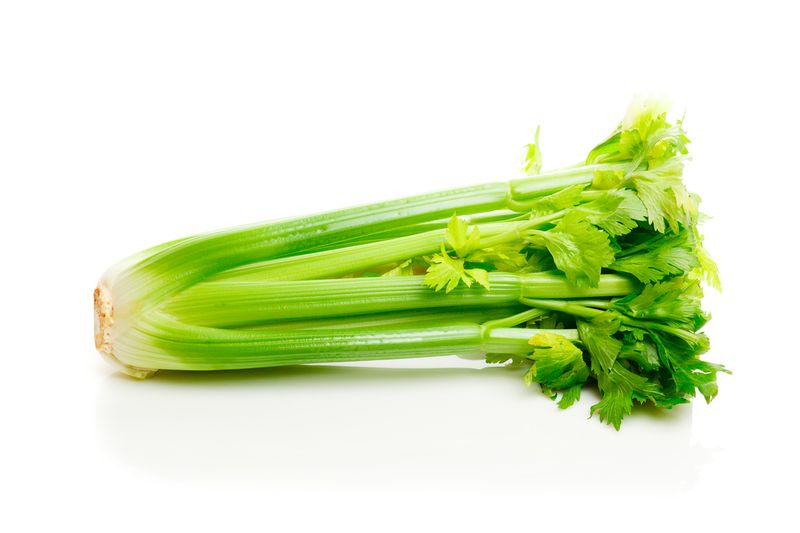
Eat celery every day if you like it. It suits soups, salads, and snack plates, and a two-stalk serving brings the 15 calories, 2 grams of fiber, and 260 milligrams of potassium the FDA lists.
You do not need a special dose, and you do not need to expect dramatic results, since the research is about concentrated preparations and is still unsettled.
Celery is one optional, low-calorie vegetable among many. Rotate it with carrots, beans, greens, and whatever your garden or market offers.
A good vegetable does not have to be a hero. Celery just has to show up, crisp and ordinary.
Share this story