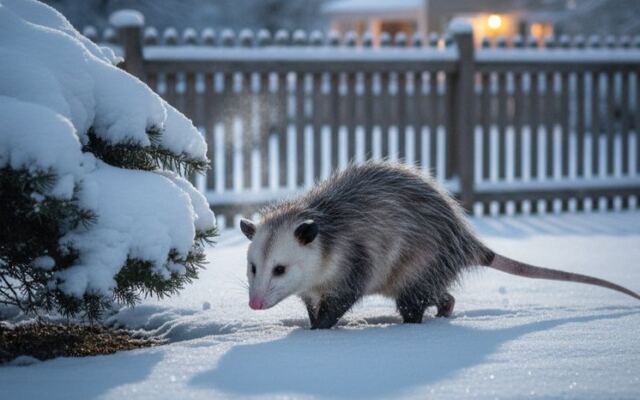
An opossum near your Massachusetts home in winter is most likely looking for food or a place to get out of the cold. Opossums stay active all year, and sometimes they use buildings as shelter.
Seeing one, even in daylight, does not mean it is sick or has moved in. Here is how to read the situation calmly and respond safely.
Cold weather can make shelter appealing
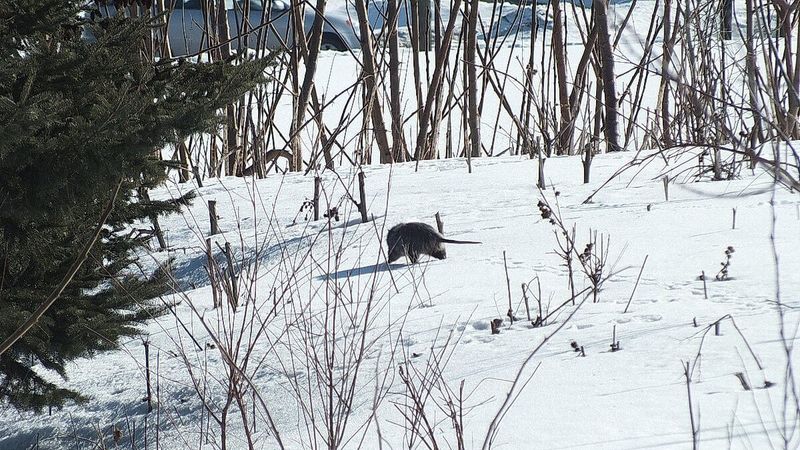
A winter opossum near a home may be looking for food or shelter from the cold, and MassWildlife says opossums sometimes use houses, sheds, garages, and other buildings as refuges. That makes cold shelter a plausible explanation.
It does not tell you why one particular animal is standing in your yard.
Massachusetts sits near the northern edge of the Virginia opossum’s range. Winters here can be hard on an animal that evolved in warmer places.
Opossums can struggle with the cold, and that is part of why a heated or windbreak space looks attractive to them.
Opossums do not hibernate. They stay active through the year, though they may spend short stretches in a den during very cold weather, as described in species information from North Carolina wildlife officials.
So an animal moving around in January is behaving in a way that fits its biology.
Think of these facts as a list of possibilities. An opossum might be hunting for fallen bird seed, checking a garbage area, or simply crossing your property on a longer trip.
One sighting cannot show that it is distressed, looking for a home, or denning on your land. Watching from a distance and noticing what it actually does will tell you far more than assuming a reason.
A daytime sighting does not prove the opossum is sick
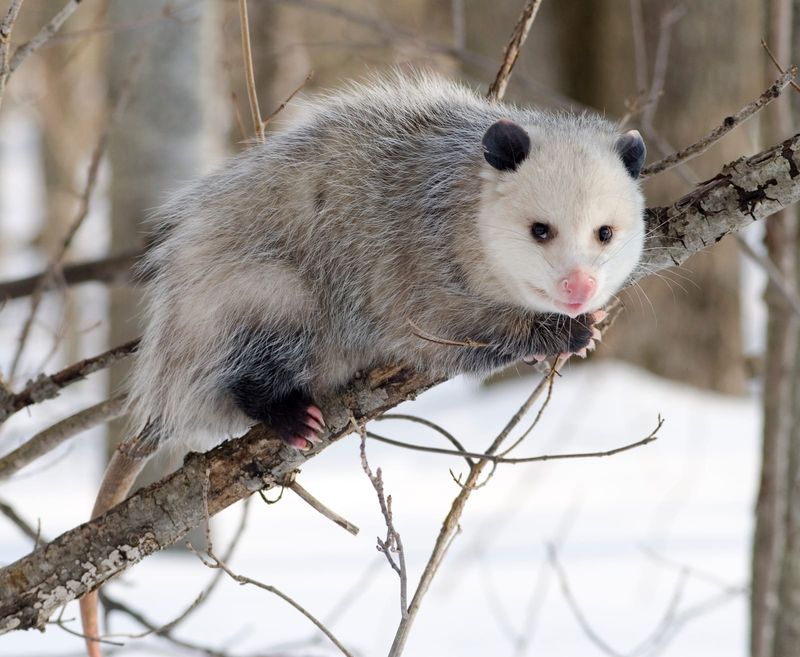
Many people assume an opossum out in daylight must be unwell. Opossums are mostly nocturnal, but MassWildlife notes they may be seen during the day, especially when food is scarce.
A hungry animal in a cold snap may simply extend its search into daylight hours.
A Massachusetts wildlife training guide for animal control officers lists daytime activity and wildlife presence in residential areas as things that are not, by themselves, public-safety concerns. So daylight activity alone does not call for intervention.
Calling for help makes more sense when you see clear signs of injury.
It also helps to separate a sighting outdoors from evidence that an animal has gotten inside. An opossum on your lawn or porch is just that.
Real signs of entry would be things like noises in an attic, a damaged vent, or fresh holes around the foundation.
Opossums are nomadic, and MassWildlife says they generally do not den in the same area on consecutive nights. An animal you see one evening may be several blocks away the next.
That is a good reason not to conclude that a nearby opossum lives in your house or on your property.
Give a passing opossum space
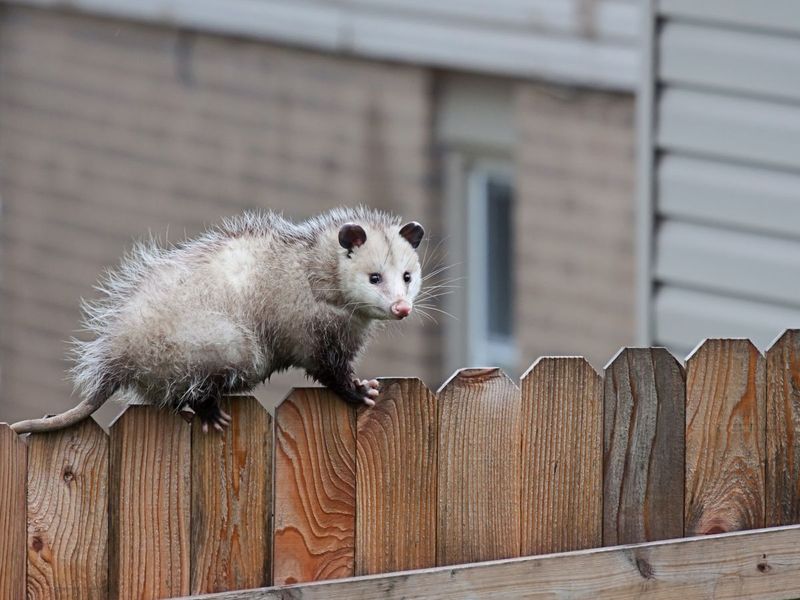
If an opossum is just passing through, the best move is to leave it alone and keep your distance. Do not touch it, feed it, or try to shoo it with your hands.
Opossums that are left alone usually move along on their own.
You can make your yard less inviting without any contact. MassWildlife points to garbage, spilled bird seed, and pet food as foods that can attract opossums.
Secure trash lids, sweep up seed under feeders, and feed pets indoors.
Threats to people and safety from opossums are very rare, but that is not the same as harmless. Keep dogs leashed when they go out at night, and protect backyard poultry with a secure coop.
A closed coop door at dusk is a simple habit that helps.
You may have heard that opossums eat thousands of ticks and protect us from Lyme disease. That claim is shaky.
In a 2021 study, researchers examined stomach contents from 32 wild opossums and found no ticks or tick parts. That does not prove an opossum never eats a tick, and it is certainly no reason to handle one.
Check before closing a possible entry point
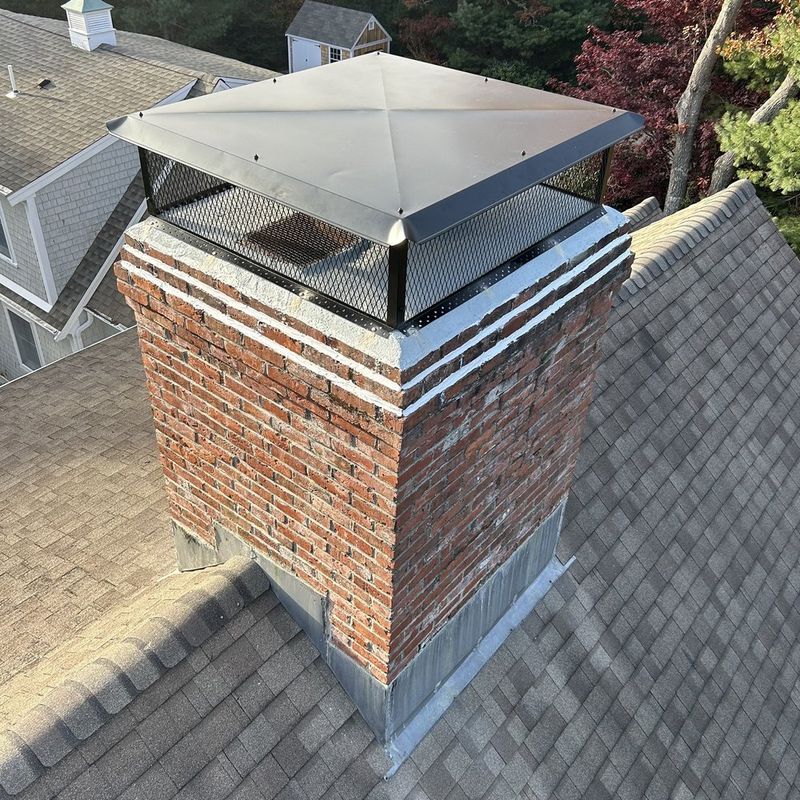
Reducing access to your building is a smart long-term step. MassWildlife recommends closing off potential denning places such as chimneys, attics, and spaces under houses, porches, and sheds.
It also advises capping chimneys and removing overhanging branches that give animals a path to the roof.
Timing matters, though. If an animal may already be living in a space, wait before you seal anything.
Closing an opening on an occupied den could trap the animal inside or separate young from a parent.
Get advice first from MassWildlife or a permitted wildlife professional. The state’s wildlife training guide covers how animal control officers approach these situations.
A professional can help you judge whether a space is in use and when closing it is safe.
Some clues suggest an animal is using a space: scratching or movement sounds, tracks in snow leading to a gap, or fresh disturbance around a hole. A sighting in the yard does not show any of these.
Walk the outside of your home, note gaps and loose boards, and plan repairs for after you have checked with a professional.
Call a rehabilitator about an obviously injured animal
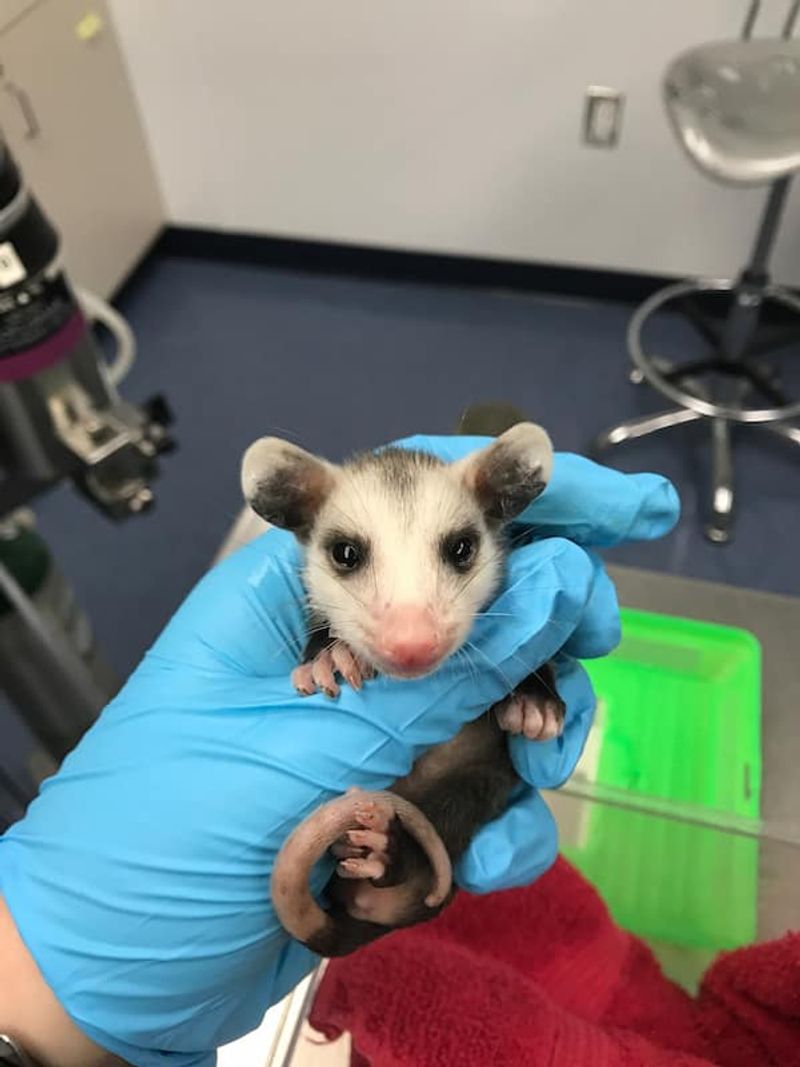
Some situations do call for help. If an opossum is obviously injured, or there is another clear reason intervention may be needed, contact a licensed wildlife rehabilitator.
MassWildlife’s directory lists rehabilitators you can call.
Do not try to capture, handle, feed, or treat the animal yourself. State guidance on sick or hurt wildlife says wild animals should generally be left alone, and taking one from the wild to keep as a pet is illegal in Massachusetts.
A frightened opossum can bite or scratch when it is handled.
Cold-related damage can happen. MassWildlife reports frostbite on the ears, nose, or tail in Massachusetts opossums.
A shortened tail or ragged ear tip, however, does not by itself make an emergency.
When you call, describe what you see: visible wounds, difficulty moving, or an animal that cannot get away from you. Mention the location and how long you have watched it.
Qualified help can then decide whether the animal needs care.
Do not trap and relocate it yourself
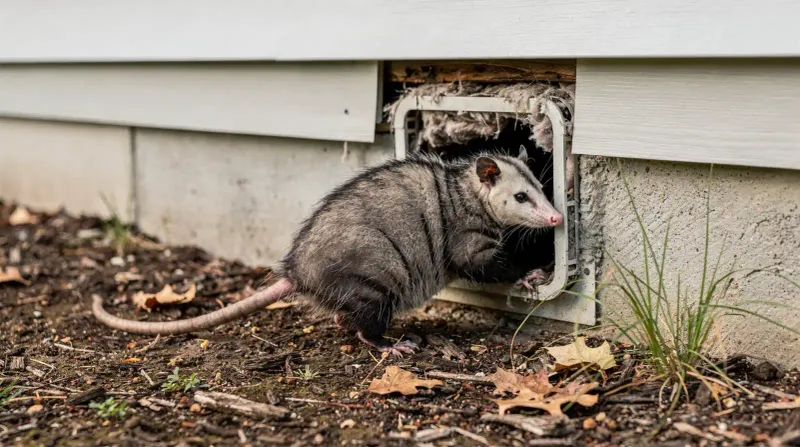
A problem with your property is different from an injured animal. If an opossum is getting into a shed or crawl space, resist the urge to set a trap and drive it somewhere else.
Trapping and relocating an opossum yourself is not a legal fix in Massachusetts.
The state’s rules on wildlife are spelled out in 321 CMR 2.00, and MassWildlife’s trapping information explains that wildlife relocation is illegal. Moving an animal can also separate it from its young and drop it in unfamiliar territory in winter.
Instead, contact MassWildlife or a permitted wildlife professional about your concern. They can assess whether an animal is using your building and suggest legal, humane options.
Many can also advise on repairs once it is safe to close a space.
Meanwhile, keep doing the simple things: secure food sources and watch from a distance. Those steps cost little and often make a yard less interesting to wildlife without any capture at all.
Get public-health advice after a bite or scratch
If a person or a pet is bitten or scratched, do not wave it off because the animal was an opossum. Massachusetts advises contacting a health-care provider, your local board of health, or state public-health officials to assess possible rabies exposure.
The Department of Public Health’s rabies page explains the steps.
For a person, wash the wound well with soap and water, then make the call. For a pet, contact your veterinarian and the local board of health.
Keep other people and animals away from the opossum, and do not try to catch it.
MassWildlife calls rabies extremely rare in opossums. Low risk, though, is not zero risk.
Health officials are the ones who can judge whether an exposure needs follow-up.
Tell them what happened, where, and when, and describe the animal. Having your pet’s vaccination records handy can also speed things up.
Acting promptly is the safest response.
Match your response to what you know
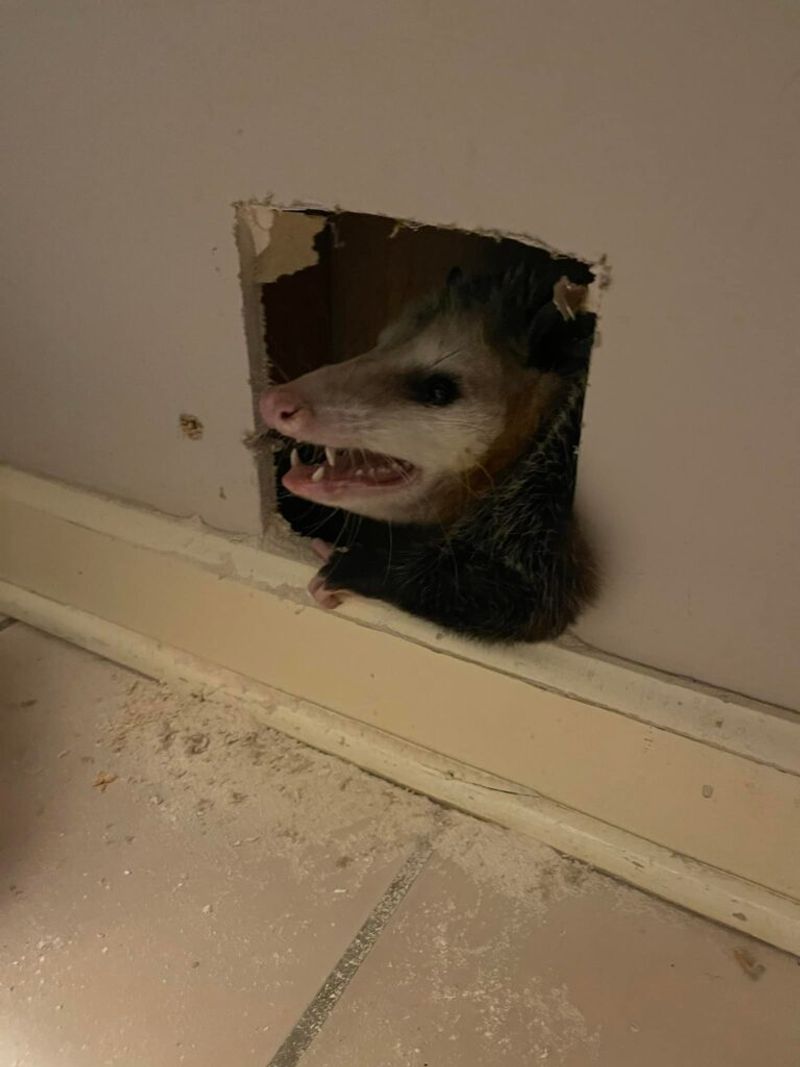
Let what you actually observe set your response. A sighting alone calls for space and fewer attractants, as MassWildlife advises.
Suspected use of a building calls for advice before sealing anything.
An obviously injured animal calls for a licensed rehabilitator, and a bite or scratch calls for public-health advice. Most nights, the opossum is just passing by on its own business.
Share this story