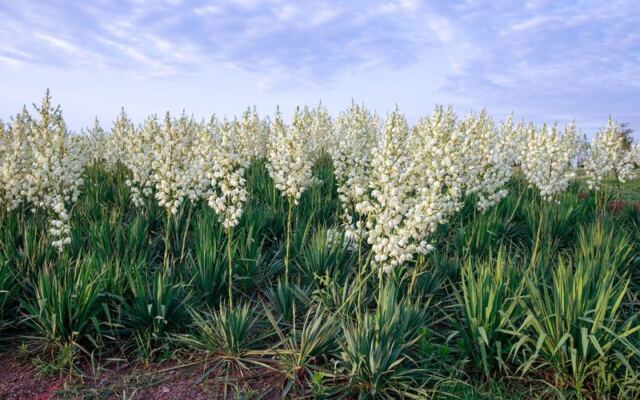
That tall stalk shooting up from your yucca is a flower stem, and it means the plant is reproducing, not that it is in trouble. Once the blooms fade, you can cut the stalk off or leave it standing, and either choice is fine.
The right pick depends on whether you want seeds, a bit of wildlife habitat, or a tidier yard. Here is how to tell what you are looking at and how to decide.
The stalk carries the yucca’s flowers
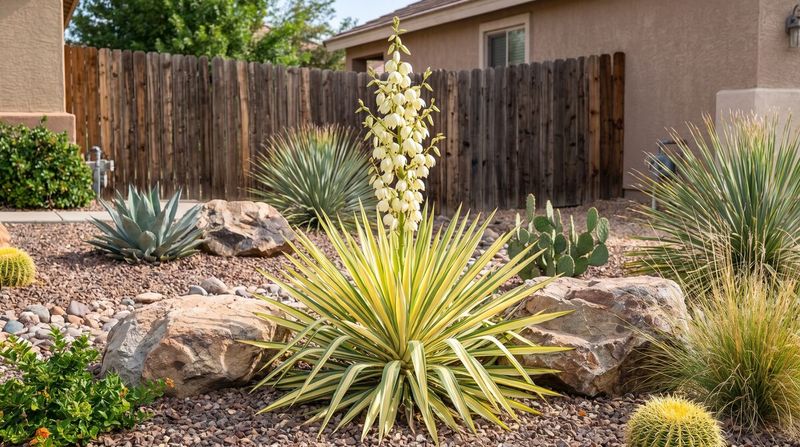
Here is the plain answer. The tall spike rising from the center of a yucca carries the flowers, and its appearance marks reproduction rather than distress.
A plant that sends up a stalk is doing what yuccas do, and the stalk alone is not a warning sign.
Adam’s-needle yucca (Yucca filamentosa) is the one most Alabama gardeners know. North Carolina State Extension notes that it produces a tall panicle of white flowers in spring or summer.
The species is also listed by the USDA’s GRIN taxonomy database as native to Alabama, so a clump in a Southern yard is often this plant.
It is not the only yucca in the state, though. Alabama Extension also describes aloe yucca (Yucca aloifolia).
On that species, the terminal flower stalk dies back after blooming while nearby buds usually persist.
Knowing which yucca you have matters because common names overlap. Spanish bayonet, for example, can point to more than one plant, and flowering habits are not identical across species.
Look at the leaves, the height, and the shape of the flower cluster to narrow it down, and photograph the plant if you want to ask your county Extension office.
Once you know what you are growing, the next question is simple. After the flowers fade, do you want to cut the stalk, or leave it for seeds and wildlife?
The sections ahead walk through each choice so you can pick with confidence.
Bloom timing does not reveal a single cause
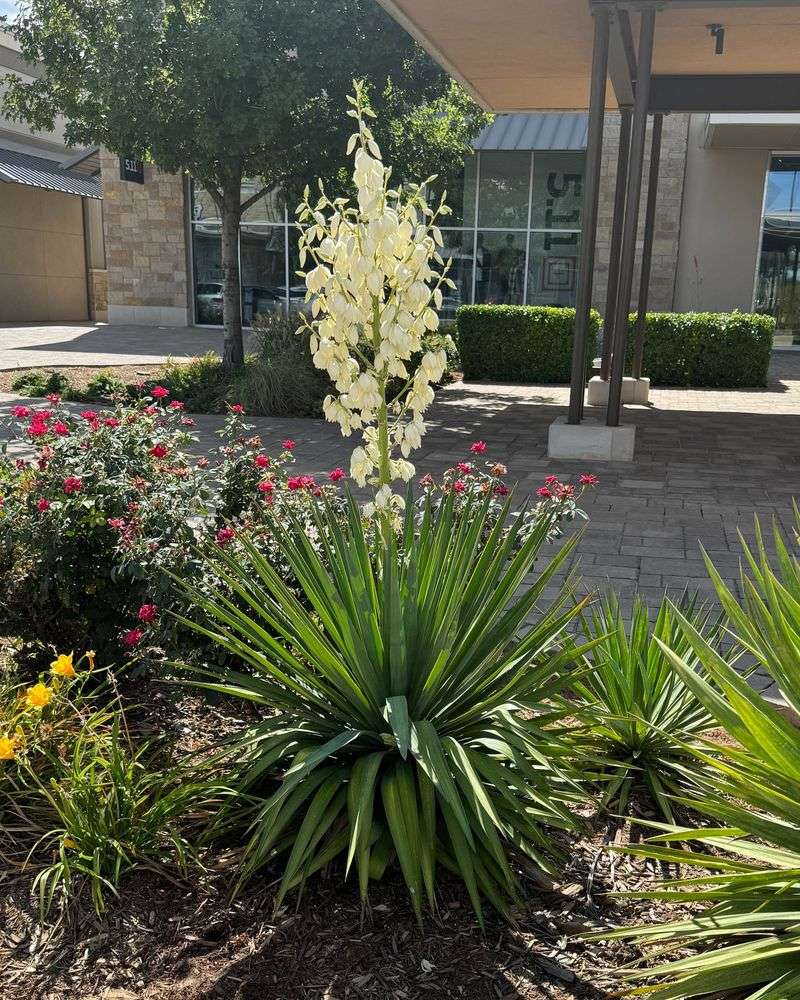
Seeing a stalk tells you the plant is blooming, but it does not tell you why it bloomed this year. Many gardeners wonder if a dry spell, a wet spring, or a hot summer set it off.
For Alabama yuccas, nobody can point to one weather event and say that was the cause.
What you can say is when to expect flowers. Adam’s-needle yucca typically blooms in spring or summer, according to NC State Extension.
A stalk showing up in that window is ordinary timing.
You may come across articles about weather and yucca flowering. One Scientific Reports study looked at an unusual bloom pattern in Joshua trees and Mojave yuccas in the American Southwest.
It describes a mix of weather and day length, but it covers desert plants, not the common yuccas growing in Alabama yards.
So treat that research as interesting background, not as a recipe for your own plant. Some years you may see many stalks, and other years few, and that variation does not need a dramatic explanation.
If the leaves look healthy and the stalk is upright, you are watching a normal bloom.
A flowering rosette may be only part of the plant
Will the yucca die after it flowers? The honest answer is that it depends on the species and on what you mean by the plant.
Saying all yuccas die after blooming is too broad, and so is saying none ever do.
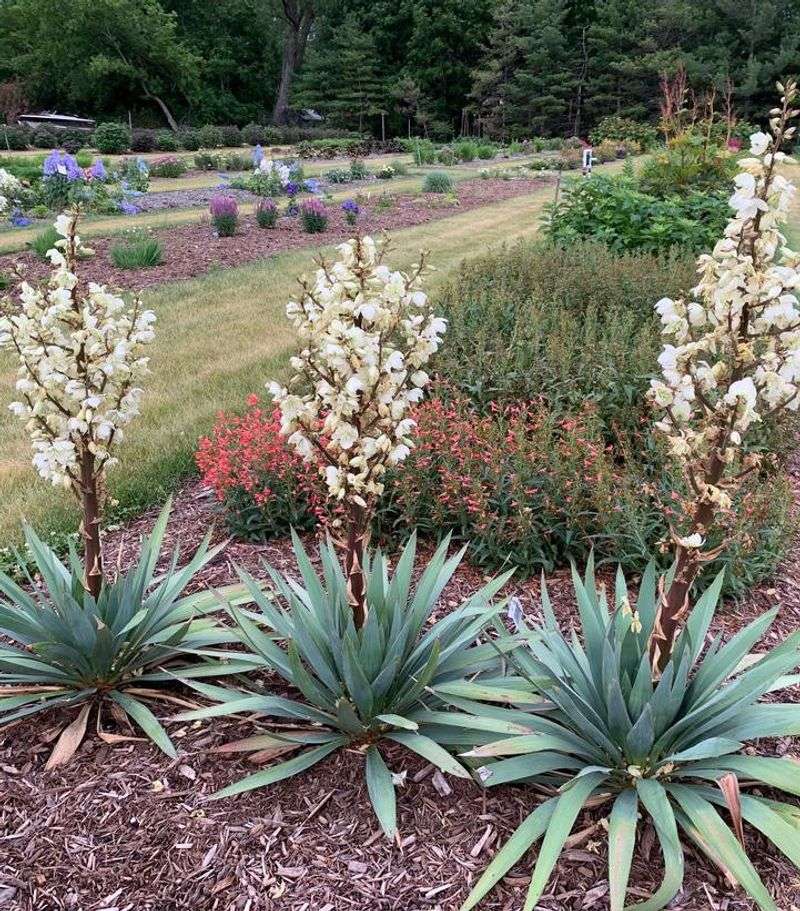
Many yuccas grow as clumps made of several rosettes, which are the circles of leaves. Research on yucca flowering and fruiting separates a single flowering rosette, which can die after it blooms, from the larger clump, which may carry on through replacement rosettes.
So one rosette might finish while the clump keeps growing around it.
With aloe yucca, Alabama Extension explains that the terminal stalk dies back while nearby buds usually persist. That is a good picture of how a plant can lose one stem and still go on.
The dramatic death bloom story you may have heard is mostly about agave. University of Arizona Extension contrasts agaves, many of which die after flowering, with yuccas.
Do not carry the agave pattern over to your yard.
Cutting the stalk does not change any of this. Whatever the rosette does after blooming is part of its life cycle, and a pair of pruners will not rewrite it.
Check the base for new offsets instead, since those show the clump is still going.
Cut a spent stalk for appearance or seed control
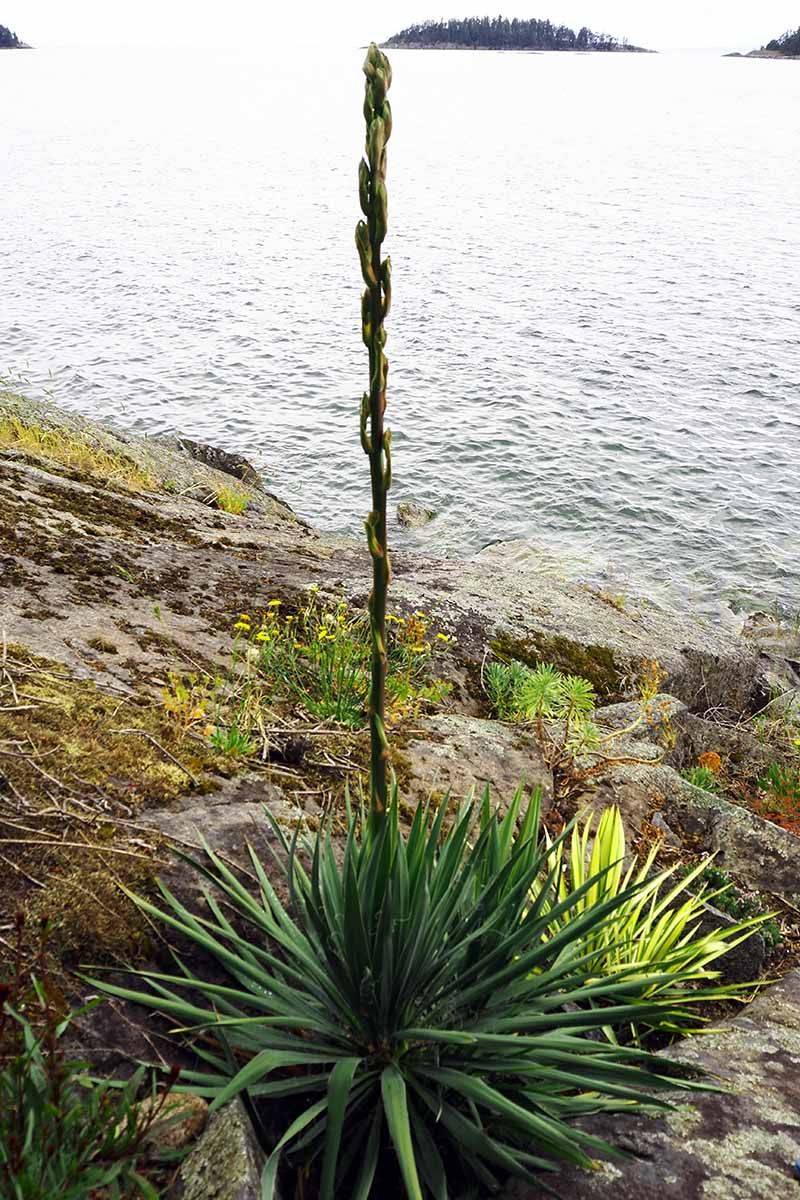
Brown, bare stalks are not everyone’s favorite look. If you would rather not have the spent stalk or its seed pods in your bed, you can cut it off.
Removal is a tidying choice, and the plant does not need it to stay alive.
Timing is flexible. A Lady Bird Johnson Wildflower Center answer says the stalk can be removed at any point.
You do not have to hurry the moment the last flower drops.
For a clean result, cut near where the stalk emerges from the foliage. University of Nevada, Reno Extension pruning guidance for desert succulents supports this kind of low cut.
A stub left standing looks awkward, and a cut at the base blends into the leaves.
Loppers or a pruning saw work well on thick stalks, and the long handles keep your hands away from the leaves. Dry stalks are lighter and easier to snap, while green ones may need a saw.
Toss the cut stalk in yard waste or break it up for the compost pile.
Some gardeners cut to stop seed pods from forming, and that is a reasonable goal. Others just want a neat border.
Either way, you are making a style decision, not rescuing the plant from decline.
Leave the stalk if you want seeds or possible moth habitat
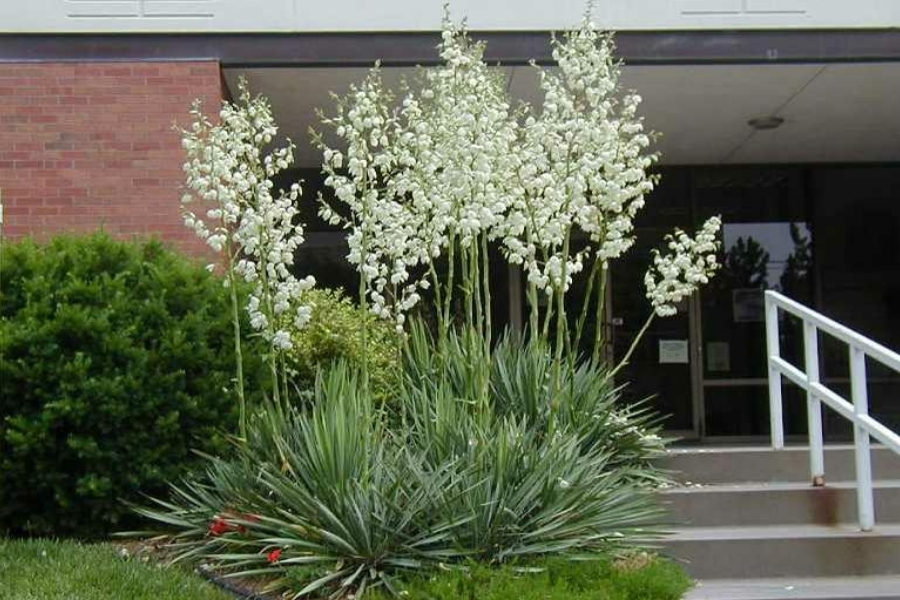
Seed savers have a simple rule: be patient. If you want seeds, wait for the seed pods to mature before you cut the stalk.
Cutting early means the pods will not finish developing.
There is a wildlife angle too. The Wildflower Center advises leaving one or two stalks where possible as habitat for yucca moths.
That is a helpful tip if you like supporting insects that live alongside the plant.
Keep expectations realistic, though. Yucca and moth relationships vary by species and place, so you cannot promise that every yard’s plant depends on the same moth.
Fruit is not guaranteed either. Alabama Extension’s aloe yucca article discusses fruit on that species, but a given plant in a given yard may or may not set any.
Gardeners who just do not mind the look of a dried stalk can leave it as well. An Extension question-and-answer entry backs leaving it if you prefer not to tidy up.
A standing stalk can even add height and texture through autumn.
A middle path works nicely. Cut most stalks for neatness and keep one or two for seeds or moths.
You get a tidy bed and a little extra life in the garden.
Protect yourself around the pointed leaves
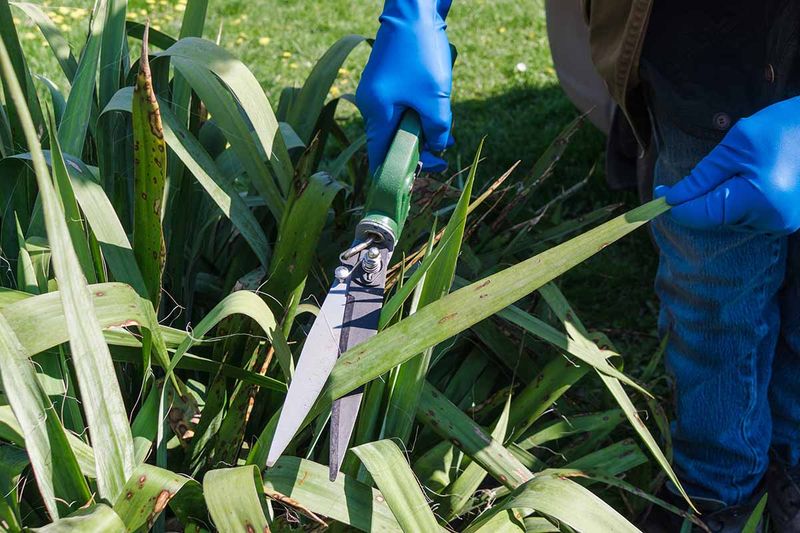
Before any cutting, think about your hands and arms. Adam’s-needle leaves end in a sharp spine, as University of Florida IFAS Extension describes.
Reaching casually through the foliage is a quick way to get stabbed.
Wear sturdy gloves and long sleeves, and keep your face back from the leaf tips. Long-handled loppers or a pruning saw let you work from a distance, and desert succulent pruning advice from University of Nevada, Reno Extension likewise stresses care around spiny plants.
Take your time and make the cut at the base where you can see it.
If you share your yard with animals, know that the ASPCA lists yucca as toxic to dogs, cats, and horses. Sharp leaves can also cause physical injury.
Placement and cleanup of cut pieces are worth a thought.
Whether the stalk stays or goes, nothing about flowering demands a rush job. Let your goals decide, and let the plant keep its dramatic exclamation point as long as you enjoy it.
Share this story