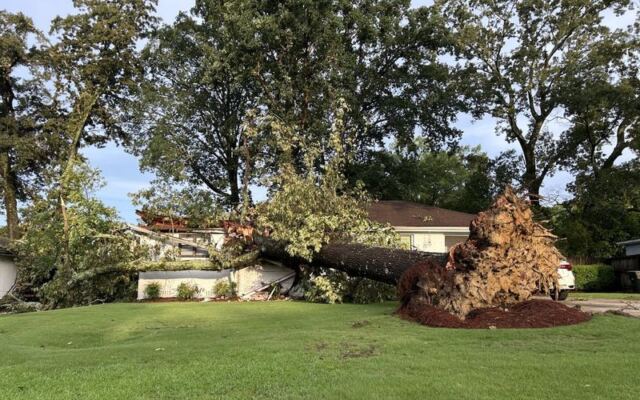
When a neighbor’s tree lands in your Alabama yard, the bill usually depends on why it fell, and your own homeowners policy is often the first place to look. A neighbor generally is not liable when an act of nature brings the tree down, though visible signs that it was dead or diseased can change the picture.
Paying for repairs and paying for tree removal are two different questions, and each has its own rules. Here is how to sort them out before you pick up the phone.
Who pays depends on why the tree fell
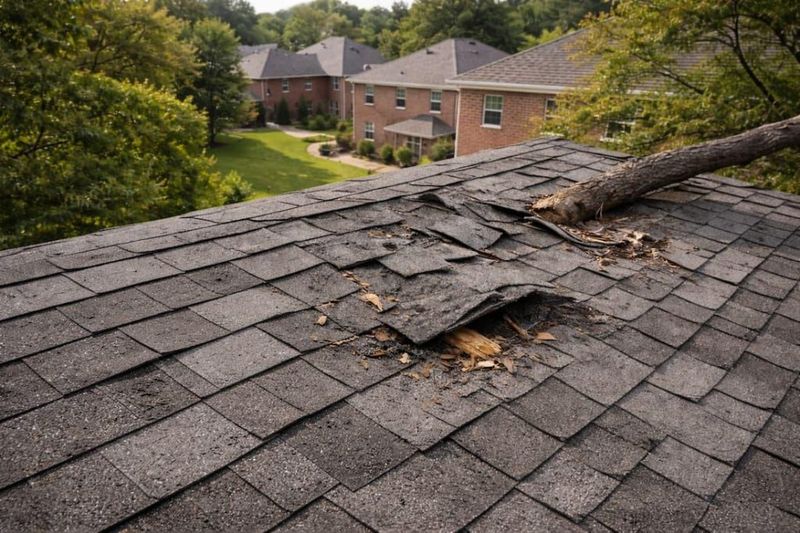
Owning the tree does not settle who pays when it falls. According to the Alabama State Bar’s Disaster Relief Manual, a neighbor generally is not liable when an act of nature, such as a strong wind or storm, brings a tree down.
The cause of the fall is the starting point.
There is an exception worth knowing. The manual says a neighbor may be responsible when the tree showed visible signs of being dead or diseased before it fell.
Think of things like bare, brittle branches in summer, large patches of missing bark, or fungus growing on the trunk.
Those signs are evidence, not a verdict. They may matter to who is responsible, but they do not automatically decide an individual situation.
Photos of the tree from before the fall, if you happen to have any, can be useful, and so can what the tree looked like afterward.
It also helps to keep several questions apart. Legal responsibility is one question.
Whether the neighbor’s insurance policy pays is another, since a neighbor may be responsible in some situations and the policy may or may not pay. Whether your own policy covers the damage is a third.
Because of all this, an accusation is rarely the best first move. Your own homeowners policy may respond depending on the cause of loss, no matter how the question of fault turns out.
Checking your own coverage first gives you facts to work with before any conversation with your neighbor.
Your policy may cover damage to the house
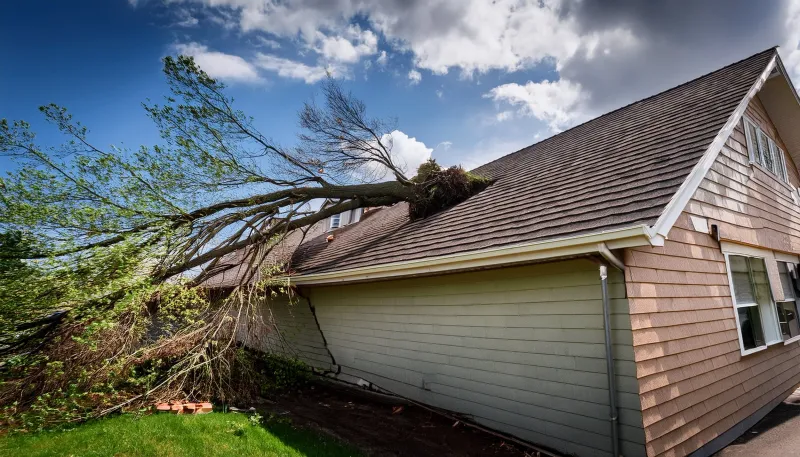
If the tree hit your house, garage, or another insured structure, the repair bill is an insurance question of its own. Whether your policy pays depends on whether it covers the cause of the loss.
Your neighbor’s legal responsibility does not decide which insurer steps in.
The Alabama State Bar manual offers a simple example. When wind causes a tree to damage a home, the roof damage may be covered if the policy covers wind.
In that case the wind is the cause of loss, and the policy’s wind coverage is what matters.
That example does not mean every policy covers every cause. Some policies exclude certain events or carry separate deductibles for wind or hail.
Two homeowners with the same fallen tree could get different answers because their policies read differently.
The manual also points out that the neighbor’s policy may or may not pay if the neighbor is responsible. If the neighbor is not at fault, or their policy does not pay, it advises contacting your own insurer.
Read the declarations page and the section on covered perils, or simply call your agent or company and ask how your policy applies to a tree that fell from next door. Ask about your deductible too.
Those answers will tell you what to expect before you decide anything else.
Tree removal is a separate coverage question
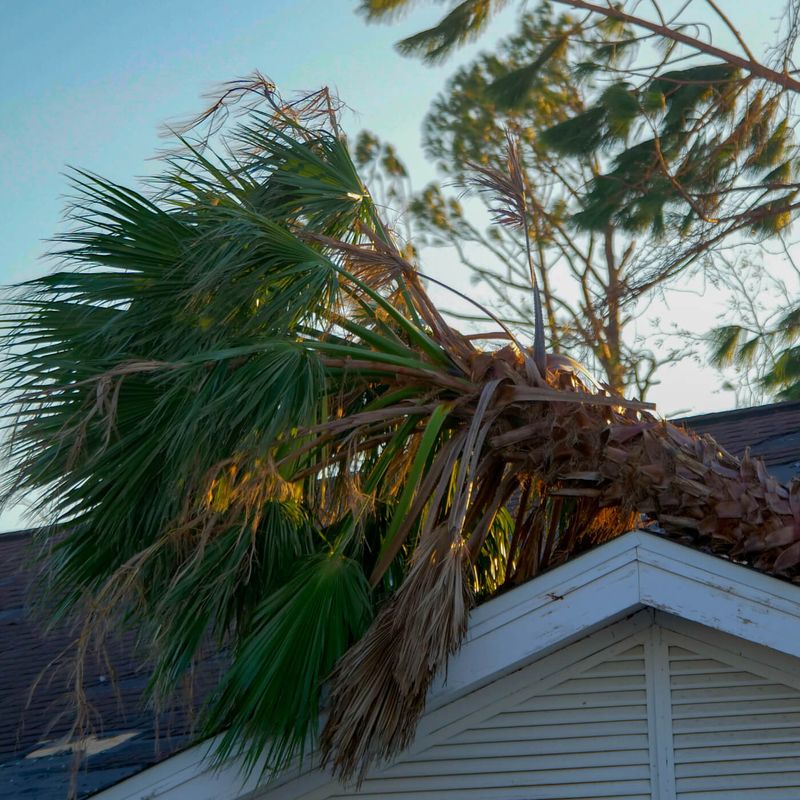
Fixing the roof and hauling away the tree are billed and covered differently. Many homeowners are surprised to learn that a policy may pay for one and only partly pay for the other.
The Alabama State Bar manual notes that some policies limit tree-removal coverage and that removal is not covered if the tree did not damage an insured structure.
The Alabama Department of Insurance explains in its storm damage FAQ that policies typically pay for removal when the tree damaged covered property or blocks access, such as a driveway or a handicapped ramp. A tree that simply lies in the yard may not qualify.
The FAQ gives examples of limits, such as $500 per tree and $1,000 total.
Another Department of Insurance resource, its Natural Disasters Guide, describes a common $500-per-event limit for general tree removal and treats removal from a damaged structure separately. Those numbers are examples of common provisions, not promises.
Conditions and limits vary from one policy to another, and your actual policy controls. Look for the debris removal or tree removal section, check the dollar limits, and ask your insurer what counts as blocked access.
That way you know what you may be paying out of pocket before you hire a crew.
Document the damage before the scene changes
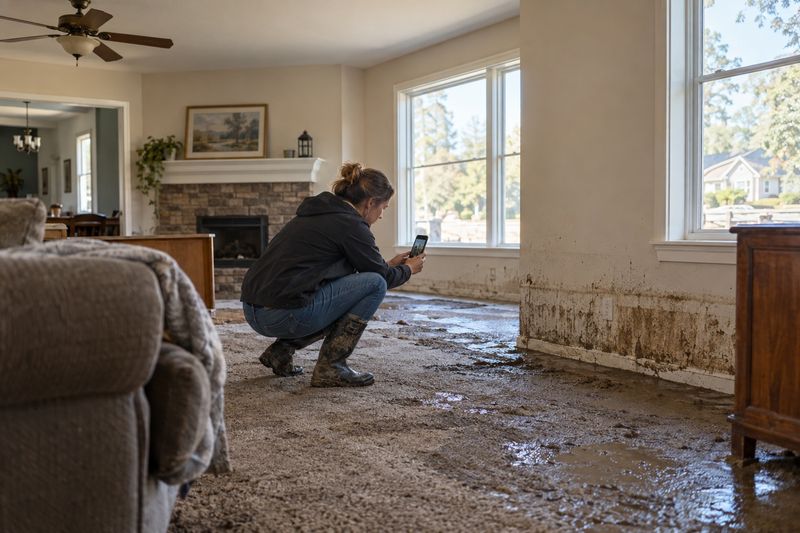
Once the shock wears off, your phone becomes your most useful tool. The Alabama Department of Insurance recommends in its Natural Disasters Guide that you photograph and document the damage, report the claim promptly, and take safe steps to prevent additional damage.
Start with wide shots that show where the tree came from and where it landed. Then take close-ups of the damaged roof, fence, car, or siding, along with the trunk, the broken ends, and the stump if you can see it safely from your own property.
Write down the date and time, and keep any receipts for temporary fixes, such as a tarp over a hole.
Call your insurer soon after. They can explain the next steps and what they need from you.
Do not move or cut up the tree before you have photos, and ask your insurer before hiring anyone for major work.
Records help show what happened and what was damaged. They do not by themselves prove who is legally responsible, and they do not guarantee coverage.
The Alabama State Bar manual ties responsibility to the cause of the fall and the tree’s visible condition, so clear pictures of both are worth having.
When you do talk with your neighbor, share what you know in a friendly way. Describing the photos and the damage keeps the conversation about facts instead of a demand for payment.
Power lines make this an emergency, not a cleanup job
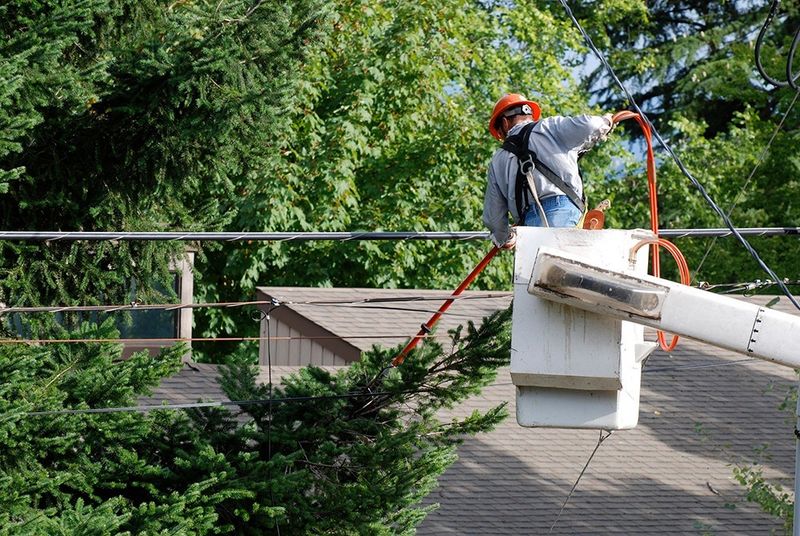
A tree or branch touching a power line changes everything. Alabama Power warns that fallen lines may remain energized, which means they can carry dangerous electricity even when they look dead.
Stay far away from the tree, the branch, and any wires.
Call the utility right away and keep children, pets, and neighbors back from the area. If you think anyone is in immediate danger, call 911.
Do not try to pull a branch free or cut the tree yourself. Alabama Extension also says not to remove trees or branches from utility lines.
You can read more in Alabama Power’s guidance on trees and rights of way and in Alabama Extension’s post-storm landscape safety article.
Questions about photos, claims, and neighbors can wait. Let the utility make the scene safe first.
Start with coverage, not blame
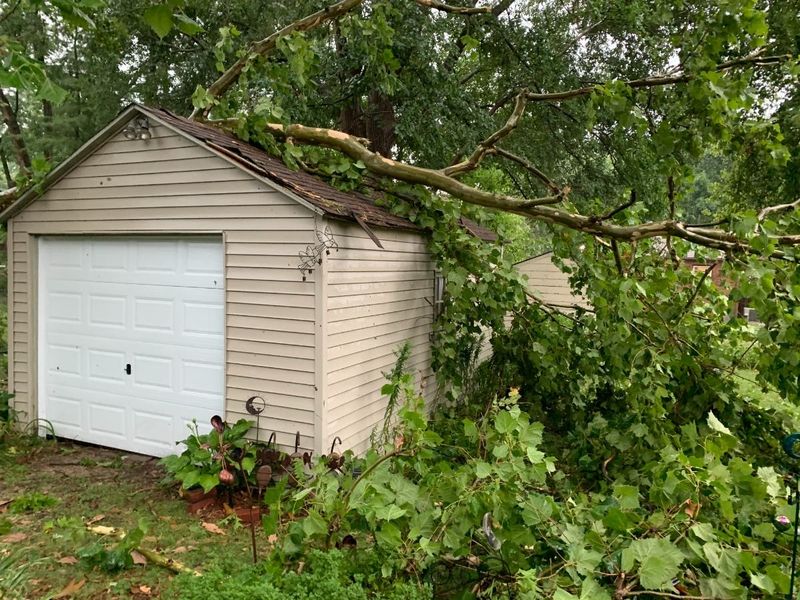
Take your photos, call your own insurer, and then talk with your neighbor using the facts you have about how the tree fell and what condition it was in. The Alabama State Bar manual and the Department of Insurance guide both support this order of steps.
Who owns the tree, who is responsible for the damage, whether insurance covers it, and who pays for removal are separate questions. Any outcome depends on the cause of the fall, the evidence, and the wording of the policies involved.
A fallen tree is a hard day, but a calm start with your own coverage keeps small problems from growing into larger ones.
Share this story