Get the latest garden guides in your inbox →
Gardening Latest
  • General Gardening
  • Lawn Care
  • Plant Care
  • Composting
  • Soil Health
  • Backyard
  • Garden Muse Magazine
  • General Gardening
  • Lawn Care
  • Plant Care
  • Composting
  • Soil Health
  • Backyard
  • Garden Muse Magazine
  • News
  • Gardening Calendar
  • Garden Structures
  • Vegetable Garden
  • Vertical Garden
  • Raised Beds
  • Hydroponics
  • General Equipment
  • Community Gardens
Garden Themes
  • Spiritual Garden
  • Hydroseeding
  • Seeding and Laying Sod
  • Artificial Grass
  • Lawn Care Equipment
  • Plants
  • Trees
  • Planting Tools
  • Composting Basics
  • Fertilizer
  • Alternative Growing Mediums
  • Front Yard
  • Backyard Activities
  • Landscaping
Gardening Latest

Explore by state

Which state is your garden in?

Currently viewing Michigan

All states

Northeast

  • Connecticut —
  • Delaware 33
  • Maine —
  • Maryland 19
  • Massachusetts 35
  • New Hampshire —
  • New Jersey 19
  • New York 28
  • Pennsylvania 28
  • Rhode Island —
  • Vermont —

Southeast

  • Alabama 19
  • Arkansas —
  • Florida 19
  • Georgia 19
  • Kentucky 33
  • Louisiana 18
  • Mississippi —
  • North Carolina 17
  • South Carolina 32
  • Tennessee 16
  • Virginia 18
  • West Virginia —

Midwest

  • Illinois 18
  • Indiana 20
  • Iowa 32
  • Kansas —
  • Michigan 19
  • Minnesota 18
  • Missouri 18
  • Nebraska —
  • North Dakota —
  • Ohio 19
  • South Dakota —
  • Wisconsin 34

Southwest

  • Arizona 19
  • Colorado —
  • Nevada —
  • New Mexico —
  • Oklahoma —
  • Texas 18
  • Utah —

West

  • Alaska —
  • California 19
  • Hawaii —
  • Idaho —
  • Montana —
  • Oregon —
  • Washington —
  • Wyoming —

No state matches that search.

Site menu

Gardening Latest
  • General Gardening
    • News
    • Gardening Calendar
    • Garden Structures
    • Vegetable Garden
    • Vertical Garden
    • Raised Beds
    • Hydroponics
    • General Equipment
    • Community Gardens
    Garden Themes
    • Spiritual Garden
  • Lawn Care
    • Hydroseeding
    • Seeding and Laying Sod
    • Artificial Grass
    • Lawn Care Equipment
  • Plant Care
    • Plants
    • Trees
    • Planting Tools
  • Composting
    • Composting Basics
  • Soil Health
    • Fertilizer
    • Alternative Growing Mediums
  • Backyard
    • Front Yard
    • Backyard Activities
    • Landscaping
  • Garden Muse Magazine

Explore

  • About GardeningLatest.com
  • Contact Us

Get the latest from the garden

New guides on lawn care, plants and backyard projects, sent when they go up.

Subscribe →

Follow

  • Facebook
  • X
  • Pinterest
  • YouTube
Michigan Gardening

After a Michigan Storm Drops Your Neighbor’s Tree on Your Property, Here’s Who Actually Pays

Start with your own homeowners insurer. That call is the first step when a neighbor's tree lands on your house, fence…

NL

By Nora Lindqvist

November 25, 2026 · 6 min read

After a Michigan Storm Drops Your Neighbor’s Tree on Your Property, Here’s Who Actually Pays

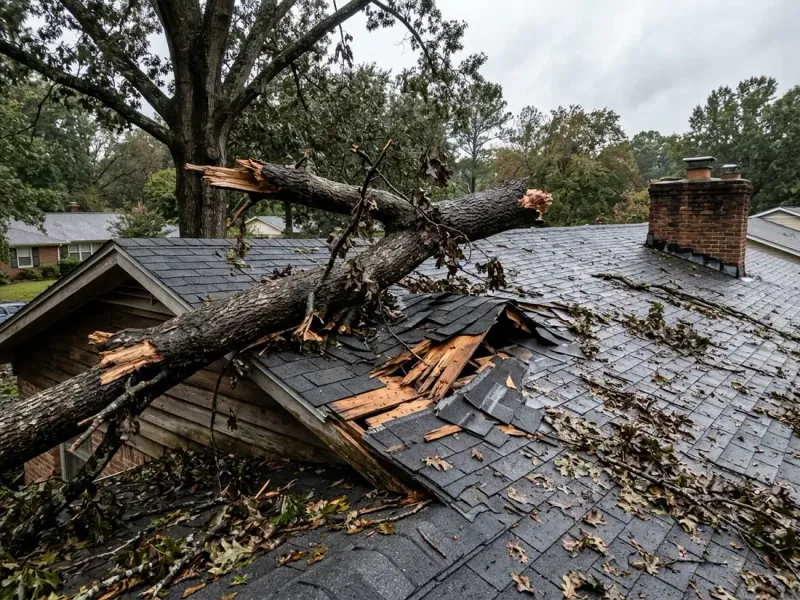
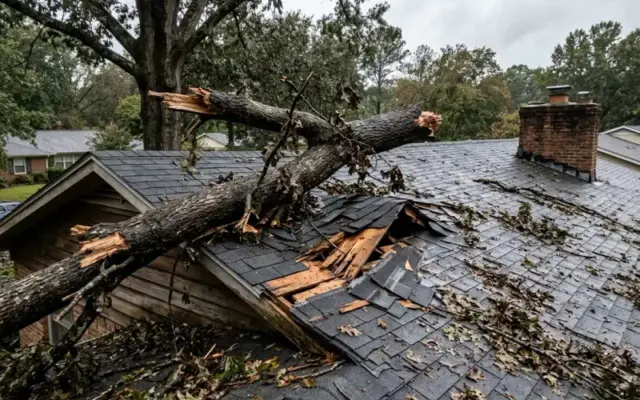
Start with your own homeowners insurer. That call is the first step when a neighbor’s tree lands on your house, fence, or yard, and your policy and deductible shape what happens next.

Whether your neighbor ends up responsible is a separate question that depends on the facts. Here is how to sort out who pays what, and in what order.

At a glance

Where
Michigan Gardening
Hardiness zone
6 −10 to 0°F
Read
6 minutes
Published
November 25, 2026

Start with your own insurer

Start with your own insurer
© Ann Arbor Roofing Co.: Roof Replacement, Metal Roofing, Flat Roofs & Storm Damage Repair

Call your homeowners insurer or agent as soon as you can. That is the practical first move, and it does not depend on whose tree it was.

Michigan’s insurance regulator advises policyholders to notify the insurer or agent promptly, take reasonable steps to limit further damage, keep records, and cooperate with the insurer’s requests.

Reasonable steps might mean covering a hole in the roof with a tarp or boarding up a broken window. Keep receipts for those materials.

Take photos and video of the tree, the damage, and the surrounding yard before anything is moved. Those are DIFS recommendations, not promises of coverage or payment.

It helps to treat several questions as separate. Who reports the claim first is one question.

Which policy covers the loss is another. Who pays the deductible is a third.

Whether the neighbor is legally liable is a fourth, and it is answered later and by different evidence.

DIFS also tells storm victims to review their policy because insurers pay benefits only for covered losses, and the deductible applies. The tree’s origin does not settle any of this on its own.

Michigan courts look at negligence, notice, and evidence, as described in an unpublished Court of Appeals opinion covered later in this article.

Make the scene safe before cleanup
Make the scene safe before cleanup
© MLive.com

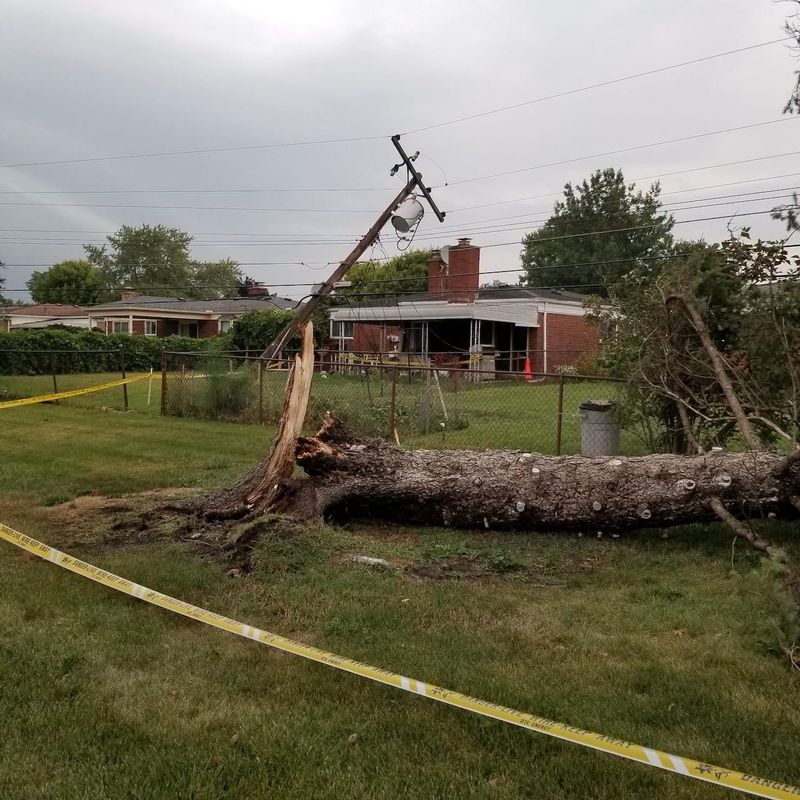
Cleanup can wait. Safety cannot.

The Michigan DNR says to stay far away from a tree or limb that is, or might be, touching a power line, and to contact the utility. Downed limbs can hide energized wires, so never cut, move, or pull branches away from wires yourself.

The same guidance says whole trees, large limbs, hanging branches, and leaning or partly uprooted trees belong in the hands of qualified professionals. A branch that looks stable can shift without warning.

Paying to fix damage and paying to haul away the tree are not always the same thing.

A tree resting against a house can be under tension that is not obvious from the ground.

If you hire an arborist, the DNR suggests getting two to three quotes and confirming that the company carries general-liability and workers’ compensation insurance. That check protects you if a worker is hurt or something else on your property is damaged.

Before any work begins, tell your insurer what you plan to do. Photograph the tree where it fell, and keep every invoice.

Check what your policy covers
Check what your policy covers
© For The Public Adjusters

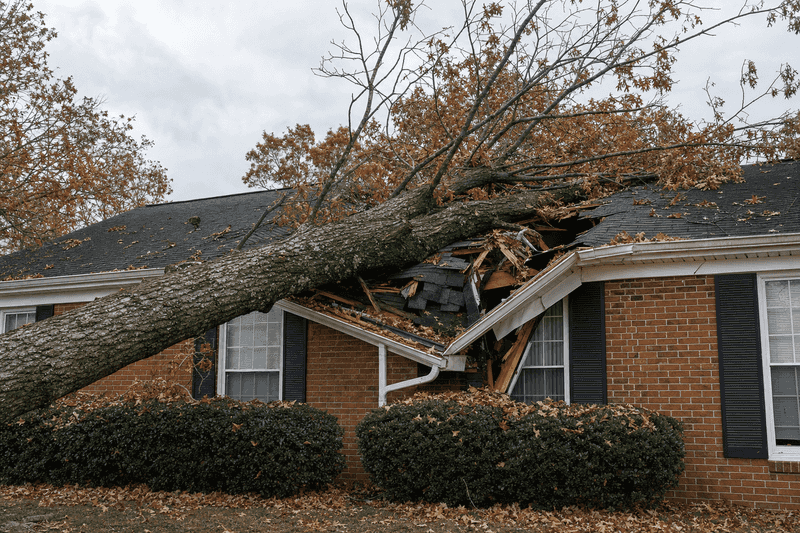
Your own policy decides what your insurer will pay. Michigan’s regulator explains that insurers provide benefits only for covered losses and that your deductible applies.

Pull out the full policy and the declarations page, which lists your coverage amounts and deductible.

Then ask your insurer direct questions. How does it treat damage to the house itself?

What about a detached garage or shed, which policies often call another structure? How are a fence and yard debris handled?

These categories do not always receive the same treatment, so do not assume one answer fits them all.

Write down the name of the person you speak with, the date, and what they say. If the insurer asks for photos, estimates, or a damage list, send them promptly.

A deductible is the part of a covered loss you pay before the insurer pays. If the repair costs less than the deductible, filing may not produce a payment, and your agent can help you weigh that.

No one can predict a coverage decision in advance, so wait for the insurer’s written answer.

Tree removal may have a separate limit
Tree removal may have a separate limit
© Property Insurance Coverage Law | Blog

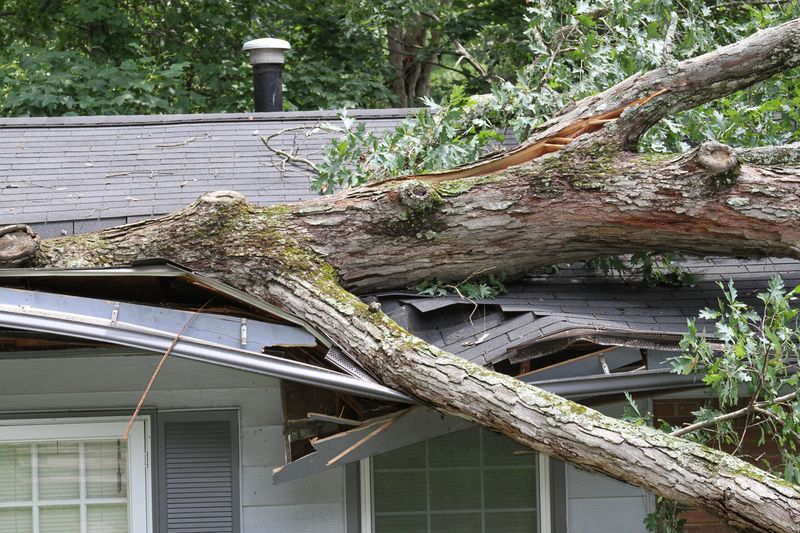
Paying to fix damage and paying to haul away the tree are not always the same thing. Removal often has its own, smaller benefit.

The state’s DIFS homeowners insurance guide lists a $500 standard limit for tree removal.

That figure comes with conditions. The guide cautions that company requirements vary, and some coverage depends on a covered peril causing the tree to fall or on the tree damaging other covered property.

It is not a guaranteed payment for every fallen tree.

Picture a tree that falls in your yard and hits nothing. Your policy may treat it very differently from one that crushes part of your garage.

Do not assume removal is covered whenever a tree comes down.

Ask your insurer for the exact terms in your policy. Find out the removal limit, whether it applies per tree or per loss, and what must be damaged for it to apply.

Get that answer before you sign a contract with a tree service.

When the neighbor may be responsible
When the neighbor may be responsible
© Michigan Insurance

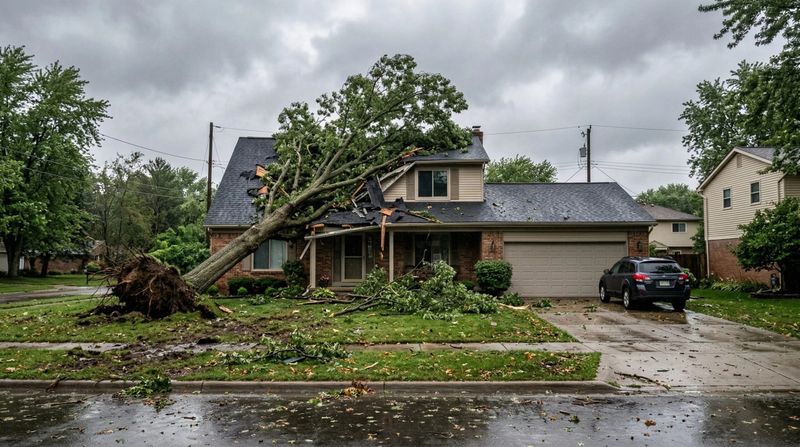
A neighbor may be liable, but only if the facts support it. Michigan negligence claims generally require duty, breach, causation, and damages.

In plain terms, the neighbor owed a duty of reasonable care, failed to meet it, and that failure caused your loss.

Notice is often the hard part. Courts ask whether the owner knew, or reasonably should have known, that the tree posed a danger.

Earlier warnings, such as a letter from you, a visible dead trunk, or obvious decay, can matter when it comes to what the owner should have known.

Estate of Clock v Kemp is an unpublished Michigan Court of Appeals opinion. It shows how one court considered notice and evidence in that case.

It is not a binding rule for every fallen-tree claim, so do not read it as one.

Neither side of the common arguments is automatic. Owning the tree does not by itself make the neighbor liable, and a storm does not automatically excuse the owner.

A dead or diseased tree does not automatically prove negligence either. Evidence on condition, warnings, and cause decides it.

Gather photos of the tree before the storm if you have them, any messages about its condition, and an arborist’s observations about the stump or trunk. For a claim against the neighbor, consider talking with an attorney.

A damaged car follows auto coverage
A damaged car follows auto coverage
© Freeway Insurance

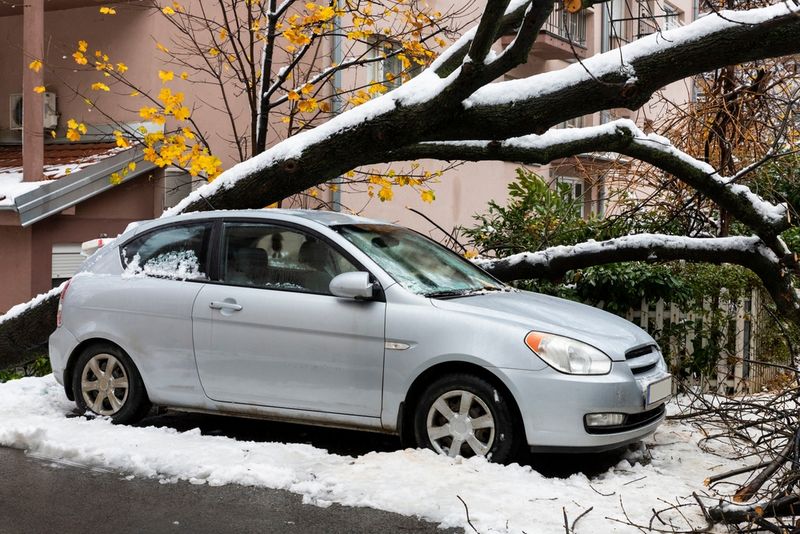
If a branch lands on your car, look to your auto policy, not your homeowners policy. Michigan DIFS says comprehensive coverage pays for damage from a falling object.

Required no-fault coverage alone does not pay for most repairs to your own car.

Check whether your auto policy includes comprehensive coverage and what deductible applies. Then contact that insurer, report the loss, and ask for its decision in writing.

Do not assume the homeowners insurer will treat the vehicle the same way it treats the house.

Photograph the car where it sits, and keep any towing or storage receipts. Whether the neighbor is liable for the car is the same fact-specific negligence question covered above.

Report each loss to the right insurer, read the actual terms, and let the evidence settle blame.

Share this story

NL

Written by

Nora Lindqvist

More from Nora Lindqvist →

About Gardening Latest

Gardening Latest provides in-depth guides to maintaining and enhancing your garden and backyard. Learn how to make the most of the space you have and create a beautiful garden.

More about us →

Latest stories

  • California GardeningIf a Gray Fox Keeps Trotting Through Your California Yard This Winter, Here’s What It’s After

    If a Gray Fox Keeps Trotting Through Your California Yard This Winter, Here’s What It’s After

    11 hr ago
  • Arizona GardeningWhen a Gray Fox Trots Through Your Arizona Yard This Winter, It’s on a Mission

    When a Gray Fox Trots Through Your Arizona Yard This Winter, It’s on a Mission

    12 hr ago
  • Texas GardeningNeighbor Vines Crossing Into Your Texas Yard: Texas Tree-Branch Guidance Is Clear, but the Answer for Vines Is Less Settled

    Neighbor Vines Crossing Into Your Texas Yard: Texas Tree-Branch Guidance Is Clear, but the Answer for Vines Is Less Settled

    12 hr ago
  • Wisconsin GardeningWisconsin Neighbors Fight Over Snow Piled on Their Property, and Here’s What the Law Actually Says

    Wisconsin Neighbors Fight Over Snow Piled on Their Property, and Here’s What the Law Actually Says

    12 hr ago
  • Missouri GardeningYellow Jackets Nesting Near Your Missouri Home? This Is What You Should Do First

    Yellow Jackets Nesting Near Your Missouri Home? This Is What You Should Do First

    12 hr ago

Gardening by state

Stories for your state, and the hardiness zone most of it gardens in.

Keep exploring

Read next

All Michigan Gardening →
Michigan GardeningCome Fall, Venomous Critters In Michigan Show Up Much Closer To Home Than You Think
Michigan Gardening

Come Fall, Venomous Critters In Michigan Show Up Much Closer To Home Than You Think

14 hr ago
Michigan GardeningYour Neighbor’s Vines Are Creeping Over The Fence, So Here’s What Michigan Law Actually Allows
Michigan Gardening

Your Neighbor’s Vines Are Creeping Over The Fence, So Here’s What Michigan Law Actually Allows

20 hr ago
Michigan GardeningThose Coyotes Howling Near Your Michigan Home in the Middle of the Night Are Sending Real Messages
Michigan Gardening

Those Coyotes Howling Near Your Michigan Home in the Middle of the Night Are Sending Real Messages

23 hr ago

More from Michigan Gardening

  • Michiganders Who Eat Celery Every Day Are Discovering What It Actually Does To Their Bodies

    Nov 24
  • Why Deer Are Bedding Down in Your Michigan Yard Right Now and What It Tells You

    Nov 23
Back to top

Leave a response Cancel

Your email address stays private. Required fields are marked with an asterisk.

Gardening Latest

In-depth guides to maintaining and enhancing your garden and backyard: how to make the most of the space you have, and how to make it beautiful.

  • Facebook
  • X
  • Pinterest
  • YouTube

We may earn a portion of sales from products or services that are purchased through our site as part of our affiliate partnerships with retailers.

Explore

  • About GardeningLatest.com
  • Contact Us
  • Terms and Conditions
  • Privacy
  • Editorial Note:
  • FTC Disclosure

Newsletter

New garden guides and seasonal tips, straight to your inbox.

We’ll email you a link to confirm. Unsubscribe any time.

Almost there! Check your inbox and tap the link to confirm.

© 2026 Gardening Latest. All rights reserved.

Back to top