Get the latest garden guides in your inbox →
Gardening Latest
  • General Gardening
  • Lawn Care
  • Plant Care
  • Composting
  • Soil Health
  • Backyard
  • Garden Muse Magazine
  • General Gardening
  • Lawn Care
  • Plant Care
  • Composting
  • Soil Health
  • Backyard
  • Garden Muse Magazine
  • News
  • Gardening Calendar
  • Garden Structures
  • Vegetable Garden
  • Vertical Garden
  • Raised Beds
  • Hydroponics
  • General Equipment
  • Community Gardens
Garden Themes
  • Spiritual Garden
  • Hydroseeding
  • Seeding and Laying Sod
  • Artificial Grass
  • Lawn Care Equipment
  • Plants
  • Trees
  • Planting Tools
  • Composting Basics
  • Fertilizer
  • Alternative Growing Mediums
  • Front Yard
  • Backyard Activities
  • Landscaping
Gardening Latest

Explore by state

Which state is your garden in?

Currently viewing Michigan

All states

Northeast

  • Connecticut —
  • Delaware 33
  • Maine —
  • Maryland 19
  • Massachusetts 35
  • New Hampshire —
  • New Jersey 19
  • New York 28
  • Pennsylvania 28
  • Rhode Island —
  • Vermont —

Southeast

  • Alabama 19
  • Arkansas —
  • Florida 19
  • Georgia 19
  • Kentucky 33
  • Louisiana 18
  • Mississippi —
  • North Carolina 17
  • South Carolina 32
  • Tennessee 16
  • Virginia 18
  • West Virginia —

Midwest

  • Illinois 18
  • Indiana 20
  • Iowa 32
  • Kansas —
  • Michigan 19
  • Minnesota 18
  • Missouri 18
  • Nebraska —
  • North Dakota —
  • Ohio 19
  • South Dakota —
  • Wisconsin 34

Southwest

  • Arizona 19
  • Colorado —
  • Nevada —
  • New Mexico —
  • Oklahoma —
  • Texas 18
  • Utah —

West

  • Alaska —
  • California 19
  • Hawaii —
  • Idaho —
  • Montana —
  • Oregon —
  • Washington —
  • Wyoming —

No state matches that search.

Site menu

Gardening Latest
  • General Gardening
    • News
    • Gardening Calendar
    • Garden Structures
    • Vegetable Garden
    • Vertical Garden
    • Raised Beds
    • Hydroponics
    • General Equipment
    • Community Gardens
    Garden Themes
    • Spiritual Garden
  • Lawn Care
    • Hydroseeding
    • Seeding and Laying Sod
    • Artificial Grass
    • Lawn Care Equipment
  • Plant Care
    • Plants
    • Trees
    • Planting Tools
  • Composting
    • Composting Basics
  • Soil Health
    • Fertilizer
    • Alternative Growing Mediums
  • Backyard
    • Front Yard
    • Backyard Activities
    • Landscaping
  • Garden Muse Magazine

Explore

  • About GardeningLatest.com
  • Contact Us

Get the latest from the garden

New guides on lawn care, plants and backyard projects, sent when they go up.

Subscribe →

Follow

  • Facebook
  • X
  • Pinterest
  • YouTube
Michigan Gardening

Your Neighbor’s Vines Are Creeping Over The Fence, So Here’s What Michigan Law Actually Allows

Michigan law lets you deal with vegetation on your own side of the property line, but it does not clearly give you…

NL

By Nora Lindqvist

November 25, 2026 · 6 min read

Your Neighbor’s Vines Are Creeping Over The Fence, So Here’s What Michigan Law Actually Allows

Michigan law lets you deal with vegetation on your own side of the property line, but it does not clearly give you a right to cut across that line. The state’s best-known court cases are about tree branches, not creeping vines.

A fence also may not sit where the legal boundary does. Knowing these points before you pick up the pruners can save you from a fight with your neighbor.

At a glance

Where
Michigan Gardening
Hardiness zone
6 −10 to 0°F
Read
6 minutes
Published
November 25, 2026

Start with the boundary, not the fence
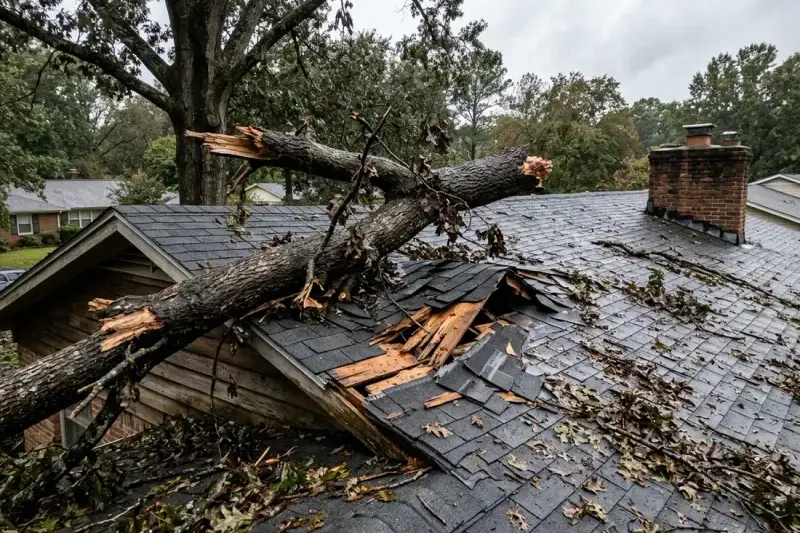
Start with the boundary, not the fence
© Jake Parrillo

Handling a vine on your own parcel is one thing. Cutting across the actual property boundary is something else.

That difference is the heart of this whole topic.

Michigan’s best-known court decisions on this subject, Hickey v. Michigan Central Railroad and Newberry v.

Bunda, are about tree branches. Neither one decided an ordinary dispute over a creeping vine.

Applying them to vines is an analogy, and it is not a settled vine rule.

The fence adds another wrinkle. A fence may not mark the legal line, and Michigan’s fence viewer statute says fence viewers do not decide where boundaries are.

So the spot where the vine meets your fence may not be the spot where it crosses onto your land.

Before you decide what to do, answer two questions. What plant is it?

Where exactly is it growing in relation to the true property line? The rest of this article walks through how to sort those out, one step at a time.

What Michigan’s tree-branch cases say
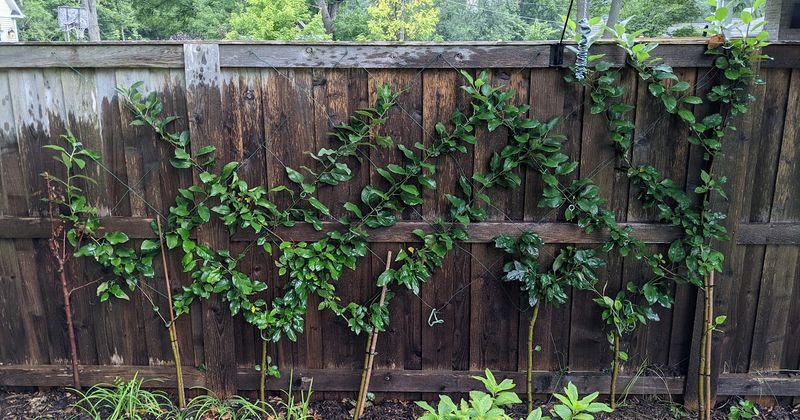
What Michigan’s tree-branch cases say
© Merchants Insurance Group

Two old Michigan Supreme Court cases come up most often. Both deal with tree branches.

Neither involved a homeowner fighting a creeping vine.

In Hickey, trees stood beside a railroad right-of-way, and their branches blocked the view of train engineers. The court treated those branches as a nuisance in that setting.

Section 247.62 lists specific plants, including Canada thistle, dodders, field bindweed, giant hogweed, poison ivy, and poison sumac.

It held that the railroad could trim them up to the division-fence line.

That ruling is tied to railroad safety and its specific facts. It is not a general permission to remove a neighbor’s vegetation.

In Newberry, the court rejected cutting projecting branches past the division line without permission. It did uphold a jury finding of an implied license in one situation.

The neighbors had agreed to build part of a line fence, and that agreement carried limited permission to trim what was necessary for the fence work.

Put together, the cases counsel caution about cutting across a boundary. They do not answer every vine scenario.

Any use of them for vines is an inference, so treat it that way.

A fence may not show the property line
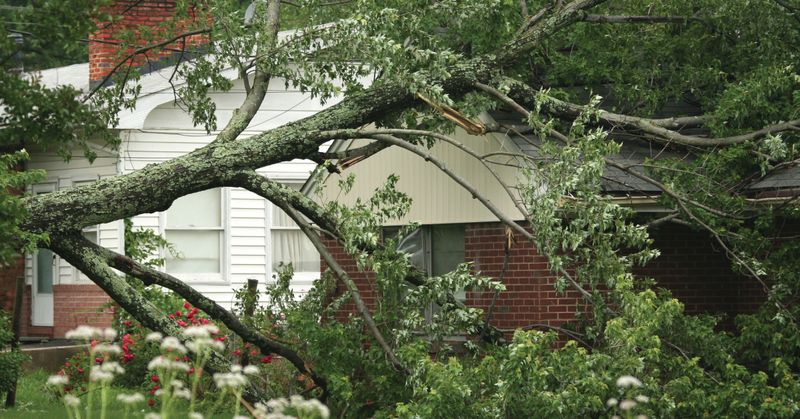
A fence may not show the property line
© Feenstra & Associates Inc.

Fences wander. One may sit a foot inside your yard, straddle the line, or follow a boundary that neighbors have argued about for years.

The fence you see is only a clue, and it is not proof.

Michigan’s fence viewer statute says fence viewers do not determine boundary locations. Boundary disputes are handled under state law, not by a fence viewer’s opinion.

That statute does not settle any particular dispute, and it should not be read as doing so.

A vine that looks like it has crossed your fence might still be growing on the neighbor’s land. A vine that seems to be on the neighbor’s side might actually be rooted on yours.

You cannot tell from the fence alone.

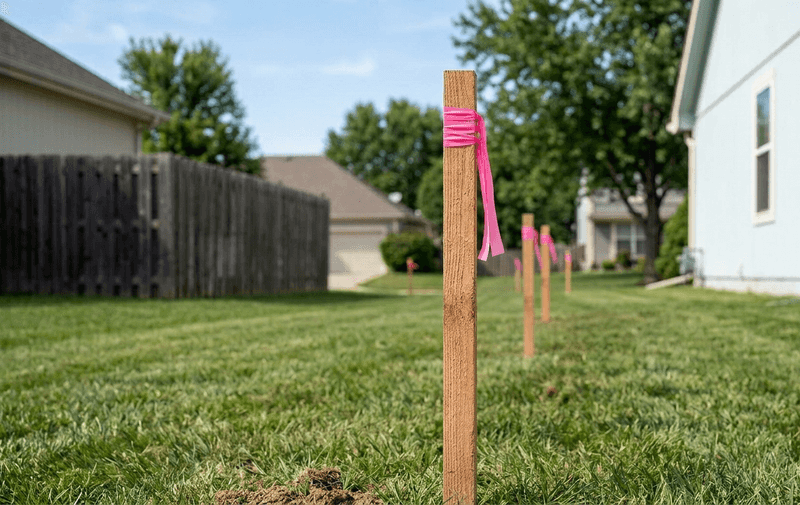
So shift your attention from the fence to the parcel line. Look at your deed, your closing documents, and any survey you received when you bought the home.

Survey markers, often metal pins, may also help, though a licensed surveyor is the dependable way to confirm where the line runs.

Where the plant grows changes the next step
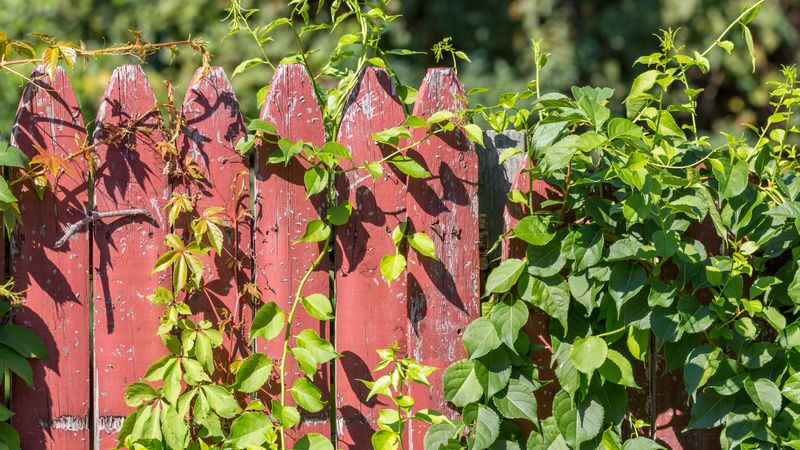
Where the plant grows changes the next step
© Gardening Know How

Start with the easiest case. If the vine is entirely on your parcel, you are dealing with your own land.

Even then, identify the plant before you grab a tool.

Things get less certain when the growth crosses a line you cannot confirm. The same is true if reaching it means stepping onto the neighbor’s land, or if the plant may be rooted or owned over there.

The Newberry decision warns against cutting past the division line without permission, though it was a tree-branch case.

Nothing in the branch cases promises a right to cut a vine back to its base. They do not promise a right to enter a neighbor’s yard or cut on the neighbor’s side.

They do not allow you to damage a plant your neighbor owns.

Take dated photos of the growth from several angles. Hold off on cutting beyond the apparent boundary until you know where the line is and whose plant it is.

If you are unsure about the boundary question, treat the line as uncertain, and leave questions of ownership and liability to a professional.

The weed law covers listed plants and a local process
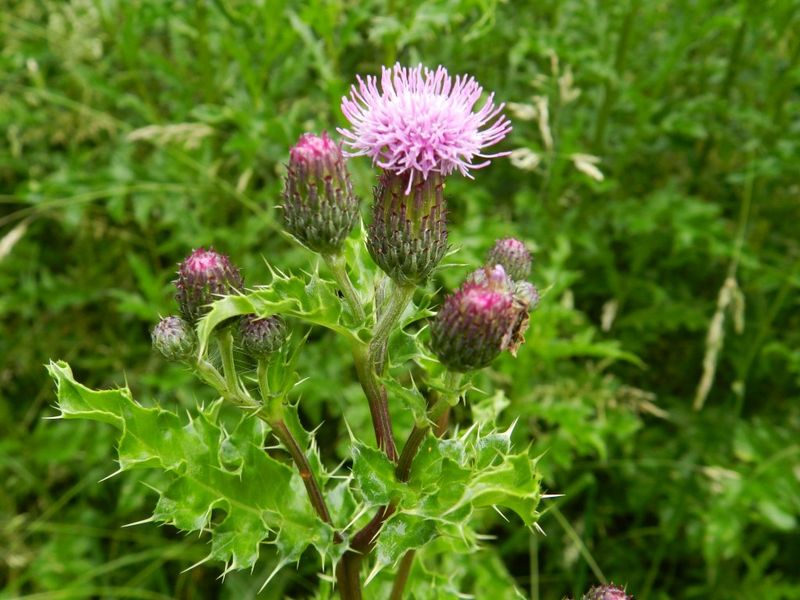
The weed law covers listed plants and a local process
© Worth it Places

Some people assume any pushy vine counts as a legal weed. Michigan’s noxious-weeds statute does not work that way.

Section 247.62 lists specific plants, including Canada thistle, dodders, field bindweed, giant hogweed, poison ivy, and poison sumac. It also lets a local governing body classify another plant as a common nuisance under the act.

Being aggressive, invasive, or just unwanted does not automatically put a vine on the list.

The process is run by government officials. Under Section 247.64, local officials can give notice and arrange destruction of qualifying noxious weeds.

The act also allows local ordinances for control in specified subdivided areas, as described in Act 359 of 1941.

None of that is a general permission for neighbors to remove each other’s plants. It is a limited public process.

If your vine might be on the list, call your city, village, or township office. Ask whether a local designation or ordinance applies and how complaints are handled.

Take extra care with possible poison ivy
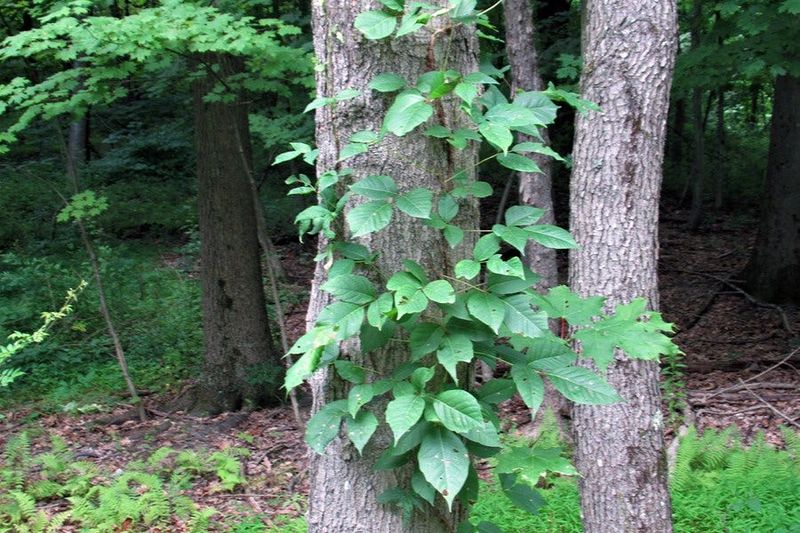
Take extra care with possible poison ivy
© Penn State Extension

Most vines are harmless to touch, so there is no need to fear every green tendril. Poison ivy is the specific exception.

Michigan’s noxious-weed list includes it.

Identify the plant before anyone handles it. If it may be poison ivy, MSU Extension guidance advises covering exposed skin and wearing waterproof gloves.

Plant material should go in a bag.

Never burn it. The oil that causes the rash, called urushiol, is in all parts of the plant.

It can stay on tools, clothing, and dead plant material, and smoke from burning can expose people through the air.

Do not pull, mow, or burn a vine you cannot identify. If you think poison ivy is on the neighbor’s side, the same boundary caution applies.

Safe handling does not give you permission to cross the line.

Document the growth and check the line
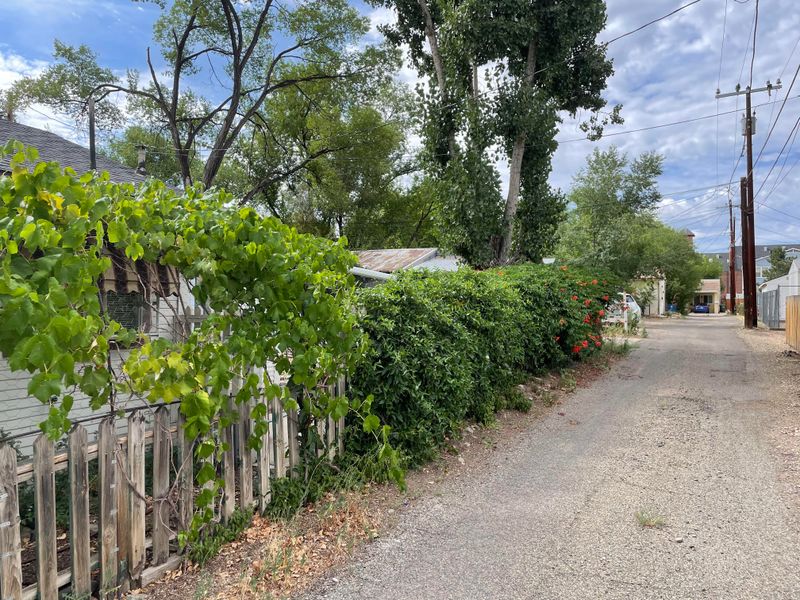
Document the growth and check the line
© Reddit

Here is a practical order of steps. Photograph the growth with dates.

Identify the plant before touching it. Confirm the property boundary rather than trusting the fence.

Then check your local rules if the plant could fall under the noxious-weeds process. Do not enter your neighbor’s land or cut across an uncertain line because someone claimed vines can always be cut.

These steps are precautions, and they will not settle every boundary or ownership dispute. A calm conversation with your neighbor often does more than any pair of shears.

Share this story
NL

Written by

Nora Lindqvist

More from Nora Lindqvist →

About Gardening Latest

Gardening Latest provides in-depth guides to maintaining and enhancing your garden and backyard. Learn how to make the most of the space you have and create a beautiful garden.

More about us →

Latest stories

  • California GardeningIf a Gray Fox Keeps Trotting Through Your California Yard This Winter, Here’s What It’s After

    If a Gray Fox Keeps Trotting Through Your California Yard This Winter, Here’s What It’s After

    11 hr ago
  • Arizona GardeningWhen a Gray Fox Trots Through Your Arizona Yard This Winter, It’s on a Mission

    When a Gray Fox Trots Through Your Arizona Yard This Winter, It’s on a Mission

    12 hr ago
  • Texas GardeningNeighbor Vines Crossing Into Your Texas Yard: Texas Tree-Branch Guidance Is Clear, but the Answer for Vines Is Less Settled

    Neighbor Vines Crossing Into Your Texas Yard: Texas Tree-Branch Guidance Is Clear, but the Answer for Vines Is Less Settled

    12 hr ago
  • Wisconsin GardeningWisconsin Neighbors Fight Over Snow Piled on Their Property, and Here’s What the Law Actually Says

    Wisconsin Neighbors Fight Over Snow Piled on Their Property, and Here’s What the Law Actually Says

    12 hr ago
  • Missouri GardeningYellow Jackets Nesting Near Your Missouri Home? This Is What You Should Do First

    Yellow Jackets Nesting Near Your Missouri Home? This Is What You Should Do First

    12 hr ago

Gardening by state

Stories for your state, and the hardiness zone most of it gardens in.

Keep exploring

Read next

All Michigan Gardening →
Michigan GardeningCome Fall, Venomous Critters In Michigan Show Up Much Closer To Home Than You Think
Michigan Gardening

Come Fall, Venomous Critters In Michigan Show Up Much Closer To Home Than You Think

14 hr ago
Michigan GardeningAfter a Michigan Storm Drops Your Neighbor’s Tree on Your Property, Here’s Who Actually Pays
Michigan Gardening

After a Michigan Storm Drops Your Neighbor’s Tree on Your Property, Here’s Who Actually Pays

16 hr ago
Michigan GardeningThose Coyotes Howling Near Your Michigan Home in the Middle of the Night Are Sending Real Messages
Michigan Gardening

Those Coyotes Howling Near Your Michigan Home in the Middle of the Night Are Sending Real Messages

23 hr ago

More from Michigan Gardening

  • Michiganders Who Eat Celery Every Day Are Discovering What It Actually Does To Their Bodies

    Nov 24
  • Why Deer Are Bedding Down in Your Michigan Yard Right Now and What It Tells You

    Nov 23
Back to top

Leave a response Cancel

Your email address stays private. Required fields are marked with an asterisk.

Gardening Latest

In-depth guides to maintaining and enhancing your garden and backyard: how to make the most of the space you have, and how to make it beautiful.

  • Facebook
  • X
  • Pinterest
  • YouTube

We may earn a portion of sales from products or services that are purchased through our site as part of our affiliate partnerships with retailers.

Explore

  • About GardeningLatest.com
  • Contact Us
  • Terms and Conditions
  • Privacy
  • Editorial Note:
  • FTC Disclosure

Newsletter

New garden guides and seasonal tips, straight to your inbox.

We’ll email you a link to confirm. Unsubscribe any time.

Almost there! Check your inbox and tap the link to confirm.

© 2026 Gardening Latest. All rights reserved.

Back to top