
Yes, those howls and yips outside your window are real communication between coyotes. Coyotes use calls to stay in touch and to mark out their space.
You cannot translate a single howl into words, though, and a chorus can fool your ears. Here is what the sounds can tell you, what they cannot, and how to respond sensibly.
Coyote calls communicate, but they do not come with a translation
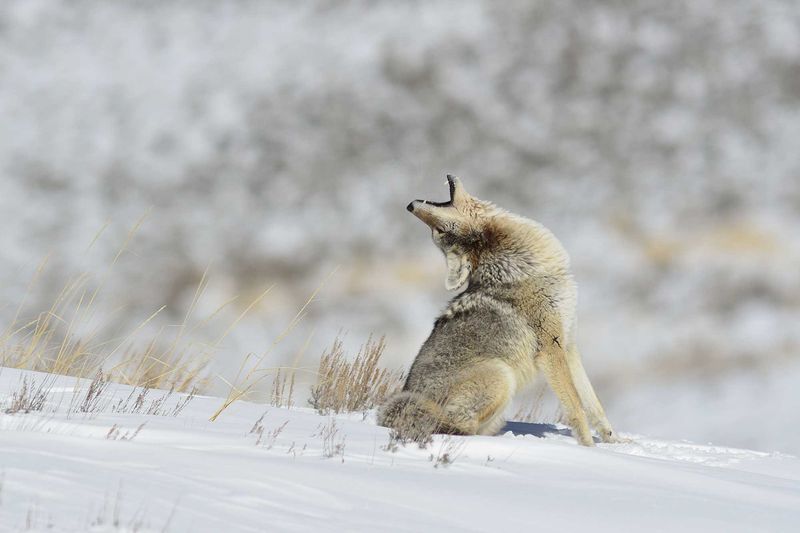
Howls, yips, and barks are all ways coyotes talk to one another. Researchers describe broad jobs for these sounds, such as staying in contact and territory-related signaling.
A study of coyotes in Michigan’s Upper Peninsula described resident howling as something that may help maintain territory, and it tested how coyotes responded to broadcast calls.
Knowing the general purpose of a sound is very different from knowing what a particular coyote means at a particular moment. Nothing in that research gives a single meaning for every howl you happen to hear from your porch.
People sometimes use the phrases “territory call” or “pack check-in” as casual shorthand, and that is fine as long as nobody treats them as a confirmed explanation for the chorus outside.
Coyotes also have more than one way to communicate. A 1978 lexicon of coyote vocalizations compared their sounds with those of other canids, which shows how varied the vocal toolkit is.
Body language and scent matter too, and you cannot hear either of those from your bed.
So the honest answer to a late-night chorus is this: the animals are talking, but you are overhearing only part of the conversation. A howl alone does not tell you that coyotes just made a kill, are hunting together, or are heading toward your house.
It simply tells you coyotes are somewhere out there, communicating, which can feel eerie but is ordinary wild-animal behavior.
A chorus can sound bigger than it is
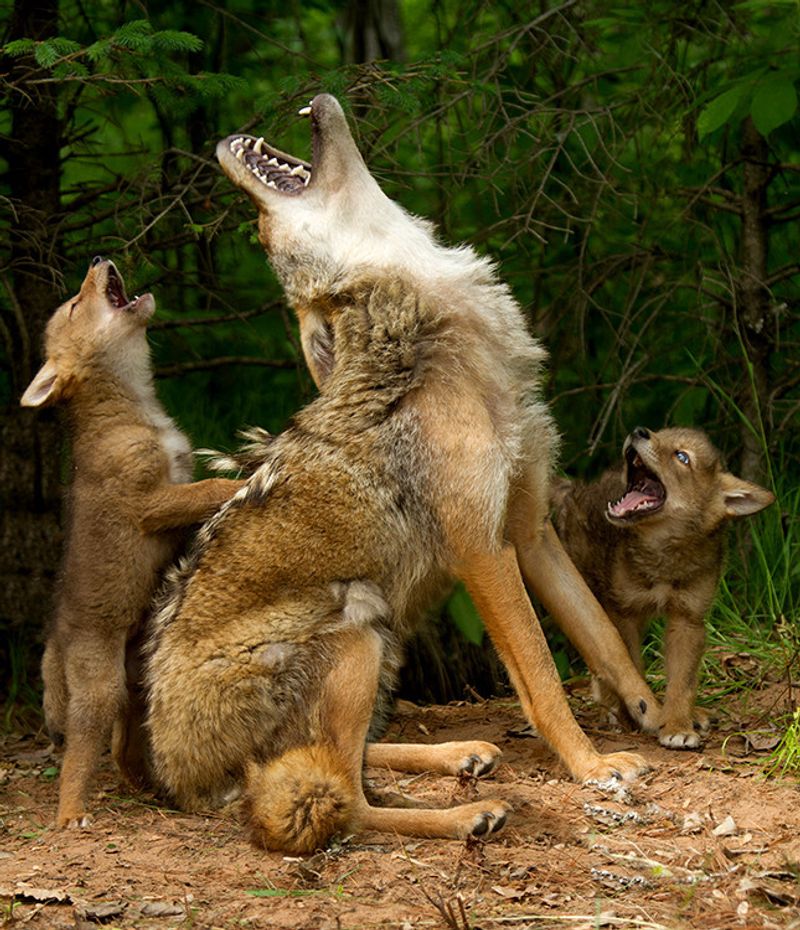
Picture a burst of yips and howls drifting across a quiet neighborhood. It can sound like a crowd of animals, but your ears may be playing tricks on you.
In a 2017 study on how people perceive coyote group size, 427 participants listened to recordings of one to four coyotes. Listeners consistently overestimated the number, by nearly twofold.
The reason is easy to imagine. Coyote voices overlap, rise and fall, and bounce around in open land, so a small number of animals can sound like many.
Your brain tries to count distinct voices, and that job gets hard when the sounds blur together.
It helps to be clear about what this result does and does not say. The people in the study judged recordings, not real Michigan neighborhoods.
It does not mean every chorus comes from just one or two coyotes, and it cannot tell you how many coyotes live near your street or township.
What you can take from it is a practical caution. If you hear a wild burst of calls at 2 a.m., resist the urge to count voices or guess at the size of a group.
The sound is not a reliable headcount, and a loud chorus is not a sign that something unusual or dangerous is going on.
When Michigan residents are more likely to notice coyotes
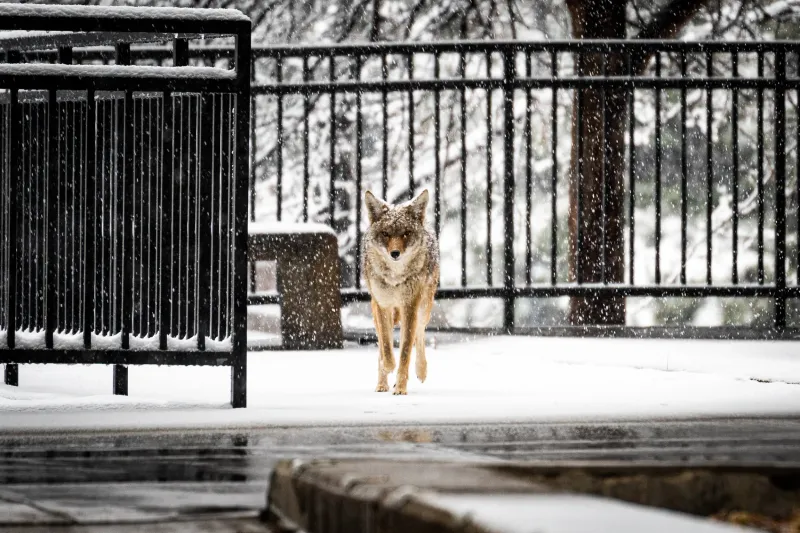
Seasons shape when coyotes show up in our lives. According to the Michigan DNR’s coyote species page, breeding runs from January through March, and people are more likely to see and hear coyotes during that period.
That is a statement about when you may notice them, not a rule that every winter howl is a mating call.
The calendar keeps going after winter. In spring and summer, mated pairs typically occupy a home range with four to seven pups, and adults may be more visible while caring for them.
Then in fall, the young coyotes leave the den site, and those dispersing animals may also be more visible.
Each of these stages is its own chapter. Winter breeding is one thing, spring and summer pup care is another, and fall dispersal is a third.
Pup care should not be used to explain a sound you hear in January, and a February chorus is not proof of anything specific about what those animals are doing.
Think of the seasons as background context. They help explain why you might spot a coyote at the edge of a field in March or notice more activity at certain times of year.
They do not decode a single call, so treat them as a rough guide to noticing coyotes rather than a translator for what you hear.
Coyotes live in urban and rural Michigan

From the suburbs around Detroit and Grand Rapids to forests Up North, coyotes are part of Michigan’s landscape. The Michigan DNR notes that they live in both rural and urban areas and are active during the day as well as at night.
A coyote passing through a green space near your neighborhood is not a strange event.
That includes daylight sightings. The DNR’s guidance on coyotes says that seeing one near homes, even in the daytime, is normal and does not by itself indicate aggression.
A coyote crossing a yard or trotting along a trail is usually just going about its business.
It also means a neighborhood chorus is not a message aimed at residents. Hearing coyotes does not suggest they are targeting people or acting unusually.
Plenty of Michigan communities share space with coyotes without ever noticing, and the nights you do hear them are simply the nights the sound carries.
The useful line to draw is between ordinary presence and an actual approach. A coyote that keeps its distance and moves along is behaving normally.
Concern begins only when an animal comes toward you or shows aggressive behavior, which is rare, and the next section covers what to do then.
If a coyote approaches, make space without running
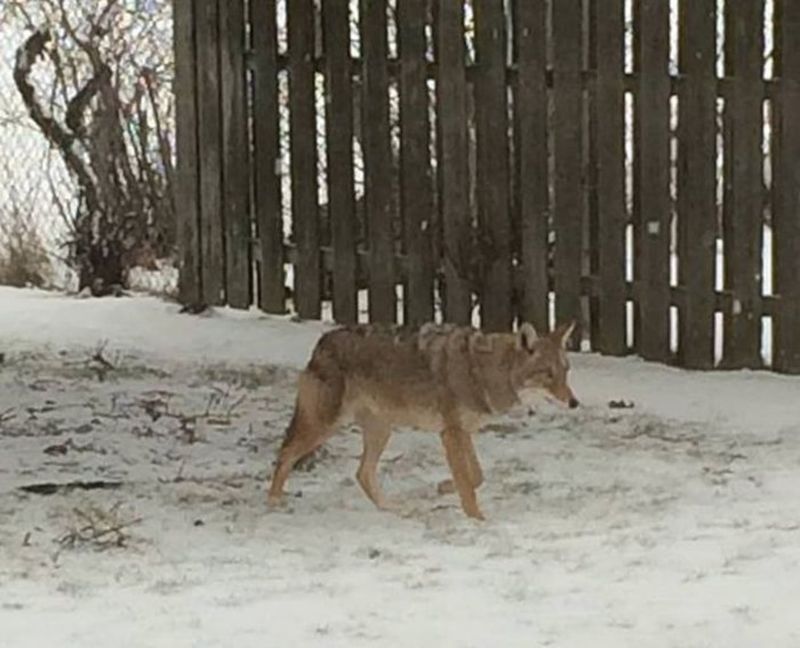
A distant howl is not an approach, but a coyote that walks toward you is a different situation. The Michigan DNR’s coyote guidance gives a clear sequence to follow.
Having the steps in your head ahead of time makes them easier to use in the moment.
First, make yourself appear large. Stand tall, raise your arms, and open your jacket if you have one.
Second, make noise by shouting, clapping, or using a whistle.
Third, walk away while facing the coyote so you can keep an eye on it. Do not run.
If children are with you, put yourself between them and the animal.
Rare aggressive behavior, such as snapping, growling, or snarling, should be reported to the DNR Report All Poaching line at 800-292-7800. Most coyotes want nothing to do with people, so an animal acting this way stands out and is worth reporting.
Notice what this advice is built around. It is for an animal that is actually coming toward you, not for a sound carried on the night air.
Hearing a howl from far away is not a reason to head outside waving your arms.
Keep food and pet attractants out of reach
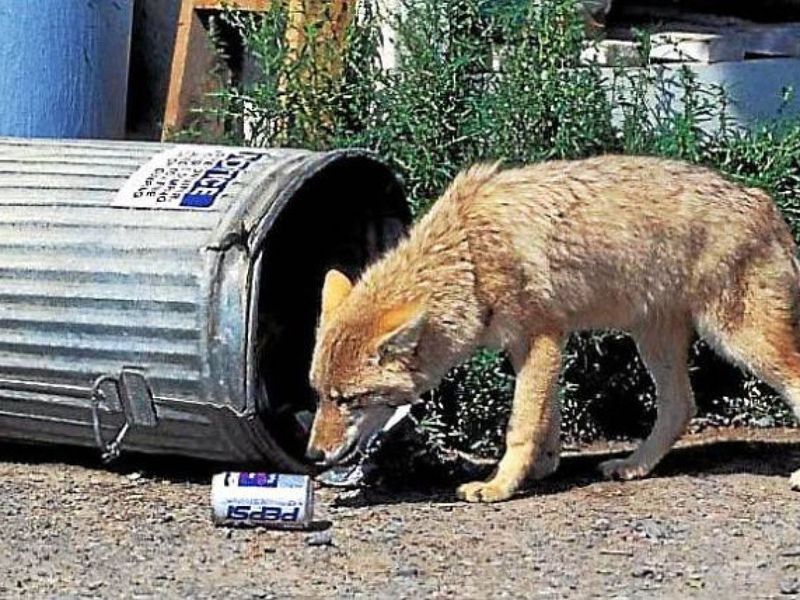
The best way to make your yard less interesting to coyotes is to take away what might draw them in. The Michigan DNR’s nuisance wildlife guidance recommends securing garbage, compost, and pet food.
Use bins with tight lids, keep compost enclosed, and bring pet bowls inside after meals.
Never feed coyotes, on purpose or by accident. Food teaches them that yards are a source of meals, which can erode their natural wariness of people.
Keeping that wariness intact is good for both coyotes and neighbors.
Pets need a little planning too. Supervise small pets when they are outdoors, and keep dogs leashed or enclosed.
A quick check of the yard before letting a small dog out at night is a simple habit.
Some people also try hazing, which means using noise and movement to scare a coyote away. Its effectiveness is not guaranteed and may be limited or brief.
USDA’s wildlife research center notes that controlled studies have been limited, and a captive-coyote experiment found responses were shaped by animals’ earlier experiences with people.
That is why prevention stays at the center. Hazing may be a tool when a coyote approaches, but a yard with nothing to eat gives coyotes little reason to linger.
Treat a distant howl as communication, not a warning
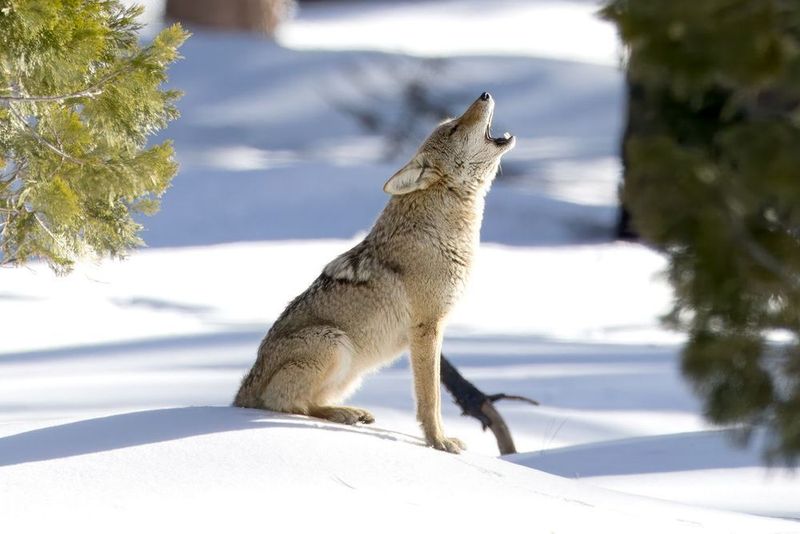
Coyotes really are talking when they howl, as research on their vocal responses shows, but you cannot pull a specific message out of the sound alone. A howl in the distance is not, by itself, evidence of danger.
If a coyote ever does approach you, turn to the Michigan DNR encounter guidance described above.
Until then, the howl is simply a wild conversation you are lucky enough to overhear.
Share this story