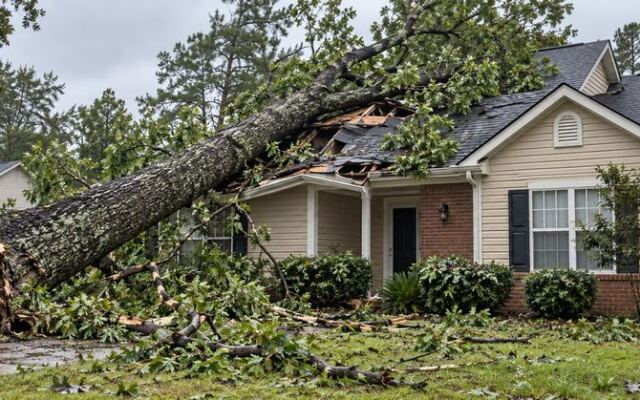
When a neighbor’s tree lands on your New Jersey property, the first bill often goes to your own homeowners insurance, not to your neighbor. The tree owner pays only if a court or insurer finds they acted negligently or unreasonably.
That difference can save you weeks of arguing. Here is how to stay safe, protect your claim, and understand who may end up paying.
Your first step may be your own insurer
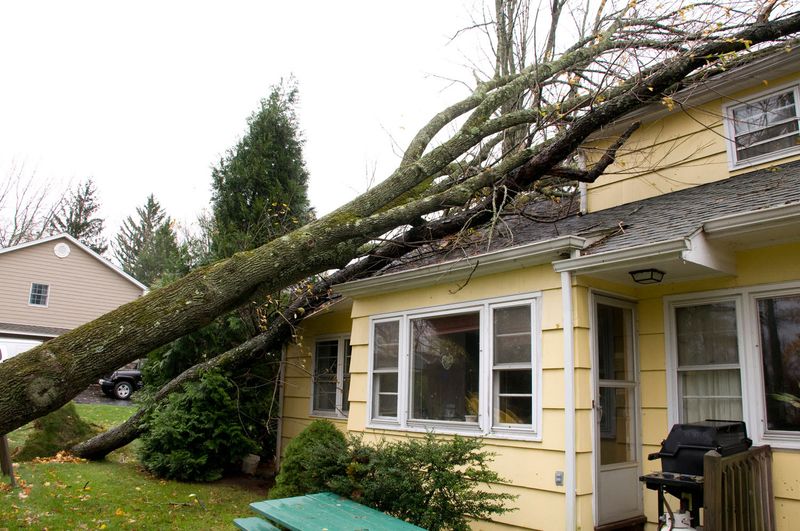
If a fallen tree caused covered damage to your house or another insured structure, your own homeowners policy may be the first place to seek payment. The Insurance Information Institute explains that a standard policy generally covers this kind of damage from a tree felled by wind, lightning, or hail, no matter who owned the tree.
That does not settle whether your neighbor was at fault. A claim on your own policy is a first-party claim.
A claim against the tree owner is a separate matter, and neither one guarantees payment.
New Jersey does not make a tree owner pay just because the tree stood on their land. Under Burke v.
Briggs, liability depends on the owner’s conduct and the facts of the case.
Repair coverage, tree removal costs, and other losses can each follow different policy rules. The sections below walk through each one so you know what to ask your insurer.
Keep clear of wires and unstable trees
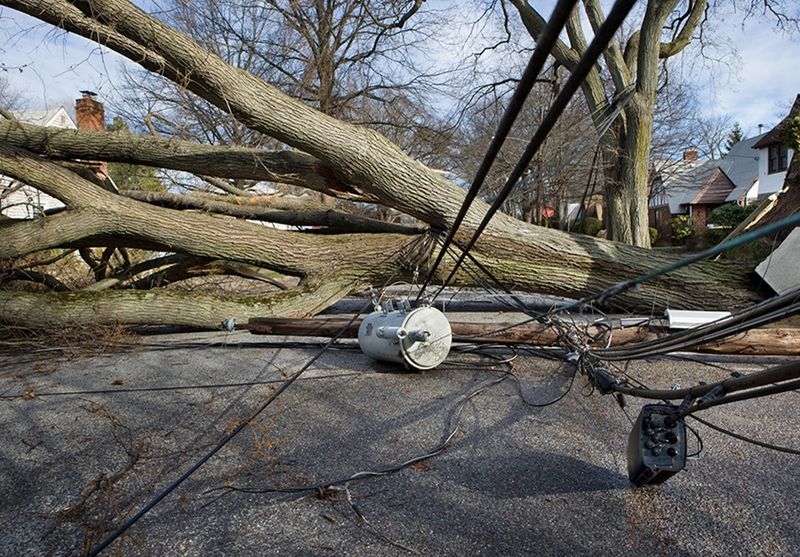
Before you think about money, think about safety. Storm cleanup can hide energized lines, and the New Jersey Department of Health says homeowners should leave downed-tree work to licensed tree-care professionals.
PSE&G advises staying at least 30 feet away from downed wires and reporting them right away. Treat every wire as live, even if it looks dead.
Never try to cut or remove a tree that is tangled in power lines. A tree under tension can spring or shift without warning, and a tree that looks steady may not be.
Keep children and pets away from the area. Do not climb, cut, or move the tree yourself.
Call a licensed professional and let the utility handle anything involving wires.
The tree owner’s conduct matters
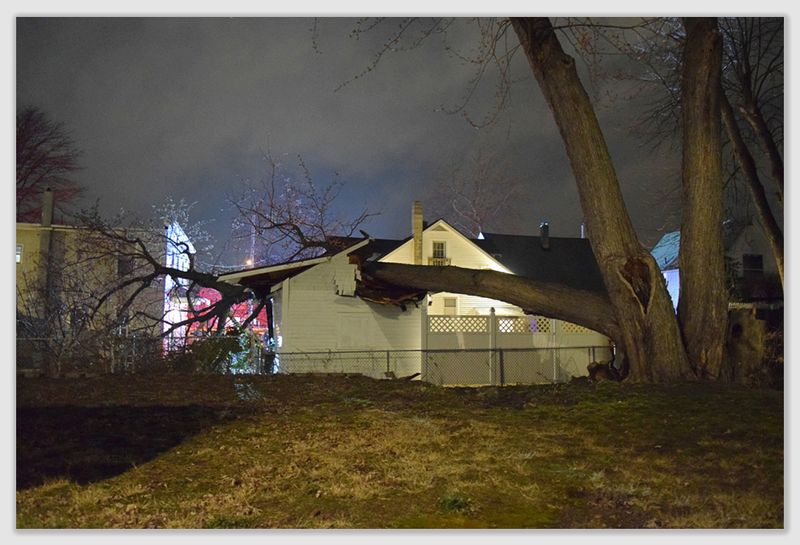
Many people assume the neighbor pays because it was their tree. New Jersey law does not work that way.
In Burke v. Briggs, the Appellate Division rejected strict liability just because a tree from one property fell onto another.
Instead, the question is whether the owner acted negligently or unreasonably. A fact-finder looks at the full picture rather than one checklist item.
Several circumstances may matter. One is how dangerous the tree appeared to be.
Another is what a reasonable inspection might have revealed. A third is what could have been done to prevent the fall.
Picture a tree with a leaning trunk, mushrooms at its base, and large dead limbs that neighbors had mentioned for years. Those facts may point toward unreasonable conduct.
A healthy tree that a sudden storm snapped may look very different.
Burke does not say a tree must be dead, and it does not require written notice in every case. It also does not say the homeowner whose yard received the tree always pays.
Where the tree stood does not settle liability by itself, and the outcome turns on the facts.
Preserve evidence about the tree’s condition
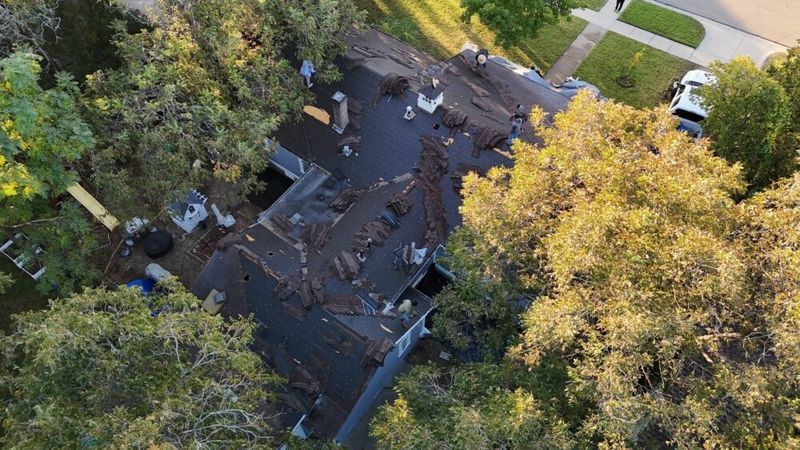
Evidence fades fast after a storm. Take dated photos of the fallen tree, the break point, the roots, and the damage before anything is moved, as long as it is safe to do so.
Save any earlier messages, emails, or complaints about the tree. Keep arborist reports, and gather any records of past damage or maintenance you can find.
Older photos that show dead branches or leaning can also help.
This material may help show what the owner knew or what a reasonable inspection could have revealed. That matters under Burke’s fact-specific standard.
No single item automatically proves liability, though.
For an example of how courts weigh proof, see Sabbagh v. Muller.
It is an unpublished Appellate Division decision that discusses whether the plaintiff proved a breach of reasonable care and causation. It is an illustration only and not a binding rule.
If a dispute looks likely, consider talking with a New Jersey attorney. Good records make that conversation far more productive.
Check what your policy covers
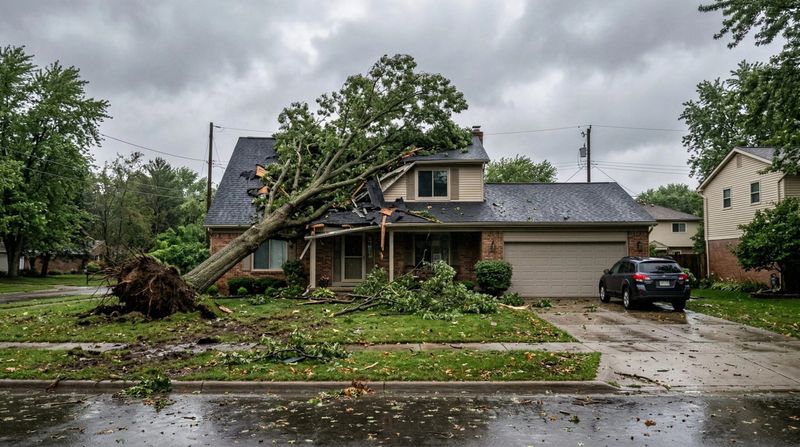
Policy language drives the answer. According to the Insurance Information Institute, a standard homeowners policy generally covers damage to an insured home or other insured structure from a tree felled by wind, lightning, or hail, regardless of who owned the tree.
Three things control the result: the cause of the loss, the wording of your policy, and the property that was damaged. A covered storm cause and an insured structure are the usual starting points.
New Jersey’s consumer guide to insuring your home describes how limits apply to trees and shrubs and to debris removal. Read your declarations page and endorsements, and ask your agent about deductibles.
You may also hear the word subrogation. It means your insurer may later try to recover what it paid from another party, such as a tree owner or their insurer, when the evidence supports that person’s liability.
Subrogation is a possible later step, not a promised outcome. Your own claim does not depend on it, and it is separate from what your insurer pays you now.
Tree removal may have a separate limit
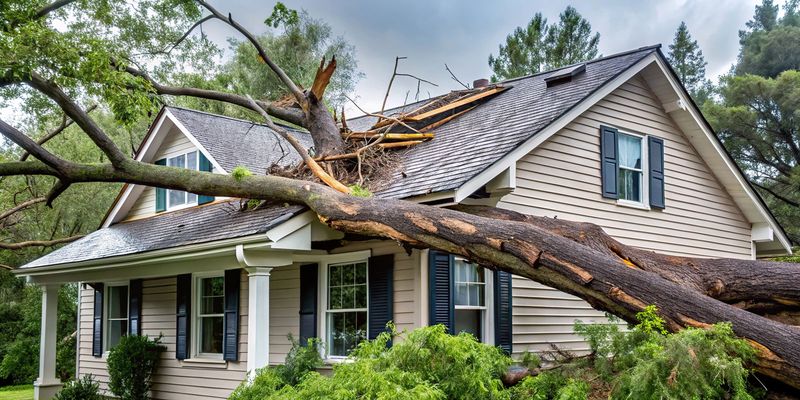
Fixing the roof and hauling away the tree are two different costs. Repair coverage pays for damage to an insured structure, while removal usually falls under a separate and more limited provision.
The Insurance Information Institute notes that removal coverage is generally limited and varies by policy. If the tree did not hit an insured structure, debris removal is generally not covered.
Some policies make exceptions, such as when a fallen tree blocks a driveway or an accessibility ramp. Whether yours does depends on its wording.
Do not rely on one dollar figure you saw online. New Jersey’s consumer guide separates limits for damaged trees and shrubs from debris removal after a covered loss, and neither is a guarantee that every cleanup bill is paid.
Detached structures, fences, and landscaping may also be treated differently from the main house. Ask your insurer in writing what applies before you sign a tree service contract, and use a licensed professional for the work itself.
Vehicles and public trees can raise different questions
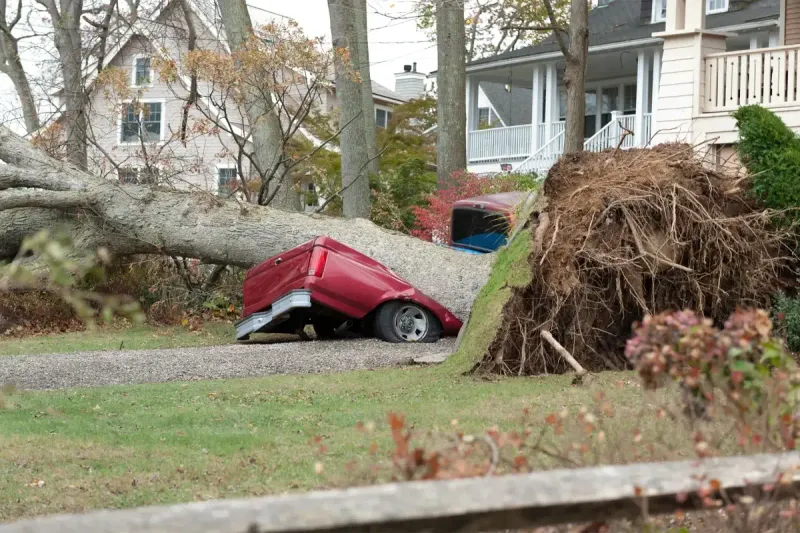
If a falling tree hit your car, your homeowners policy is probably not the place to look. New Jersey’s storm-claims guidance points to optional comprehensive auto coverage for falling-tree damage to a vehicle.
Check whether your auto policy includes it.
Who owns the tree can change the questions too. A private neighbor’s tree, a municipal tree, a utility-managed tree, and a tree in a public right-of-way may each raise different issues.
Report a tree you think is public to your town or utility.
Towns also have tools for hazard trees. N.J.S.A. 40:48-2.13 authorizes municipalities to adopt ordinances requiring removal of dead or dying trees and debris after notice.
That is an authorization for local ordinances, not a statewide rule that assigns every private tree-fall bill to a neighbor. If a hazard remains next door, check your town’s code and ask the municipality how it handles complaints.
Report the loss and keep useful records
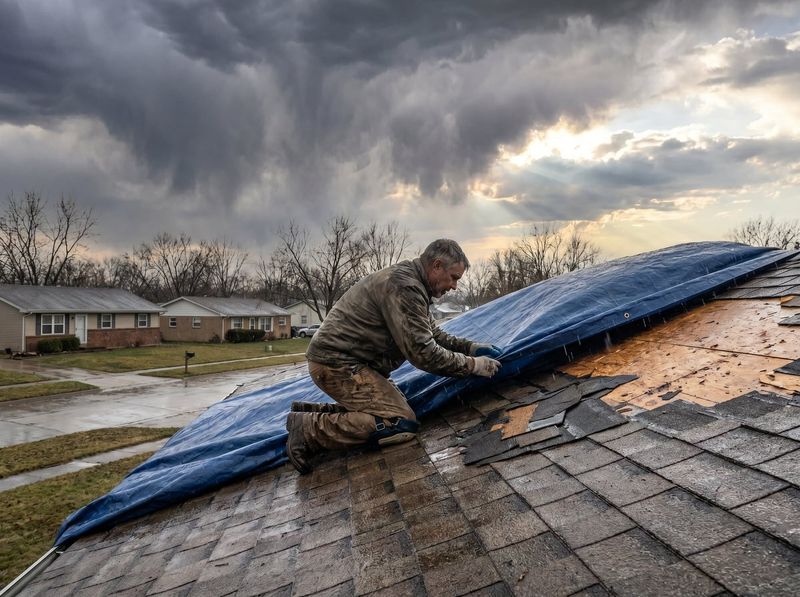
Call your insurer promptly. The New Jersey Department of Banking and Insurance advises policyholders to report a loss and ask what claim materials are required.
Make only the temporary repairs needed to limit further damage, such as tarping a roof, and keep every receipt. Hold on to damaged property until the insurer has had a chance to inspect it.
Keep what you gathered about the tree too: dated photos, earlier complaints, and any arborist reports. That record may matter if the question of the owner’s conduct under Burke comes up later.
Your insurer decides coverage under your policy and may weigh whether to seek recovery from someone else. Tree ownership alone does not decide who pays, and neither does a homeowner’s assumption.
Good paperwork is the one part of this process you fully control.
Share this story