Birds really do plant new Chinese tallow trees in Florida yards, and that is why small seedlings can keep showing up even after you clear them. This tree, also called the popcorn tree, spreads its seeds far beyond where it grows.
Pulling can still work, but it helps to know what kind of growth you are dealing with. Here is how to identify it, remove it, and keep it from coming back.
Chinese tallow is the strongest match, but check before acting
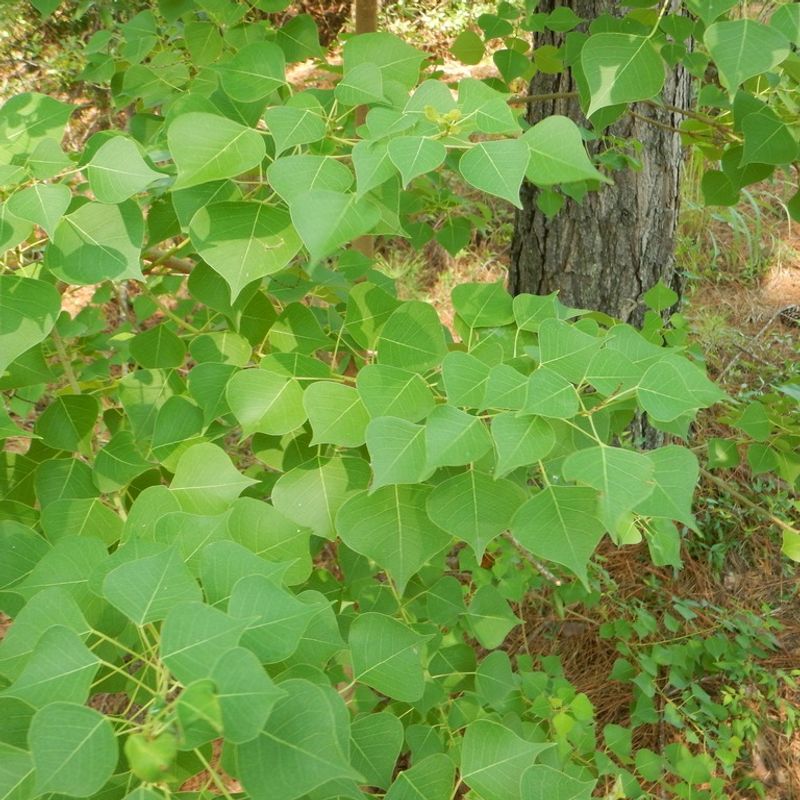
If you have found unfamiliar young trees in your yard, Chinese tallow (Triadica sebifera), also called popcorn tree, is the best-supported match for the story behind this article. A description alone cannot confirm what is growing in your yard, though.
Treat it as a strong lead and confirm before you act.
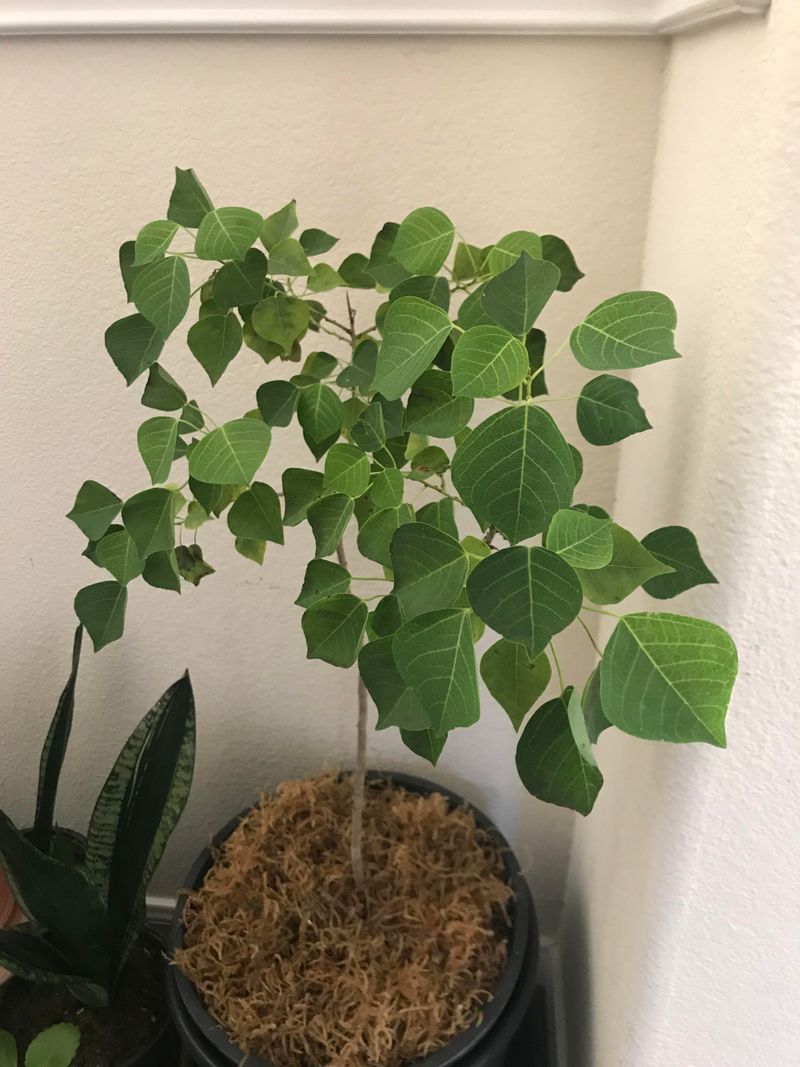
Start with the leaves. They are simple, meaning each leaf blade is a single piece, and they are arranged alternately along the stem rather than directly across from each other.
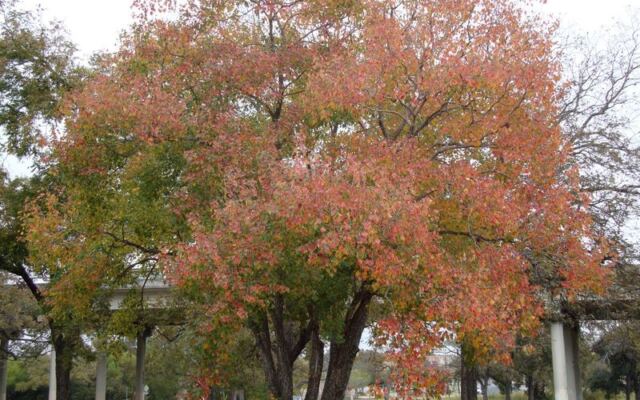
In fall, the leaves can turn red, which makes the tree stand out in a yard that otherwise looks green.
Next, look for the fruit. According to the Florida Department of Agriculture and Consumer Services, mature brown capsules have three parts and split open to show three white seeds that look like popcorn.
That is where the nickname comes from. Damaged stems and leaves also ooze milky sap, which is another clue.
Not every young plant will have fruit or fall color, so a single clue is not enough. If you are unsure, contact your local UF/IFAS Extension office before you pull, cut, or treat anything.
Extension staff can look at a sample or photos and help you avoid removing the wrong plant. Once you know what you have, the rest of the plan gets much easier, and the guidance in UF/IFAS invasive tree herbicide advice will make more sense for your situation.
Birds spread the seeds, but they are not the whole story
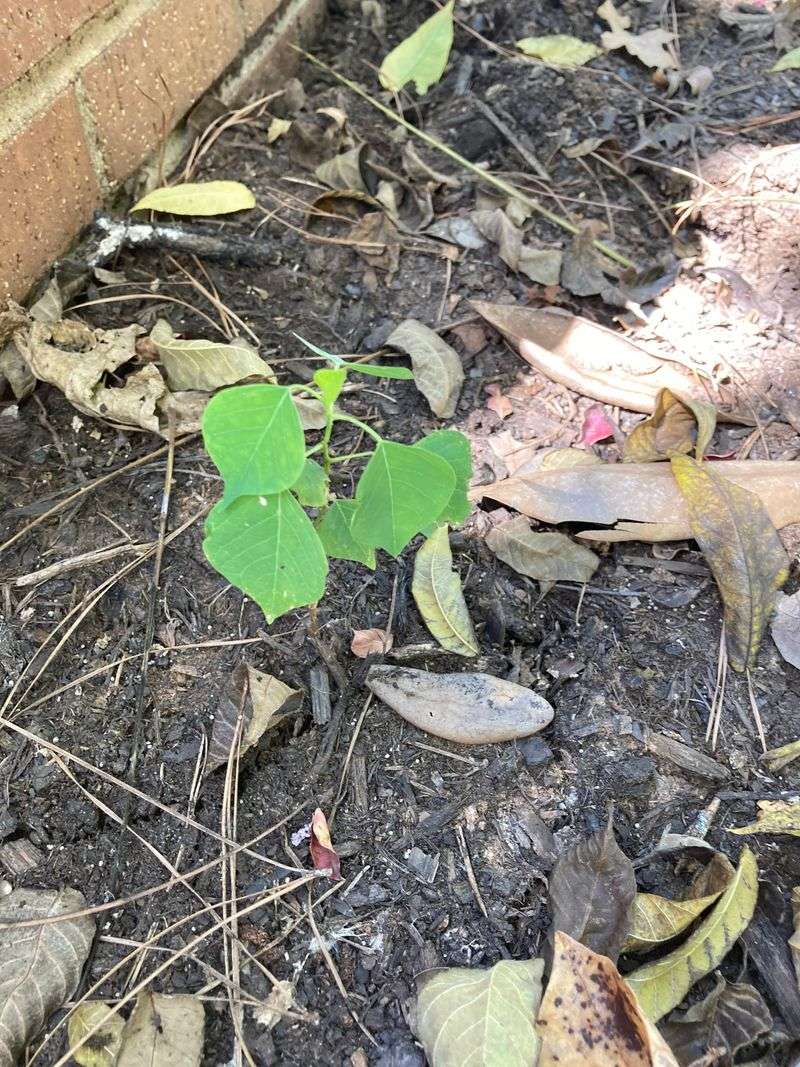
Birds are a big reason this tree turns up in surprising places. UF/IFAS Gardening Solutions notes that birds eat the seeds and carry them to new spots.
A bird can perch on a fence, a power line, or a shrub and drop seeds nearby, which explains seedlings along fence rows and under other plants.
Water is another route. The Florida Fish and Wildlife Conservation Commission points to water as a way the seeds travel, and the state agriculture department agrees.
Rain, drainage ditches, and low spots in a yard can move seeds a surprising distance.
Those two routes can explain a lot. A seedling may appear after a nearby tree has been removed, because seeds were already on the ground or arrived from a neighbor’s tree.
It may also show up far from any obvious source, because a bird or running water brought the seed there.
There is one limit to keep in mind. Nobody can look at a single seedling and say exactly how its seed arrived, so it is best not to blame birds for every new plant.
Some new growth comes from other sources, which is the next thing to check.
Is it a seedling, a root sucker, or stump regrowth?
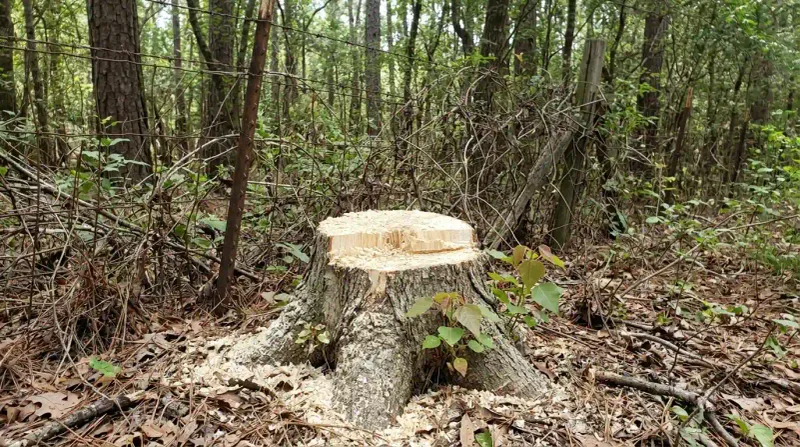
Three different things can make new green growth appear, and they are not interchangeable. A seedling grows from a seed.
A root sucker is a shoot that rises from an existing root. Stump regrowth is a sprout from a cut tree’s base.
Dig around the base of the plant, or look closely at where it emerges. A seedling usually has its own small root system and a single thin stem.
A shoot that pops up from a root will be connected to a larger root running through the soil. Sprouts clustered around a cut stump are coming from the stump.
Chinese tallow can spread by seed and can also sucker from roots, according to the UF/IFAS plant profile. The Florida Fish and Wildlife Conservation Commission also describes how the species regrows after damage.
Ask yourself a few simple questions. Is there an established tree or a stump nearby?
Did the growth appear in a spot where seeds could have landed? Do the roots lead somewhere?
These clues help, but they will not always settle it, especially when roots are tangled or a stump is hidden under mulch.
The answer matters because each route calls for a different response. Young seedlings can be pulled, while root and stump shoots point to a bigger plant that needs a different approach.
If you cannot tell, your local Extension office can help.
Pull young seedlings, then keep checking
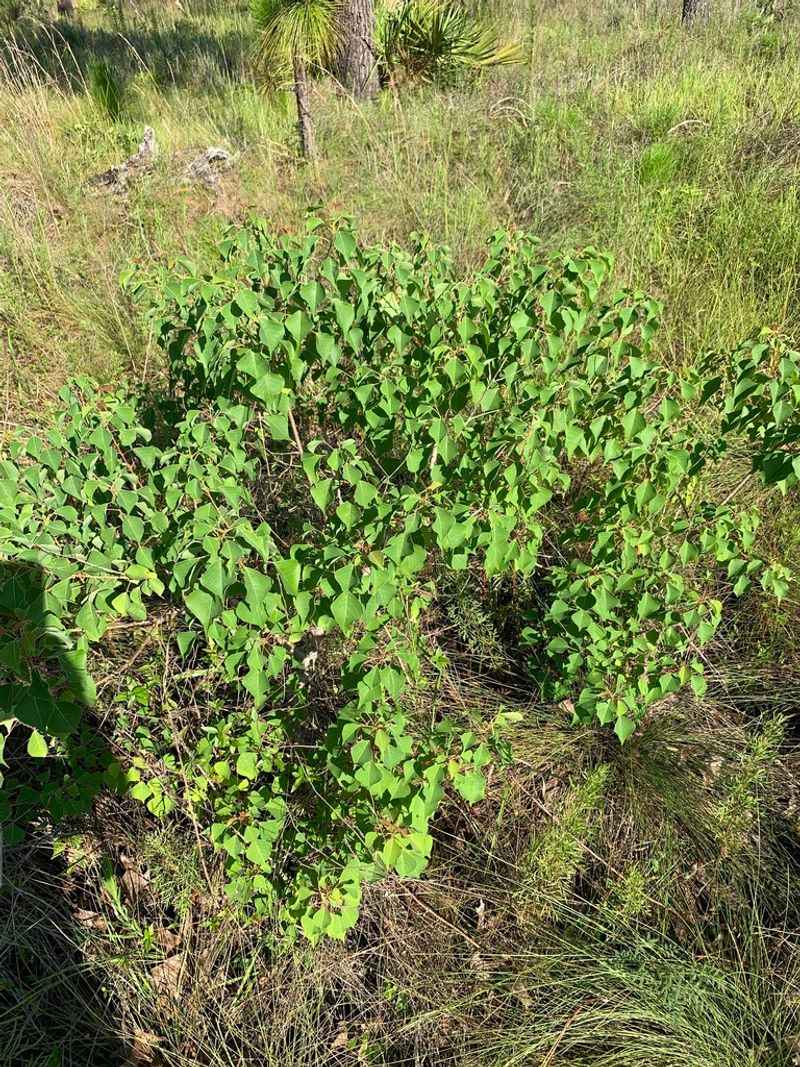
Good news: hand-pulling works well on small seedlings. UF/IFAS recommends pulling young plants before they mature.
Damp soil after rain makes the job easier.
Grab the seedling low, near the soil, and pull the whole plant out with its roots. Snapping off the stem leaves the roots behind, and that can leave the plant a chance to regrow.
If the roots snap, dig down and remove what you can. Wear gloves, since the plant has milky sap.
Then check the spot again. Seeds may still be arriving from birds or water, and seeds already in the soil can sprout later.
A new seedling does not mean your pulling failed. It means more seeds have germinated, and you can simply pull those too.
How long will that go on? Nobody knows.
UF/IFAS says the time needed to use up the seed supply in the soil is unknown, and seeds may stay viable for many years. So there is no reliable timeline to count on.
A practical habit is to glance at the spots you cleared whenever you are out in the yard, especially under fences, trees, and along drainage paths. Catching seedlings while they are small keeps the work light.
That steady attention matters more than any set schedule.
A mature tree needs stump control, not just a cut
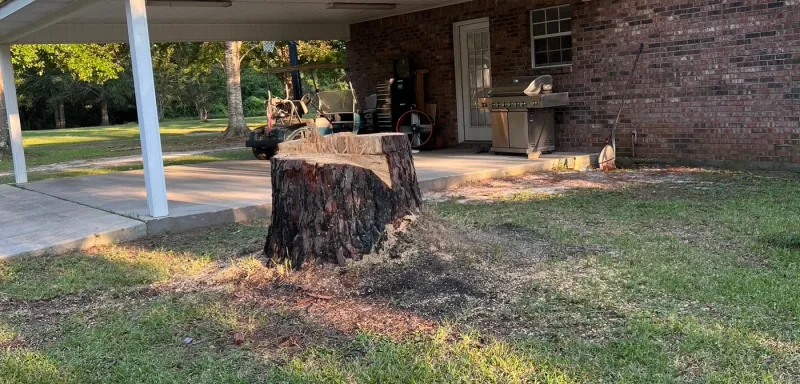
Pulling works for seedlings, but a mature tree is a different job. Cutting it down is only the first step.
An untreated stump can send up new shoots, and cutting alone is not complete control.
UF/IFAS advises cutting as close to the ground as practical, then treating the fresh stump to prevent resprouting. Timing matters here, because the treatment is meant for a freshly cut surface rather than an old one.
Which product should you use? That depends on your site, and this article will not name one or give a dose.
UF/IFAS publishes guidance on herbicides for invasive trees in home landscapes, and it is a good place to start. Your local Extension office can advise on what suits your yard.
The product label is the final word. As the EPA explains about pesticide labels, the label tells you where and how a product may be used, what protective equipment to wear, and which precautions to follow.
Read it fully before you buy and again before you use it.
If the tree is large, near power lines, or close to your house, hiring a professional is a sensible choice. Tree work can be dangerous, and there is no shame in handing it off.
Ask any contractor how they plan to treat the stump.
Handle sap and plant material with care
A few simple precautions go a long way. UF/IFAS describes the sap of Chinese tallow as poisonous.
The state agriculture department also notes the milky sap when it describes the plant.
The safe approach is easy to follow. Do not eat any part of the plant, and keep children and pets from chewing on leaves, stems, or seeds.
Wearing gloves while you work is a sensible habit.
There is also a legal side. Florida lists Chinese tallow as a noxious weed, and state materials prohibit certain activities such as planting and selling or distributing it.
That does not mean a homeowner is required to remove a tree on their property.
Moving plant material is where you should be careful. The state’s invasive plant laws describe restrictions on cultivating, introducing, and transporting listed weeds without a permit.
Before you haul branches, seeds, or roots off your property, check the rules that apply to you.
If you are unsure, call your local Extension office or the state agency. Keeping cut material on site until you know the answer is a simple way to avoid spreading seeds by accident.
Choose a Florida-friendly replacement
Once the tallow is gone, an empty spot is a good chance to plant something better. UF/IFAS lists buttonbush, Chickasaw plum, eastern redbud, and red maple as Florida-friendly alternatives.
Each one suits different conditions, so think about your yard first. How much sun does the spot get?
Is the soil often wet or usually dry? How big a plant do you have room for?
Your local Extension office can help match a tree or shrub to your site.
Buttonbush tends to suit wetter areas, while the others differ in size and form. Looking at a few at a nursery that sells Florida-adapted plants can help you picture how they will fit.
The overall plan is simple. Identify what is growing, match the control method to where it comes from, and keep checking for new seedlings instead of assuming one removal settles the matter.
A yard is never really finished, and a quick look now and then is part of owning one.
Share this story