A red fox crossing your Florida yard in winter may be out during its breeding season, since Florida red foxes breed in late fall or early winter. That timing gives you a helpful clue, but it does not tell you why one fox trotted past your fence.
Foxes also hunt, wander, and use suburban spaces all year. Here is how to make sense of what you saw and what to do about it.
Breeding season offers a seasonal clue

Winter evenings in Florida can bring a flash of rusty fur at the edge of the yard. One reason that sighting may happen then is timing.
Florida’s wildlife agency says red foxes in the state breed in late fall or early winter, so a December or January fox may be out during that stretch of the year.
A U.S. Forest Service review points the same direction.
It reports that red fox breeding generally runs from December to March and starts earlier farther south. That is a useful reminder that calendars from northern states do not match Florida’s.
The Florida profile is the better guide for the exact timing here.
Still, think of breeding season as background, not an answer. It is a plausible seasonal setting for a sighting, but it does not prove that mating brought a particular fox across your lawn.
That fox could just as easily have been checking for food or following a path it uses all the time.
It also helps to skip two popular explanations. Cold weather is not a reliable reason for a fox to show up in a Florida yard, and foxes do not visit yards only to find a mate.
The sources behind this article do not show that winter brings more yard sightings in Florida, either. So if you saw one, you saw one animal on one night, and that is about as far as the evidence goes.
Suburban yards can be part of a fox’s route

Foxes are not limited to deep woods. Red foxes live in a mix of habitats, and the Forest Service review lists suburban areas, parks, golf courses, and large gardens among the places they use.
A neighborhood with open lawns and green belts can fit into that picture.
Food is part of the story too. FWC notes that red foxes eat small mammals such as rabbits, rats, and mice.
Any place where those animals live, from a hedge row to a quiet corner of a park, can be part of a fox’s hunting range.
As for timing, FWC describes red foxes as mainly nocturnal, with activity also common at dawn or dusk. That is why many people catch a fox in the porch light or on a doorbell camera late at night, or glimpse one in early morning or evening light.
These facts describe how red foxes live in general. They explain why a yard can fall within a fox’s movements, but they cannot tell you what drew one animal to yours.
Maybe it was hunting. Maybe it was simply cutting across on its way somewhere else.
Without more information, a single sighting leaves that question open, and that is perfectly fine.
A rusty coat may belong to a gray fox

A quick look at a fox in dim light can fool anyone. Florida also has gray foxes, and they can show reddish fur too.
That means a reddish coat alone cannot tell you which species crossed your yard.
Details help. FWC describes the gray fox as having a gray back and tail, with black-tipped hair.
If you noticed a dark-tipped tail, that points toward a gray fox.
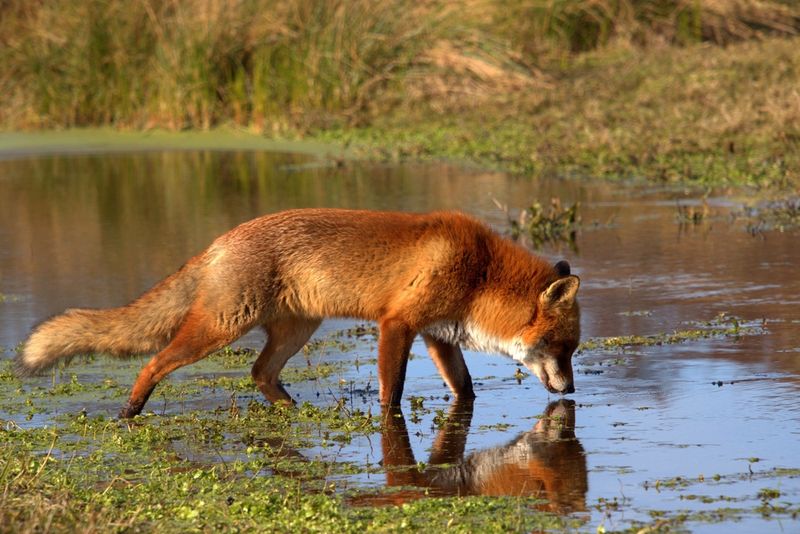
The red fox looks different in a few ways. FWC’s profile describes a commonly rusty-red animal with black legs and a usually white tail tip.
Check the legs and the end of the tail if you can.
If you only had a glimpse, it is fine to say you saw a fox and leave the species undecided. A phone photo from a safe distance, taken through a window, can make the details much easier to study later.
Writing down the tail tip, leg color, and back color gives you more to go on than a general impression of reddish fur.
Secure food and other attractants

The simplest way to keep wildlife from settling into a routine around your home is to take away easy meals. FWC’s tips for securing attractants include closing up trash, pet food, fallen fruit, and other food that animals can reach.
A few habits cover most of it. Use bins with tight lids and set them out the morning of pickup, not the night before.
Feed pets indoors, or pick up bowls when they finish. Rake up fallen fruit from citrus, mango, or other trees, and keep compost covered or enclosed.
Do not feed a fox, even with kind intentions. FWC explains that feeding wildlife can habituate animals to people and increase conflicts.
A fox that learns your yard pays off with food may keep coming back and lose some of its natural wariness.
There is a legal side as well. FWC says Florida rules prohibit placing food in a way that attracts foxes.
Leaving out scraps or a bowl of kibble could fall under that, so keep the yard free of anything edible.
Keep your distance and protect pets
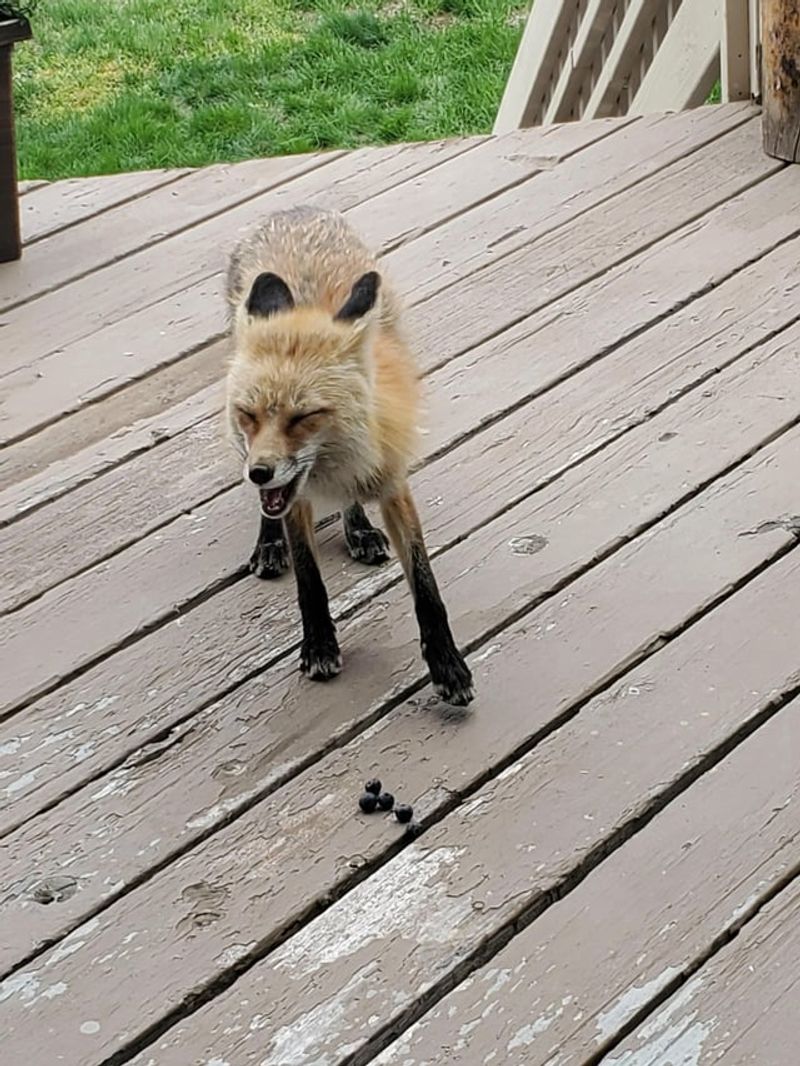
If a fox wanders through, the best move is to watch from a distance. Do not approach it, try to handle it, or offer food, and do not let pets walk up to it.
Calm, hands-off behavior protects you and keeps the fox wild.
Pets need a little planning. FWC recommends keeping pets controlled and secured, and keeping small pets and poultry indoors or in secure enclosures when wildlife is present.
It also recommends keeping rabies vaccinations current. Leashes on walks and supervised trips outside after dark are easy places to start.
A fox in daylight can look alarming, but a daytime sighting alone does not establish rabies. Humane wildlife guidance says activity in daylight is not a rabies sign by itself.
Call animal control or local wildlife authorities if the fox seems seriously ill, disoriented, or unusually aggressive.
If someone is bitten or may have been exposed, the Florida Department of Health advises washing the wound with soap and running water. Then promptly contact a health care provider and the county health department.
Do the same if a pet may have had contact, and call your veterinarian.
Read the sighting in context
Breeding season is one piece of the winter picture. Habitat use and hunting for small prey matter too, as FWC’s red fox profile shows.
No single sighting can reveal why that fox passed through.
What you can control is simple. Watch from a distance, skip the feeding, and follow FWC’s attractant tips for food and pets.
Some mysteries are best enjoyed rather than solved, and a fox on its own errand is one of them.
Share this story