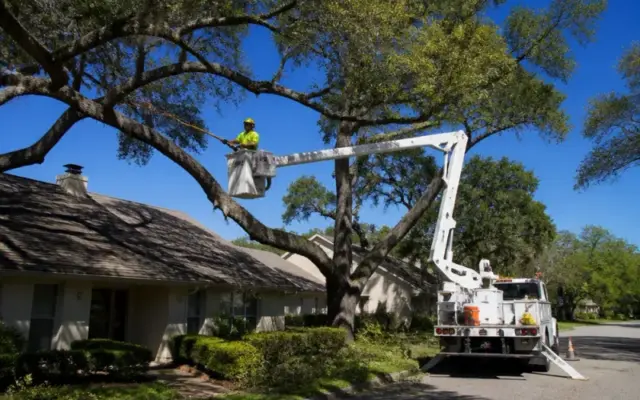
If a neighbor’s branches hang over your yard, Alabama generally lets you trim them back to the property line from your own side. That line is your stopping point, and it matters more than most people realize.
Cut past it, or cut in the wrong way, and a simple yard chore can turn into a dispute. Here is how to use the rule responsibly and where it runs out.
When a branch crosses onto your property

Picture a big oak limb reaching over your fence and dropping leaves on your lawn. In Alabama, the general rule is on your side.
Courts have recognized a landowner’s right to remove branches that extend over their land, a point discussed in Drummond v. Franck and described again in Harding v.
Bethesda Regional Cancer Treatment Center, a case that was mainly about roots.
The practical version comes from the Alabama State Bar. Its disaster relief guide says you can trim back to the property line.
That means the part of the branch hanging over your land is the part you may deal with.
There is a flip side. The same guidance says your neighbor generally cannot be forced to trim branches just because they hang over your yard.
If you want them gone, the usual path is to do the trimming yourself, from your own property, up to the line.
That sounds simple, and for an ordinary overhanging branch it often is. But this is a general rule, not a license to cut however you like.
Later sections cover where the line actually is, what changes when a trunk stands on it, how to avoid harming the tree, and when safety or local rules should make you stop.
Think of the rule as a boundary for your pruning saw. Your right reaches as far as your own land and no further.
Locate the boundary before you cut
Before you lift a saw, you need to know where your land actually ends. The Alabama State Bar’s guidance points to trimming back to the line, which only helps if you know where that line is.
Guessing can leave you cutting where you have no right to be.
Do not assume a fence marks the legal boundary. Fences get built slightly off the line, and some stay in place for decades after a property changes hands.
A fence can be a clue, but it is not proof.
Better sources are your deed, your closing paperwork, and any survey you received when you bought the home. If those leave you unsure, a licensed surveyor or a real estate attorney can tell you what applies to your situation.
This article cannot replace that kind of advice.
Once you know the line, plan the work so you stay on your side of it. Do not step onto the neighbor’s land to reach a branch, set up a ladder over there, or cut growth that sits entirely on their side.
The trimming right covers what hangs over your property, not what grows on theirs.
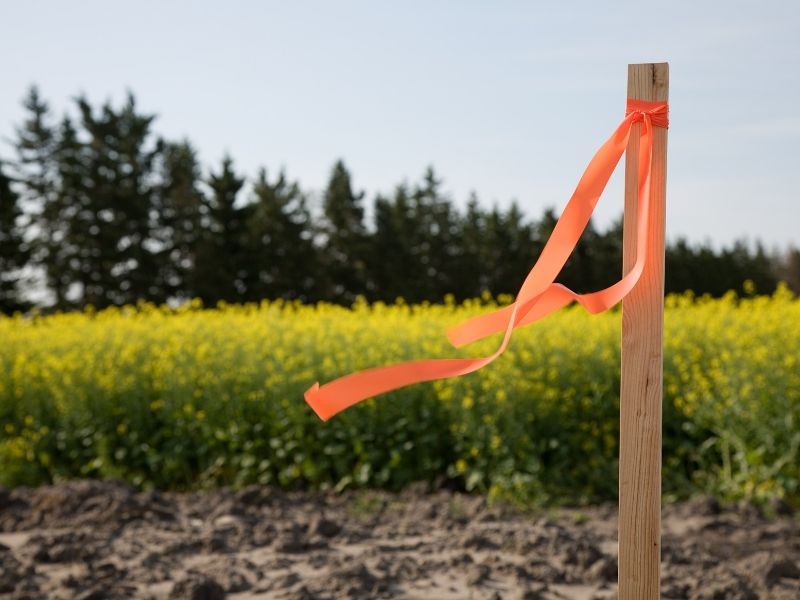
A practical habit helps. Mark the line with stakes or string, and take photos of the branches before you start.
If a disagreement comes up later, you will have a record of what you cut and where it stood.
A tree on the boundary is different
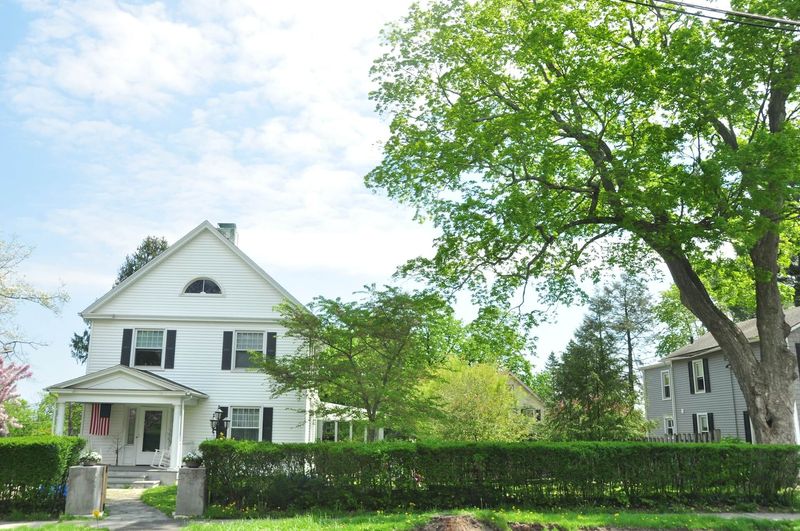
Overhanging branches and a boundary-line tree are two separate situations. With overhang, the trunk sits on your neighbor’s land and only limbs cross over.
With a boundary-line tree, the trunk itself stands on the dividing line.
In Young v. Ledford, the Alabama Court of Civil Appeals treated a tree on the boundary as shared property.
It reversed a ruling that had allowed one owner to remove the tree without the other’s agreement. In plain terms, one neighbor could not simply decide the tree had to go.
That matters because the ordinary overhang rule is about branches reaching into your space. It does not turn a shared trunk into something you can cut down on your own.
Do not read the overhang rule as settling every dispute over a tree on the line.
A few clues can help you sort out which situation you have. Look at where the trunk meets the ground compared with the boundary.
If the base seems to sit on or very near the line, get the boundary confirmed before doing any serious cutting.
If the tree does look shared, talk with your neighbor first. Written agreement on what will be done, and who pays, can prevent a costly fight.
For a major decision, an attorney can explain how the case might apply to your facts.
Protect the tree while you prune
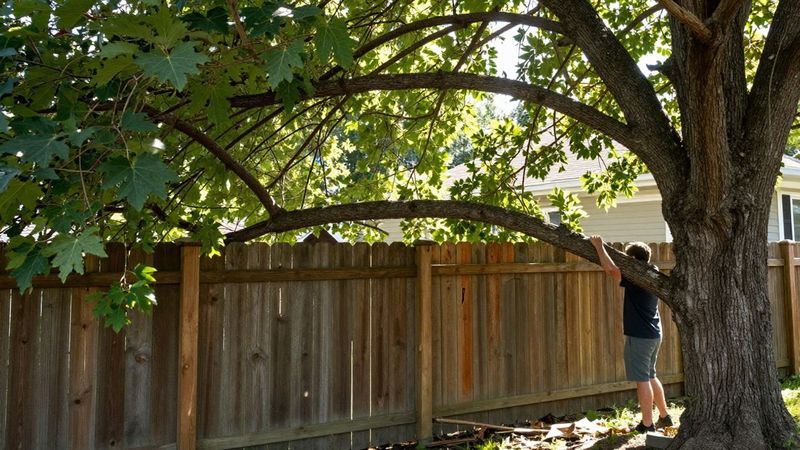
Reaching the property line does not mean every cut at that line is fine. The Alabama State Bar’s practical guidance says to trim back to the line without killing the tree.
Treat that as a caution to take seriously.
It helps to be clear about what kind of rule this is. The warning comes from State Bar guidance.
It is not a precisely defined statutory test, and the cases cited in this article do not squarely settle how much pruning counts as killing a neighbor’s tree.
That uncertainty is a reason for care, not a loophole. A tree that dies or is badly damaged after heavy cutting can lead to a claim by the owner, even if you stayed on your side of the line.
So do not assume that cutting flush at the boundary is acceptable no matter what it does to the tree. A limb that is a big share of the tree’s crown, or a cut that leaves a lopsided, stressed tree, deserves a second thought.
Consider taking less off, spreading the work over time, or asking a qualified professional how much the tree can handle. A modest, clean trim usually protects both the tree and your relationship with the neighbor.
Prune carefully and stay clear of power lines
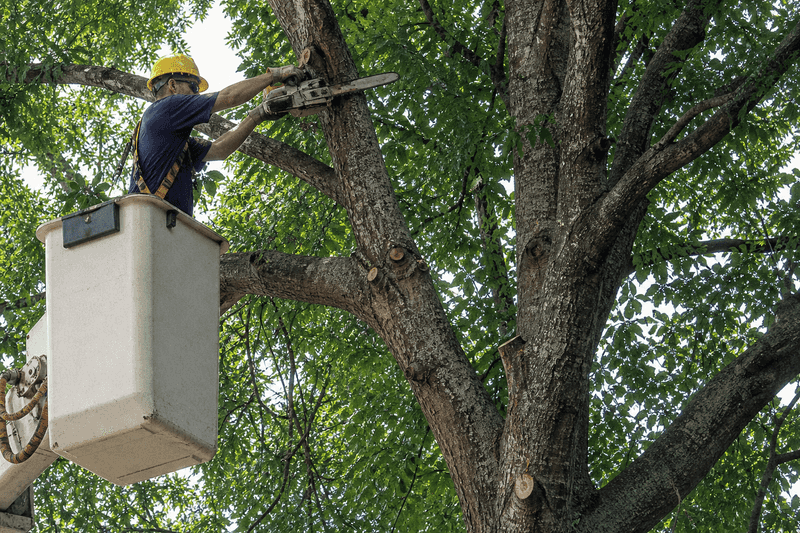
Good pruning is about how you cut, not just where. Alabama Extension pruning guidance advises against topping trees, which means chopping limbs back to stubs.
It recommends making proper cuts near the branch collar, the slightly swollen area where a branch joins its parent limb.
A hard cut at an arbitrary spot on an overhanging limb may not be sound pruning, even if it lands exactly on the property line. For large or structurally important limbs, hiring a qualified arborist is a prudent option.
They can judge how to remove the overhang in a way the tree can recover from.
Safety comes first. A ladder or chainsaw is not a safe tool for just any limb, and heavy branches can swing or drop in unexpected ways.
If a limb is large, high, or tangled with other growth, leave it to a professional.
Power lines raise the stakes. Alabama Extension storm safety advice says to avoid work within 10 feet of power lines and to contact the utility instead.
Never go near a tree that is touching a line. Treat the line as live, keep others away, and call the utility right away.
A dangerous tree needs a separate response
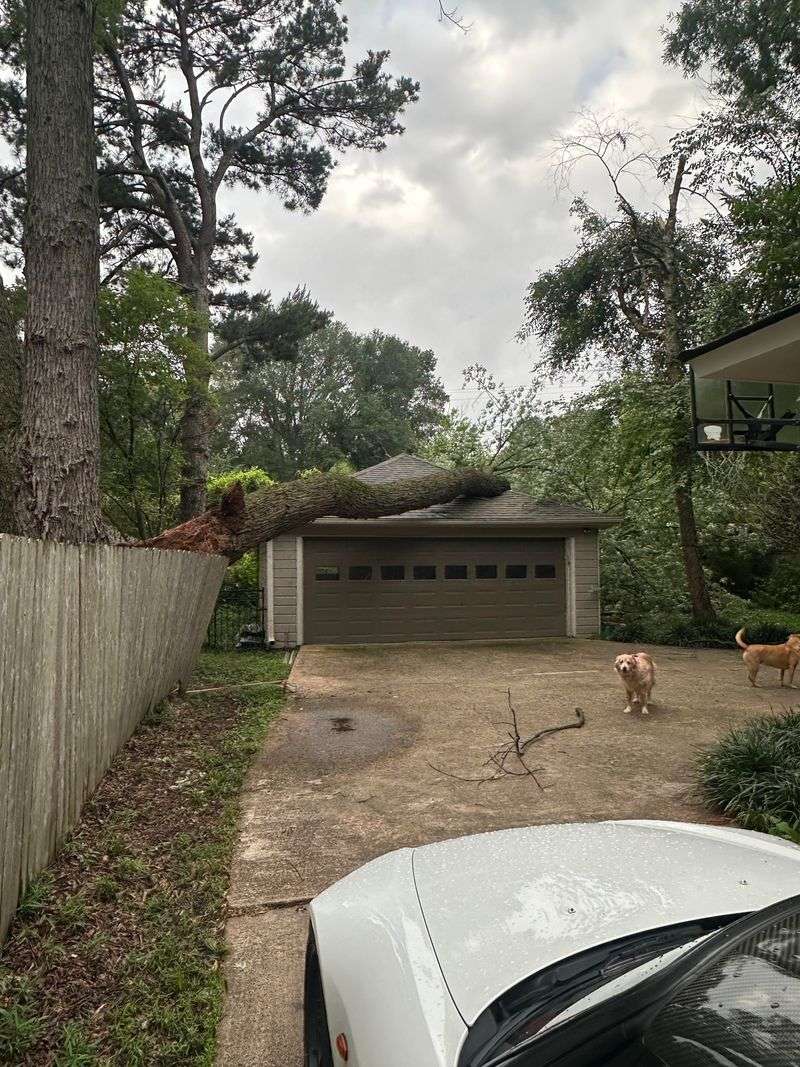
Sometimes the worry is not leaves in the gutter but a tree that looks ready to fall. A cracked limb or a leaning trunk feels urgent.
Even so, danger does not automatically give you the right to take matters into your own hands.
The Alabama State Bar’s guide says not to trespass or remove plants from a neighbor’s property. It suggests documenting your concern and contacting the neighbor or local government, which may evaluate the hazard.
Documentation is practical. Take dated photos, note storm damage, and keep copies of any messages.
A calm written note to the neighbor describing what you see gives them a fair chance to act.
If the neighbor does not respond, contact your city or county and ask who handles hazardous trees. They can tell you what steps are available in your area.
One legal point is worth knowing. In Young v.
Ledford, the court did not decide whether the alleged danger justified an exception to the general rule. So do not count on a hazard to excuse removal.
If you face a true emergency, such as a limb on a house or a line, call emergency services or the utility.
Check for local restrictions
State-level guidance is only part of the picture. Cities and counties may have their own tree rules, and easements or private restrictions can also limit what you do.
A homeowners association, for example, may have its own say about trees.
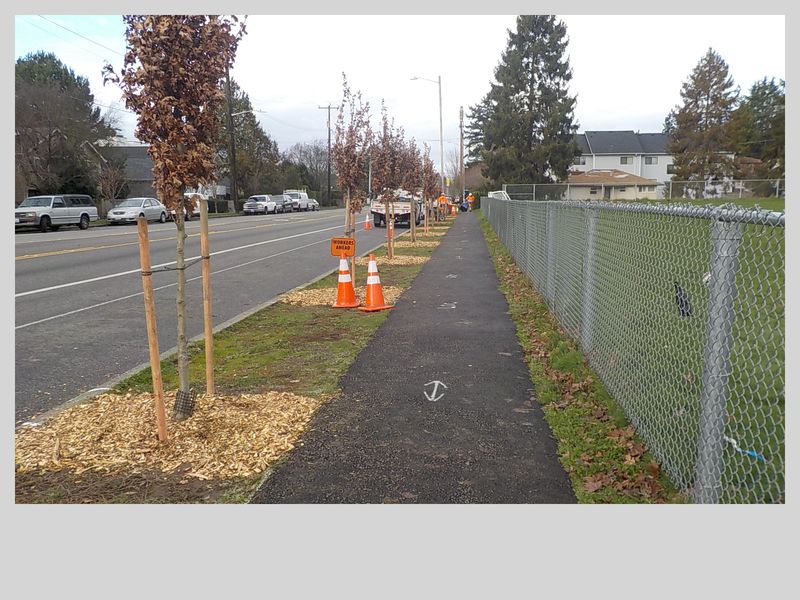
Auburn offers a useful local example. Its Tree FAQs say the city’s tree ordinance covers public property and that pruning or removal on city right-of-way requires a permit.
That example shows why checking matters. If a branch hangs over from a tree on public land, or the tree sits in a right-of-way near your lot, the rules may differ from those for a neighbor’s private tree.
Do not trim first and ask later.
Auburn’s ordinance is only an illustration. It does not apply statewide, and it does not tell you what your own city requires.
Other places may have different permits, protected-tree lists, or no special rules at all.
A short call to your city or county planning or public works office can settle the question. Ask whether any ordinance, permit, or easement affects the tree or the work you plan.
Also read any deed restrictions or HOA rules that come with your property.
Know when to stop
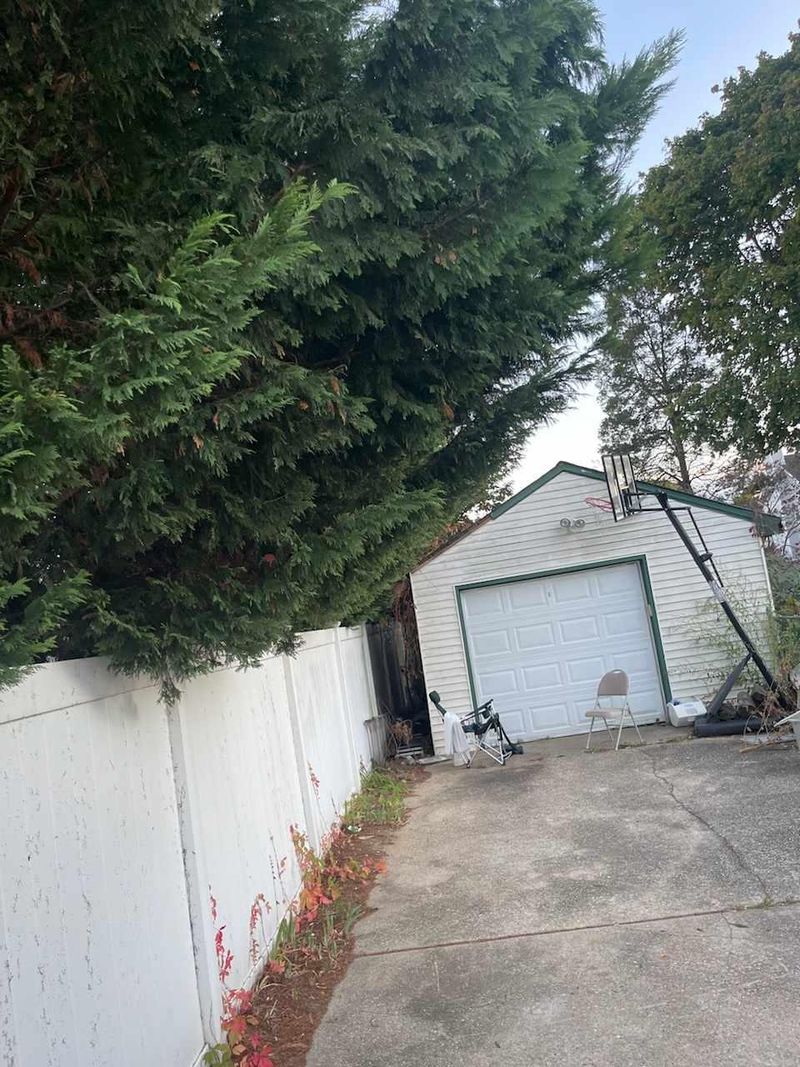
For an ordinary overhanging branch, the property line is the usual stopping point, and you work from your own side. Confirm where that line is before you start.
The State Bar guide is the practical reference for that approach.
Pause if the trunk stands on the line, since Young v. Ledford treated such a tree as shared.
Pause too if the cut could kill the tree, if a safety hazard is present, or if a local restriction may apply.
A branch may be yours to trim, but the tree is still your neighbor’s.
Share this story