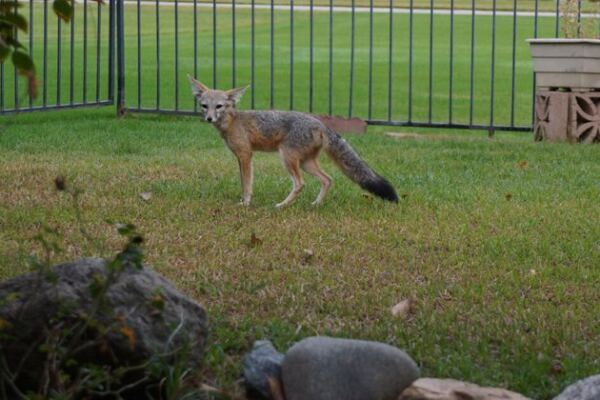
That wild burst of yips and howls outside your window is coyotes talking to each other. It is real communication, even though nobody can translate it word for word.
Hearing it can feel spooky, especially if you have a small dog or cat. Here is what the calls most likely mean, what they do not tell us, and how to keep your pets and yard safe.
A familiar sound in California neighborhoods
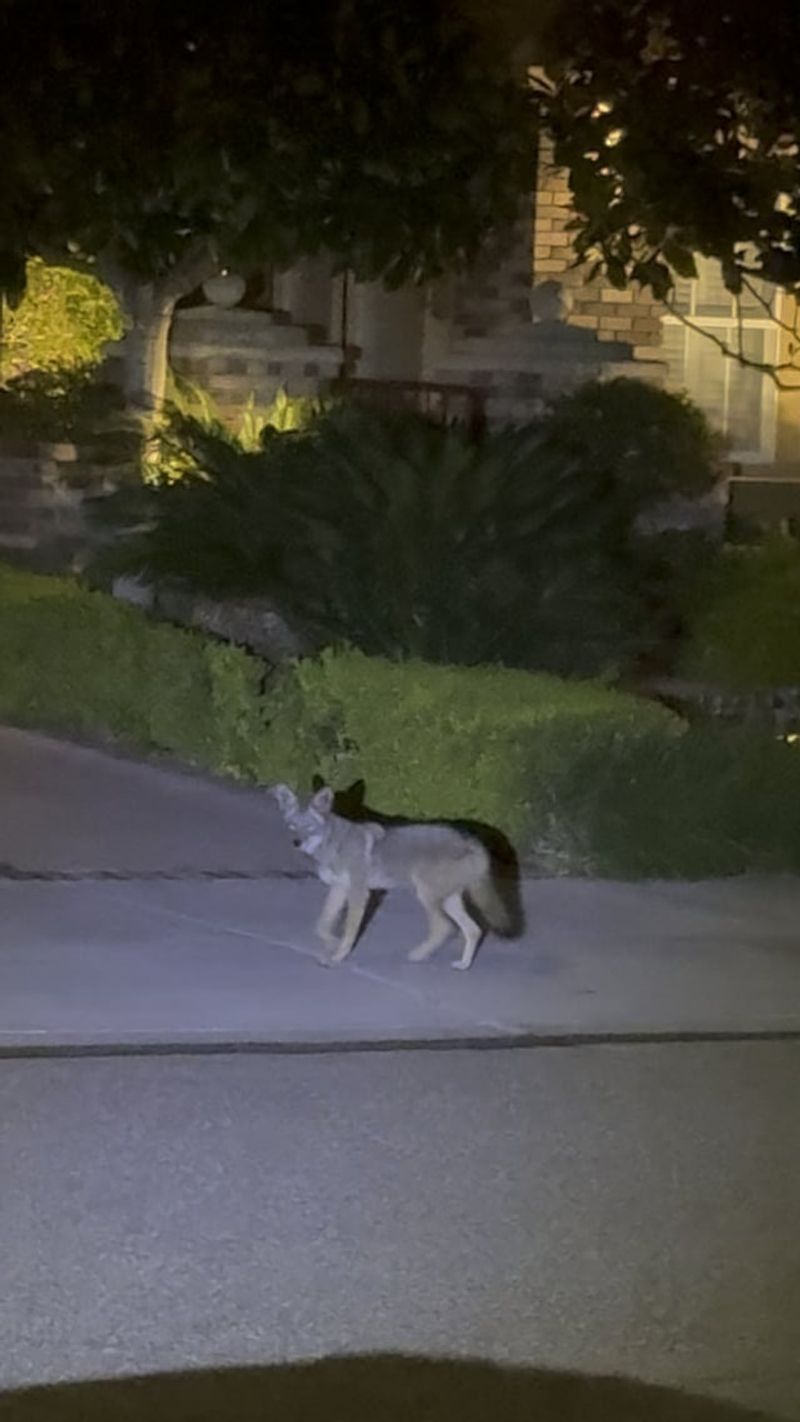
A nighttime coyote chorus is communication among coyotes, but it is not a message anyone can translate. The sounds are real conversation, just not a code we can crack by listening from the bedroom window.
Coyotes are native to California, and they live in cities, suburbs, farm country, and wild canyons. According to the California Department of Fish and Wildlife, they call to one another with yips, howls, and barks at any time of day or night.
So the sound is not a sign that a coyote has just moved in next door. Many of them have been there all along.
People hear this music most often after dark. UC Integrated Pest Management notes that barking and howling are heard in the evening and at night through much of the year.
In a foothill town or a valley subdivision, that can mean a handful of calling sessions every month.
Here is the calm baseline to start with. Hearing coyotes call, by itself, does not show that anything unusual or dangerous is happening.
It simply tells you that coyotes live nearby, as they do across much of the state. The rest of this article explains what the sounds can mean, what they cannot, and the simple habits that keep pets safe.
A chorus is communication, not a transcript

Think of a coyote chorus like hearing a conversation in a language you do not speak. You can tell people are talking, and you can guess at the general topic, but you cannot write down exactly what was said.
Coyotes use yips, howls, and barks to stay in touch, and that is about as precise as science lets us be.
Research describes coyote vocalizations as serving territory-related functions, as laid out in a paper on how people perceive coyote group size. That fits how coyotes live.
They generally stay in family groups and set up home-range territories where they hunt and raise pups, as the state wildlife agency explains.
So two broad ideas make sense as background. One is that a chorus may announce that an area is occupied.
The other is that family members may be making contact with each other, perhaps after spreading out to hunt.
Those are possibilities, not translations. Nobody can listen to a particular recording and say, this one means a warning, or that one means dinner is ready.
The evidence does not let listeners assign a precise meaning to each sound or sequence, and it is fine to enjoy the mystery.
What changes with the season?
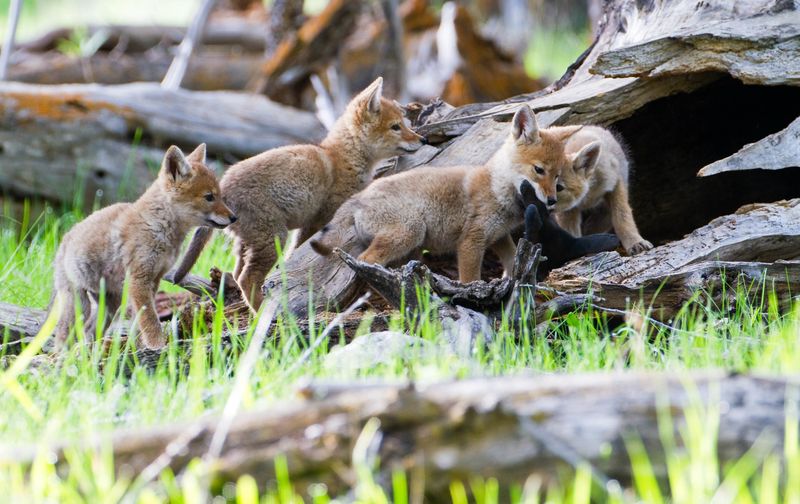
Seasons give us some context for coyote life, but the calendar cannot decode any single chorus. According to UC IPM, coyotes in California typically breed in late January and February, and pups are born in March and April.
Coyotes also vocalize through much of the year, so a chorus in July or October is not unusual.
Timing varies by place. At the Golden Gate National Recreation Area near San Francisco, the National Park Service describes pupping as typically running from March through September.
That is a local example, not a statewide schedule, so your own neighborhood may differ.
Here is a point that surprises many people. UC IPM reports less vocalizing in the early stages of pup-rearing.
That means you should not assume that a spring chorus is pups calling out.
The practical takeaway is simple. If you hear a chorus in February, it might be related to breeding season, but it also might not be.
Timing can give you background, and it cannot prove that a particular chorus is mating chatter or pups checking in.
One chorus can sound like a crowd
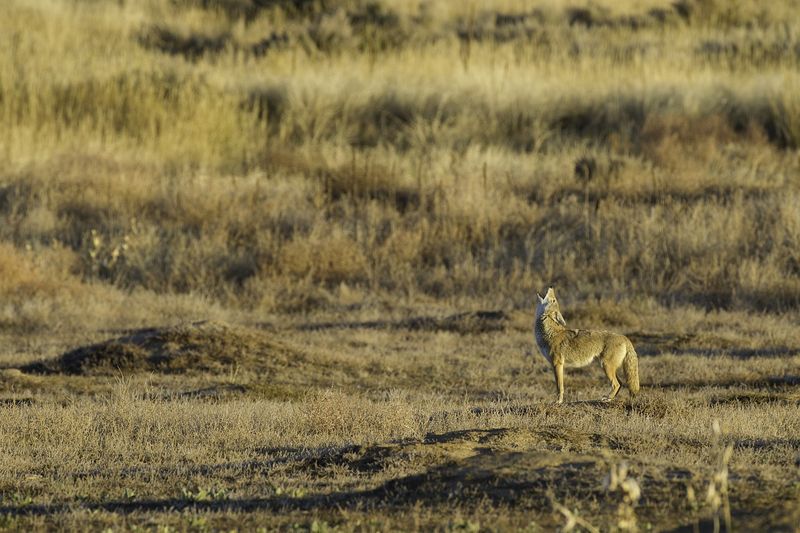
Ever lie awake and think there must be a dozen coyotes out there? Your ears may be fooling you.
Coyote voices overlap, bounce off hills and houses, and shift in pitch, which makes a small group sound much larger.
A study called Do You Hear What I Hear? tested this directly. Participants listened to recordings of one to four coyotes, and they overestimated the number they heard by nearly twofold.
That research took place with people in southern Texas. It shows a problem with human hearing, not how many coyotes live in any California neighborhood.
It is not a count of local coyotes, and it does not tell us how crowded a canyon or a valley town really is.
The lesson is a gentle one. Do not estimate coyote numbers from the apparent number of voices.
A loud, layered chorus might come from a small group, and that is a good reason to skip the worry that your block is overrun.
A safer yard starts with fewer attractants

The best protection for pets has little to do with the sounds and a lot to do with the yard. The California Department of Fish and Wildlife gives a short list of habits that work.
Bring small pets inside at night, and keep pets on a leash during walks.
Next, secure trash and pet food, since coyotes can eat both. Also clean up fallen birdseed, because it can attract rodents, and rodents can attract coyotes.
A clean yard is simply less interesting to a hungry animal.
Food matters for another reason. Access to non-natural food can contribute to food conditioning or habituation, meaning coyotes learn to link people and yards with meals.
That is a reason to remove attractants, and it does not mean that coyotes calling at night have become unusually bold.
Finally, never approach, feed, attract, or try to summon coyotes. The National Park Service gives the same advice to visitors at Golden Gate.
Skipping the fake howls and the snack offerings keeps coyotes wild, and keeps your neighborhood safer for everyone.
When does a sighting call for action?
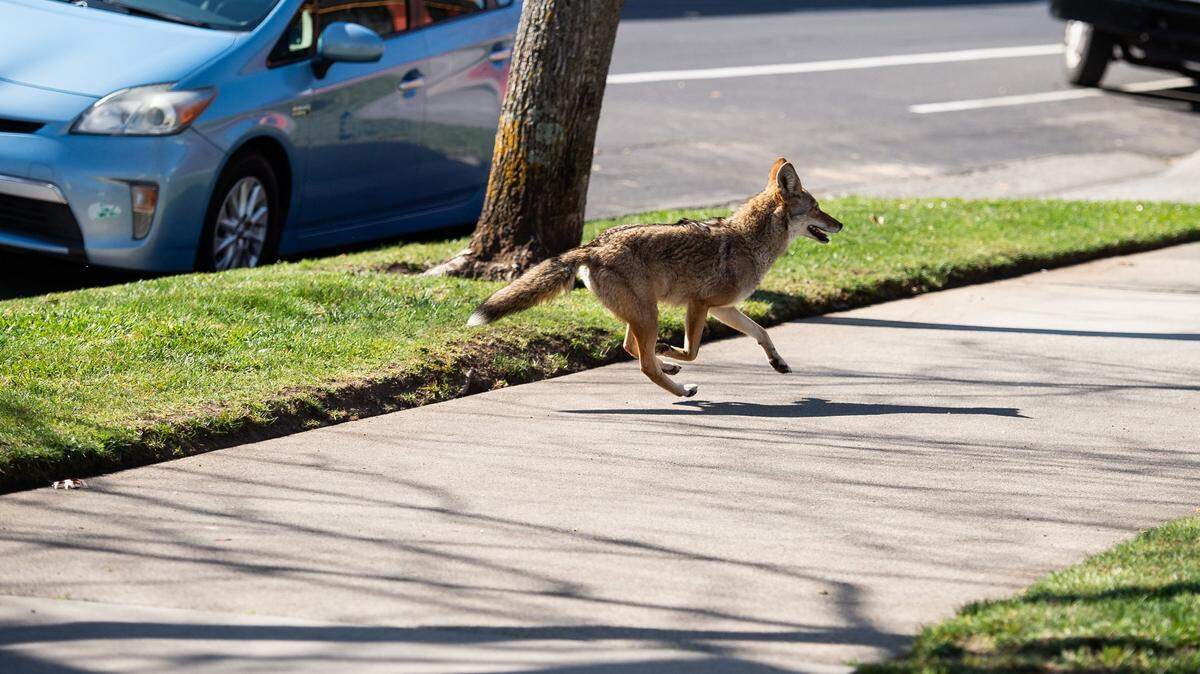
Seeing a coyote is not the same as facing a threat. The state’s workshop guidance, Coyotes in the Urban Environment, says a coyote that is merely present and behaving normally is not a reason for alarm.
A trot across the street at dawn is ordinary coyote life.
If a coyote does approach you, there are clear steps from CDFW. Keep your distance, keep children and pets close, make noise, and appear larger.
Then let the animal leave.
If a coyote makes contact, fight back. After that, call animal control or 911.
The workshop guidance sets out separate thresholds. Call 911 for a human attack, an attempted bite, or immediate aggressive behavior toward a person.
For an injured or sick animal, contact local animal services, a permitted wildlife rehabilitator, or a CDFW regional office.
Notice what is missing from that list. Hearing a chorus, or spotting a coyote at a distance, is not a reason to call emergency services.
Keep the sound in perspective
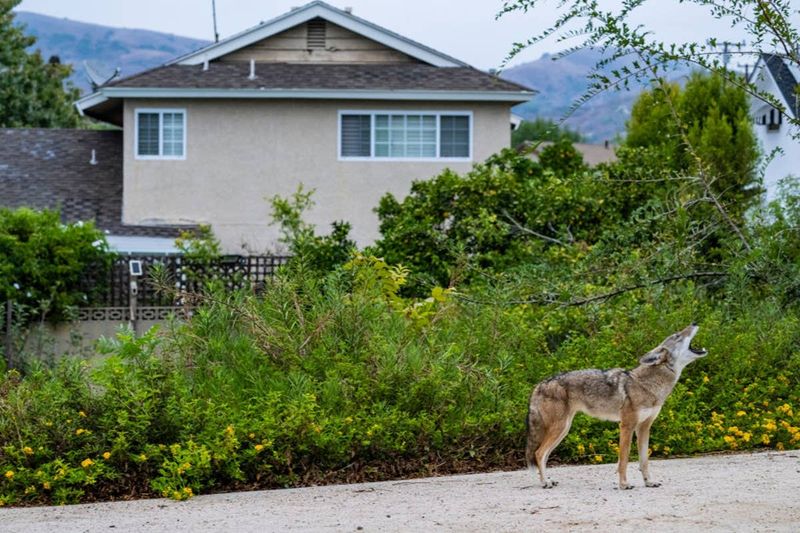
Coyotes use nighttime calls to talk to one another, and no listener can reliably pin down a chorus’s exact message or how many animals are singing. Sensible habits like those CDFW recommends for pets and yards do not require treating ordinary calls as an emergency.
Next time the yips drift through your window, you can let them be a reminder that wild neighbors still share the night with you.
Share this story