Get the latest garden guides in your inbox →
Gardening Latest
  • General Gardening
  • Lawn Care
  • Plant Care
  • Composting
  • Soil Health
  • Backyard
  • Garden Muse Magazine
  • General Gardening
  • Lawn Care
  • Plant Care
  • Composting
  • Soil Health
  • Backyard
  • Garden Muse Magazine
  • News
  • Gardening Calendar
  • Garden Structures
  • Vegetable Garden
  • Vertical Garden
  • Raised Beds
  • Hydroponics
  • General Equipment
  • Community Gardens
Garden Themes
  • Spiritual Garden
  • Hydroseeding
  • Seeding and Laying Sod
  • Artificial Grass
  • Lawn Care Equipment
  • Plants
  • Trees
  • Planting Tools
  • Composting Basics
  • Fertilizer
  • Alternative Growing Mediums
  • Front Yard
  • Backyard Activities
  • Landscaping
Gardening Latest

Explore by state

Which state is your garden in?

Currently viewing California

All states

Northeast

  • Connecticut —
  • Delaware 33
  • Maine —
  • Maryland 19
  • Massachusetts 35
  • New Hampshire —
  • New Jersey 19
  • New York 28
  • Pennsylvania 28
  • Rhode Island —
  • Vermont —

Southeast

  • Alabama 19
  • Arkansas —
  • Florida 19
  • Georgia 19
  • Kentucky 33
  • Louisiana 18
  • Mississippi —
  • North Carolina 17
  • South Carolina 32
  • Tennessee 16
  • Virginia 18
  • West Virginia —

Midwest

  • Illinois 18
  • Indiana 20
  • Iowa 32
  • Kansas —
  • Michigan 19
  • Minnesota 18
  • Missouri 18
  • Nebraska —
  • North Dakota —
  • Ohio 19
  • South Dakota —
  • Wisconsin 34

Southwest

  • Arizona 19
  • Colorado —
  • Nevada —
  • New Mexico —
  • Oklahoma —
  • Texas 18
  • Utah —

West

  • Alaska —
  • California 19
  • Hawaii —
  • Idaho —
  • Montana —
  • Oregon —
  • Washington —
  • Wyoming —

No state matches that search.

Site menu

Gardening Latest
  • General Gardening
    • News
    • Gardening Calendar
    • Garden Structures
    • Vegetable Garden
    • Vertical Garden
    • Raised Beds
    • Hydroponics
    • General Equipment
    • Community Gardens
    Garden Themes
    • Spiritual Garden
  • Lawn Care
    • Hydroseeding
    • Seeding and Laying Sod
    • Artificial Grass
    • Lawn Care Equipment
  • Plant Care
    • Plants
    • Trees
    • Planting Tools
  • Composting
    • Composting Basics
  • Soil Health
    • Fertilizer
    • Alternative Growing Mediums
  • Backyard
    • Front Yard
    • Backyard Activities
    • Landscaping
  • Garden Muse Magazine

Explore

  • About GardeningLatest.com
  • Contact Us

Get the latest from the garden

New guides on lawn care, plants and backyard projects, sent when they go up.

Subscribe →

Follow

  • Facebook
  • X
  • Pinterest
  • YouTube
California Gardening

That Coyote Chorus Outside Your California Home at Night Is Actually a Conversation, and Here’s What It Means

That wild burst of yips and howls outside your window is coyotes talking to each other.

JN

By Julia Navarro

November 26, 2026 · 6 min read

That Coyote Chorus Outside Your California Home at Night Is Actually a Conversation, and Here’s What It Means
That Coyote Chorus Outside Your California Home at Night Is Actually a Conversation, and Here's What It Means

That wild burst of yips and howls outside your window is coyotes talking to each other. It is real communication, even though nobody can translate it word for word.

Hearing it can feel spooky, especially if you have a small dog or cat. Here is what the calls most likely mean, what they do not tell us, and how to keep your pets and yard safe.

At a glance

Where
California Gardening
Hardiness zone
9 20 to 30°F
Read
6 minutes
Published
November 26, 2026

A familiar sound in California neighborhoods
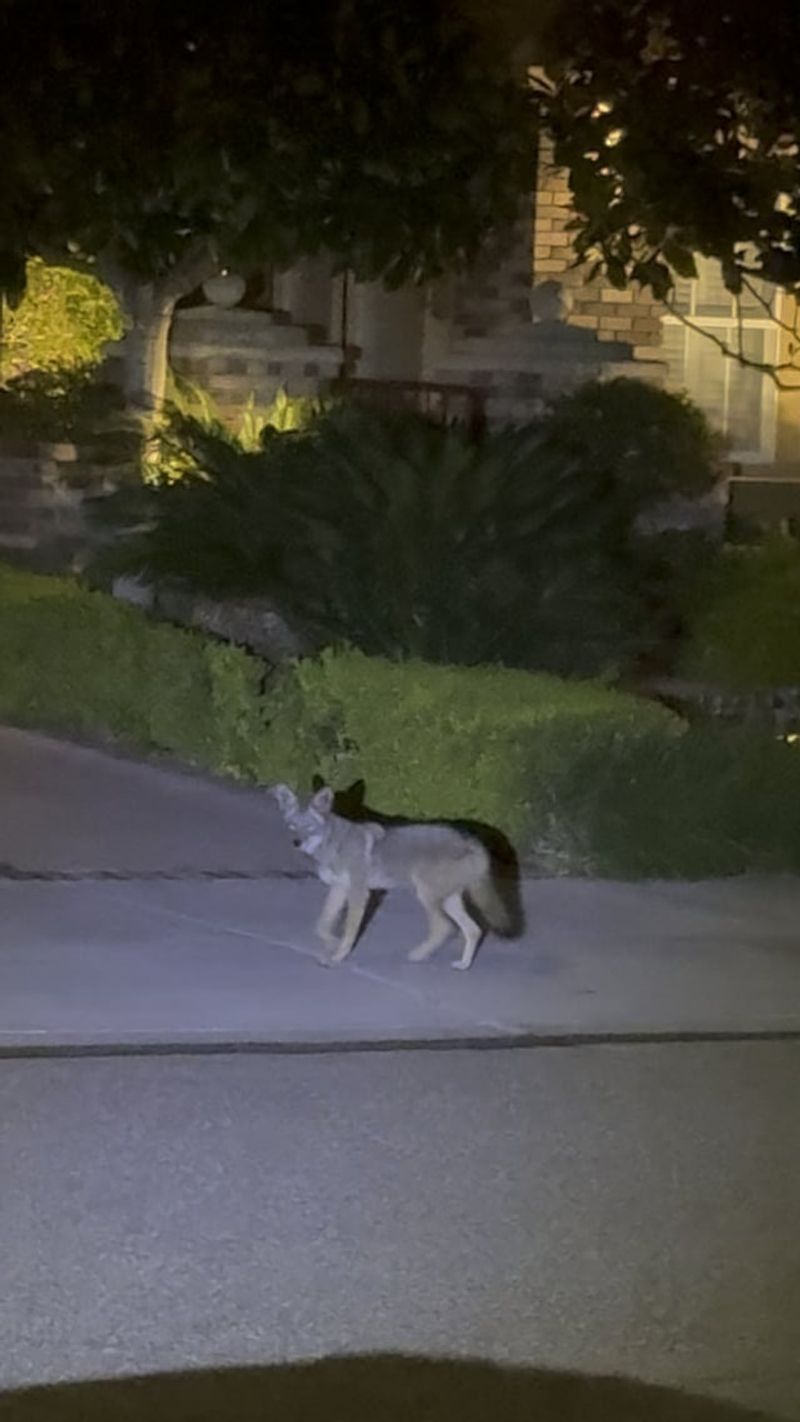
A familiar sound in California neighborhoods
© Reddit

A nighttime coyote chorus is communication among coyotes, but it is not a message anyone can translate. The sounds are real conversation, just not a code we can crack by listening from the bedroom window.

Coyotes are native to California, and they live in cities, suburbs, farm country, and wild canyons. According to the California Department of Fish and Wildlife, they call to one another with yips, howls, and barks at any time of day or night.

So the sound is not a sign that a coyote has just moved in next door. Many of them have been there all along.

People hear this music most often after dark. UC Integrated Pest Management notes that barking and howling are heard in the evening and at night through much of the year.

In a foothill town or a valley subdivision, that can mean a handful of calling sessions every month.

Here is the calm baseline to start with. Hearing coyotes call, by itself, does not show that anything unusual or dangerous is happening.

It simply tells you that coyotes live nearby, as they do across much of the state. The rest of this article explains what the sounds can mean, what they cannot, and the simple habits that keep pets safe.

A chorus is communication, not a transcript

A chorus is communication, not a transcript
© The Natural History of the Urban Coyote

Think of a coyote chorus like hearing a conversation in a language you do not speak. You can tell people are talking, and you can guess at the general topic, but you cannot write down exactly what was said.

Coyotes use yips, howls, and barks to stay in touch, and that is about as precise as science lets us be.

The best protection for pets has little to do with the sounds and a lot to do with the yard.

Research describes coyote vocalizations as serving territory-related functions, as laid out in a paper on how people perceive coyote group size. That fits how coyotes live.

They generally stay in family groups and set up home-range territories where they hunt and raise pups, as the state wildlife agency explains.

So two broad ideas make sense as background. One is that a chorus may announce that an area is occupied.

The other is that family members may be making contact with each other, perhaps after spreading out to hunt.

Those are possibilities, not translations. Nobody can listen to a particular recording and say, this one means a warning, or that one means dinner is ready.

The evidence does not let listeners assign a precise meaning to each sound or sequence, and it is fine to enjoy the mystery.

What changes with the season?
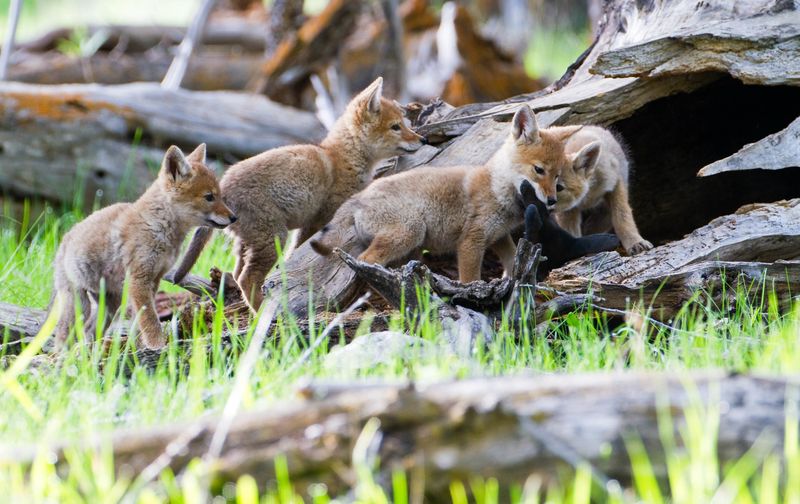
What changes with the season?
© Forest Service Research and Development – USDA

Seasons give us some context for coyote life, but the calendar cannot decode any single chorus. According to UC IPM, coyotes in California typically breed in late January and February, and pups are born in March and April.

Coyotes also vocalize through much of the year, so a chorus in July or October is not unusual.

Timing varies by place. At the Golden Gate National Recreation Area near San Francisco, the National Park Service describes pupping as typically running from March through September.

That is a local example, not a statewide schedule, so your own neighborhood may differ.

Here is a point that surprises many people. UC IPM reports less vocalizing in the early stages of pup-rearing.

That means you should not assume that a spring chorus is pups calling out.

The practical takeaway is simple. If you hear a chorus in February, it might be related to breeding season, but it also might not be.

Timing can give you background, and it cannot prove that a particular chorus is mating chatter or pups checking in.

One chorus can sound like a crowd
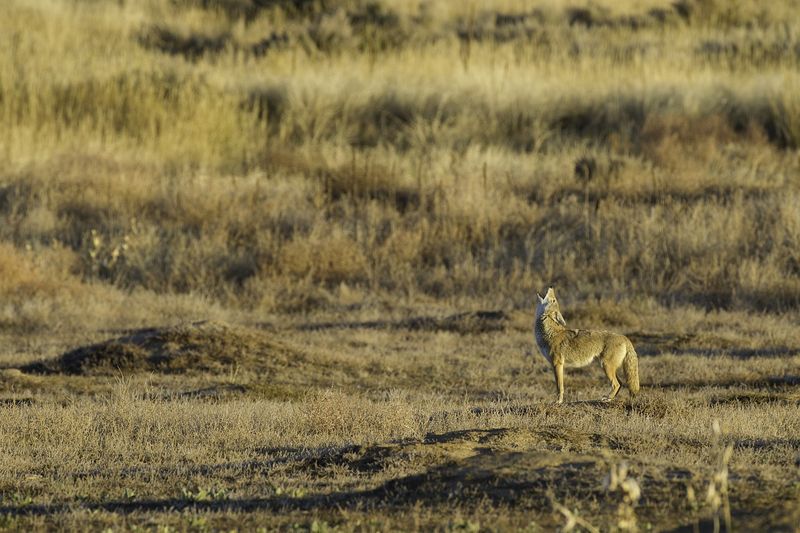
One chorus can sound like a crowd
© Farm and Dairy

Ever lie awake and think there must be a dozen coyotes out there? Your ears may be fooling you.

Coyote voices overlap, bounce off hills and houses, and shift in pitch, which makes a small group sound much larger.

A study called Do You Hear What I Hear? tested this directly. Participants listened to recordings of one to four coyotes, and they overestimated the number they heard by nearly twofold.

That research took place with people in southern Texas. It shows a problem with human hearing, not how many coyotes live in any California neighborhood.

It is not a count of local coyotes, and it does not tell us how crowded a canyon or a valley town really is.

The lesson is a gentle one. Do not estimate coyote numbers from the apparent number of voices.

A loud, layered chorus might come from a small group, and that is a good reason to skip the worry that your block is overrun.

A safer yard starts with fewer attractants

A safer yard starts with fewer attractants
© Vibrowl

The best protection for pets has little to do with the sounds and a lot to do with the yard. The California Department of Fish and Wildlife gives a short list of habits that work.

Bring small pets inside at night, and keep pets on a leash during walks.

Next, secure trash and pet food, since coyotes can eat both. Also clean up fallen birdseed, because it can attract rodents, and rodents can attract coyotes.

A clean yard is simply less interesting to a hungry animal.

Food matters for another reason. Access to non-natural food can contribute to food conditioning or habituation, meaning coyotes learn to link people and yards with meals.

That is a reason to remove attractants, and it does not mean that coyotes calling at night have become unusually bold.

Finally, never approach, feed, attract, or try to summon coyotes. The National Park Service gives the same advice to visitors at Golden Gate.

Skipping the fake howls and the snack offerings keeps coyotes wild, and keeps your neighborhood safer for everyone.

When does a sighting call for action?
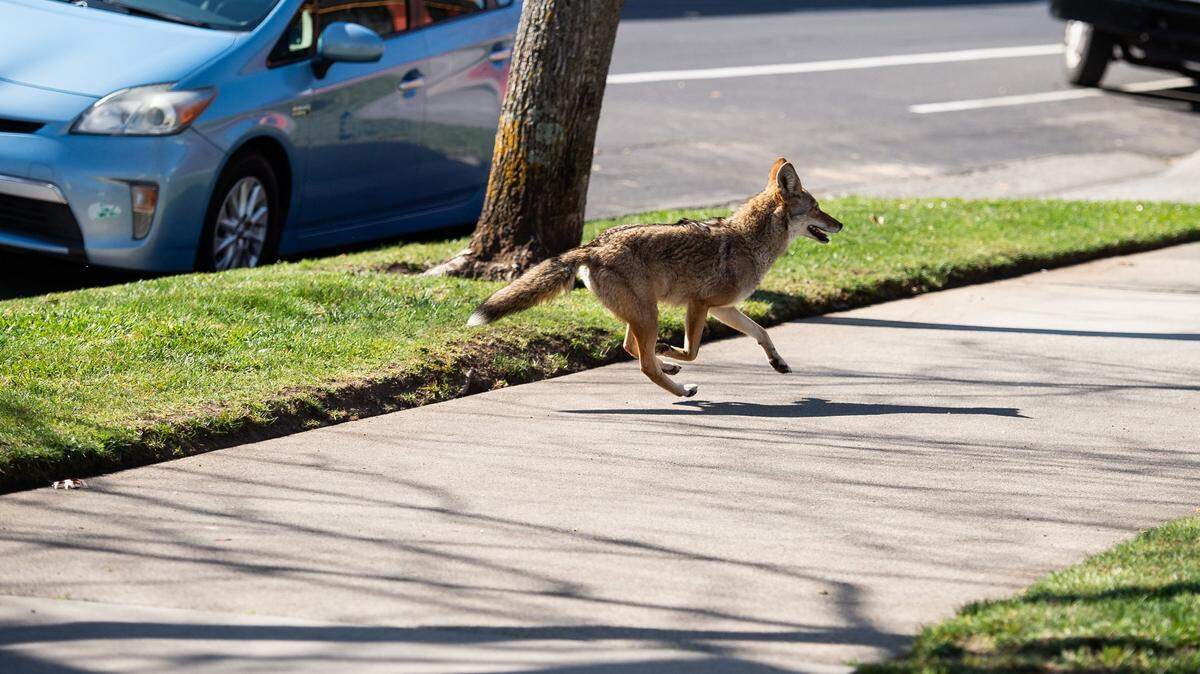
When does a sighting call for action?
© Sacramento Bee

Seeing a coyote is not the same as facing a threat. The state’s workshop guidance, Coyotes in the Urban Environment, says a coyote that is merely present and behaving normally is not a reason for alarm.

A trot across the street at dawn is ordinary coyote life.

If a coyote does approach you, there are clear steps from CDFW. Keep your distance, keep children and pets close, make noise, and appear larger.

Then let the animal leave.

If a coyote makes contact, fight back. After that, call animal control or 911.

The workshop guidance sets out separate thresholds. Call 911 for a human attack, an attempted bite, or immediate aggressive behavior toward a person.

For an injured or sick animal, contact local animal services, a permitted wildlife rehabilitator, or a CDFW regional office.

Notice what is missing from that list. Hearing a chorus, or spotting a coyote at a distance, is not a reason to call emergency services.

Keep the sound in perspective

Keep the sound in perspective
© PetHelpful

Coyotes use nighttime calls to talk to one another, and no listener can reliably pin down a chorus’s exact message or how many animals are singing. Sensible habits like those CDFW recommends for pets and yards do not require treating ordinary calls as an emergency.

Next time the yips drift through your window, you can let them be a reminder that wild neighbors still share the night with you.

Share this story
JN

Written by

Julia Navarro

More from Julia Navarro →

About Gardening Latest

Gardening Latest provides in-depth guides to maintaining and enhancing your garden and backyard. Learn how to make the most of the space you have and create a beautiful garden.

More about us →

Latest stories

  • California GardeningIf a Gray Fox Keeps Trotting Through Your California Yard This Winter, Here’s What It’s After

    If a Gray Fox Keeps Trotting Through Your California Yard This Winter, Here’s What It’s After

    7 hr ago
  • Arizona GardeningWhen a Gray Fox Trots Through Your Arizona Yard This Winter, It’s on a Mission

    When a Gray Fox Trots Through Your Arizona Yard This Winter, It’s on a Mission

    7 hr ago
  • Texas GardeningNeighbor Vines Crossing Into Your Texas Yard: Texas Tree-Branch Guidance Is Clear, but the Answer for Vines Is Less Settled

    Neighbor Vines Crossing Into Your Texas Yard: Texas Tree-Branch Guidance Is Clear, but the Answer for Vines Is Less Settled

    7 hr ago
  • Wisconsin GardeningWisconsin Neighbors Fight Over Snow Piled on Their Property, and Here’s What the Law Actually Says

    Wisconsin Neighbors Fight Over Snow Piled on Their Property, and Here’s What the Law Actually Says

    7 hr ago
  • Missouri GardeningYellow Jackets Nesting Near Your Missouri Home? This Is What You Should Do First

    Yellow Jackets Nesting Near Your Missouri Home? This Is What You Should Do First

    7 hr ago

Gardening by state

Stories for your state, and the hardiness zone most of it gardens in.

Keep exploring

Read next

All California Gardening →
California GardeningIf a Gray Fox Keeps Trotting Through Your California Yard This Winter, Here’s What It’s After
California Gardening

If a Gray Fox Keeps Trotting Through Your California Yard This Winter, Here’s What It’s After

7 hr ago
California GardeningCalifornia Yards Have Their Share Of Venomous Critters, And Late Fall Is When You’ll Meet Them
California Gardening

California Yards Have Their Share Of Venomous Critters, And Late Fall Is When You’ll Meet Them

13 hr ago
California GardeningCalifornia Gardeners Who Get Stung by a Buck Moth Caterpillar Should Do This Right Away
California Gardening

California Gardeners Who Get Stung by a Buck Moth Caterpillar Should Do This Right Away

16 hr ago

More from California Gardening

  • Your Neighbor’s Tree Just Crashed Into Your California Yard, So Here’s Who Actually Pays

    Nov 24
  • The Backyard Crops That Quietly Break California Law, Even When They Grow Like Weeds

    Nov 24
Back to top

Leave a response Cancel

Your email address stays private. Required fields are marked with an asterisk.

Gardening Latest

In-depth guides to maintaining and enhancing your garden and backyard: how to make the most of the space you have, and how to make it beautiful.

  • Facebook
  • X
  • Pinterest
  • YouTube

We may earn a portion of sales from products or services that are purchased through our site as part of our affiliate partnerships with retailers.

Explore

  • About GardeningLatest.com
  • Contact Us
  • Terms and Conditions
  • Privacy
  • Editorial Note:
  • FTC Disclosure

Newsletter

New garden guides and seasonal tips, straight to your inbox.

We’ll email you a link to confirm. Unsubscribe any time.

Almost there! Check your inbox and tap the link to confirm.

© 2026 Gardening Latest. All rights reserved.

Back to top