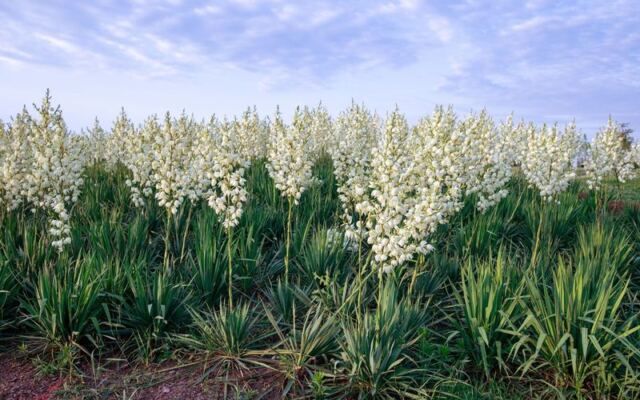
A tall flower stalk shooting up from your yucca is normally just the plant flowering, and the stalk alone does not mean something is wrong. It looks dramatic, so many New Jersey gardeners worry when it appears.
Once the blooms fade, you get to choose: tidy the stalk away or leave it for seeds. Here is how to tell what you are looking at and what to do next.
A tall stalk is the yucca’s flowering structure
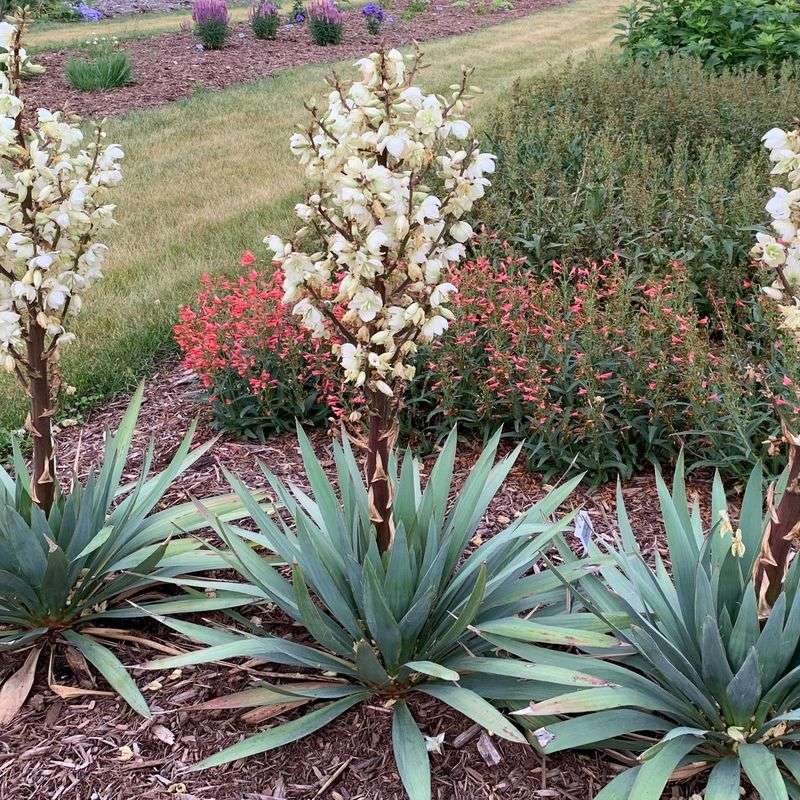
Seeing a stalk several feet tall rise from the middle of your yucca can be startling, but it is usually the plant’s flowering structure. Its presence alone does not show disease or distress.
Flowering is a normal reproductive event, and a stalk by itself does not tell you why the plant chose to bloom this year.
One plausible garden yucca in New Jersey is Adam’s needle, Yucca filamentosa. The state’s Jersey-Friendly Yards guide describes clusters of flowers held on stalks above the leaves, blooming roughly May through July.
The same guide lists the plant as not native to New Jersey, even though it recommends it for local yards.
The plant grows as a basal rosette, which means the leaves fan out from the ground like a starburst. According to North Carolina State Extension, those leaves are stiff, sword-shaped, and sharply pointed.
The creamy flowers hang in showy clusters along the stalk.
Treat that name as a good guess, not a certainty. Many yuccas are sold in garden centers, and a tall stalk by itself cannot identify yours.
A clear photo of the leaves and flowers, shared with a local nursery or your county extension office, is the best way to confirm the species.
If your plant has a rosette of tough, pointed leaves and a tall stalk covered in blooms, you are most likely watching a healthy yucca do what yuccas do. The next sections explain how tall is normal, what happens to the rosette, and what to do with the stalk afterward.
Why the flower stalk grows so high
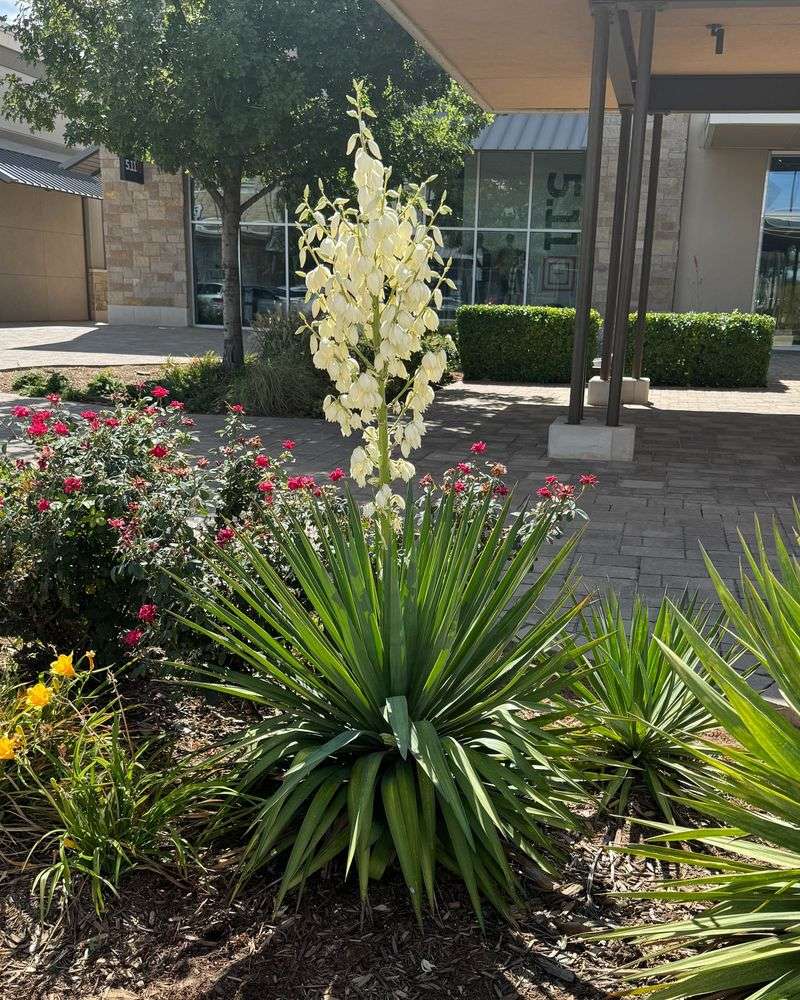
Height is part of the show. Yucca filamentosa sends up a stalk that, according to NC State Extension, can reach about 5 to 8 feet.
So a stalk that towers over the leaves can fall well within the natural flowering range for this species.
The tall stalk lifts the blooms high above the foliage where they are easy to see. Cream-colored flowers open in spring or summer, and the Jersey-Friendly Yards guide places bloom time in New Jersey roughly from May through July.
If your stalk appeared in early summer, that timing fits.
Researchers have measured how often this happens in one place. In a field study in Florida, Yucca filamentosa plants typically flowered every two to three years, and stalks were reported from 0.5 to 4 meters tall.
Those numbers belong to that study. They describe plants in Florida and should not be read as a schedule or a height range for New Jersey gardens.
Your yucca may bloom more or less often, and the stalk may come out shorter or taller.
A practical clue: if the stalk is sturdy and green, with buds forming along its upper portion, it is behaving like a flowering stem. Nothing about its height alone suggests a problem.
Does flowering mean the whole plant is dying?
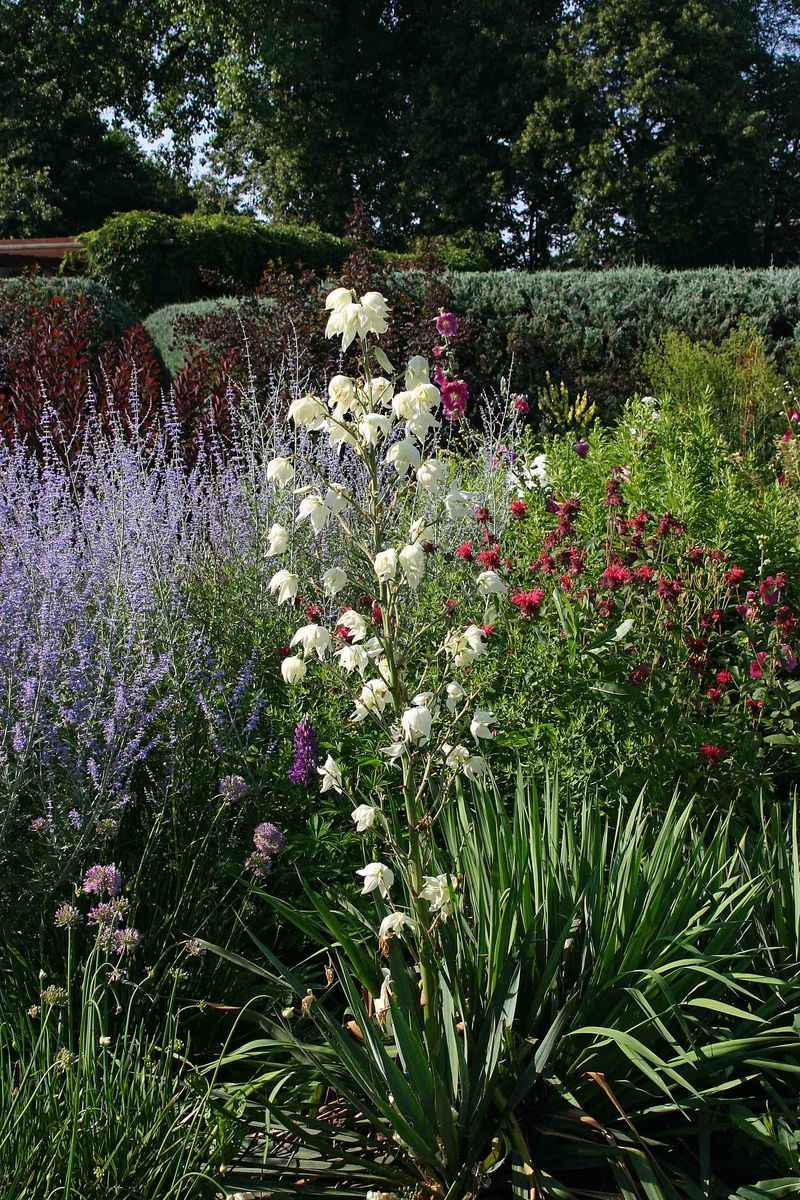
Many gardeners hear that a yucca dies after it blooms, and the worry is understandable. The better question is whether you mean one rosette or the whole planting.
Those are two different things, and the answer can differ by species.
A peer-reviewed study of Yucca glauca, published in AoB Plants, describes the flowering rosette dying and being replaced by new rosettes. That allows the clump to keep going.
It is a useful picture of how a single rosette and a whole planting can have different fates.
It is only an example from one species. Yucca covers many species, so that pattern should not be treated as a rule for every yucca in a New Jersey yard.
A stalk also cannot diagnose your plant, because flowering is a normal event and does not by itself show disease or distress.
The Yucca filamentosa study from Florida, Althoff and colleagues, treats flowering as part of the plant’s regular reproductive life, not as a sign of trouble.
Here is a next action. Look at the base of the plant for smaller rosettes or offsets, and watch the leaves over the following season.
Firm green foliage and fresh growth around the base are reassuring, while a clearly soft or collapsing crown would be worth showing to a local extension office.
You can remove the spent stalk for tidiness
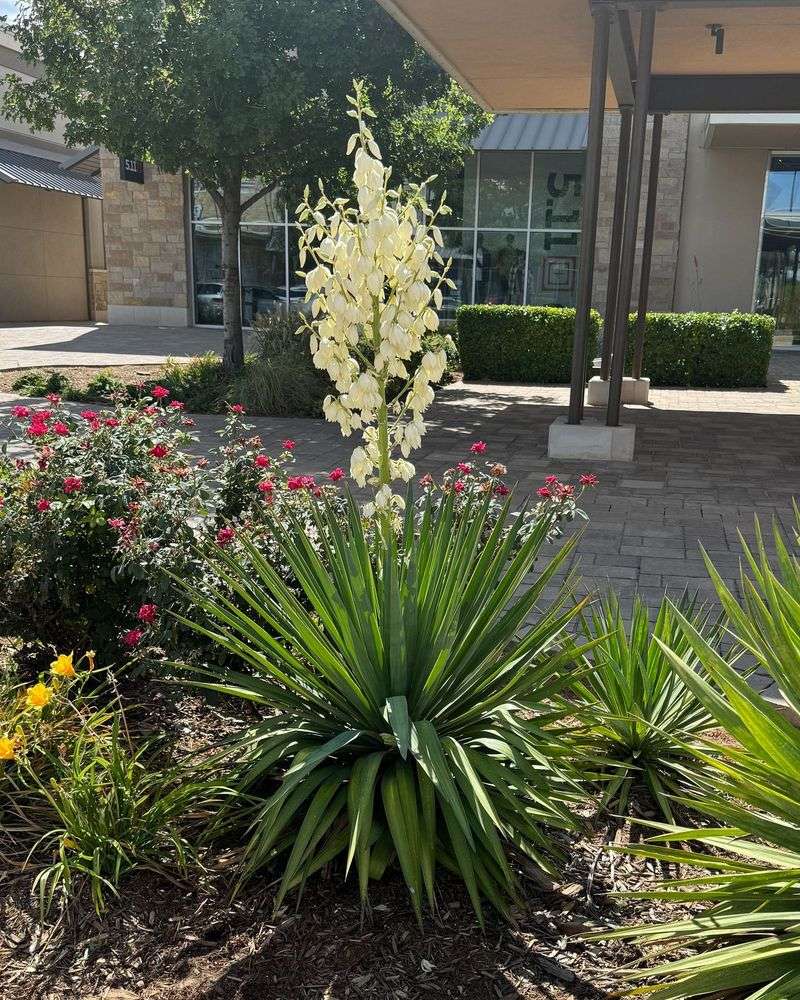
Once the last flowers drop, the stalk can look bare and brown. If that bothers you, taking it out is a perfectly reasonable choice.
Think of it as housekeeping, like deadheading a perennial.
Extension sources describe it that way. University of Illinois Extension answers a gardener’s timing question about removing yucca flower stalks, and Virginia Cooperative Extension lists removing the spent stalk as routine care.
Neither presents it as a treatment the plant needs.
That means you can skip it without guilt. The sources reviewed do not say that cutting the stalk will save the plant, prevent decline, or make it bloom again.
Those are common beliefs, but they are not backed by the pruning guidance.
So the decision comes down to looks and preference. A tall dried stalk can be a nice vertical accent in a border, while others want a clean, compact clump.
Both are fine.
If you do cut it, wait until flowering is clearly finished, so you are not removing a stalk that is still in bloom. The final section covers where to cut and how to stay safe while doing it.
Leave the stalk if you want to keep the seeds
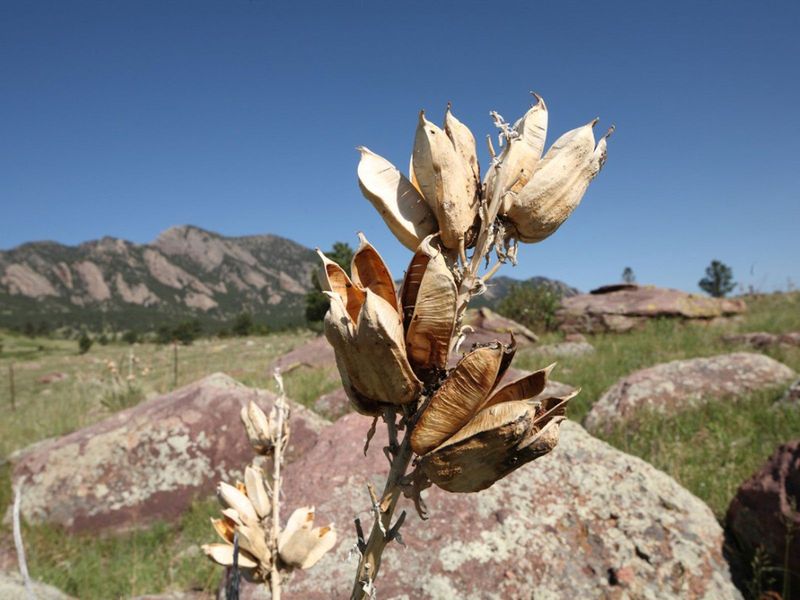
After the flowers fade, some yuccas form seed capsules along the stalk. If you would like to collect seeds, the simple approach is patience.
Leave the stalk standing while the capsules develop.
Guidance from University of Nevada, Reno Extension on pruning yuccas ties the timing to seeds: if you want to retain the seedheads, wait until the seeds mature or disperse before pruning. Once the capsules have dried and released their seeds, or you have gathered them, the stalk can come off.
This is just an option. Leaving the stalk is not shown to make the plant healthier, and removing it is not shown to harm it.
You are simply choosing between a tidier look now and a seed harvest later.
A few practical points help. Check the capsules from time to time, and collect seeds once they look dry and mature.
Keep in mind that seeds grown from garden plants may not match the parent plant, and young seedlings take time to develop.
If the standing stalk looks untidy by late season, you can still cut it once the seeds are gathered or have dispersed.
Cut the stalk carefully and leave the leaves
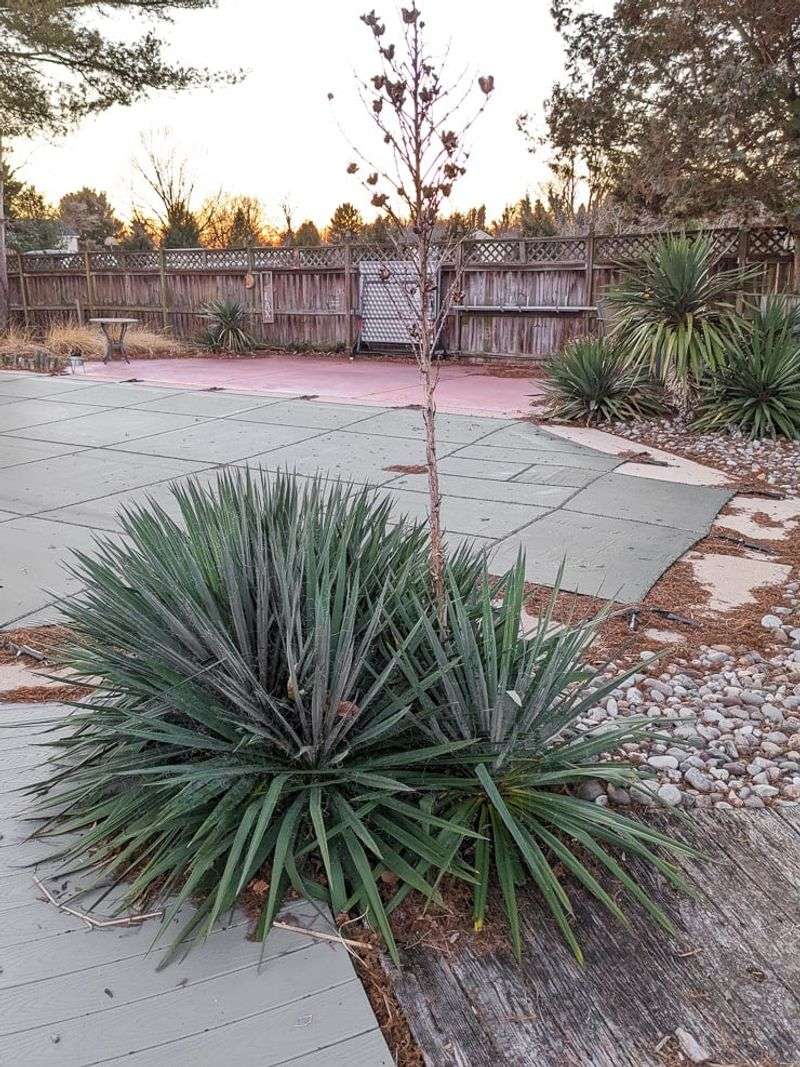
When flowering is over and you want the stalk gone, cut it low, near its base. Aim for a clean cut that removes the whole spent stalk.
Extension guidance from Virginia Cooperative Extension and University of California Agriculture and Natural Resources supports removing the flower stalk at the end of flowering.
Keep the job narrow. The brown stalk is finished, but the green leaves are living foliage, so leave them intact during ordinary stalk cleanup.
Cutting only the stalk keeps the rosette looking full.
Protect yourself, because yucca leaves end in sharp tips. NC State Extension describes the leaves as sharply pointed, and Virginia Cooperative Extension flags some yuccas as a pedestrian-safety concern.
Sturdy gloves and eye protection are sensible when reaching among the leaves, and long sleeves help too.
Pets deserve a thought as well. The ASPCA lists yucca as toxic to dogs, cats, and horses, with saponins as the toxic principle, so keep cuttings out of reach and dispose of them promptly.
A spent stalk is only a finished flower stem. Take it off if you like, and the leaves will carry on.
Share this story