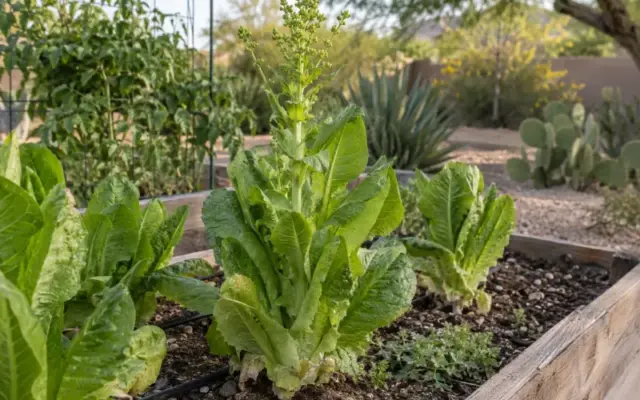
A tall stalk rising from the middle of your lettuce is a strong sign that the plant is bolting, which means it is switching from making leaves to making flowers and seeds. You can pinch off the flowers, but that only might buy a little more harvest time.
It will not turn the plant back into a leafy one. Here is how to tell what you are really seeing and what to do with the leaves.
Flowers are a stronger sign than height alone
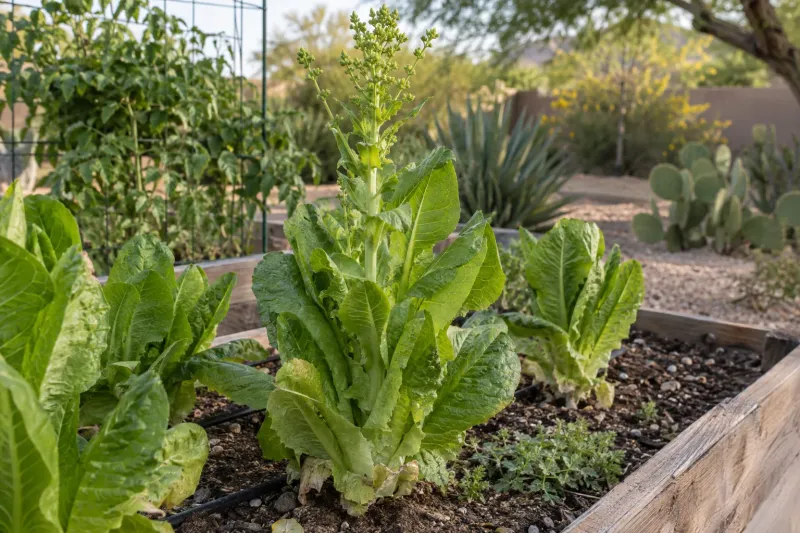
You walk out to the garden and see something new: a pointed shoot climbing out of the middle of your lettuce. It is natural to wonder if the plant is finished.
A rapidly elongating center with developing flowers is a strong sign of bolting, which means the plant has shifted from leafy growth toward flowering and seed production.
Height by itself does not settle the question. Leaf lettuce naturally grows with its leaves arranged loosely along a short stalk, so a plant that looks open or raised may simply be growing the way that type grows.
UF/IFAS lettuce guidance describes this loose habit, so a stalk-like look alone should not alarm you.
Here is a simple visual check. Look at the center of the plant and ask whether it is stretching upward fast, getting taller from one week to the next.
Then look for branching tips with flower buds, or small yellow flowers, forming at the top.
If the center is shooting up and buds are forming, you are most likely looking at bolting. If the plant is just leafy and a bit loose, with no climbing center and no buds, keep harvesting as usual.
Make this check before you pick up the scissors, because the right next step depends on what the plant is doing. UF/IFAS also covers the general pattern in its page on vegetable bolting, which treats bolting as flowering in plants grown for their leaves or roots.
Heat can contribute, but it is not the only influence
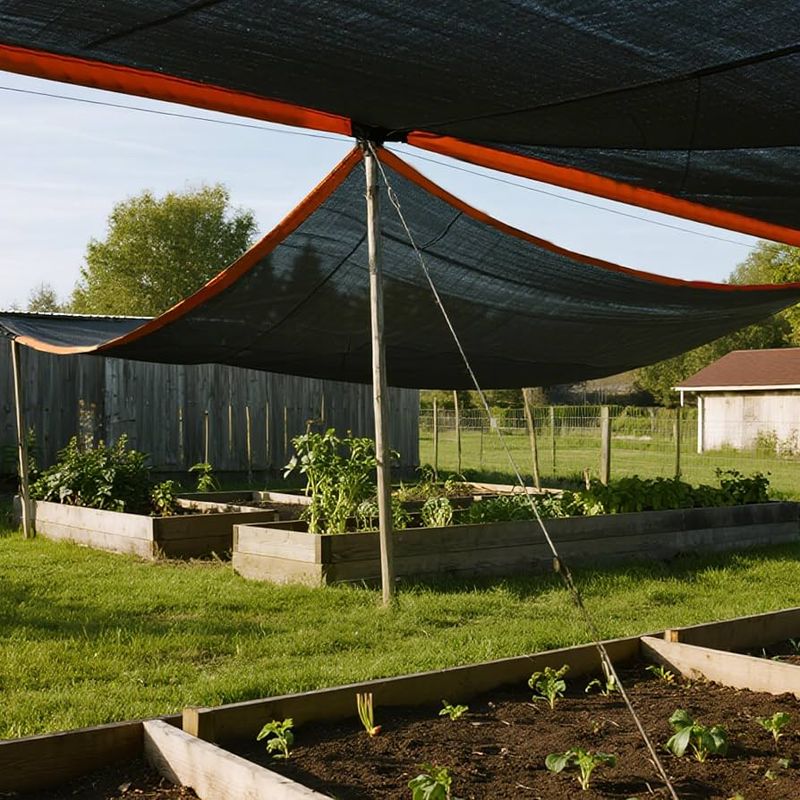
Florida heat gets most of the blame, and it often deserves some. Lettuce can bolt early when the weather turns hot.
UF/IFAS says lettuce prefers about 50 to 75 degrees F and suggests afternoon shade or shade cloth when temperatures go above 85 degrees F, according to its lettuce growing guide.
Those numbers are growing recommendations. They are not a switch that flips every plant into bolting at one exact temperature.
Variety, plant age, and recent weather all change how a given lettuce behaves.
Heat is also just one piece of the picture. Extension sources such as UC IPM list longer days as another influence on bolting in some crops, and Utah State University Extension points to stress as a factor in leafy greens.
In practice, that means a spring planting can bolt as days stretch out and warm up together. A plant that dries out between waterings, or is crowded, may also bolt sooner than a neighbor that is comfortable.
When you see a stalk, think of several pressures stacking up rather than one culprit.
This is good news in a way. You are not failing as a gardener when lettuce bolts in Florida.
The season, the day length, and the weather are all pushing in the same direction.
Cutting flowers may buy a little time
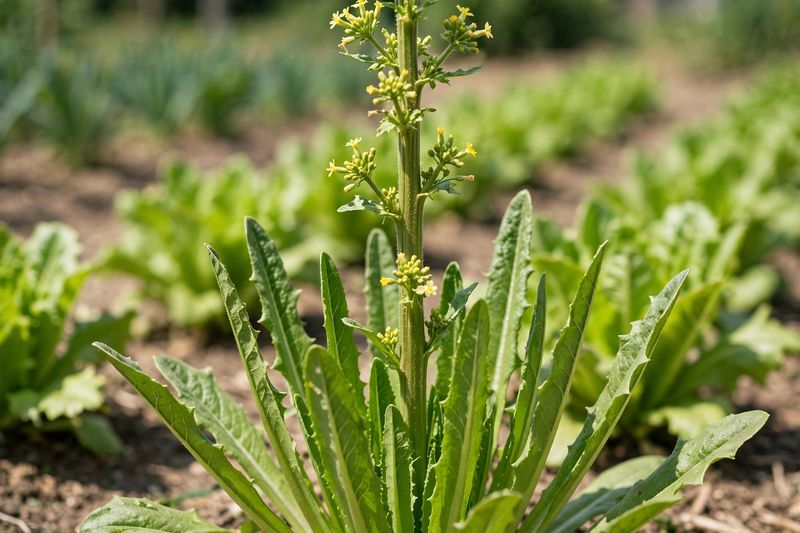
So, should you cut it? Pinching off emerging flowers is an option, and it may extend your harvest briefly.
That is the advice in UF/IFAS guidance on bolting vegetables, and the word “may” matters.
The guidance does not say that cutting a tall stalk reverses bolting. It also does not say the plant will return to ordinary leafy growth or to its earlier flavor.
The advice covers bolting vegetables in general rather than a test on lettuce stalks.
Set your hopes modestly. If you pinch the buds, you might get a few more days or a week of usable leaves.
You might also find the plant sends up new flower shoots again, or that the leaves keep getting tougher.
Here is a practical way to handle it. Pinch the flowers while they are small, use clean fingers or scissors, and harvest leaves right away rather than waiting.
Then check the plant again every couple of days.
If the leaves stay pleasant, keep going. If they turn harsh, pull the plant and use the space for something else.
Either way, you have lost nothing by trying.
Taste the leaves before deciding to keep the plant
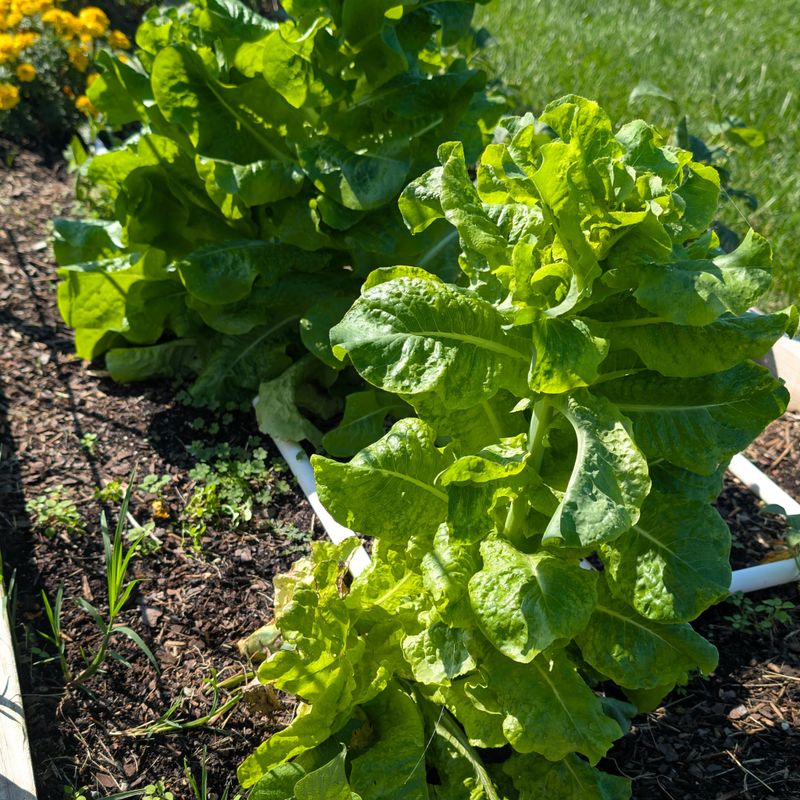
Your tongue is the best tool here. Bolting often comes with bitter or poorer-quality leaves, but that is a tendency, not a rule.
Some bolting plants still give mild, pleasant leaves for a while.
Bitterness also has other causes. Heat, water stress, and plant age can all make lettuce taste sharper, as noted in a UF/IFAS summer lettuce document.
A bitter leaf alone does not prove the plant is bolting, and University of Minnesota Extension describes similar quality changes in cool-season crops.
To taste-test, pick a healthy-looking leaf from the lower or outer part of the plant. Chew a small piece and notice whether the flavor is fresh, slightly sharp, or harsh.
Try one from a different spot, too, since young leaves can differ from older ones.
This is a quality decision, not a safety one. The horticulture sources treat bitterness as a flavor and harvest-quality issue, and UF/IFAS bolting guidance does not call bolting a food-safety hazard.
Healthy leaves are fine to eat if you enjoy them.
If they taste good, keep harvesting. If you wince, that is your sign to move on.
Leaves that are slimy, moldy, or rotten should be tossed no matter what the plant is doing.
Harvest the leaves that are still usable
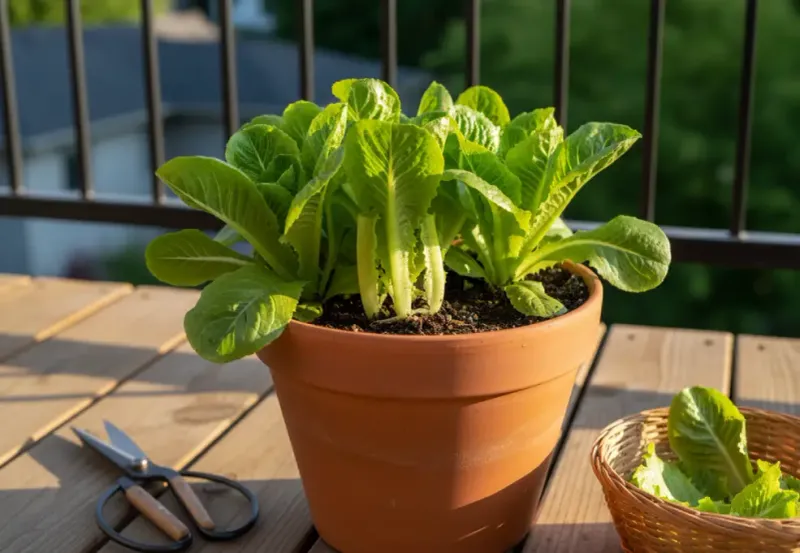
Once the taste test is done, put the good leaves to work. For leaf, butterhead, and romaine lettuce, UF/IFAS recommends picking the larger outer leaves first.
The same lettuce guide says these types can also be cut about two-thirds of the way down, leaving the base and growing crown.
Crisphead lettuce is different. It is harvested as a whole head, so if yours has started to bolt, you will usually take the entire plant at once.
With a bolting plant, a good plan is to harvest generously now rather than a little at a time. Pick everything that tastes good, since quality may slip over the next several days.
Bring a bowl and cut in the cool of the morning if you can.
After picking, rinse the lettuce under running water. FoodSafety.gov advises this approach and says not to use soap, bleach, or commercial produce washes, as explained in its food safety steps.
Gently rub the leaves with your hands while rinsing, then dry them with a clean towel or salad spinner. Store them in the refrigerator.
Strong-tasting leaves often work better mixed into sandwiches, wraps, or cooked dishes than eaten plain.
Use local guidance for the next planting
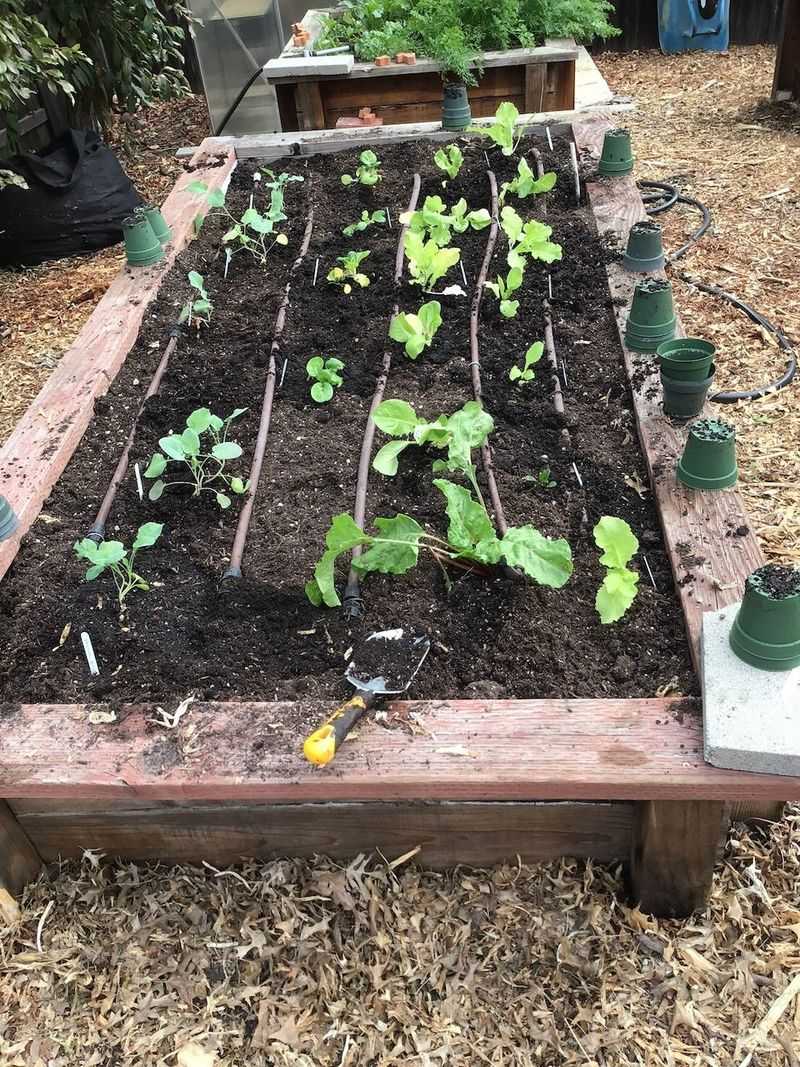
Rather than trying to rescue a plant that has begun flowering, put your energy into the next round. Florida is a long state with very different growing conditions from the Panhandle to the Keys.
Planting dates vary by location, so UF/IFAS points gardeners to a local planting guide or Extension office instead of one statewide date.
Your county Extension office can tell you when lettuce usually does well where you live. Many offices also offer printable vegetable planting calendars.
A quick call or visit can save you a failed crop.
Plan the weather side, too. UF/IFAS lists afternoon shade or shade cloth as growing advice when temperatures go above 85 degrees F, as described in its lettuce page.
That is a way to give plants a better chance, not a guarantee that they will never bolt.
Staggering your plantings can help, too. Sow a small batch every couple of weeks during your local window so you are not counting on one row.
Keep notes on when your plants started to bolt this year, and use that to adjust next time.
Lettuce is a short-season visitor in Florida, and the stalk is simply its way of saying goodbye.
Share this story