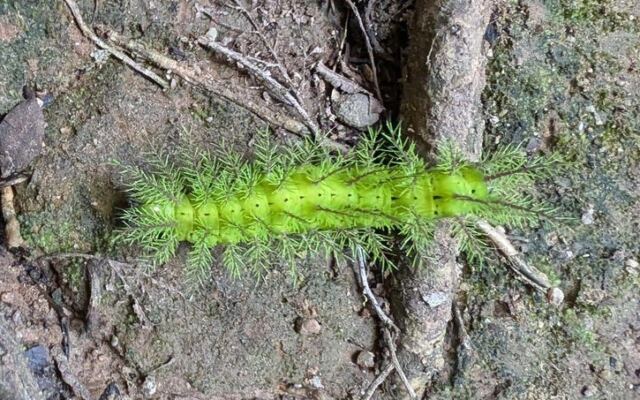
If a spiny green caterpillar just left a burning welt on your skin, you can start helping right now. Remove the caterpillar with a tool, lift the spines off with sticky tape, wash gently, and cool the spot with a wrapped cold pack.
Call 911 if you have trouble breathing, faint, or notice swelling of the lips, face, or tongue. Late-summer yard cleanup can put your hands near leaves where odd caterpillars hide, so a little know-how goes a long way.
Lift spine material with tape, not bare fingers
Start with the caterpillar itself, if it is still on you. Flick or lift it off with a tool such as a stick, tweezers, or a folded piece of paper.
Do not pick it up with bare fingers, because that can cause more contact with its stinging spines.
Next, press a piece of sticky tape gently onto the affected skin, then peel it straight off. Poison Control describes tape as a way to remove spines left in the skin.
Use a fresh piece each time and repeat a few times, since old tape loses its grip and can press spines back onto you.
Do not rub, scrape, or brush the area with bare hands. That can push spine material deeper or spread it to nearby skin.
Keep your expectations realistic. Tape can lift spine material, but it may not remove every spine or stop the burning right away.
The contact is a sting from spines, not a bite, and the University of Florida notes that Io moth caterpillar spines can cause pain on contact, so moving quickly and carefully is worthwhile.
Wash the skin, then cool the welt

Once the tape work is done, rinse the area gently with soap and water. Use a light touch and skip the scrubbing brush or rough towel.
The goal is to clear away leftover irritants without bothering the skin further, as Poison Control’s caterpillar guidance suggests.
Then cool the spot. Wrap a cold pack or a bag of ice in a thin cloth or towel and rest it on the welt.
Never put ice directly on the skin, since that can add irritation of its own.
MedlinePlus advises cooling for 10 minutes on, then 10 minutes off. A kitchen timer or phone alarm makes that easy to follow.
Think of cold as comfort care. It may take the edge off the burning, but it is not an antidote and will not undo the sting.
The University of Florida’s Io moth account also lists ice among its suggestions.
Skip homemade pastes as a main step. Baking-soda paste shows up in some general advice, but it is not a proven Io-specific treatment.
The welt can burn, itch, and fade on different schedules
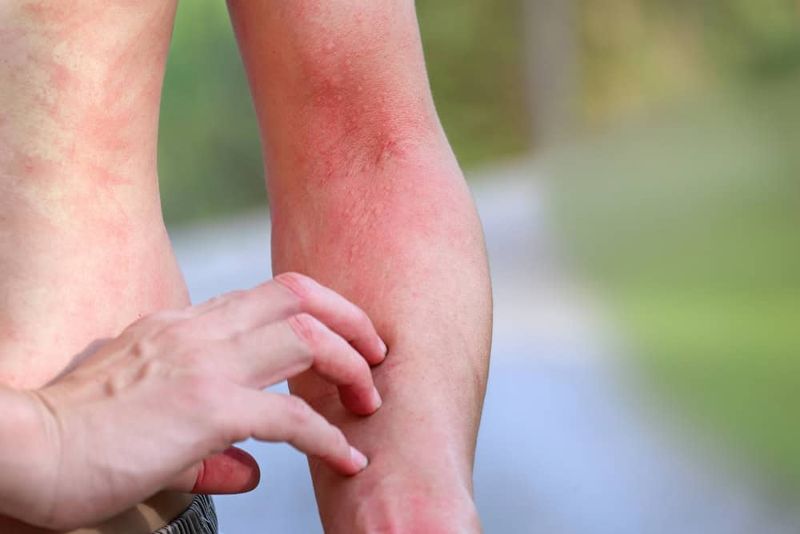
Contact with Io moth caterpillar spines can bring burning pain, redness, itching, swelling, or a raised welt. Not everyone reacts the same way, so your experience may differ from a neighbor’s.
Reported recovery times vary. The University of Florida account says pain usually resolves within a couple of hours, with the welt and redness fading within 6 to 8 hours.
Virginia Cooperative Extension says irritation may last a day or two.
Treat those as reported ranges, not a promise. Your skin may calm down sooner or take longer.
For itching, Poison Control suggests an antihistamine if needed, as noted in its caterpillar guidance. That is only for itch relief.
It is not known to neutralize Io venom or reliably prevent a reaction.
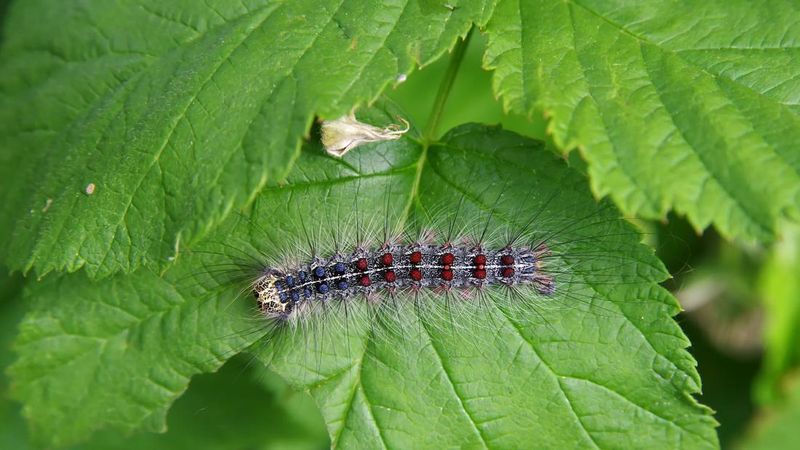
One more caution: a painful welt alone does not tell you which caterpillar was responsible. Other caterpillars can also cause skin reactions, so avoid guessing the species from symptoms.
Which symptoms call for urgent help?
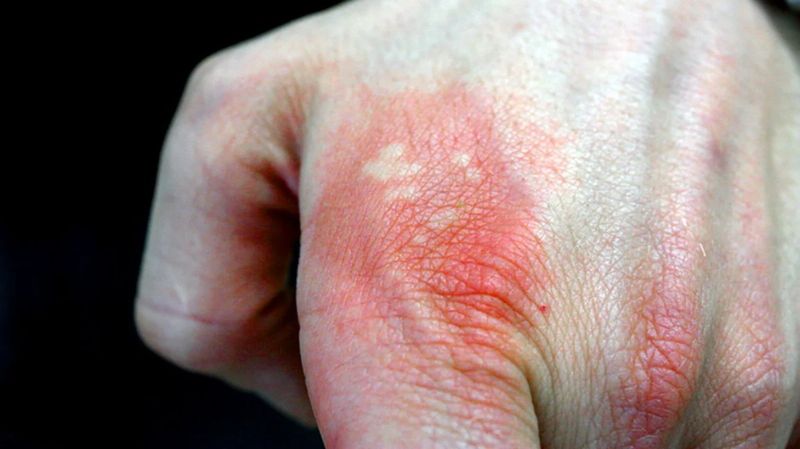
Most local reactions stay on the skin, but a few signs mean it is time for emergency help. Call 911 for difficulty breathing, fainting, or swelling of the lips, face, or tongue.
Do not wait to see whether these improve on their own.
Eye contact needs its own steps. Rinse the eye with lukewarm water, and get medical advice if irritation persists.
Avoid rubbing the eye, since that can drive spine fragments in further.
If you are unsure what to do, call U.S. Poison Control at 1-800-222-1222.
Poison Control’s caterpillar page covers when to seek urgent help and what to do for exposure.
A helpful way to sort it out is by location. Burning, redness, and a welt right where the spines touched fit the usual local reaction.
Trouble breathing, faintness, or swelling away from the contact spot is a different situation.
Keep the number saved in your phone before gardening season gets busy.
A late-season encounter is possible, but not the usual Minnesota timing
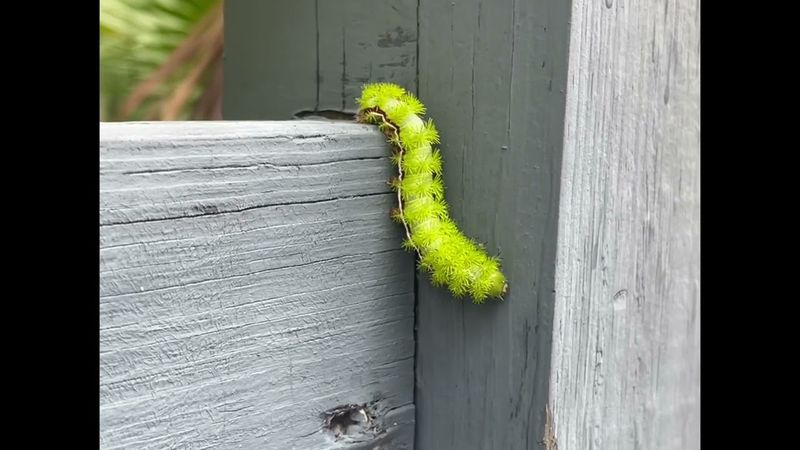
Minnesota-specific reference material gives a more careful picture than the idea of an August cleanup hazard. Minnesota Seasons describes one generation a year and lists late May through June as the season.
It also records a sighting on August 24.
So running into one late in summer or early fall can happen. The evidence does not show that late summer or early fall is the usual Minnesota timing.
Be careful with outside dates, too. A Missouri Extension guide lists larvae from July to October, but that timing should not be applied to Minnesota.
If you do spot one, Io larvae are typically green with red-and-white markings along the sides, and they carry stinging spines, according to the University of Florida. Looks alone do not prove the species, though.
That is why the safest habit is simple: treat any unfamiliar spiny caterpillar as a reason to keep your bare skin away from it.
Keep bare hands away from unfamiliar spiny caterpillars

Pull on a pair of gardening gloves before you reach into leaf piles, brush, or tangled plants. Gloves cut down the chance that spines will touch your skin.
Poison Control notes that some spiny or hairy caterpillars can cause trouble.
That does not mean every fuzzy or colorful caterpillar is dangerous. It just means an unfamiliar one is not worth picking up barehanded.
A stick or a tool can move it out of your way.
Sometimes the best cleanup trick is a pause. A caterpillar you leave alone cannot sting back, and the leaf pile will still be there in a minute.
Share this story