
Arizona law gives you a limited right to cut back plant growth that crosses onto your land, as long as you stop at the true property line. The main court decision on this point, Cannon v.
Dunn, ties that right to an owner who is injured by the growth. A bougainvillea draping over your wall can feel like a clear case, but the details matter.
Knowing where the line sits and what the case does not say can save you from a costly neighbor dispute.
What Cannon actually supports
Cannon v. Dunn is an Arizona appellate decision, and it is the leading published case on encroaching plants.
In it, the court said an owner who sustains injury from branches or roots of a tree or plant on adjoining land may cut the growth back to the property line without notice. You can read the opinion text for Cannon v.
Dunn to see that language in context.
The facts matter, though. The dispute involved eucalyptus roots, not bougainvillea, and it was not a fight over an overhanging branch.
So the statement about branches is broader language than the case itself required.
The injury wording is a key limit. The opinion frames the right around an owner who is hurt by the growth, so it does not clearly settle what happens when branches cross a line but cause no concrete harm.
In Cannon, the court found no actual damage from the roots and denied both damages and an injunction.
Put together, the case supports a limited right to cut encroaching growth back to the true line when you are injured. It does not give you unlimited permission to prune anything that crosses a boundary, and it does not say Arizona law clearly allows cutting every branch the moment it passes over.
A neighbor’s bougainvillea may fit the principle, but the decision does not name it.
The wall may not mark the property line
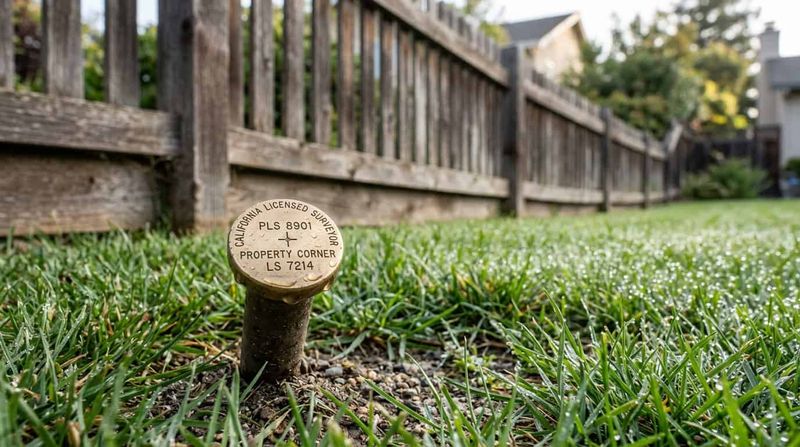
Before you decide any bougainvillea is on your side, you need to know where your side actually ends. Many people assume the wall or fence is the boundary, and that guess can be wrong.
Apache County advises residents not to rely on a separating fence to show the property line accurately.
That does not mean your wall is misplaced. It means a wall is not proof either way.
Walls get built for convenience, and they may sit a little inside or outside the legal line.
If you are unsure, start with your property records, such as your deed and recorded plat. If those leave doubt, hire a registered land surveyor to mark the line.
Surveyors work under rules like the Arizona boundary survey minimum standards set by the state board that registers them.
Treat this as a checking step, not an accusation. Once the line is marked, you can see whether the vines truly cross onto your land and by how much.
Photos taken before any work begin can also help if the neighbor later disagrees.
Where a permitted cut must stop
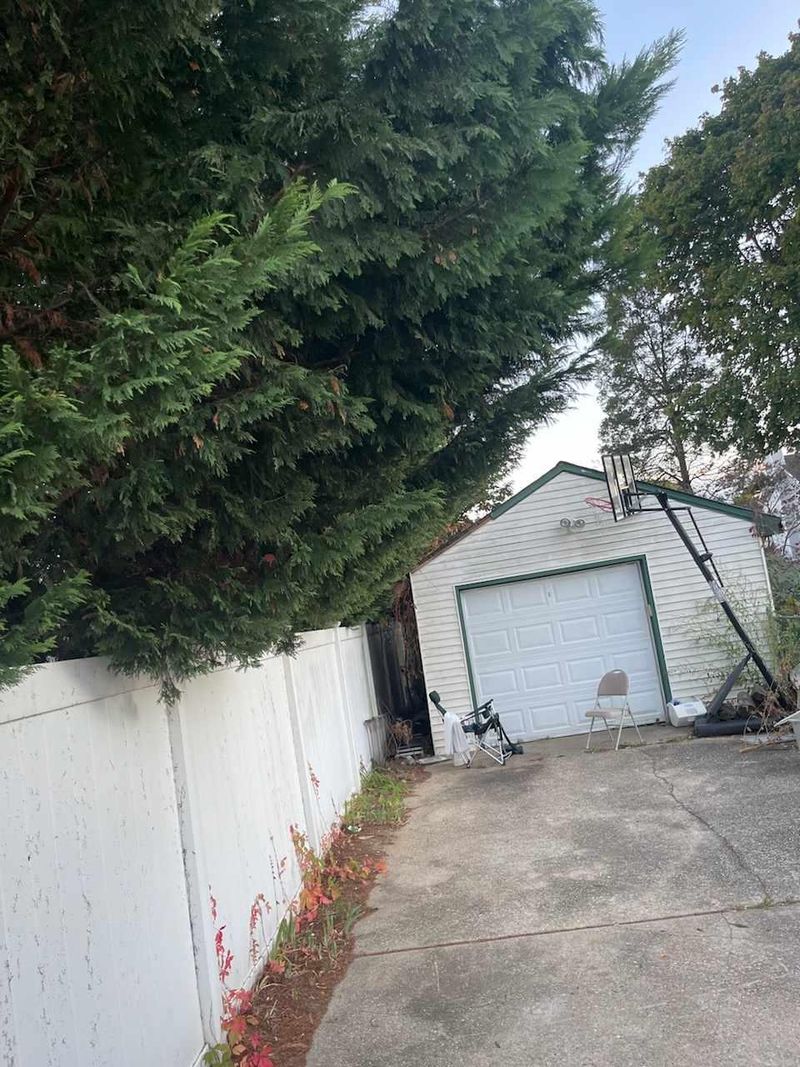
The supported cut is narrow. You trim only the growth that crosses onto your land, and you stop at the actual property line.
In Cannon, the court’s language is about cutting back to that line, as described in the published opinion.
Notice what that rules out. The line is not automatically your wall, a fence post, the plant’s trunk, or some point on your neighbor’s side.
If a vine crosses the line by two feet, the supported cut removes those two feet, not the whole plant.
Cannon also does not authorize entering your neighbor’s property. You should not climb over the wall, step into their yard, or cut from their side.
Reaching a cut point from the neighbor’s land is a different matter from trimming what hangs over your own.
Sometimes a clean pruning cut is impossible from your side. A stem might attach to a wall top or sit just out of reach.
In that case, ask your neighbor for permission, or arrange for a qualified professional to do the work with that permission in hand. A short, friendly conversation usually costs far less than a dispute over a ruined hedge.
Check the rules for your property

Court language is only one layer of rules. If your home is in a homeowners association, recorded covenants may govern landscaping and require approval for certain work.
Cannon’s limited framing does not wipe those out, so read your documents before you cut.
An Arizona Court of Appeals dispute shows how this can play out. In Kulpins v.
Weaver, HOA documents bore on landscaping and approval. That decision is unpublished and nonprecedential, so use it only as an example of why the paperwork matters.
Do not mix this up with Arizona’s protected-native-plant laws. A.R.S. 3-903 lists specified native plants, and A.R.S. 3-904 addresses their destruction by private landowners.
Those laws concern plants growing wild, not an ordinary cultivated bougainvillea, and they are not a special trimming rule for it.
Also check for any local rules that might apply to your lot. If the paperwork is unclear, ask your HOA or a local attorney before you pick up the shears.
Pruning advice is not legal permission
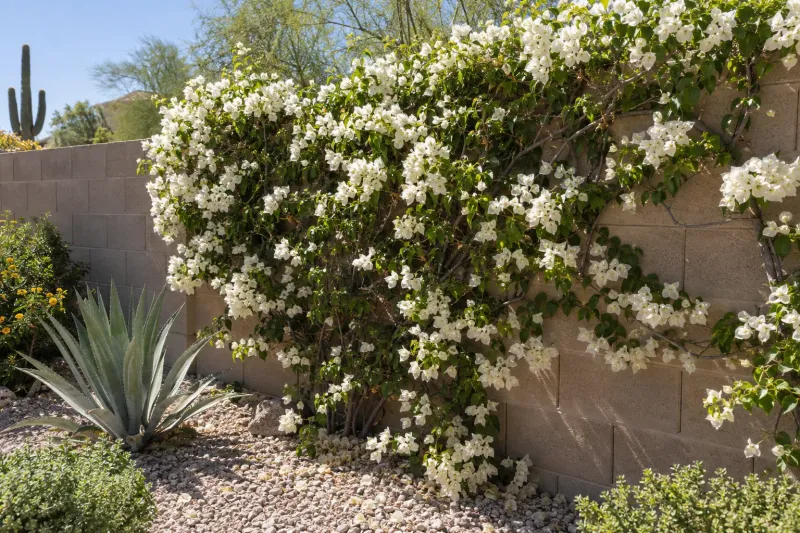
Gardeners prune bougainvillea for health and shape, and that is a separate question from what you may cut across a boundary. The University of Arizona Cooperative Extension offers guidance on pruning shrubs in Arizona’s low and mid-elevation deserts.
It says vigorous bougainvillea may need light pruning during the growing season.
Its table suggests removing vigorous shoots as needed. It also suggests pruning dead or frost-damaged wood in early spring.
That is plant-care advice for the person who owns the plant. It does not expand your legal authority over a neighbor’s vine.
A tip about when to prune does not mean you may cut a plant that sits on the other side of the line.
A practical example: even if early spring is the best time to remove frost damage, you still may not trim the neighbor’s stems beyond your boundary. Timing belongs to horticulture, while the right to cut belongs to the property line and the injury question.
If you want the plant tidied for its own health, the owner can do that, or you can ask permission.
Protect yourself from thorns and other hazards
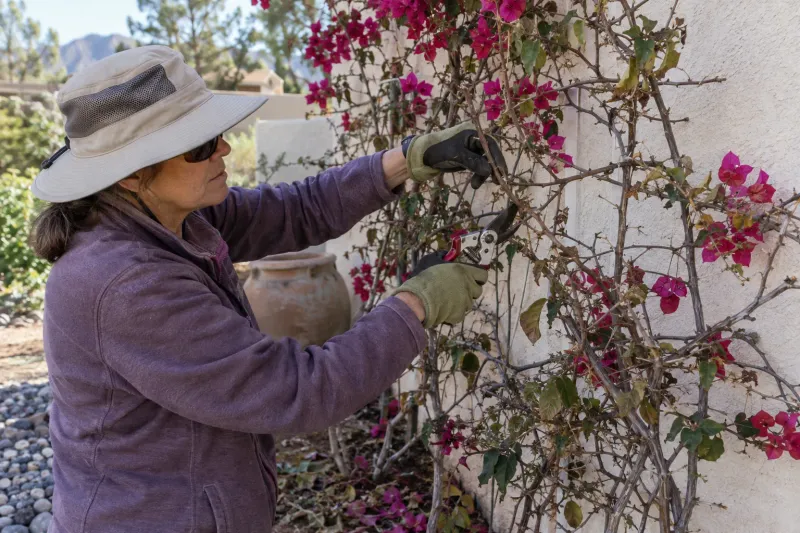
Bougainvillea fights back. An Arizona desert landscape guide lists large thorns on the plant.
UC Agriculture and Natural Resources recommends caution, protective clothing, gloves, sturdy shoes, and eye protection when working with it.
Look up as well as at the plant. OSHA’s tree trimming guidance advises assessing hazards and using protective equipment.
It also says work within 10 feet of a power line should be handled by trained, experienced line-clearance tree trimmers.
So if wires run near the vine, stop. Do not try to work around them yourself, and call the utility or a qualified professional.
Treat unstable ladders as a serious hazard too. A wobbly ladder on gravel, with thorny stems pulling at your sleeves, is how a small trim becomes an emergency room visit.
If you cannot reach the cut point safely from firm ground, that is a sign to hire help or leave it alone.
Powered equipment adds more risk. Hire a professional with the right training when the job calls for it.
Verify first, then keep the cut on your side
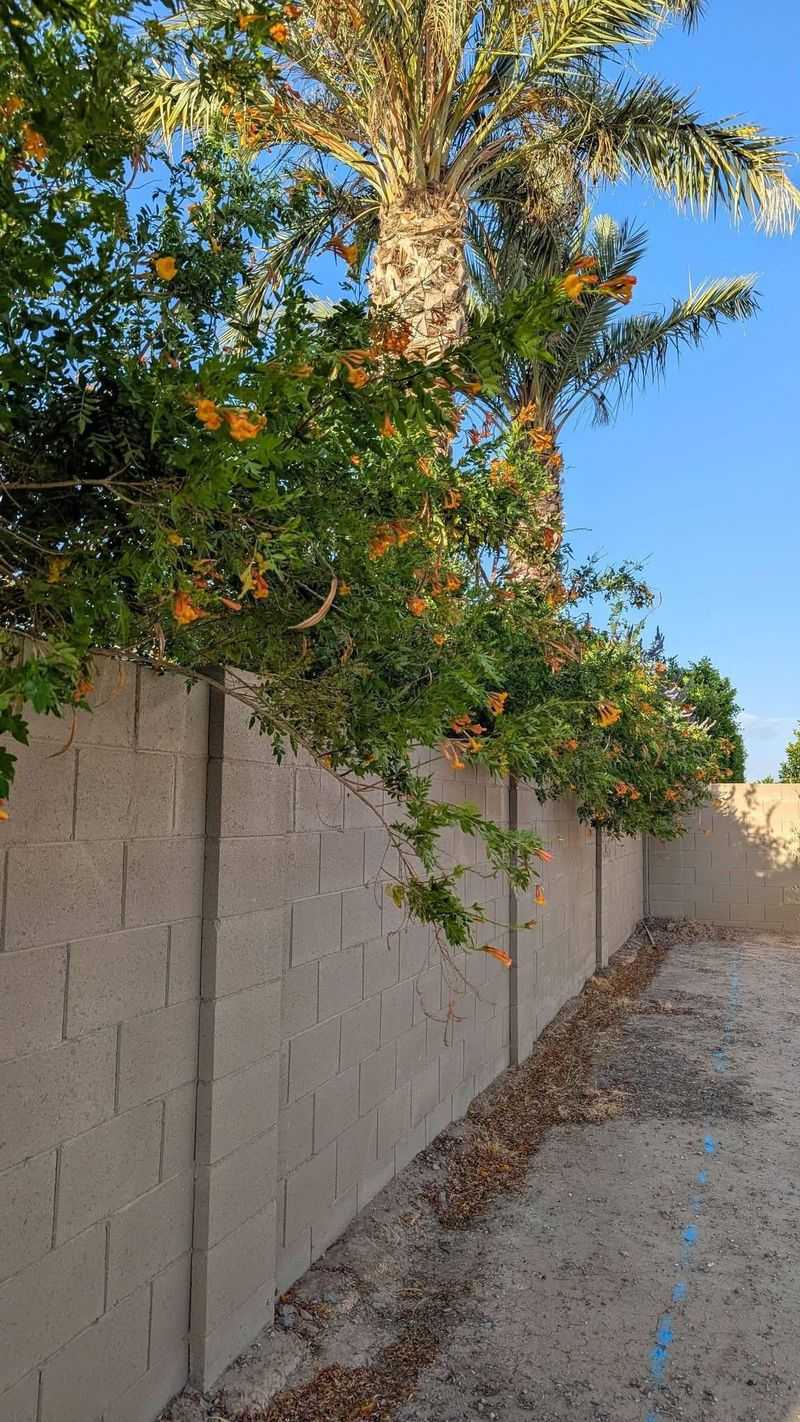
Start with the line. Apache County’s caution about fences is a reminder to confirm it through records or a surveyor.
Then limit any cut to growth that truly crosses onto your land, remembering that Cannon is not blanket permission to prune.
Check your HOA or covenant rules, and get permission if the work requires stepping onto the neighbor’s property. A vine can wait a week, but a boundary dispute can last for years.
Share this story