Tree of heaven is widespread in southern Lower Michigan, and it can come back from its roots faster than most people expect after a quick pull or a single cut. Many homeowners spot a skinny new shoot, yank it, and then find more popping up nearby.
Knowing what the tree looks like and how it regrows can save you a lot of wasted effort. Here is how to spot it, understand it, and decide what to do.
Recognize tree of heaven before removing it
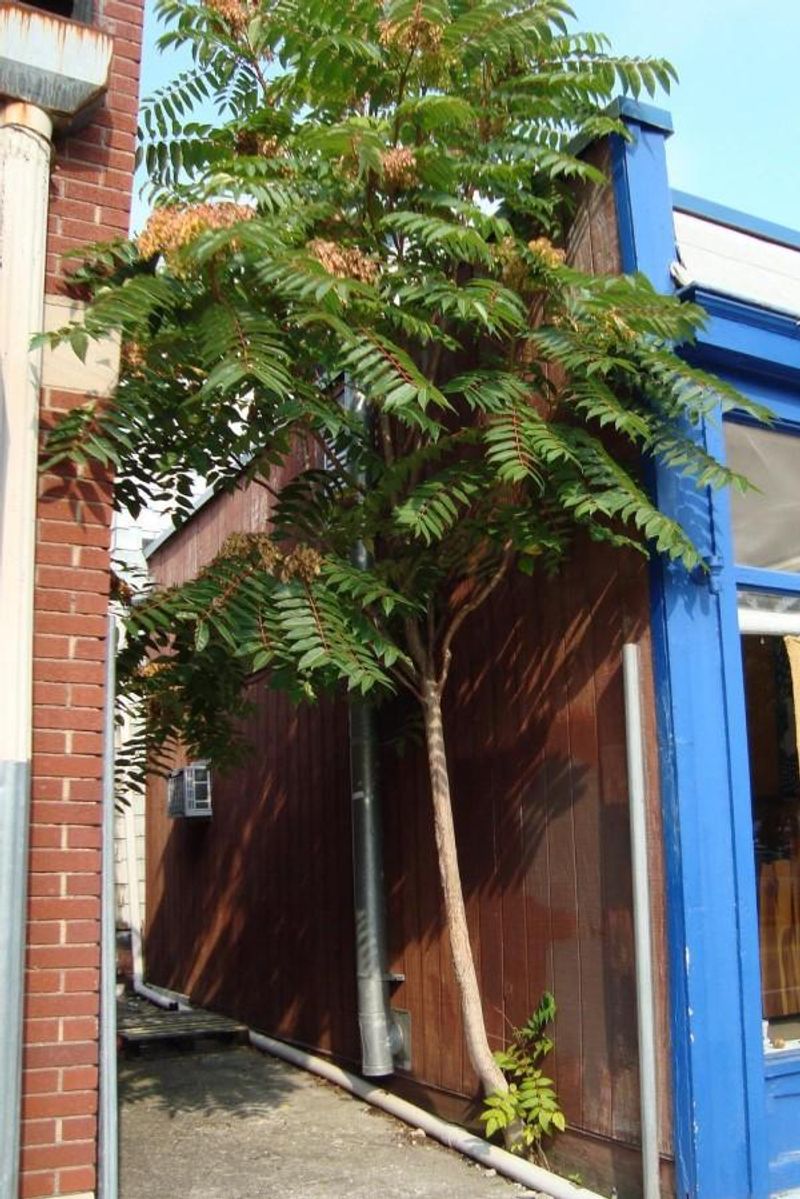
Walk through almost any older neighborhood, fence line, or vacant lot in the Detroit or Grand Rapids areas and you may pass this tree without knowing it. Michigan’s invasive species alert describes tree of heaven (Ailanthus altissima) as widespread in southern Lower Michigan.
That makes it a realistic suspect when an unfamiliar tree shows up on your property.
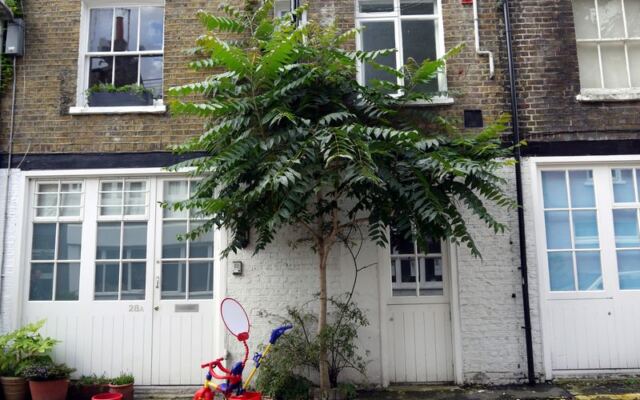
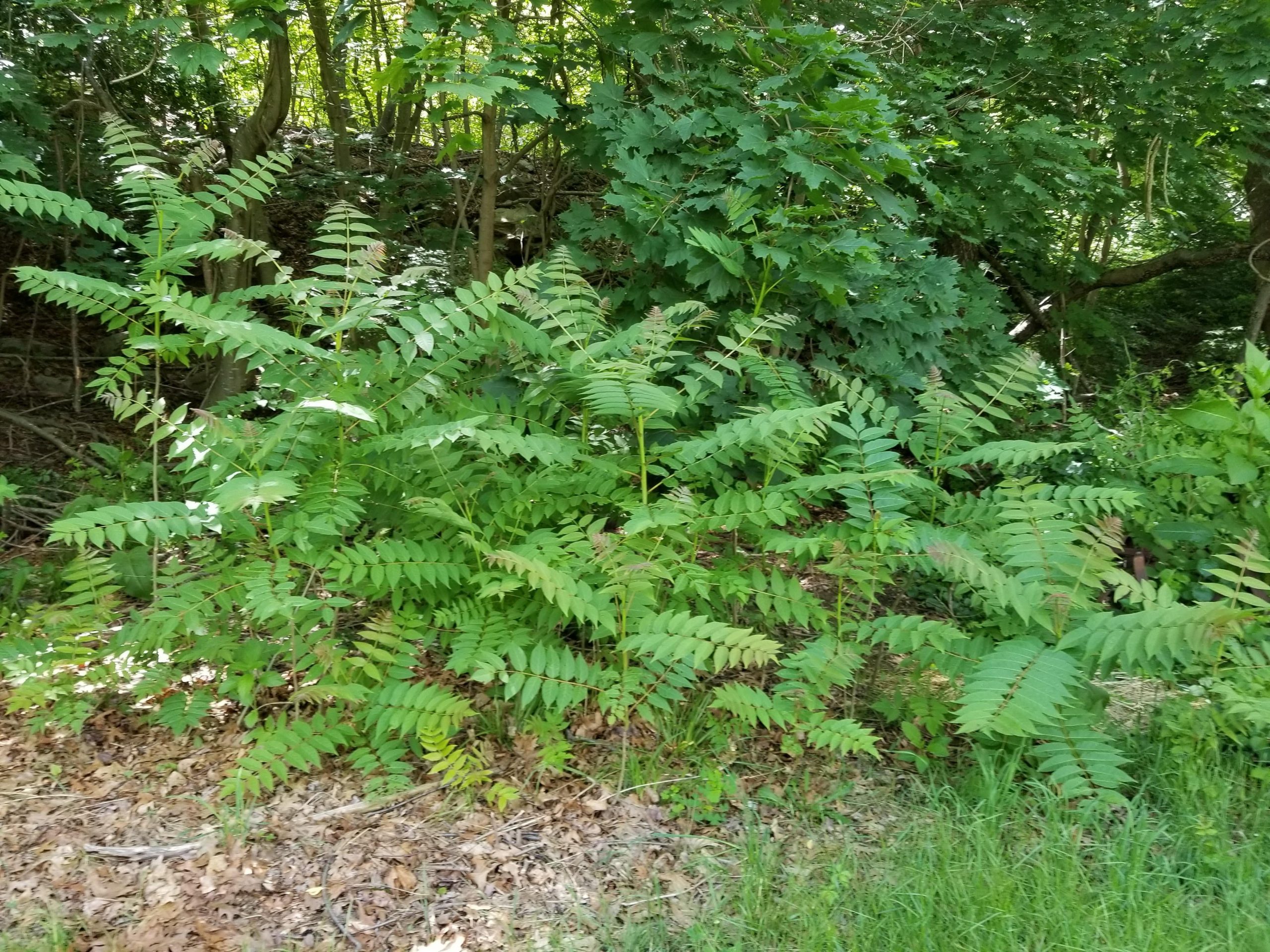
Start with the leaves. They are long and compound, meaning one leaf is made of many smaller leaflets arranged along a central stalk.
A single leaf can carry anywhere from 11 to 25 narrow leaflets, and those leaflets often have a few rounded teeth near the base.
Several other trees can fool you. Sumac, ash, black walnut, and hickory all have compound leaves too, so a quick glance can lead to a wrong guess.
Count leaflets, look closely at the edges, and compare what you see to photos from a trusted source.
Identification matters because the wrong call has real costs. You could spend a weekend removing a native tree, or you could ignore a tree that will keep spreading.
If you are not sure, take clear photos of the leaves, the bark, and the whole tree, then ask your local MSU Extension office or a certified arborist to confirm before you cut, pull, or spray anything.
A good habit is to check in summer when the leaves are fully out. Mark the tree with ribbon so you can find it again when it is time to act.
Growth depends on the tree and the site
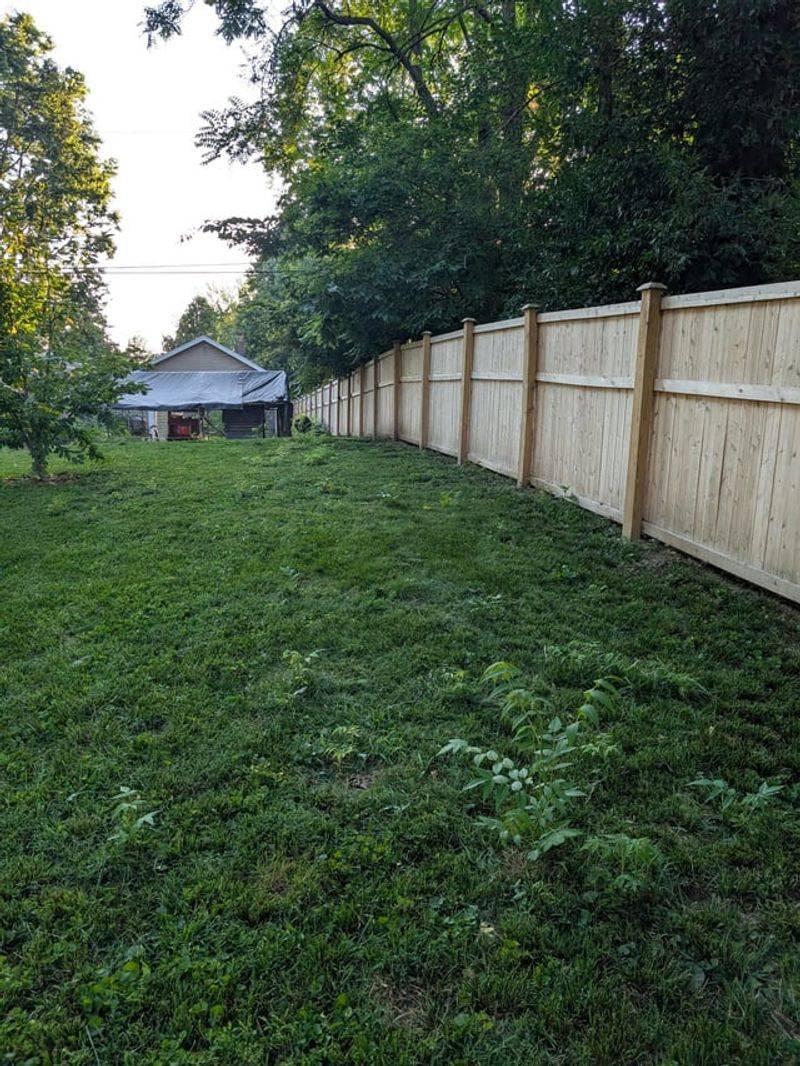
Gardeners often hear that tree of heaven grows at a shocking pace, and there is some truth in that. The USDA Forest Service describes it as fast-growing and says it reproduces both by seed and by root sprouts.
Still, one speed does not fit every yard.
The Forest Service separates growth by type. Seedlings, root sprouts, and bole sprouts (shoots that come from the trunk) each grow at their own rates.
A sprout fed by a large root system usually has a head start over a seedling that has to build roots from nothing.
Site conditions matter too. Sun, soil, and competition from other plants all change how well a young tree does.
A Forest Service species review notes that seedlings may establish less often under some conditions, so a shady, crowded corner may behave differently than a bare, sunny strip beside a driveway.
It also helps to be clear about what the sources do and do not tell us. They establish that the tree is present and that it has these growth traits.
They do not measure how quickly it is spreading from city to city, and they do not compare that spread with how much work homeowners put into pulling it.
For your own yard, the practical lesson is to watch what the tree is actually doing. Note how tall new shoots get in a season and where they appear, because that tells you more than any general rate.
A seedling and a root sprout need different treatment
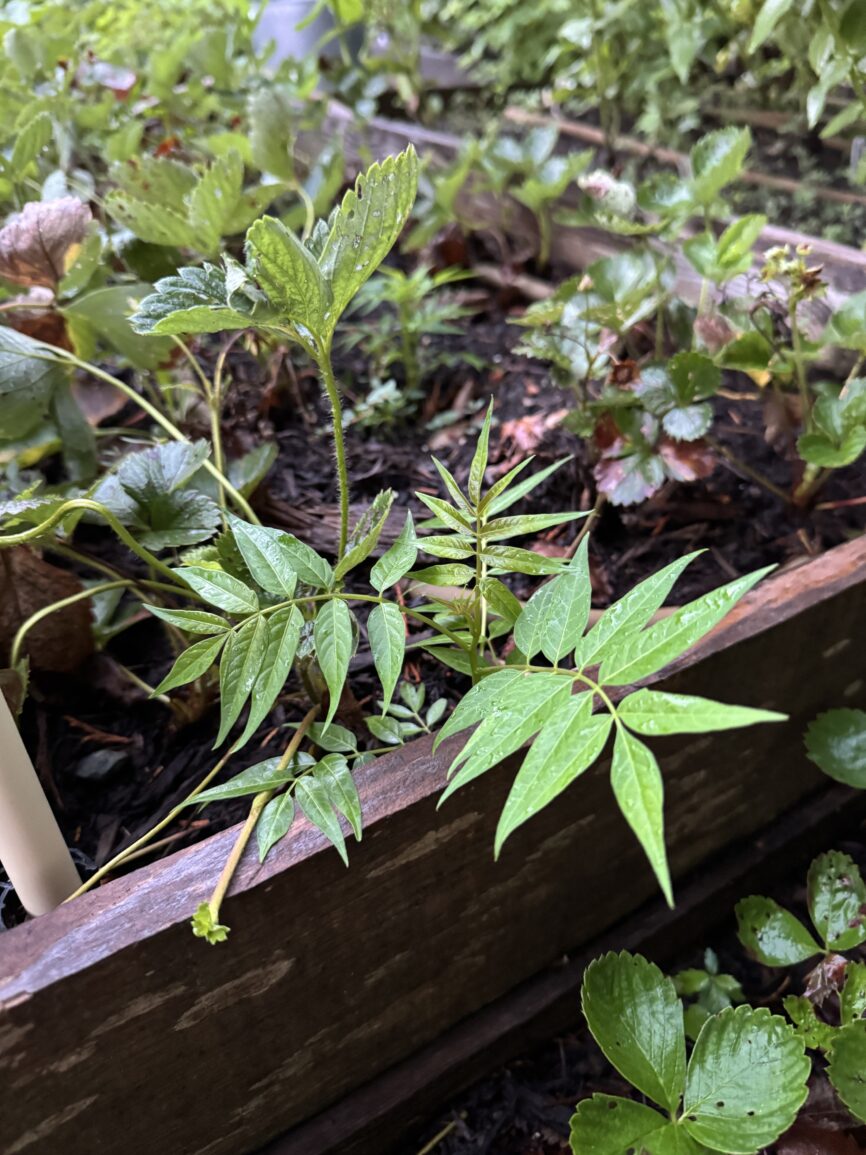
Two shoots can look nearly identical and still demand different handling. One may be a seedling that sprouted from seed this season.
The other may be a sprout sent up by the roots of a tree that has been there for years.
Michigan State University Extension says a very young seedling may sometimes be pulled, as long as the roots come out with it. Damp soil and a slow, steady tug help, and the job is easiest when the plant is still small.
A root sprout is a different story. It is connected to an established root system, so when you pull, it may snap off instead of coming free.
The stem in your hand looks like victory, but the roots underground are untouched.
Leftover root fragments are the other trap. MSU notes that pieces left in the soil can produce new shoots.
That is why a method that works on one tiny seedling can fail on a sprout from a mature tree.
Here is a simple test. Dig gently beside the shoot.
If you find a thin, short taproot, you likely have a seedling. If the shoot follows a long horizontal root toward a larger tree, you are dealing with a root sprout and should plan for more than pulling.
Cutting may lead to more shoots
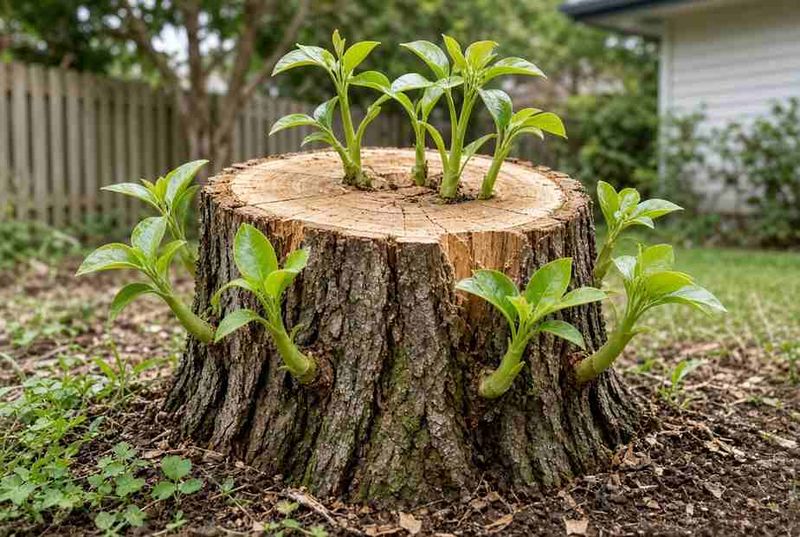
Cutting down a tree feels decisive, yet with tree of heaven it can start a second round. The Forest Service notes that damage to stems can stimulate sprouting, so a saw or mower may actually encourage new growth.
It helps to know where the new shoots come from. Stump sprouts grow out of the cut stump itself.
Root suckers are separate shoots that rise from the roots, sometimes several feet from the original trunk.
That difference matters for treatment. A Penn State Extension answer on tree of heaven control explains that treating the stump can prevent stump sprouts but not root suckering.
So a tidy, treated stump does not mean the yard is finished.
Cutting still has a place. MSU Extension says cutting or mowing young sprouts can work when it is repeated over several years, and cutting a tree can stop it from producing seed.
Keep expectations realistic, though. One pass is not eradication, and repeated cutting is not right for every tree or every site.
If you cut, plan on returning to the same spot again and again, and mark your calendar so the shoots never get a chance to rebuild.
Choose a control method that fits the tree
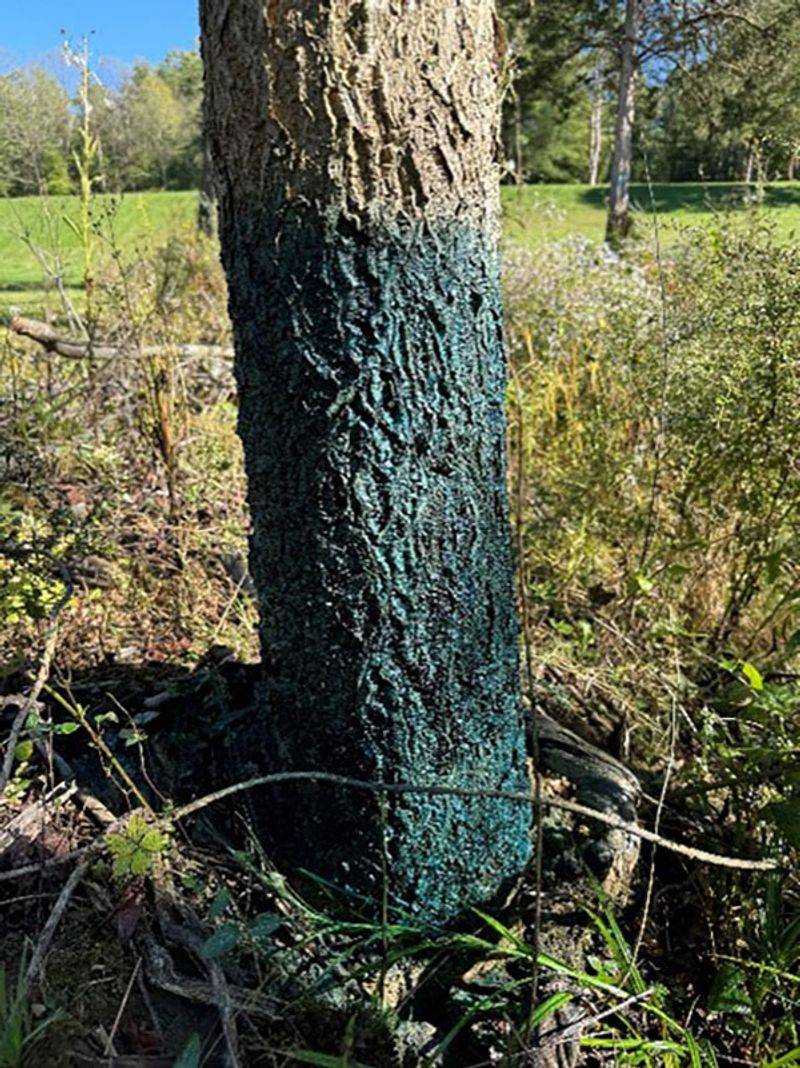
For larger trees, MSU Extension says herbicide is often the most efficient option. Treatment generally works best from mid-July to early fall.
Herbicide is one approach, not a cure-all, and it carries tradeoffs.
MSU describes methods by size. Foliar treatment, which means spraying leaves, suits young clumps.
Basal-bark treatment, applied to the lower trunk, fits smaller stems. Stem injection is used for larger stems.
Your choice should reflect what grows nearby. Glyphosate can injure any plant it touches, and triclopyr can harm other broadleaf plants.
Some herbicides also have longer-lasting soil effects, which matters if you want to plant near the spot later.
Always follow the product label, since it is the legal guide for how and where a product can be used. Some products may require a certified applicator, so check before you buy.
If the tree is big, close to buildings, or near prized plantings, hiring a licensed professional can be the safer call.
Physical removal has its own precautions. MSU says leaves, sap, and sawdust may irritate sensitive people, which does not mean everyone will react.
Wear long sleeves, gloves, and eye protection, and keep sap away from open wounds.
One more point on neighbors in your garden: Michigan sources list growth-inhibiting chemicals from the roots as a concern. That does not mean every struggling plant nearby is the tree’s fault, so look at soil, light, and water too.
Keep checking for regrowth
The first treatment is rarely the last step. After a larger tree comes down, MSU Extension recommends watching for root suckers for two growing seasons.
Check the stump, then scan the surrounding lawn and beds, since suckers can pop up some distance away.
A simple routine works well. Walk the area every few weeks from late spring through early fall, and look for new shoots with the same long, many-leaflet leaves you learned to spot earlier.
Note where they appear so you can see whether the pattern shrinks or grows.
If you are cutting or mowing young sprouts, expect it to take multiple years. Each time you remove new growth, the roots lose some of their stored energy.
Skip a season, and they can recover.
When shoots do return, treat them as a signal, not a failure. Address them promptly, using a method that fits their size and the plants around them, and follow the product label if you use herbicide.
Spotted lanternfly is one reason some people want the tree gone, since it is a preferred host. But the insect uses many other plants, so removal is no guarantee against it.
Tree of heaven rewards the patient homeowner: the yard that gets checked is the yard that gets cleared.
Share this story