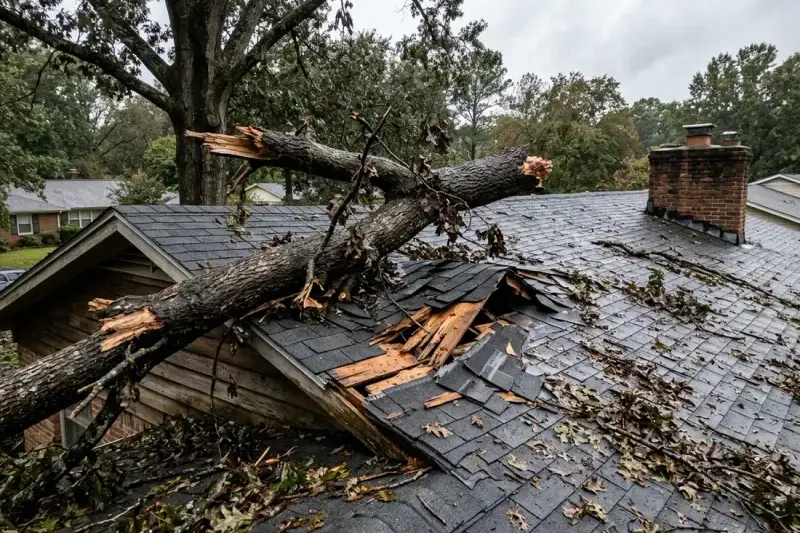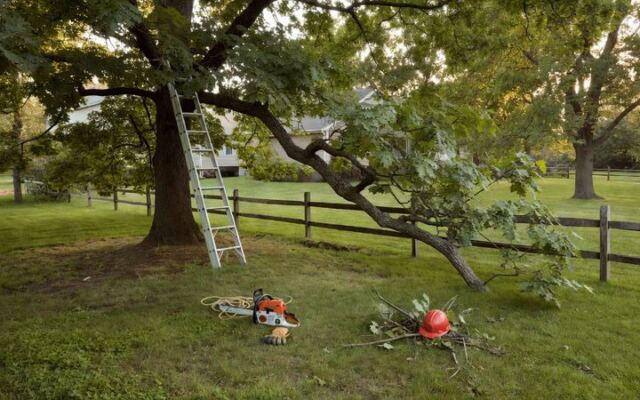
In Michigan, you can generally trim the branches of a neighbor’s tree that hang over your yard, as long as you stop at the property line. That simple rule comes from old court decisions, not from a single state law.
Where people get into trouble is in the details, like where the line really is, who owns the tree, and how the cut gets made. A few smart checks before you pick up the saw can save you a lot of headaches.
The general trimming limit is the property line

Michigan generally allows an adjoining owner to cut branches that project over their land, but not beyond the division line without the neighbor’s permission or an applicable agreement. That is the plain version of the rule.
It is a common-law rule built by courts over time, not a statute that hands out a license to prune.
The main authority is the Michigan Supreme Court’s 1904 decision in Newberry v. Bunda.
The court said an adjoining landowner may not cut projecting branches beyond the division line without permission. So the right stops where your land stops.
Newberry also dealt with a particular situation involving work on a fence done by agreement. That context matters because it shows permission or a specific arrangement can change the picture.
It does not mean an agreement hands you an unlimited right to cut on the neighbor’s side, and readers should not treat it that way.
A later Michigan Court of Appeals opinion, Drake v. Converse, repeats the same idea.
When a tree stands on one owner’s land, the neighbor may cut branches overhanging their own property, but not past the boundary. Drake is unpublished, so it works best as an illustration of how courts describe the rule, not as the controlling source.
Put simply, think of the property line as an invisible wall running straight up from the ground. Anything crossing it into your airspace is generally fair game to trim back to that wall.
Everything on the other side belongs to your neighbor’s tree and your neighbor’s yard.
Check the actual boundary before cutting
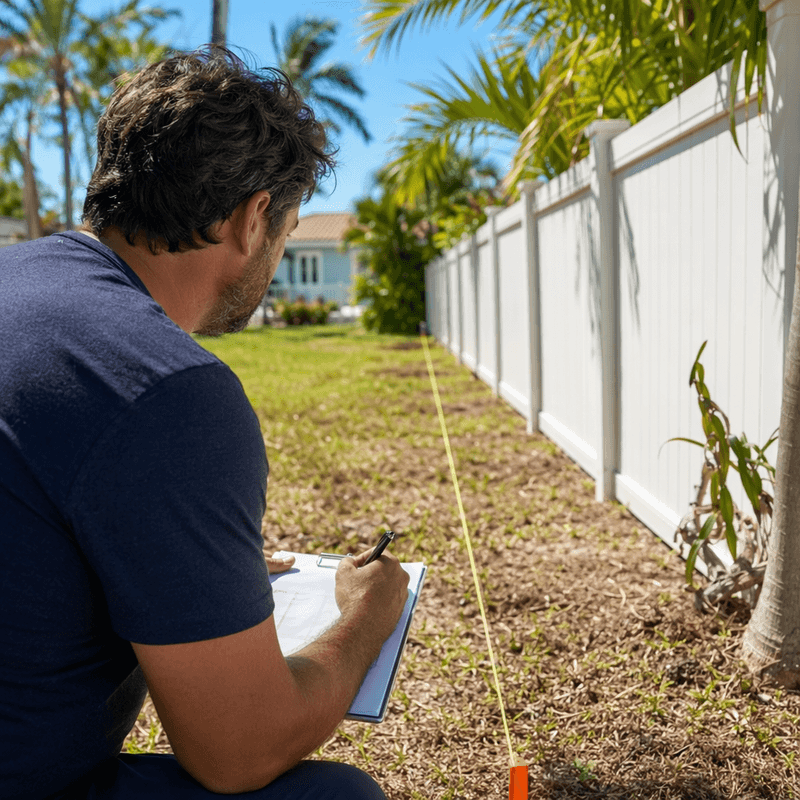
Before any saw comes out, find out where your property line really is. The trimming rule only works if you know exactly where the line sits.
Guessing can put you on the wrong side of it.
Many people assume a fence marks the boundary. That is a risky assumption.
The Drake v. Converse opinion shows how neighbors can mistake a fence for the line, and how that mistake can turn into a dispute once branches are cut.
Fences get built crooked, replaced in slightly different spots, or placed for convenience. None of that changes where the legal line runs.
A fence can sit a few feet inside or outside it.
Start with your deed and any property records you already have. If those leave doubt, ask a qualified professional to help you establish the line.
Whatever route you pick, the goal is the same: know the actual boundary, not the apparent one.
If you and your neighbor disagree about where the line is, that is a sign to stop. Trimming into a disputed area is how a small tree problem becomes a bigger property argument.
A tree on the boundary belongs to both neighbors
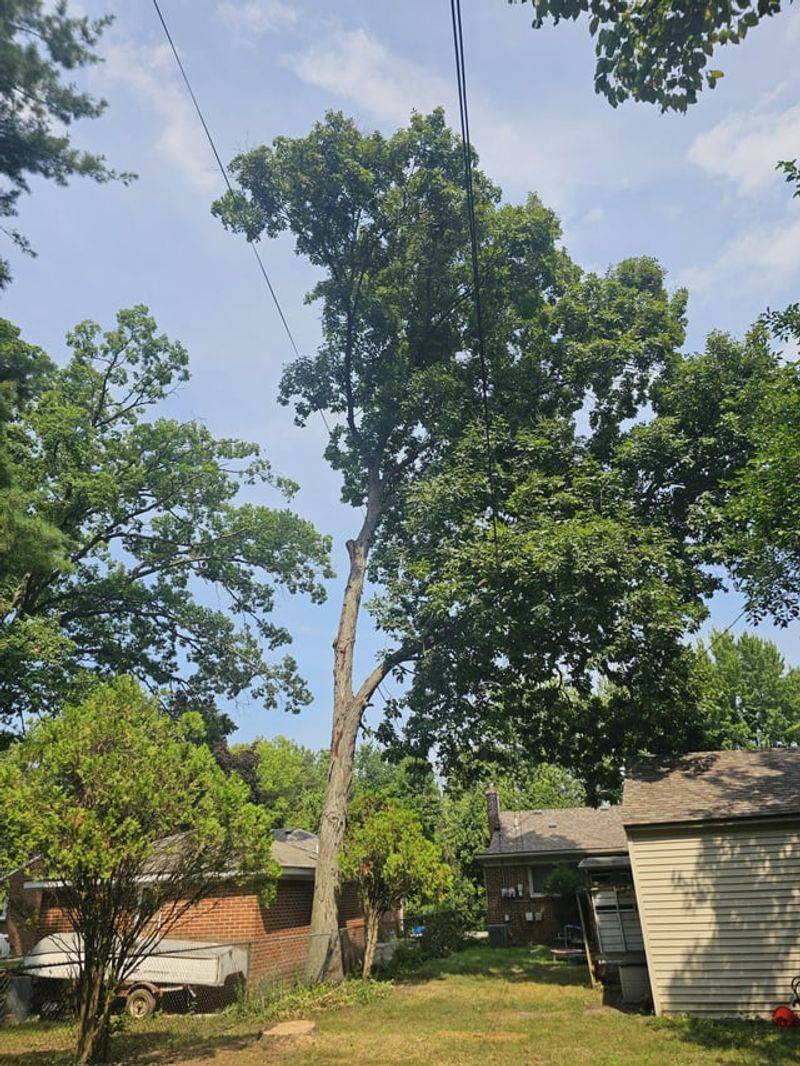
Not every tree fits the overhanging-branch rule. A tree rooted entirely in your neighbor’s yard is one thing.
A tree whose trunk stands right on the boundary is something else.
In Lennon v. Terrall, the Michigan Supreme Court treated a boundary-line tree as common property.
Neither owner may cut, injure, or destroy it without the other’s consent.
That is a very different position from the branch rule. When a tree sits wholly on one side, you can trim what crosses into your space back to the line.
When the trunk straddles the line, the tree belongs to both of you, so you do not get to decide its fate alone.
A practical clue: look at where the trunk meets the ground. If it clearly sits on one side, the branch rule is the starting point.
If the trunk seems to sit on or very near the line, treat the tree as shared until you know more.
In that case, talk with your neighbor before touching it. Getting consent in advance is far easier than untangling a disagreement over a tree that has been cut or hurt.
Do not assume you can cross the property line
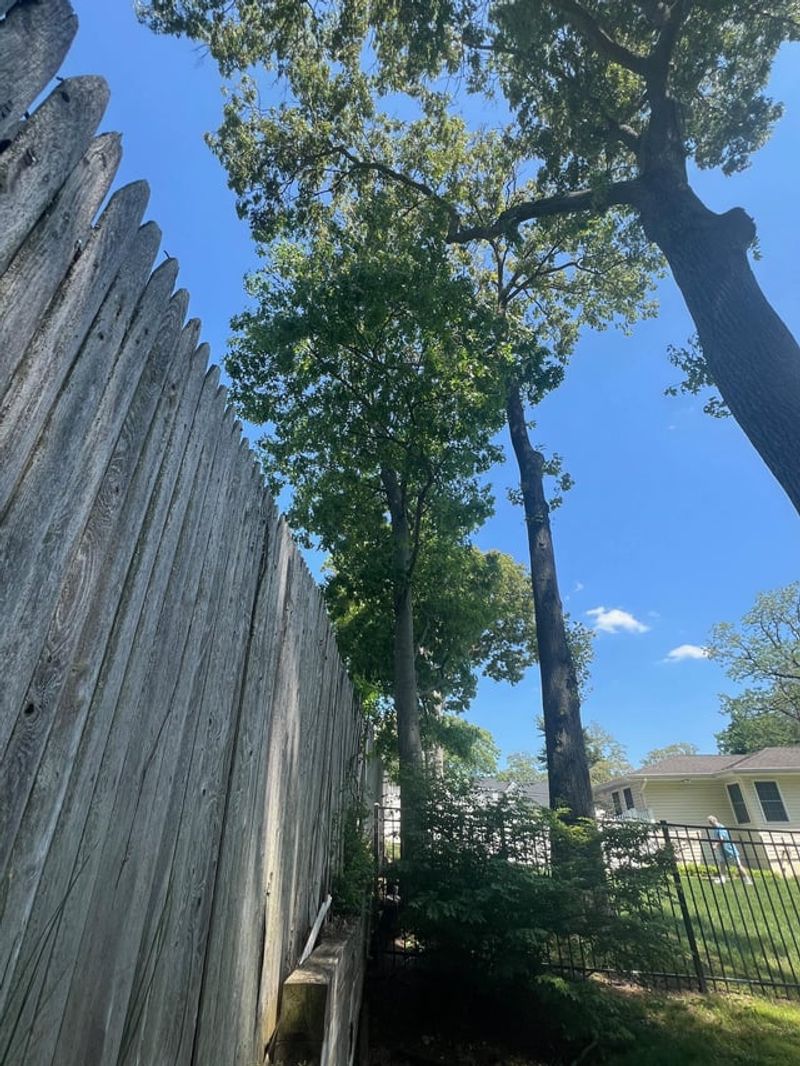
The cases on overhanging branches deal with what you may cut. They do not establish a right to walk onto your neighbor’s land to do the cutting.
Reaching a branch from the other side of the line is a separate question.
That means a ladder planted in the neighbor’s yard, or a step over the fence to get a better angle, is not covered by the trimming rule. Work from your own side unless the neighbor says otherwise.
Notice is a more fact-dependent topic. In Hickey v.
Michigan Central Railroad, the Michigan Supreme Court discussed the right to cut branches overhanging another’s soil, and it also talked about notice and abatement. It addressed when notice may be needed before dealing with a nuisance, and it noted an exception for urgent danger.
The setting there involved branches brushing a railroad engineer, so it is not a complete guide to every modern neighbor dispute. It would be wrong to say notice is always required, and just as wrong to say it is never required.
The sensible takeaway is simple. A friendly heads-up costs nothing, and it often gets you permission to reach the tree from their side.
If access is needed and the neighbor says no, that answer stands, and you should look for another approach.
Prune carefully to protect the tree
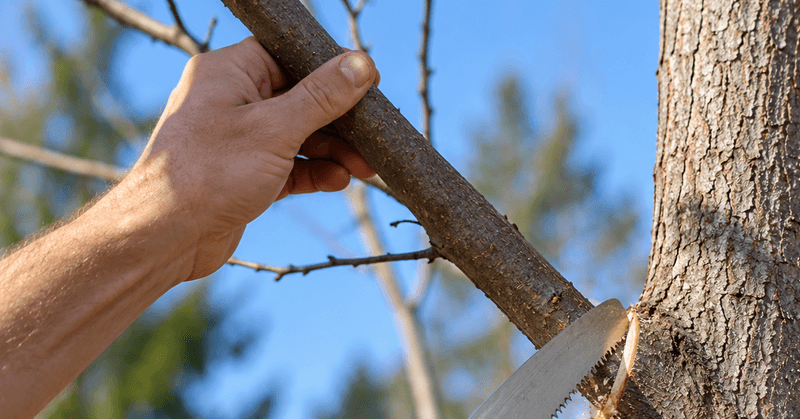
Staying inside the legal line is only half the job. How you cut also matters, both for the tree’s health and for avoiding a fight.
The advice below is horticultural, not a legal standard.
According to MSU Extension’s pruning guidance, cut back to another branch rather than leaving a random stub. Avoid cutting into the branch collar, the slightly swollen ring where a branch meets the trunk or a larger limb.
Also avoid leaving large stubs.
For larger branches, MSU Extension recommends a preliminary undercut. You make a shallow cut on the underside first, so the weight of the branch does not tear the bark as it falls.
Large branches on large trees may call for a professional arborist.
MSU Extension also advises against removing more than about 25 percent of a tree’s total crown in one year. That figure is tree-care advice, not a legal limit.
Still, a heavy cut can stress a tree and invite disputes with a neighbor who cares about it.
One more practical point. A branch that hangs over your yard may be attached to a limb high in the tree, and trimming only to the line may be harder than it looks.
If a safe, clean cut is not possible, that is a good reason to bring in a professional rather than force it.
Leave branches near power lines to utility crews
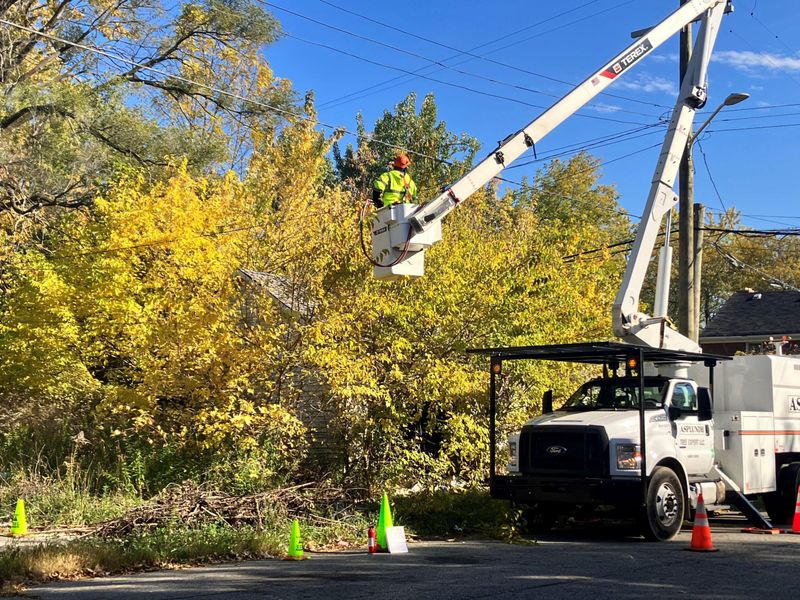
If a branch is near a power line, stop. Do not try to prune it yourself.
Contact the utility or another appropriately qualified professional instead.
Electric companies are clear about this. Consumers Energy tells customers to leave branches near lines to its crews.
DTE Energy likewise urges people to use professional service around power lines.
The Michigan Public Service Commission also explains that utilities run line-clearing programs, and it describes their role in keeping service safe and reliable. In other words, clearing trees from lines is a job built into how the system is managed.
This is separate from ordinary pruning. A tree can be on your neighbor’s property, a branch can overhang your yard, and you may have a general right to trim it back to the line.
None of that makes it safe to cut near a live wire.
If you see branches touching or close to lines, call the utility. Keeping your distance is the rule here, and no property question is worth the risk.
Unauthorized tree damage can have consequences
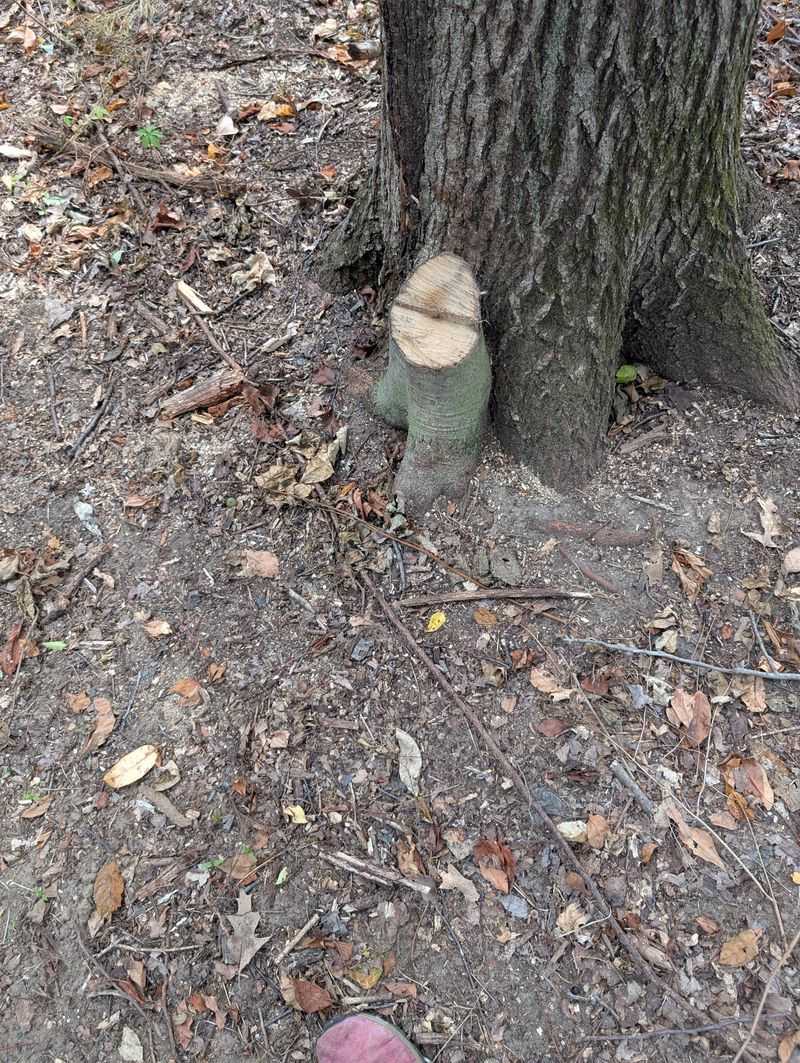
Going past the line, or harming the neighbor’s tree beyond what you may trim, can create real trouble. The Drake opinion offers an illustration.
It treated an alleged cut flush with the trunk as a possible trespass issue, and it said nominal damages may be available for an unauthorized invasion of property.
Michigan’s tree-damage statute, MCL 600.2919, provides for treble actual damages in specified circumstances involving trees on another’s land. That does not mean every disputed or heavy cut leads to triple damages.
Whether it applies depends on the facts and the claim brought.
There is also a separate criminal statute, MCL 750.367, about injuring trees. Its text includes the qualifications “without right” and “with wrongful intent.” It is not a rule that makes all pruning of overhanging branches a crime.
The point is not to scare anyone. It is to show why the details matter.
A cut that stays on your side and leaves the neighbor’s tree healthy looks very different from one that slices into the trunk or crosses the line.
Cutting only what you are entitled to cut is the best way to keep a disagreement from becoming a legal claim.
Pause when the boundary, tree, or risk is unclear
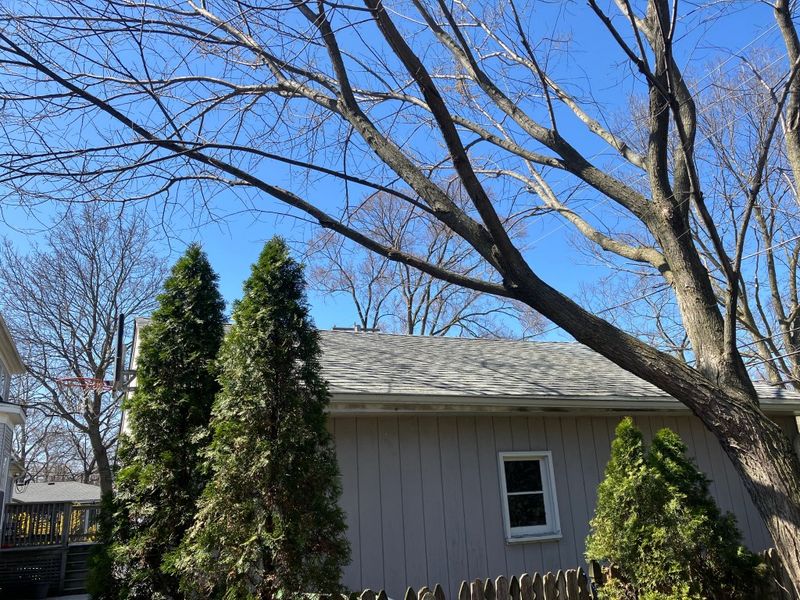
Here is the sequence in short. Confirm the actual boundary, not just the fence.
Work out whether the tree stands wholly on one side or on the line, and keep to your own side of the property.
The general trimming rule from Newberry works absent permission or an applicable agreement, and a boundary-line tree falls under the shared-ownership approach in Lennon. Skip any hazardous work.
If ownership, the line, or safety is uncertain, pause and get appropriate help. A short wait beats a long dispute.
Share this story